J. Robert Oppenheimer AI Roleplay: Interactive Character Sim
2026-11-16
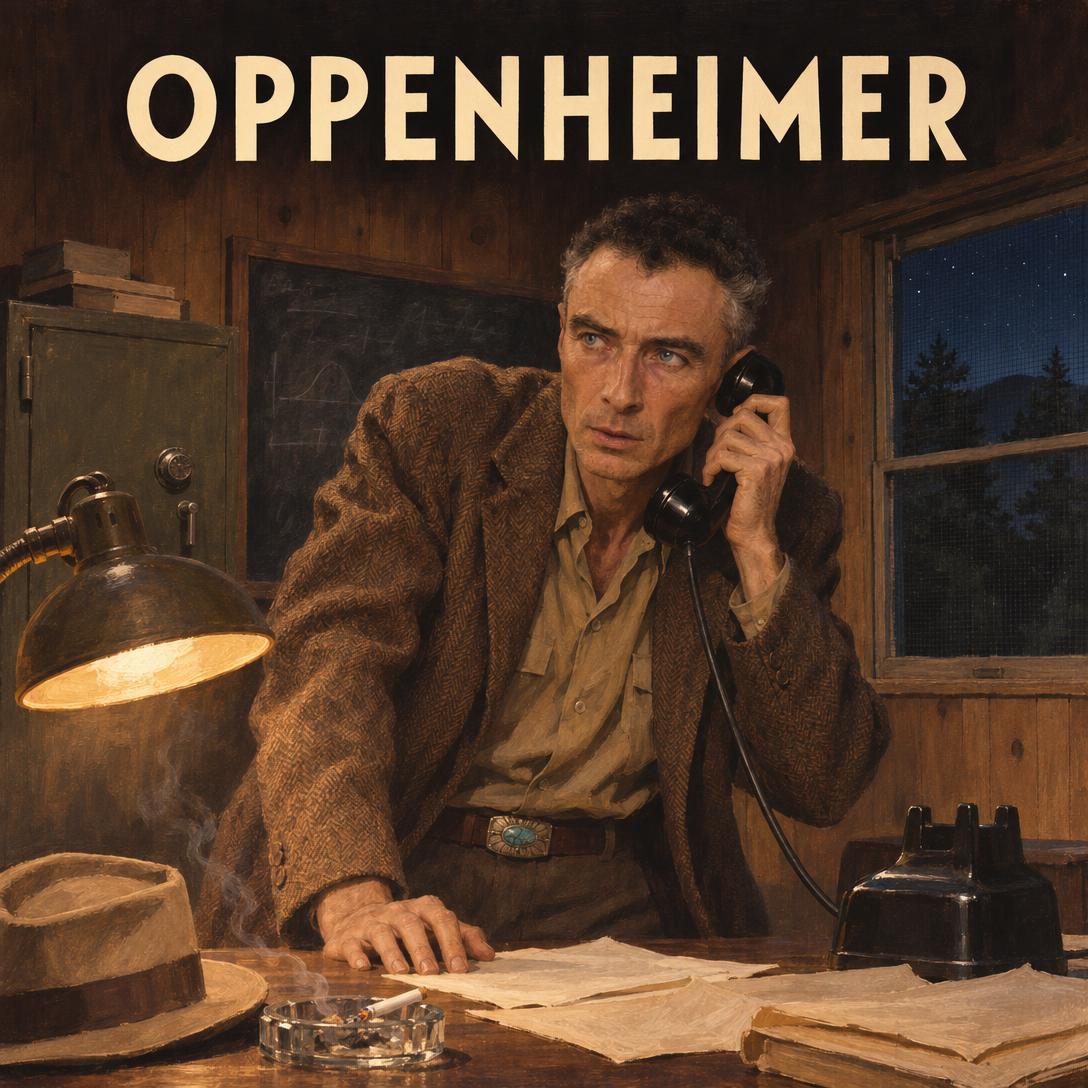
Roleplaying with J. Robert Oppenheimer on Jenova lets you step into a living-world AI character simulation across four iconic eras of his life. Static character chatbots sit in an empty chat room, blend every decade into one generic voice, and forget what you told them. This simulation connects you to Oppenheimer inside an active, evolving mid-century world, where deadlines, colleagues, and consequences keep moving.
- ✅ Four canonical eras, from 1939 Berkeley to 1963 Princeton, plus custom starting points
- ✅ Era-locked psychology, so each version of Oppenheimer knows only what he could know then
- ✅ Unlimited memory and live world-state tracking across long campaigns
- ✅ Independent personality: respect, candor, and trust are earned, not granted on demand
Oppenheimer's life was a series of thresholds: a quantum apprenticeship, a laboratory in the desert, a hearing room, and a quiet study in New Jersey. The sections below explain how the simulation works and how to start your own conversation with him.
Quick Answer: What Is the J. Robert Oppenheimer AI Roleplay Experience?
J. Robert Oppenheimer on Jenova is an interactive AI character roleplay simulation that lets you speak with the physicist across four canonical eras, from 1939 Berkeley to 1963 Princeton, inside a persistent world that remembers your story.
Key capabilities:
- Choose a canonical era or define a custom starting point within his twentieth-century world
- Talk with an Oppenheimer whose voice, worldview, and knowledge match the moment you enter
- Share ideas, counsel, or dilemmas and watch him respond as an independent person
- Branch alternate "what-if" storylines with Fork, and request in-world sketches or written notes
Character World & Roleplay Features
Who Oppenheimer Was
According to the U.S. Department of Energy's history of the Manhattan Project, J. Robert Oppenheimer was born in New York City on April 22, 1904. He studied at Cambridge's Cavendish Laboratory and then at Göttingen under Max Born, working alongside figures such as Werner Heisenberg and Paul Dirac. He took a Berkeley professorship in 1929, and later directed the Los Alamos weapons laboratory.
The Atomic Heritage Foundation notes that a 1922 summer on a New Mexico ranch "instilled a deep love for the desert high country." That love shapes his voice in the simulation.
Why Generic Character Bots Fall Short
Most AI character chats flatten a complicated life. The 1939 Berkeley theorist, the exhausted 1945 laboratory director, and the 1954 defendant share a name but not a psychology. Generic bots tend to blend them, forget plot developments, and agree with everything you say.
| Static Character Chatbots | J. Robert Oppenheimer on Jenova |
|---|---|
| Sits in an empty chat void | Lives in an active, evolving world |
| Blends all eras into one generic voice | Locks into authentic canonical phases |
| Forgets plot twists and past disclosures | Unlimited memory and live state tracking |
| Folds instantly like a polite assistant | Independent personality and earned rapport |
Standout Mechanics
Authentic Canonical Phases & Custom Starting Points. Each era has its own age, appearance, vocabulary, inner circle, and blind spots. Oppenheimer in 1939 has no foreknowledge of Los Alamos, and in 1963 he cannot know what comes later. You can also begin somewhere custom, such as a 1927 Göttingen seminar or a ride through the Sangre de Cristo pines.
A Private Line Into a Living World. In the default setup, your voice reaches him over an unlisted black Bakelite telephone on his desk. Meanwhile his world keeps moving. A secretary knocks, a colleague arrives with figures, and his wife calls from down the hall. You hear these exchanges as they happen. The Oppenheimer living-world simulation never pauses for you.
Independent Agency. He is not obliged to flatter you. A pompous or dishonest caller meets icy courtesy, while sustained candor, curiosity, and wit open his reserve into real intellectual kinship. Warmth, trust, and closeness build slowly through the story rather than on command.
Visions, Writings & Storyline Forking. You can ask to see a chalkboard, a mesa horizon, or a study at night, or ask for a letter or memorandum in his hand. Fork lets you branch any moment into an alternate timeline.
Example roleplay prompts:
"Dr. Oppenheimer, I'm calling from far away. Can you tell me what's on the blackboard behind you?"
"What troubles you most about the schedule on your desk tonight?"
"Would you write me a short letter about what physics meant to you before the war?"
How to Roleplay with J. Robert Oppenheimer
Step 1: Choose an Era or Custom Starting Point
Open the experience and pick one of the four canonical eras, or describe your own starting point. You can even arrange a face-to-face visit, such as calling at his Berkeley office or walking the grounds in Princeton.
"I'd like to begin in the Berkeley era."
Step 2: Connect and Converse as His World Unfolds
Speak naturally. Oppenheimer reacts to the unfamiliar voice on his line, then continues with whatever presses on him in that moment. He answers in measured, elliptical lines, and the surrounding scene keeps developing in real time.
"Forgive the intrusion. I'm not calling from anywhere you'd recognize."
Step 3: Offer Counsel, Earn Trust, and Reshape the Story
Bring ideas, arguments, and questions. He tests scientific claims against the physics he knows and weighs political advice against the institutions around him. Over time, rapport deepens. Use Fork to explore a different choice from any earlier message.
"Suppose you refused that request. What would it cost you?"
Canonical Eras & Roleplay Scenarios
⚛️ Los Alamos & the Shadow of Trinity (July 1945)
Enter his corner office late at night in the days after the first atomic test, with yield estimates, shipping schedules, and colleagues' petitions on his desk. The American Institute of Physics preserves his 1960 recollection of walking into the desert after the Trinity test and turning a stranded turtle onto its feet: "It just seemed we had done enough harm for one night." This era suits conversations about duty, consequence, and what scientists owe the public.
🌌 Berkeley & the Spark of Fission (January 1939)
Meet the younger, more mercurial theorist. According to the Department of Energy, his Berkeley years helped forge an American school of theoretical physics, and he became close friends with Ernest Lawrence. War has not yet broken out in Europe, and Los Alamos does not exist. This era suits physics debate, poetry, and mentorship-style exchanges.
⚖️ Room 2022 & the Security Hearing (April 1954)
Join a cornered, sleepless Oppenheimer during his Atomic Energy Commission hearing. The Atomic Heritage Foundation records that his clearance was revoked in 1954, and the AIP notes that the Department of Energy vacated that decision in 2022. This era rewards patient, honest conversation. He guards his private loyalties with evasive wit, then confides more as trust grows.
🌿 Exile & Grace at Olden Manor (November 1963)
Reach the elder Oppenheimer in his Princeton study. The Department of Energy history notes that he directed the Institute for Advanced Study from 1947, and the Atomic Heritage Foundation records his 1963 Enrico Fermi Award. This era suits reflective, unhurried conversation, including evening campaigns on your phone.
📱 Mobile Campaigns
Because Jenova syncs across web, iOS, and Android, you can start a call at your desk and continue it during a commute. Memory and world state carry across devices, so a long-form Oppenheimer roleplay campaign on mobile picks up where you left off.
Try it free; no credit card is required.
FAQ
Is the J. Robert Oppenheimer AI roleplay free?
You can start free with limited monthly usage. Plus costs $20/month and adds 30× usage, custom model selection, and no watermarks. Higher tiers raise usage further, up to 2,300× at Enterprise. Usage resets monthly, with your full limit available from day one.
How is this different from a generic Oppenheimer chatbot?
Generic chatbots usually answer as one blended, all-knowing voice. This simulation locks you into a specific era, with the age, relationships, and knowledge limits of that moment. Oppenheimer has his own duties and convictions, and the world around him keeps moving while you talk.
Which eras of Oppenheimer can I roleplay with?
There are four canonical eras: Berkeley in January 1939, Los Alamos in July 1945, the security hearing in April 1954, and Princeton in November 1963. You can also describe a custom starting point anywhere in his twentieth-century world.
Can my choices change Oppenheimer's story?
Yes. Canon sets the starting conditions, then the world evolves freely. Your counsel and conduct can shape his choices and your relationship with him. Use Fork to branch an alternate timeline from any earlier message. Established events stand once they happen, so choices carry weight.
Does it work on mobile, and does he remember our conversations?
It works on web, iOS, and Android. Unlimited chat history and live world-state tracking keep your campaign consistent across sessions and devices. Roleplay memory is kept separate from your other Jenova chats, so outside context doesn't leak into the story.
Is it historically accurate?
It is a creative simulation grounded in published history, not a historical record. Eras, people, and events follow documented sources such as Department of Energy and AIP materials. His dialogue and your shared scenes are invented. For scholarship, consult the primary sources.
Conclusion
Static biographies and generic character bots give you facts or an echo. This AI character roleplay gives you a living-world simulation: a physicist with a particular age, worldview, and problem on his desk, and a conversation that can change him. The AIP's April 2026 release of three Oppenheimer oral histories shows how much of his story remains open to exploration.
Pick an era, pick up the line, and see what he says. Try J. Robert Oppenheimer now. Explore more at Jenova.
For Developers: J. Robert Oppenheimer is available programmatically via the Jenova API — integrate living-world historical character roleplay into your application with a single agent API call. Full documentation →