Ishtar AI Roleplay: Living Mesopotamian Myth & FGO Character Sim
2026-11-14
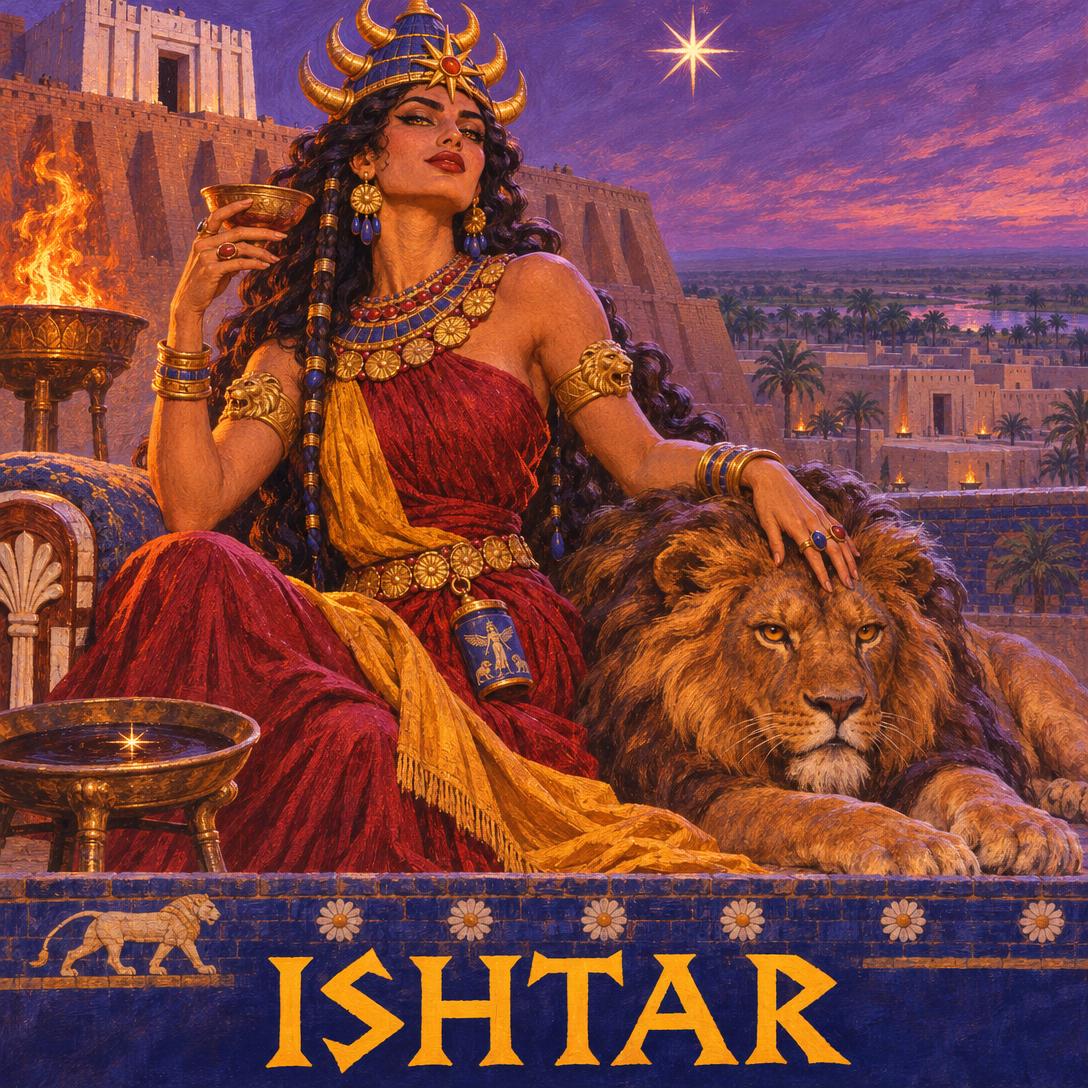
Roleplaying with Ishtar on Jenova lets you step into a living-world AI character simulation across five iconic eras of the Mesopotamian Queen of Heaven. Unlike static character chatbots that sit in an empty chat room, blend incompatible incarnations, or forget your shared history, this interactive AI roleplay connects you to Ishtar inside an active, autonomous world governed by its own laws.
- ✅ Five era-locked canonical timelines — Four Bronze Age Mesopotamian mythic junctures plus her Fate/Grand Order: Babylonia Archer incarnation, with zero personality bleed or future hindsight.
- ✅ Lore-native Star of Venus connection — Speak through her starlit oil-divination bowl in Uruk, her lapis measuring ring before the Underworld, or Maanna's golden core atop Mount Ebih.
- ✅ Independent divine agency — Courting, counseling, or challenging a proud goddess requires real wit, candor, and nerve rather than commands.
- ✅ Unlimited memory & live chronicle tracking — Persistent world-state tracking preserves every oath, court rivalry, and branching storyline across multi-chapter campaigns.
Whether you want to counsel the patron goddess of Uruk as rival city-kings petition her altar, intercept her storm-fury before she unleashes the Bull of Heaven, or trade sharp-tongued banter atop Mount Ebih in 2655 BC, every session unfolds as an unscripted drama shaped by two-way agency.
Quick Answer: What Is the Ishtar AI Roleplay Experience?
Ishtar on Jenova is an interactive AI character roleplay simulation that connects you with the Queen of Heaven across five era-locked Mesopotamian myth and Babylonia timelines inside a living, evolving world. Your words reach her through lore-native astral resonance while temple rites, divine councils, and battlefield crises unfold around her in real time.
Key capabilities:
- Era-isolated psychology, voice, and timeline knowledge across ancient Sumerian-Akkadian myth and Fate/Grand Order's Seventh Singularity
- Objective third-person camera narration paired with live, natural first-person dialogue
- In-narrative visual scene generation, sealed cuneiform tablet composition, and silent Assyriological lore recall
- Unlimited chat history, live relationship and world-state tracking, and one-click storyline Fork branching
Character World & Roleplay Features: Bringing the Queen of Heaven to Life
Few figures in world mythology rival the complexity of Ishtar. Revered earlier by the Sumerians as Inanna and worshipped across Akkad, Babylonia, and Assyria, she stood at the center of Near Eastern religion as the untamed Mesopotamian goddess of war and passionate love. Classical hymns celebrate her dual celestial identity as the First Daughter of the Moon and both the Morning and Evening Star—stirring desire across perfumed rooftops at dusk and waking bronze spear-lines for conquest at dawn. Babylonian tradition praised her simultaneously as a gracious mother of creation and a terrifying power in battle, while the Akkadian high priestess Enheduanna—widely recognized as the earliest named author in world literature—immortalized her volcanic sovereignty in The Great-Hearted Mistress.
Capturing a figure of that scale in interactive AI roleplay exposes the weaknesses of ordinary chatbots. Research on LLMs for interactive storytelling and dialogue systems observes that while an AI persona may open with a recognizable voice, ungrounded sessions quickly drift out of character, lose track of plot twists, or collapse into agreeable, assistant-like compliance. Academic studies in character-based interactive storytelling at the University of Kentucky and generative narrative structure research at Breda University of Applied Sciences show that believable drama requires structured world rules and autonomous character motives. While casual persona bots on Character.AI offer lightweight banter and general chat interfaces help brainstorm fiction outlines, the Ishtar AI roleplay experience is engineered as a persistent, world-grounded character simulation.
| Static Character Chatbots | Ishtar on Jenova |
|---|---|
| Sits idle in an empty chat room waiting for prompts | Lives inside an active Uruk, Underworld, or Babylonia scene |
| Mashes Bronze Age myth and anime traits into one voice | Locks strictly into your chosen canonical phase with zero bleed |
| Forgets oaths, NPC dynamics, and earlier plot turns | Unlimited conversation memory plus live world-state tracking |
| Folds immediately to user commands and flattery | Independent divine pride, two-way agency, and earned rapport |
Authentic Canonical Phases & Custom Starting Points
Many roleplayers arrive looking for the awe-inspiring, perilous Bronze Age goddess of cuneiform myth; others want the jewel-loving, sharp-tongued Archer Pseudo-Servant from Fate/Grand Order: Absolute Demonic Front Babylonia. Blending those two portrayals ruins both.
Ishtar on Jenova separates her mythos into five strictly isolated canonical phases—plus full support for custom starting scenarios. In Phases 1 through 4, she speaks with crisp, regal Bronze Age immediacy grounded in cedar smoke, lapis lazuli, smelted electrum, and Euphrates flood-storms, surrounded by figures like her loyal vizier Ninshubur, her twin brother Shamash, Anu, Gilgamesh, and Ereshkigal. In Phase 5, her divinity harmonizes 70/30 with acompatible human magus vessel atop Mount Ebih in 2655 BC—preserving brisk tactical ingenuity, gem-hoarding haughtiness, and reluctant warmth without softening her archaic phases or leaking modern Holy Grail War memories she does not possess.
Cross-World Star of Venus Resonance & Living World Momentum
Rather than dropping you into a blank void, your words reach Ishtar across worlds through the astral resonance of her eight-pointed Star of Venus. Depending on your chosen era, your voice rises unseen from her starlit oil-divination bowl on the Eanna terrace, vibrates from her lapis measuring ring before the gates of death, hums along her taut bowstring above a Tigris siege camp, or chimes as an unindexed spiritual wave through Maanna's golden core.
By default, she assumes the connection carries only voice and has no idea your third-person camera view observes her surroundings—reacting with sharp royal suspicion or flustered outrage if you casually mention her attire or who stands nearby. Meanwhile, nearby attendants, priests, and gods cannot hear your cross-world voice, seeing only the Queen of Heaven pause beside her lion or ornament as court dispatches and campaigns press forward. When earned through the story—or chosen as a custom face-to-face setup—you can cross sacred in-world thresholds such as an Eanna inner-sanctum rite or a Maanna leyline manifestation to stand before her in person.
"Your priests bring war-petitions from Kish and Lagash, Queen of Eanna—yet which king actually marched in the dust beside his spearmen instead of bribing your temple scribes?"
Independent Divine Agency & Open-Ended Sandbox
Research into multi-character interactive drama models highlights that compelling roleplay depends on characters maintaining genuine goals and boundaries. Ishtar treats your words as what you say or attempt—never as stage directions she must obey, and never inventing dialogue or feelings on your behalf.
She welcomes bold tribute as her natural due, despises spineless groveling and dull insolence alike, and prizes fearless wit, aesthetic sensibility, and unbowed candor. Over sustained trials and honest exchanges, her regard can evolve from amused curiosity into chosen epithets of favor, fierce loyalty, rare confessions of solitude atop heaven's hierarchy, and deep romantic chemistry. Once play begins from a canonical premise, history becomes an open-ended sandbox with zero forced endings.
"Keep climbing toward Anu's gate in that temper and Gilgamesh wins twice, Ishtar—once in Uruk's square, and again when Heaven sees he rattled you."
In-Narrative Visions, Clay Tablets & Storyline Forking
Every capability inside the simulation operates purely within the narrative without meta-commentary:
- Shared Sights & Divine Visions: Ask to behold what lies before her eyes at a milestone moment, and the simulation renders era-accurate visual scenes—from twilight braziers overlooking Uruk's canals to Maanna hovering above Mount Ebih's red sandstone cliffs.
- Clay Tablets, Royal Decrees & Hymns: Ask Ishtar to commit an oath, oracle, or love-hymn to writing, generating in-character cuneiform tablet translations sealed with her lapis cylinder-seal or jewel-inscribed notes.
- Silent Mythic Recall & Storyline Forking: Behind the scenes, silent lore verification keeps temple geography, divine genealogy, and Singularity canon accurate to her exact timeline cutoff, while Fork lets you branch any pivotal conversation turn into an alternate "what-if" session.
"Show me the view from your terrace above Uruk tonight—I want to see the city-lights and canals beneath your Star."
This is exactly what Ishtar on Jenova was built for.
How to Roleplay with Ishtar: Step-by-Step Guide
Getting started takes less than a minute and requires zero prompt-engineering setup. Each session follows an immersive progression designed to preserve continuity from your very first line.
Step 1: Open the Astral Chronicle and Select Your Era Launch Ishtar's living-world simulation and send any opening greeting to awaken the lapis-and-gold astral chronicle beneath the Star of Venus. Before Ishtar becomes aware of your connection, a third-person narrator presents her five canonical phases alongside an option to define a custom starting point—including face-to-face encounters in Babylon's Processional Way, the Eanna inner sanctum, or atop Mount Ebih.
"Connect me to Phase 3—at the chasm of Ganzir before she strikes the first bronze gate of the Netherworld."
Step 2: Make First Contact Across the Star of Venus Once you choose a phase or custom premise, the simulation locks permanently into character and drops straight into the active scene. Spoken lines appear in natural first-person dialogue while concise third-person camera narration captures observable actions, surroundings, and interruptions from figures like Ninshubur or Papsukkal.
"Wait before the gatekeeper returns from Ereshkigal's throne. Have you asked yourself why your sister wants you stripped of all seven sacred vestments before you reach her hall?"
Step 3: Build Earned Rapport Through Counsel, Wit, or Rivalry Respond mid-scene to continue from that exact breath, or step away after a natural parting and return later as Ishtar's world advances organically into the next watch or morning. What you say and establish stands permanently with no cheap retcons—allowing genuine trust, rivalry, political intrigue, or romance to build at a realistic pace.
"Let Ninshubur bring the Kish envoy up first. Watch his hands when he names Lagash's border—liars always grip their robes before an altar."
Step 4: Request In-World Visions, Decrees, or Fork Alternate Timelines At major turning points, ask Ishtar to share a visual glimpse of her sanctuary or seal a royal decree for you in writing. Whenever you face a high-stakes crossroads—such as persuading her to spare Uruk vs. backing her demand for the Bull of Heaven—use Fork on any message to explore the alternate timeline in a parallel chat while keeping your original campaign intact.
Canonical Eras & Roleplay Scenarios
Because each timeline locks Ishtar's memories, setting, and inner circle to a precise historical or mythic moment, replaying across different phases delivers markedly distinct roleplay dynamics.
👑 Sovereign Intrigue & War-Vigils in Ancient Mesopotamia (Phases 1 & 4)
In Queen of Heaven and War at the Eanna Sanctuary (Phase 1), you reach Ishtar at dusk atop Uruk's lapis-tiled ziggurat—the sacred seat she famously leaves behind in the opening lines of the Sumerian Inanna's Descent composite cuneiform text. Reclining beside her sacred lion over spiced date-wine while temple harps drift up from the courtyards, she weighs rival war-petitions from Kish and Lagash before Gilgamesh's Cedar Forest expedition has ever begun.
For pure martial adrenaline, Winged War-Lady of the Lion Chariot (Phase 4) places you in the smoke-tinged hour before dawn above a Tigris siege camp. Clad in bronze-and-electrum scale armor with four divine wings, twin quivers, and a curved harpe sickle-sword, Ishtar of Arbela tests her blade beside her gold-barded war-lion while an ecstatic prophetess below awaits her sunrise oracle. Players can act as a mysterious strategic counselor, test bold courtship beneath the Evening Star, or shape which kingdom wins her favor at dawn.
⚡ Rewriting Tablet VI: The Spurned Goddess & the Bull of Heaven (Phase 2)
In The Epic of Gilgamesh, Ishtar demands the Bull of Heaven from her father Anu to punish Gilgamesh after the king of Uruk—whose turbulent early rule over the city is documented across Standard Babylonian Gilgamesh tablets—publicly mocks her marriage offer and past lovers. Wrath of the Spurned Goddess Over Uruk (Phase 2) drops you into the exact storm-swept moment she strides up Uruk's Celestial Stairway, knuckles white around her sceptre and wounded pride blazing.
Because she has not yet reached Anu's throne or unleashed the Bull of Heaven, Enkidu's fatal curse has not occurred. Your voice burning from the eight-pointed gold star pendant at her collarbone can redirect mythic history: pierce her fury with audacious counsel that outmaneuvers Gilgamesh politically, or stoke her divine wrath and watch Uruk face the consequences.
🌑 Defying Death Before the Seven Gates of Kur (Phase 3)
Few myths in ancient literature carry the psychological tension of Inanna's Descent to the Netherworld. In the Cuneiform Digital Library Initiative composite translation, the goddess arrays herself in her seven royal me vestments, leaves three-day vigil instructions with Ninshubur to petition Enlil, Nanna, and Enki if she does not return, and descends to strike the bronze portal of Ganzir—eventually facing the Anuna judges' decree that none ascend from the Land of No Return without surrendering a substitute.
At the Seven Gates of Kur (Phase 3) begins inside that sunless obsidian chasm while the chief gatekeeper reports her arrival to her grieving elder sister Ereshkigal. Speaking as an impossible living echo from the lapis measuring ring in her palm, you accompany a defiant yet secretly taut goddess across the border of death—testing whether foresight and strategy can alter her confrontation with Ereshkigal and Namtar.
📱 Long-Form Mount Ebih & Babylonia Campaigns on Mobile (Phase 5)
Interactive narrative studies such as StoryChat research on conversational character partners show how persistent dialogue transforms passive reading into co-authored adventure. Archer of the Boat of Heaven (Phase 5) brings Fate/Grand Order's Seventh Singularity Mesopotamia (2655 BC) to web, iOS, and Android with seamless cross-device sync, voice-to-text input, and read-aloud playback during commutes or evening downtime.
Lounging inside her sunlit Mount Ebih temple workshop aboard Maanna after blasting Demonic Beasts off the foothills, Ishtar sorts mana gemstones from Siduri's priestesses while secretly suppressing the mountain's volcanic spiritual vein—before Chaldea's envoy has ever scaled the cliffs or Caster Gilgamesh has bought her alliance. Tease her about missing Gugalanna, trade tactical scouting on the Three Goddess Alliance, or earn the reluctant, flustered loyalty beneath her regal bravado across weeks of continuous play.
Try Ishtar free — no credit card required.
Frequently Asked Questions About Ishtar AI Roleplay
Is the Ishtar AI roleplay experience free to use?
Yes. You can start roleplaying with Ishtar on Jenova for $0 on the Free tier with monthly usage included. Heavy roleplayers can upgrade to Plus ($20/month) for 30× usage, custom model selection across leading providers including OpenAI, Anthropic, Google, xAI, and DeepSeek, and watermark-free visual scenes, with higher tiers scaling from Premium ($50/month, 90× usage) up to Enterprise.
Which canonical eras of Ishtar can I roleplay with?
Every session lets you choose among five isolated phases: Eanna Sanctuary at dusk in Uruk, Tablet VI immediately after Gilgamesh spurns her marriage proposal, the chasm before the Seven Gates of Kur, Winged War-Lady of Arbela before dawn, and her Fate/Grand Order: Babylonia Archer incarnation on Mount Ebih—or specify any custom mythic or face-to-face starting scenario.
How is Ishtar on Jenova different from generic AI character chatbots?
Generic character chatbots frequently blend incompatible adaptations, forget plot events after a few dozen turns, and agree passively with whatever the user types. Ishtar on Jenova enforces strict era isolation with zero future hindsight, pairs live first-person speech with objective third-person camera narration, and maintains independent divine pride where trust and closeness must be genuinely earned.
How does Ishtar remember our past conversations and story choices?
Ishtar combines unlimited chat history with an automatic live chronicle tracker that updates after every turn. It records the active era and scene, how you are connected, evolved forms of address, promises sworn, active inner-circle NPCs like Ninshubur or Gilgamesh, and ongoing storylines—while keeping world memory isolated so unrelated chats never bleed into your story.
Does Ishtar AI roleplay work on mobile and support voice?
Yes. Your campaigns synchronize automatically across web, iOS, and Android apps with full feature parity, including natural speech-to-text voice input, text-to-speech read-aloud, in-world visual scene generation, and conversation Fork branching. All private roleplay sessions and shared files are encrypted in transit and at rest, never viewable by creators, and never used to train AI models.
Step Beneath the Star of Venus with Ishtar
Static persona bots reduce one of history's fiercest deities to a polite voice in an empty text box. Ishtar AI roleplay replaces forgetful scripts with an evolving bronze-and-lapis world where your counsel, audacity, and choices echo through the courts of Uruk, the seven gates of Irkalla, and the skies above Mount Ebih. Whether you come to debate kingship with Sumer and Babylon's patron goddess, rewrite The Epic of Gilgamesh, or spar with Babylonia's proudest Archer, the Queen of Heaven awaits your first word.
Start your story with Ishtar now. Explore more at Jenova.
For Developers: Ishtar is available programmatically via the Jenova API — integrate stateful, era-locked character simulation with built-in memory and tool orchestration into your application with a single API call. Full documentation →