AI Interactive Story Game: Branching Play With Persistent Memory
2026-09-08
Roleplay Game Master helps you play an interactive story game by holding every character, secret, and consequence in memory while you decide what happens next. While a boxed narrative title freezes your plot in a finite dialogue wheel, this AI runs an open story that still feels authored — timed pressure, moral cost, and people who remember what you did. In September 2026, players want that Life is Strange intensity without waiting years for another studio episode.
✅ Remembers inventory, alliances, injuries, and unpaid debts across sessions ✅ Keeps NPCs consistent when you contradict yourself or skip a scene ✅ Runs mystery, horror, romance, or workplace drama from a single premise ✅ Plays on web, iOS, and Android with the same story state
To understand why a dedicated interactive story game matters, look at how choice-based play actually breaks when memory, timing, and character logic fall apart.
Quick Answer: What Is an Interactive Story Game?
An interactive story game is a playable narrative where your choices change scenes, relationships, and endings instead of advancing a fixed plot. Roleplay Game Master is the AI that runs that loop with persistent memory instead of a one-shot script.
Key capabilities:
- Branching scenes driven by what you say, hide, or refuse
- Characters who recall prior deals, insults, and evidence
- Genre-flexible play: mystery, survival, romance, or training drama
- Session continuity so a commute chapter still belongs to last night’s plot
- Premises you set — or authored rooms you can walk into next
Why Most Interactive Story Games Feel Scripted After Hour Two
The form is simple to describe and hard to sustain. Interactive fiction — gamebooks and “choose your own path” stories — leads players through a branching scenario where later options depend on earlier ones. Research on branching narrative treats meaningful choice as a unique outcome, not a cosmetic button. Miss the downstream effects, and the “game” is a cutscene with extra taps.
The appetite is not niche. Interactive stories now show up in training simulations, language apps, onboarding flows, museum exhibits, and marketing. The generative AI in gaming market reached $10.6 billion in 2025. Players already know the grammar: a dialogue wheel, a ticking clock, a face that will not forget.
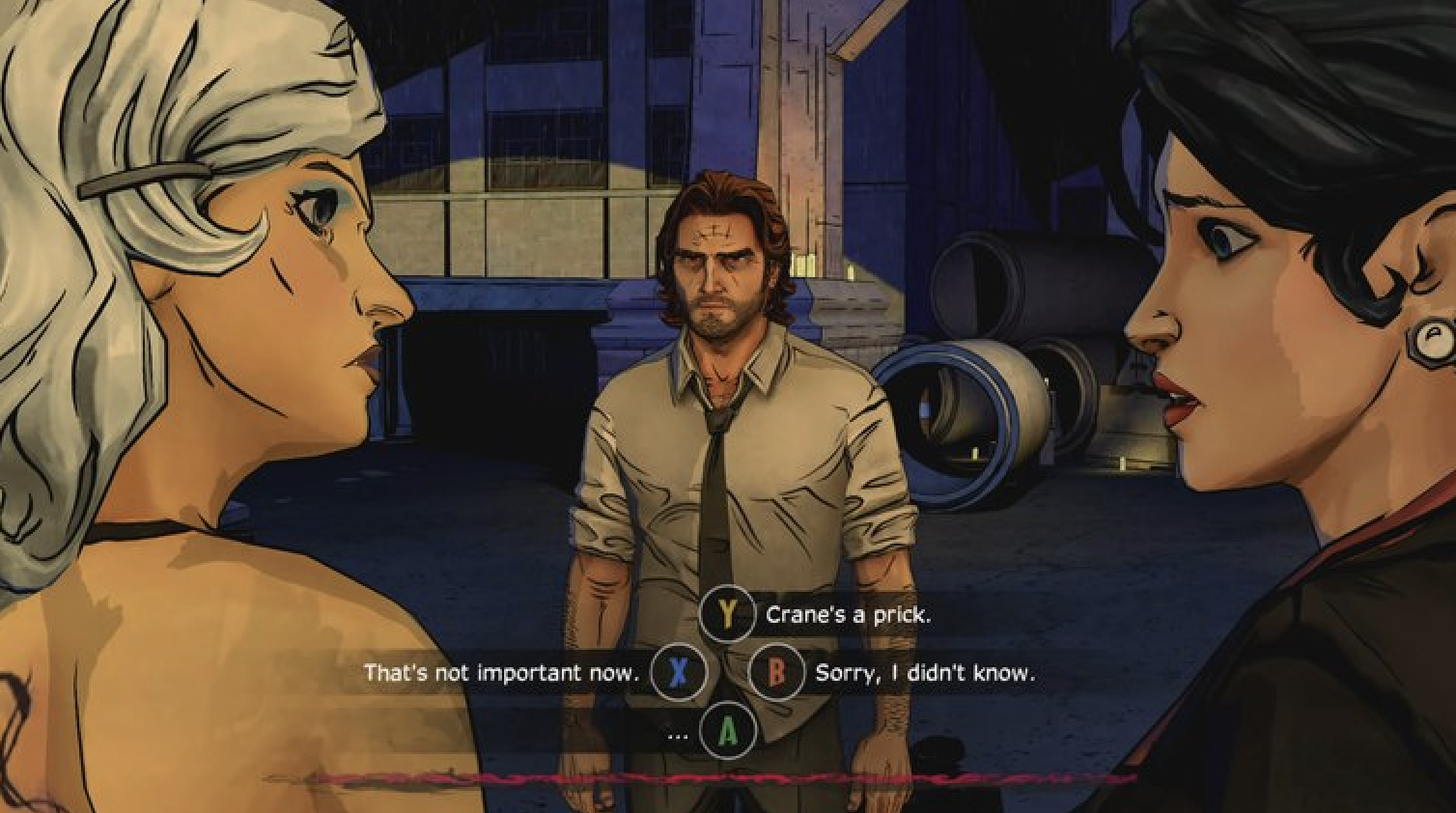
That screenshot language — four replies, a silent beat, a person in the middle who will live with your answer — is the contract. But delivering it for more than one authored episode is frustratingly difficult:
- Finite trees — every branch a studio did not write simply does not exist
- False agency — options that sound different and dump you in the same room
- Amnesia — NPCs who forget the key, the lie, or the person you saved
- Sequel drought — you finish the season and the world stops
- Engine tax — wanting Telltale pressure without learning Twine, Ink, or a game editor first
The choice interface is not the story
Not every choice UI means the same thing. A timed insult, a silent “…” , and a confession that spends trust are different verbs. If the system cannot tell them apart, you get flavor text. An interactive story game has to treat the click as a state change — flag, relationship, clock, or closed path — or the wheel is decoration.
Memory is the real difficulty, not atmosphere
Authored episodes work because a writer already knows who saw the body. Open play fails when the clerk forgets you have the radio, or a romance flag resets because you started a new chat. Continuation desire — the urge to keep going — depends on engagement that is more than a pretty scene. If the world forgets, you stop wanting the next beat.
Classrooms and workplaces raised the bar
Branching play is no longer only a living-room genre. Digital game-based learning uses these stories so students experiment, reflect, and practice higher-order thinking. Training teams use branching scenarios where choices have consequences in a safe space. Military simulation research treated branching storylines as a way to practice judgment, not just recall slides. Those uses need fair failure and a debrief, not a gotcha death screen.
This is exactly what Roleplay Game Master was built for.
Why Roleplay Game Master Works as an Interactive Story Game
Roleplay Game Master is a standalone play partner, not a passage editor. You bring a player fantasy, a tone, and constraints (length, heat, number of endings, whether failure should teach). It runs the scene: NPCs with agendas, clocks that actually tick, and a memory of what you already spent.
That order matters. Most chat tools improvise atmosphere and drop the knife. An interactive story game should first know what can be lost, who is watching, and which ending is still reachable.
| Traditional Approach | Roleplay Game Master |
|---|---|
| Finite dialogue tree written once | Open scenes that still enforce costs |
| Save file that dies when the season ends | Persistent memory across sessions |
| Cosmetic choices that reconverge | Flags for trust, evidence, injuries, and time |
| Wait for the next studio episode | Start a new premise tonight |
| Learn an engine to get a second path | Play first; design later if you want a published graph |
| NPCs who reset when you reopen the app | Character consistency under contradiction |
Persistent memory as the engine
Ask it to track has_lighter, owes_mara, and library_burned. Then leave and come back tomorrow. The interactive story game is the state, not the prose. You get continuation instead of a recap paragraph that pretends last night never happened.
"Start a rain-soaked ferry mystery. I am the night clerk. Two passengers are lying. Track every lie I catch and let it change who will cover for me."
Character consistency under pressure
Life is Strange-style play lives in faces and follow-through. If you spare someone in chapter one, they cannot vanish from the social graph. If you insult a partner on a timed wheel, the next scene should be colder, not reset to friendly NPC default. Testing shows the difference immediately: a character who remembers is a system, not a costume.
"Play a 20-second dialogue beat, then a hard choice. If I protect the stranger, the town turns. Keep a visible ledger of who saw it and who will bring it up later."
Any genre, without a new product
Horror needs unfair-feeling-but-fair information. Romance needs relationship flags you cannot max by grinding “be nice.” Training needs the wrong procedure to look tempting. Because this is a game master, those constraints arrive as rules: clocks, missable clues, debrief notes — not vibes.
"Continue last night’s session. I still have the lighter. Do not reset the library fire or the argument with Mara. If I stall, the tide takes the dock."
Related Agents You'll Also Find Useful
If you want an interactive story game tonight, you may want a authored house, a darker romance, or a design pass after the playtest. These sit on the same desk.
The Mansion
If you want a closed premise instead of a blank page, The Mansion drops you in a house with no memory of how you arrived. Every room is a node. Every shadow can end the run. Use it when you want exploration-first horror rather than a sandbox you have to pitch.
- Room-by-room secrets that stay gated until you earn them
- Escape and truth as competing endings
- A ready-made interactive story game when you do not want to invent the map
The Asylum
If the fantasy is investigation, The Asylum sends you into a shuttered institution where the assignment already went wrong. It is closer to a detective episode than a sandbox: wards, files, and a hidden story you can fail to reconstruct.
- Investigator framing with incomplete briefings
- Ward-by-ward secrets instead of a single hallway
- A reread that is smarter if you missed a file, not longer
Vesper Court
If you want relationship stakes with teeth, Vesper Court is dark romance in a hidden vampire court — amnesia, blood intrigue, and nights that actually change the board. Play it when the choice you care about is who you trust, not which door you open.
- Memory loss as a mechanical constraint, not a prologue gag
- Court politics that punish careless alliances
- Desire and danger on the same flag set
Game Designer Assistant
If a session was good and you now want a publishable graph, Game Designer Assistant turns the premise into nodes, flags, and ending criteria you can take into Twine, a classroom book, or the web. Play first; freeze the topology second.
- Branch maps with fail states and reconvergence
- Choice audits that catch cosmetic options
- Documentation for a class, an artist, or an engine
Try Roleplay Game Master free — no credit card required.
How to Play an Interactive Story Game With an AI Game Master
Each step is a complete action. Do them in order. Do not start with “make it cinematic” until the costs exist.
Step 1: Lock the player fantasy and what can be lost Say who you are, what you want, and the one thing that must hurt if you fail. An interactive story game with “lots of vibes” and no loss condition is a linear scene.
"I am a junior ranger in a flooded visitor center. Fantasy: competent under pressure. If I freeze, the archive floods. Age-appropriate, 20 minutes, one joke fail allowed."
Step 2: Name the flags the world will remember Inventory, trust, time, and evidence need labels. If you cannot name the flag, the later scene cannot spend it. This is the difference between a story and a recap.
"Track
has_radio,trusts_guide, andflood_rising. If I leave the radio, the boathouse scene changes. Do not invent a fourth flag without telling me."
Step 3: Play a single hard choice, then continue Ask for a timed beat or a two-option fork with unequal information. After you pick, demand the world react in the next paragraph — not three scenes later.
"Give me 20 seconds of dialogue, then A: leave the stranger, B: take them in. If I take them in, the town’s first line in the next scene must show it."
Step 4: Leave, return, and refuse a reset The test of an interactive story game is the second session. Open the same thread. If a burned room is intact, stop and correct the state before you write more atmosphere.
"Continue yesterday. Library is burned. Mara will not joke. If you recap instead of playing the consequence, rewrite the opening beat."

Those portraits are the promise players already understand: one face in daylight, one in a tunnel with a flame, one rewritten by the story’s own symbols. Character is the UI. Memory is how you keep it honest.
Results and Use Cases
📊 Coastal mystery with a lie ledger
- Scenario: You want a short detective episode: night ferry, two liars, three endings, no omniscient narrator.
- Traditional Approach: Replay a studio mystery until you have seen every node, or outline a Twine graph you never finish.
- Roleplay Game Master: A live ledger of caught lies that changes who will alibi you.
- Endings that are mutually exclusive, not paletteswaps
- Clues you can miss and still finish on a harder path
- A reread that uses the same flags instead of new adjectives
💼 Safety drill that teaches the wrong click
- Scenario: A warehouse lead needs a 10-minute branching drill: spill, alarm, or injured coworker.
- Traditional Approach: A linear video plus a quiz that never shows why the unsafe click looked efficient.
- The AI game master: A tree where choices have consequences and the team sees outcomes without real-world risk.
- Wrong answers teach procedure instead of instant-fail humiliation
- Flags for PPE, radio, and evacuation order
- Debrief lines listing the intended lesson per node
📱 Commute chapter of a character drama
- Scenario: You have twelve minutes on a phone and last night’s argument with Mara is unfinished.
- Traditional Approach: Notes-app fragments, or a console save you cannot open on the train.
- Your interactive story partner: Voice or short typed turns on mobile, same memory, no recap tax.
- Timed dialogue that still fits a small screen
- One choice per stop, not a novel chapter
- Continuity when you sit down at a keyboard later
🎯 Authored house, then a custom sequel
- Scenario: You want a complete horror loop tonight, then a sequel premise that is yours.
- Traditional Approach: Finish one commercial title and wait. Home-brew never leaves the outline.
- The Mansion plus a game-master session: Clear the house, then pitch “the grounds after the fire” with the same loss conditions.
- A finished run without designing rooms first
- A sequel that inherits what you burned
- Optional handoff to Game Designer Assistant if you want a node list you can publish
FAQ
What is an interactive story game?
An interactive story game is a narrative you play: decision points, consequences, and endings that depend on what you did. Classic forms include gamebooks, Telltale-style dialogue wheels, and digital fiction used in classrooms. Roleplay Game Master runs that loop with persistent memory so characters, items, and clocks survive more than one sitting — without requiring you to compile a graph first.
Is Roleplay Game Master free?
Yes. You can play on the free tier with core features and limited monthly usage. Paid plans increase usage if you are running long campaigns, many recasts, or heavy playtest passes. You do not need a credit card to start a first session. For most players, the first useful output is a constrained premise with named flags, not a commercial build.
How is this different from Telltale, Life is Strange, or a generic chatbot?
Authored games give you a finished tree, voice acting, and a closed art pass — and then the tree ends. A generic chatbot will improvise mood and drop inventory. This is a game master: state, character consistency, and cost first, atmosphere second. You still get choice pressure. You do not get a finite season calendar.
Does an interactive story game like this work on mobile?
Yes. You can dictate a turn, pick a fork, and continue the same thread on a phone or tablet with the same memory as desktop. That matters because this genre is a series of small, costly decisions, not one long writing session. Play the argument on the commute; resolve the dock at a keyboard.
Can it remember choices across sessions?
Yes — that is the product. Name the flags you care about, then refuse recap-as-reset when you return. If a burned room comes back intact, correct the state before you play the next beat. Persistent memory is what turns a chat into an interactive story game instead of a one-shot scene.
Can I play a premade story instead of inventing one?
Yes. Use The Mansion, The Asylum, or Vesper Court when you want a authored premise. Switch to the game master when you want a sequel, a custom genre, or a training scenario that no studio shipped.
Play the Choice, Then Keep the Consequence
Interactive story games fail when the wheel is theater. If options do not change state, if a face forgets the lie, if a classroom or warehouse drill cannot show why the wrong click was tempting, the player feels it. A dedicated interactive story game — Roleplay Game Master — keeps flags, people, and clocks honest before you spend an evening on atmosphere.
Name what can be lost. Play one hard choice. Come back tomorrow and refuse the reset. Then, if you want a closed house or a publishable map, step into the related stories and tools.
Try Roleplay Game Master now. Explore more at Jenova.
For Developers: Roleplay Game Master is available programmatically via the Jenova API — integrate persistent, choice-driven interactive story play into your application with a single API call. Full documentation →