AI Inspiration Library: How to Find Ideas, Prompts & Creative Fuel with AI (May 2026)
2026-05-25
Every creative professional knows the feeling. You sit down to work, cursor blinking, and nothing comes. The deadline is tomorrow, the brief is open, and your brain has decided to take the day off.
You're not alone — and the problem isn't a lack of talent. It's a lack of input. Writers, marketers, designers, entrepreneurs, and students all hit the same wall: they need fresh ideas on demand, but traditional inspiration sources — mood boards, Pinterest rabbit holes, brainstorming sessions that go nowhere — can't keep up with the pace of modern creative work. What if you had an always-available library of AI-powered specialists, each trained to generate ideas, prompts, and creative direction in a specific domain?
That's the core promise of an AI inspiration library — and it's exactly what Jenova was built to deliver. With specialized agents spanning creative writing, visual design, marketing strategy, music composition, business planning, and dozens of other fields, Jenova functions as a living inspiration engine where every agent is a domain expert ready to brainstorm alongside you.
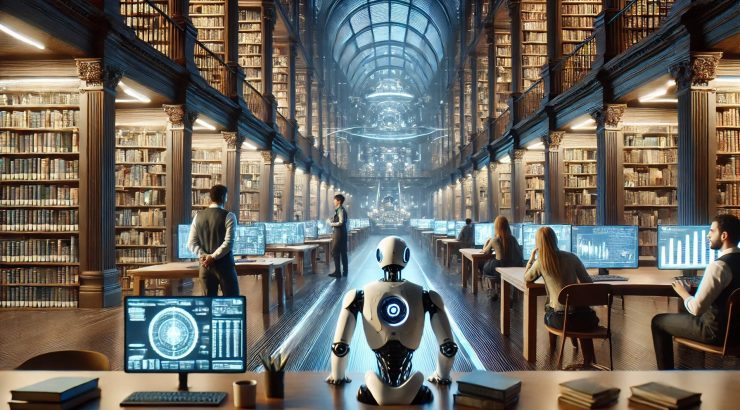
Quick Answer: What Is an AI Inspiration Library?
An AI inspiration library is a curated collection of AI-powered tools and agents that generate ideas, prompts, and creative direction across multiple disciplines — functioning as an on-demand brainstorming partner.
- 🎨 Visual & design inspiration — generate mood concepts, logo directions, and style references with agents like the Graphic Designer
- ✍️ Writing & storytelling prompts — overcome blank-page paralysis with the Creative Fiction Writer and Writing Assistant
- 💡 Business & strategy ideation — brainstorm product concepts, campaign angles, and market positioning with the Marketing Strategist
- 🎵 Music & multimedia creativity — explore melodies, lyrics, and sonic directions with the Lyric Writer and Music Composition Assistant
The Problem: Why Traditional Inspiration Falls Short
Creative blocks aren't just annoying — they're expensive. In a world where content demand has exploded and creative cycles have compressed, the inability to generate ideas quickly carries real consequences.
The Scale of Creative Demand Has Outpaced Human Bandwidth
According to Forbes, AI is expected to see an annual growth rate of 36.6% from 2023 to 2030, driven largely by the need for faster content and creative output across industries (Forbes).
Marketers need fresh campaign angles weekly. Content teams publish daily. Designers iterate on concepts in hours, not days. The volume of creative output expected from individuals and small teams has grown exponentially, but the human capacity for original ideation hasn't changed.
Brainstorming Tools Solve Logistics, Not Creativity
Most AI brainstorming tools on the market today — tools like MindMeister, Miro, Ideamap, or GitMind — focus on organizing ideas rather than generating them with domain expertise. They're excellent for mapping what you already know, but they can't inject specialized knowledge into a creative problem you've never encountered before.
As The Digital Project Manager notes, the core criteria for brainstorming tools center on collaboration features, template customization, and workflow integration — not on the depth of creative knowledge the tool brings to the table.
General-Purpose AI Hits a Ceiling
While tools like ChatGPT and Claude have become popular for brainstorming — with one review noting that ChatGPT offers "full flexibility without switching tools" — general-purpose models share a fundamental limitation: they're generalists. Ask ChatGPT for songwriting inspiration and you'll get competent suggestions. Ask a dedicated lyric writer with deep knowledge of meter, rhyme schemes, singability science, and genre conventions, and you'll get craft-level inspiration that actually moves your work forward.
The Adoption Gap Is Real
A staggering 62% of companies remain stuck in the "experimenting or piloting" phase with AI, with only 7% having fully scaled AI across their enterprise (Master of Code Global).
The reason? Most people don't know which AI to use for what. They default to a single chatbot for everything, get mediocre results in specialized domains, and conclude that AI "isn't ready" for creative work. The problem isn't the technology — it's the absence of a curated, specialized library that matches the right AI to the right creative challenge.
The Solution: An AI Inspiration Library Built on Specialized Agents
The gap between "AI can help with creativity" and "AI actually makes me more creative" comes down to specialization. A true AI inspiration library doesn't just generate generic lists of ideas — it provides access to domain experts who understand the conventions, techniques, and nuances of specific creative disciplines.
| Traditional Brainstorming | AI Inspiration Library (Jenova) |
|---|---|
| One tool for all creative needs | Specialized agents per discipline |
| Organizes existing ideas | Generates new ideas with domain expertise |
| Template-based, static prompts | Dynamic, conversational ideation |
| No memory of your style or preferences | Persistent memory across sessions |
| Single AI model, take it or leave it | Multiple frontier models (GPT-5.4, Claude Opus 4.6, Gemini 3.1 Pro Preview, and more) |
| Isolated from your workflow | Integrated with Gmail, Drive, Notion, and other tools via MCP |
Domain-Specific Ideation, Not Generic Lists
When you need inspiration for a screenplay, the Film Screenwriter doesn't just suggest "a story about a detective." It understands three-act structure, character arc construction, dialogue rhythm, and genre conventions — then generates concepts that are structurally sound creative starting points.
When you need a logo concept, the Logo Generator brings intelligent style matching across industries, understanding that a fintech logo has fundamentally different visual language than a children's toy brand.
Persistent Creative Memory
Unlike standalone brainstorming tools that reset with every session, Jenova's agents remember your creative preferences, brand voice, past projects, and stylistic tendencies across conversations. Your AI inspiration library learns what inspires you and calibrates accordingly.
Multi-Model Creative Power
Different creative challenges benefit from different AI architectures. Some models excel at divergent, highly creative ideation. Others are stronger at structured, logical creative frameworks. With access to GPT-5.4, Claude Opus 4.6, Gemini 3.1 Pro Preview, and models from xAI and DeepSeek — all without vendor lock-in — you can match the right creative engine to the right task.
Try Jenova free — no credit card required.
Specialized AI Agents for Your Inspiration Library
✍️ Creative Fiction Writer
The Creative Fiction Writer is a full storytelling partner that combines research depth, editorial insight, and polished prose generation. Whether you're stuck on a novel's opening chapter, need fresh plot twist ideas, or want to explore character voice variations, this agent brings professional-level narrative craft to every brainstorming session.
- Generates story premises with built-in conflict, stakes, and thematic depth
- Explores "what if" variations of existing concepts to find unexpected angles
- Adapts to genre conventions — literary fiction, thriller, romance, sci-fi, fantasy, and more
🎨 Graphic Designer
The Graphic Designer serves as a visual creative director who can ideate across branding, social media assets, marketing collateral, print design, infographics, and illustration. When you need visual inspiration that goes beyond "search Pinterest," this agent generates concepts rooted in design principles.
- Suggests color palettes, typography pairings, and layout compositions for specific briefs
- Creates mood direction and visual identity concepts for new brands
- Produces actual design assets you can refine and use
📝 Writing Assistant
The Writing Assistant is a bespoke writing partner that adapts to any format, audience, and domain. From blog post brainstorming to speechwriting ideation to technical documentation framing, it provides the structural and stylistic inspiration to move from blank page to first draft.
- Generates multiple angle options for any topic
- Adapts voice and tone to match your brand or personal style
- Creates outlines, hooks, and structural frameworks as creative scaffolding
🎵 Lyric Writer
The Lyric Writer brings deep music theory knowledge and singability science to songwriting ideation. It understands meter, internal rhyme, syllabic stress patterns, and emotional arc across genres — generating lyrics that aren't just poetically interesting but are singable.
- Brainstorms thematic concepts and emotional territories for songs
- Generates verse/chorus/bridge frameworks with attention to melodic rhythm
- Explores genre-specific lyrical conventions from hip-hop to country to K-pop
📊 Marketing Strategist
The Marketing Strategist functions as a CMO-level advisor for creative campaigns. When you need campaign angle inspiration, messaging frameworks, or content pillar ideas, this agent generates strategic creative direction backed by marketing methodology.
- Brainstorms campaign concepts with target audience, channel strategy, and messaging architecture
- Generates positioning statements and value proposition variations
- Creates content calendar frameworks and thematic series concepts
🎬 Film Screenwriter
For filmmakers and video creators, the Film Screenwriter generates inspiration from concept through revision — covering structure, dialogue, character development, and visual storytelling.
- Develops loglines, treatments, and beat sheets from thematic starting points
- Generates dialogue variations for scene work
- Explores genre hybridization and structural experimentation
How It Works: Building Your AI Inspiration Library
Step 1: Identify Your Creative Domain
Start by choosing the agent that matches your creative challenge. Writing a novel? Start with the Creative Fiction Writer. Designing a brand identity? Open the Graphic Designer. Planning a campaign? Engage the Marketing Strategist.
Step 2: Set Your Creative Context
Give the agent the constraints and goals that will make its inspiration relevant. The more context you provide, the more targeted and useful the output becomes.
"I'm writing a psychological thriller set in a near-future Tokyo. The protagonist is a memory therapist who discovers her own memories have been altered. I need five opening scene concepts that establish unease without revealing the central mystery."
Step 3: Explore, Diverge, and Refine
Use the conversation to push ideas further. Ask for variations, combine concepts, explore different tonal registers, or challenge the agent to surprise you.
"Take concept #3 and make it darker. What if we opened from the perspective of the patient instead? Give me three versions — one clinical, one dreamlike, one noir."
Step 4: Cross-Pollinate Across Agents
One of the most powerful features of an AI inspiration library is the ability to bring different creative perspectives to the same project. Use the @mention feature to pull another agent into your conversation with full context. Brainstorm your story with the Creative Fiction Writer, then @mention the Prompt Generator to create image prompts for concept art, or bring in the Music Composition Assistant to explore the sonic world of your story.
Step 5: Save and Build Your Library
Every conversation becomes part of your persistent creative library. With unlimited chat history and cross-session memory, your past brainstorming sessions are always accessible — and the agents remember what worked, what you liked, and what direction your creative instincts tend toward.
Results & Use Cases
📖 Fiction Author Breaking Through Writer's Block
Scenario: A novelist is 40,000 words into a literary thriller and has written herself into a corner. The plot needs a midpoint reversal, but nothing feels organic to the characters she's built.
Traditional Approach: Re-read craft books, browse writing forums, take a walk and hope for a breakthrough. Estimated time to resolution: days.
AI Inspiration Library Approach: Open a session with the Creative Fiction Writer, paste in the character profiles and plot summary, and ask for ten midpoint reversal options that honor existing character motivations. Refine the top three in conversation. Time to resolution: one session.
💼 Startup Founder Naming a New Product
Scenario: A founder needs a name for a B2B SaaS product in the sustainability space. It needs to work in English and Spanish, be available as a .com domain, and convey trust without sounding corporate.
Traditional Approach: Team whiteboard session, name generator websites, trademark searches. Three weeks of back-and-forth.
AI Inspiration Library Approach: Engage the Name Generator for linguistic analysis and creative naming, then cross-reference with the Writing Assistant for tagline and messaging variations. Produce a shortlist of 20 vetted options in a single afternoon.
🎨 Marketing Team Building a Campaign from Scratch
Scenario: A four-person marketing team needs a full Q3 campaign concept for a DTC skincare brand launching in Southeast Asia. They need a theme, visual direction, content pillars, and initial copy.
Traditional Approach: External agency brief, two weeks for concepts, another week of revision. Budget: $15,000–$30,000.
AI Inspiration Library Approach: The Marketing Strategist generates campaign concepts with audience segmentation. The Graphic Designer produces mood boards and visual direction. The Product Copywriter generates headline variations and product descriptions. The Social Media Content Generator produces platform-native post concepts. Total time: two days. Total cost: a Jenova subscription.
📱 Music Producer Finding a Fresh Sound
Scenario: An independent producer is scoring a short film and needs to develop a musical identity that blends jazz harmony with electronic production — but can't articulate the specific harmonic language they're hearing in their head.
Traditional Approach: Listen to reference tracks for hours, trial and error in the DAW, hire a session musician for consultation.
AI Inspiration Library Approach: The Music Composition Assistant helps articulate harmonic ideas through text-based notation — exploring chord voicings, modal interchange options, and arrangement concepts. The Lyric Writer develops thematic text for any vocal elements. A multi-session creative dialogue produces a complete sonic blueprint before a single note is recorded.
FAQ
What exactly is an AI inspiration library?
An AI inspiration library is a collection of specialized AI agents, each trained in a specific creative domain — writing, design, music, marketing, business strategy, and more. Unlike general-purpose chatbots, these agents bring deep domain knowledge to brainstorming sessions, generating ideas that reflect the conventions, techniques, and standards of their discipline. Jenova offers one of the most comprehensive collections available.
Is an AI inspiration library free to use?
Jenova offers a free tier that includes access to all core features and agents with limited usage. Paid plans start at $20/month for expanded usage, custom model selection, and no watermarks on generated content. There's no credit card required to get started.
How is this different from using ChatGPT for brainstorming?
General-purpose AI models like ChatGPT are versatile but lack the deep specialization that makes creative inspiration truly useful. An agent like Jenova's Film Screenwriter understands screenplay structure at a craft level, while a Graphic Designer knows design principles and visual language. The difference is between a generalist who can discuss anything and a specialist who knows your discipline.
Can AI really help with creative work, or does it just produce generic output?
The quality of AI creative assistance depends entirely on specialization and context. Generic prompts produce generic output — that's true of any tool. Specialized agents with persistent memory that understand your creative history, preferences, and project context produce dramatically better results. According to research from Master of Code Global, 63% of organizations using AI focus on text generation, and companies report an average 24.69% increase in productivity — suggesting the creative output is actionable, not just novel.
Can I build my own custom inspiration agents?
Yes. Jenova allows users to create custom agents in minutes, tailored to specific creative workflows, brand voices, or domain requirements. This means your AI inspiration library can grow to reflect your exact creative needs over time.
Is my creative work private and secure?
Your data is never used for AI model training, is encrypted in transit and at rest, and is never sold to advertisers. Your brainstorming sessions, creative drafts, and project details remain yours.
Conclusion
Creative block isn't a character flaw — it's an infrastructure problem. When the demand for ideas exceeds the supply of inspiration, you need a system that can reliably generate domain-specific, craft-aware creative starting points across every discipline you work in.
An AI inspiration library built on specialized agents transforms brainstorming from a hope-and-wait exercise into a structured, repeatable creative process. Whether you're a novelist stuck on plot, a designer searching for visual direction, a marketer building campaign concepts from scratch, or a musician hunting for harmonic ideas — the right AI agent can get you from blank page to creative momentum in a single session.
Explore the full agent library and start building your personal AI inspiration library at Jenova.