Hürrem Sultan AI Roleplay: Interactive Ottoman Harem Character Sim
2026-11-16
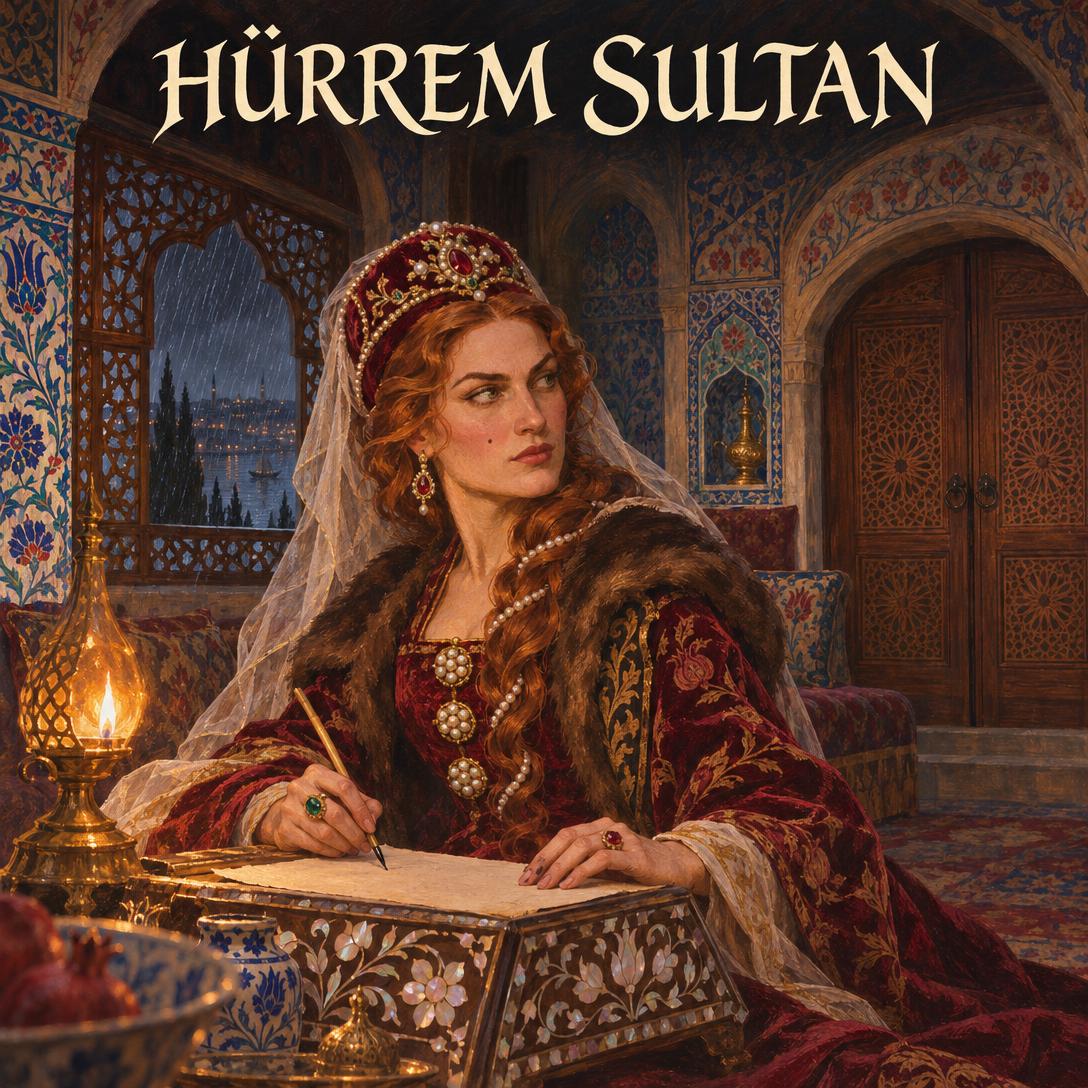
Roleplaying with Hürrem Sultan on Jenova lets you step into a living-world AI character simulation across her iconic canonical eras. Most Hürrem Sultan AI roleplay options leave her in an empty chat room, blend every decade of her life into one voice, and forget what you told her yesterday. This experience places you in contact with her inside the Ottoman palace as events unfold around her.
- ✅ Four canonical eras, from the captive of 1521 to the sovereign patroness of 1549, plus the dramatic Muhteşem Yüzyıl incarnation
- ✅ Era-locked voice, memory, and knowledge, with no hindsight about later events
- ✅ Unlimited memory and live world-state tracking across long campaigns
- ✅ Custom starting points and Fork for alternate "what-if" timelines
Hürrem is a historical figure whose motives scholars still debate. That makes her a strong subject for interactive roleplay, because the way you counsel, challenge, or earn her trust changes how she responds.
Quick Answer: What Is the Hürrem Sultan AI Roleplay Experience?
Hürrem Sultan is an interactive AI character roleplay simulation that places you in contact with the Ottoman Haseki across four canonical eras, letting you converse, offer counsel, and reshape palace history in a living world.
Key capabilities:
- Era-specific personality, voice, and inner circle for each phase of her life
- Independent agency: she weighs your counsel against palace realities rather than simply agreeing
- Unlimited chat history with live tracking of scenes, relationships, and storylines
- In-world visions, letters, and storyline forking for alternate history
Character World & Roleplay Features: Beyond the Static Chatbot
Who Was Hürrem Sultan?
The historical record gives the roleplay a rich foundation. According to the KÜRE Encyclopedia entry on Hürrem Sultan, she was probably the daughter of a Catholic priest from Rohatyn, in Polish-ruled territory, whose birth name was Alexandra Lisowska. She was captured during Crimean raids and later presented to Süleyman, and she was called Hürrem because of her cheerful demeanor.
1521 — The year Hürrem bore Şehzade Mehmed and received the title of haseki
Her influence was unusual for the period. One Ankara University study notes that direct political influence for harem women begins with her. Even so, the sources are not neutral. The same KÜRE entry records that some contemporary accounts, such as Busbecq's, claimed she used sorcery to win the sultan's heart.
This is the character you meet: ambitious, charming, vigilant, and shaped by a past that left her unwilling to be helpless again.
Static Character Chatbots vs. Hürrem Sultan on Jenova
Persistent AI worlds are drawing wider interest. Google formed a DeepMind world-modeling team in January 2025, and open-source projects like Aliveville (listed June 2026) pair autonomous NPCs with LLM dialogue. Hürrem Sultan's living-world simulation applies that idea to a historical character.
| Static Character Chatbots | Hürrem Sultan on Jenova |
|---|---|
| Sits in an empty chat void | Lives in an active, evolving palace world |
| Blends all eras into one generic voice | Locks into authentic canonical phases |
| Forgets plot twists and past disclosures | Unlimited memory and live state tracking |
| Folds instantly like a polite helper | Independent personality and earned rapport |
Authentic Canonical Phases & Custom Starting Points
You choose which moment of her life to enter, and each era has its own psychology, voice, inner circle, and knowledge limits.
- Haseki Sultan: The Sultan's Legal Bride (1534): a newly wed Hürrem answers a verse letter from the campaign road while weighing the power of the Grand Vizier.
- Roxelana: The Laughing Captive of the Harem (1521): a seventeen-year-old new mother teaches herself to write so she can reach Süleyman directly.
- Sovereign Queenmaker of Topkapı (1549): a matriarch reviews architectural plans for her hospital and drafts diplomatic letters.
- Flame of the Harem: Magnificent Century: the operatic, tempestuous Hürrem of the television drama.
You can also define a custom starting point, including a face-to-face encounter in the palace.
Cross-World Connection & Living-World Momentum
By default, you reach Hürrem as a quiet voice beside her oil lamp, audible only to her. While you talk, her world keeps moving: eunuchs knock, rivals probe, and dispatches arrive. She answers you when the doors close, and she cannot see you or know what you see unless you tell her.
Independent Agency & Open-Ended Sandbox
Hürrem interprets what you say. She does not obey it.
- A sharp piece of political counsel can earn her respect.
- Reckless chatter when footsteps approach her door can earn a cold rebuke.
- Warmth and trust build slowly through kept confidences and loyalty.
Canon holds up to the moment you enter. After that, the world stays open and your choices can bend history.
In-Narrative Visions, Writings & Storyline Forking
Ask to see something in her world and you can behold a tiled chamber or a courtyard in the rain. Ask her to write, and she composes an in-world letter or verse reply. Fork lets you branch any moment into a parallel timeline without losing the original story.
"A courier just rode in from the eastern front. Before you break the seal, what do you fear it says?"
"I overheard that one of your own eunuchs may be carrying letters to Manisa. How would you test him quietly?"
"Tell me about Rohatyn. What do you remember that no one in this palace has ever asked about?"
This is the experience Hürrem Sultan on Jenova was built around: a character with her own life, not a reflection of yours.
How to Roleplay with Hürrem Sultan
Step 1: Choose a canonical era or define your own starting point Open the experience and pick one of the four phases, or describe a custom moment such as arriving as a foreign physician summoned to the harem infirmary. Your choice locks her voice, knowledge, and surroundings to that juncture.
"I'd like to begin in 1534, the winter after the wedding."
Step 2: Connect and converse as her world unfolds You open the scene as a voice she hears beside her lamp, and she tests it before deciding whether to trust it. Speak naturally, and expect interruptions from attendants, children, and rivals. She stays anchored in her own moment.
"I can't see you, but I can hear the rain. What are you writing?"
Step 3: Offer counsel, build trust, and reshape history Share advice, ask for letters, request in-world visual scenes, and make decisions that matter. Use Fork to explore "what if" branches, and return to the main storyline whenever you like. Because the simulation keeps unlimited memory, she remembers what you confided and what you promised.
"Fork this moment: what if you warned the Sultan about his vizier before the campaign ended?"
Canonical Eras & Roleplay Scenarios
👑 The Wedding Winter: Steering Palace Politics in 1534
In 1534, according to KÜRE, Süleyman sent Mahidevran to join her son Mustafa in Manisa after the death of Valide Hafsa Sultan. He then married Hürrem, even though marriage with concubines was not obligatory. In this scenario, you serve as her unseen confidant while she weighs the Grand Vizier's reach and the safety of her children.
- Test her political instincts with your own counsel.
- Help her draft a careful reply to Süleyman's letters.
- Earn her trust through foresight rather than flattery.
🕯️ The Laughing Captive: Candlelight Lessons in 1521
Late at night beside her infant's cradle, a captive who recently bore a prince practices script so she can write to Süleyman without harem scribes reporting on her. The sources agree on the origin of her name. She was called Hürrem for her cheerful demeanor and became the sultan's favorite thanks to her intelligence and charm.
This is the most intimate era. It suits long, slow conversations on your phone, because Jenova syncs your story across web, iOS, and Android. You can pick up the same candlelit scene during a commute or before sleep.
🏛️ The Patroness of the Porte: Statecraft and Legacy in 1549
By this phase, Hürrem is no longer a newcomer. After a January 1541 fire at the Old Palace, she moved the harem to Topkapı. She also lost her eldest son Mehmed in 1543 and left behind charitable foundations, including a complex of mosque, madrasa, school, soup kitchen, and hospital in the Haseki district.
In this scenario, she reviews architectural drawings and diplomatic correspondence while weighing the safety of her surviving sons against the popularity of Mustafa, whom the sources describe as beloved by the army and people. Offer counsel, request a letter, or ask to see her suite on a sunlit loggia.
🌀 Flame of the Harem and Alternate Histories
The Muhteşem Yüzyıl phase captures the television drama's operatic Hürrem, who moves from tender devotion to blazing defiance within a single breath. Combine it with Fork to create what-if timelines that history never allowed, then compare them with the main storyline.
Ready to step inside? Roleplay with Hürrem Sultan on Jenova and begin free.
FAQ
Is Hürrem Sultan AI free to use?
You can start Hürrem Sultan on Jenova for free with limited monthly usage. Plus, at $20/month, gives you 30× the free usage along with custom model selection. Higher tiers, from Premium at $50/month up to Enterprise, increase monthly usage further. Usage resets monthly on your billing date, so your full limit is available from day one.
How is Hürrem Sultan different from generic character chatbots?
Generic character bots usually wait in an empty chat window, mix every period of a figure's life into one voice, and give in to the first request. Hürrem Sultan runs inside an evolving world with era-locked knowledge, live scene tracking, and an independent personality. She weighs your counsel against palace realities and builds trust slowly.
Which eras of Hürrem Sultan can I roleplay with?
You can enter four canonical eras: the 1534 legal bride, the 1521 captive of the harem, the 1549 sovereign patroness, and the dramatic Muhteşem Yüzyıl incarnation. You can also define a custom starting point within Ottoman history, including a face-to-face encounter in the palace. Each era keeps its own voice and knowledge.
Can my choices change Hürrem Sultan's canonical story?
Yes. History follows the chosen era up to the moment you enter, then the world stays open. Your counsel, choices, and relationship with her can send events in new directions. Fork lets you branch any earlier moment into a parallel timeline, so you can explore alternate outcomes without overwriting the story you've built.
Does Hürrem Sultan work on mobile?
Yes. Jenova offers full feature parity across web, iOS, and Android, with your chat history synced between them. You can type or use voice input, and unlimited chat history means a long campaign continues exactly where you left it.
Is the roleplay historically accurate?
The eras are grounded in documented events, such as her 1521 haseki status, the 1541 harem move to Topkapı, and her charitable foundations. Her inner life, however, is interpretation. Contemporary accounts were often hostile or secondhand, so the simulation is a creative portrait, not a primary source.
Conclusion
Static Hürrem Sultan chatbots offer a portrait. This AI character roleplay experience offers a living world. You choose a canonical era, speak to a woman with her own agenda and fears, and watch palace politics respond to what you do. It remembers your story, locks into each phase of her life, and lets you fork the past into new possibilities.
Whether you want a candlelit conversation in 1521, a strategic partnership in 1534, or an alternate history of the Ottoman court, the Hürrem Sultan AI roleplay experience gives you a reason to return. Try Hürrem Sultan now. Explore more at Jenova.
For Developers: Hürrem Sultan is available programmatically via the Jenova API — integrate a living-world historical character roleplay agent with persistent memory into your application with a single API call. Full documentation →