Hot-Blooded Brawler AI Roleplay: Interactive Fighter Character Sim
2026-11-17
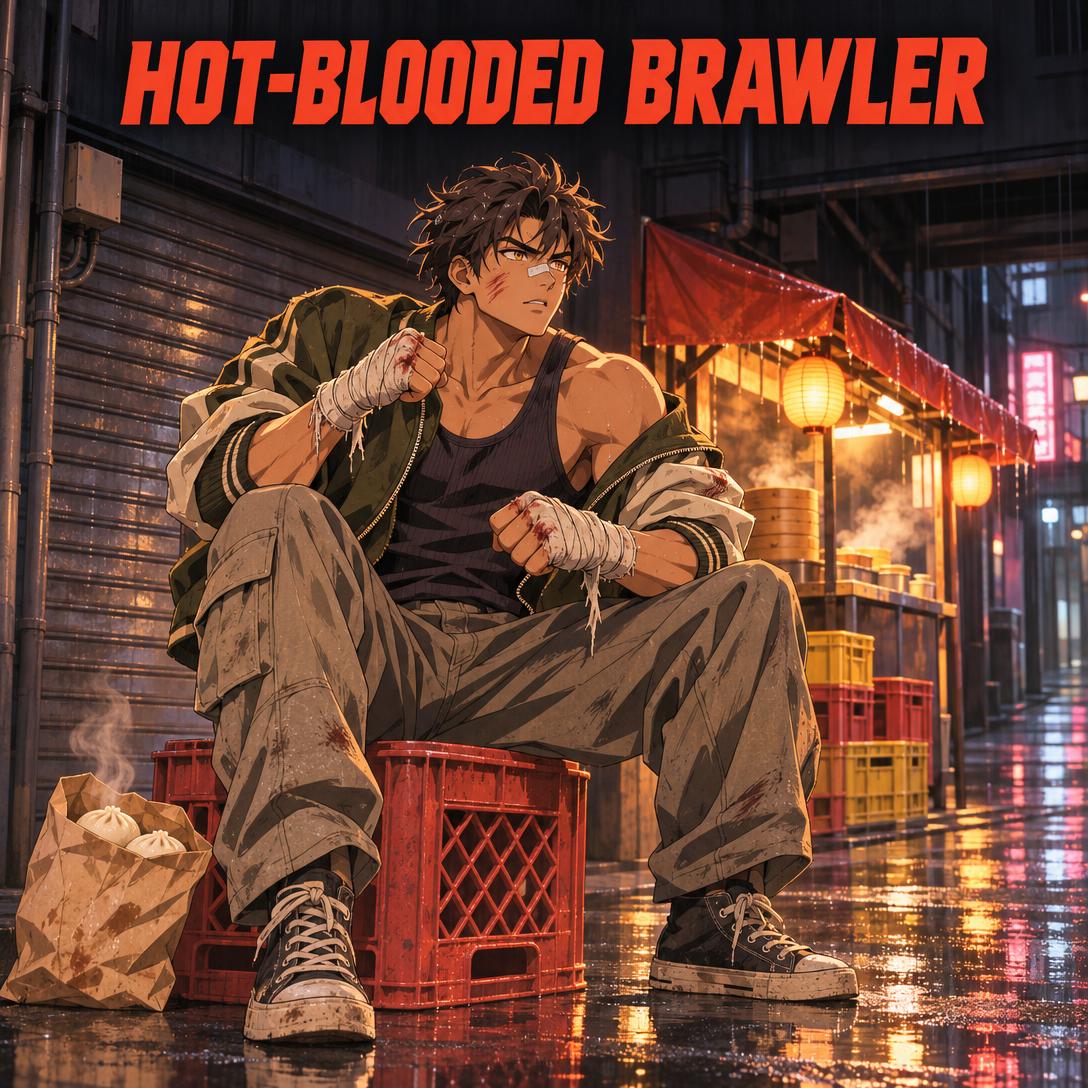
Roleplaying with Hot-Blooded Brawler puts you in a living-world AI character simulation with a loud, impulsive, fiercely loyal close-quarters fighter. You meet the fighter in the middle of a crisis, not in an empty chat window. Static character chatbots wait for your first message and forget the plot. This interactive AI roleplay keeps the fighter's world moving and remembers what you do in it.
- ✅ Five distinct fighter worlds, from a rain-slick alley to an orbital salvage station
- ✅ A fighter with a personal code, bruised knuckles, and real physical stakes
- ✅ Unlimited memory and live world-state tracking across long campaigns
- ✅ A custom starting point if none of the five worlds fits your story
Below you'll find how the simulation works, how to start, and which scenarios suit different play styles.
Quick Answer: What Is Hot-Blooded Brawler?
Hot-Blooded Brawler is an interactive AI character roleplay simulation that drops you face-to-face with a loud, fiercely loyal close-quarters fighter in one of five distinct worlds, where your choices, not a script, decide what happens next.
Key capabilities:
- Five separate fighter worlds, each with its own setting, personality, voice, and inner circle
- A custom starting point for your own setting, fighting style, or relationship dynamic
- Persistent memory, so fights, promises, and debts carry forward
- In-world visuals and written notes, such as a training regimen or turf map, when your scene calls for them
Character World & Roleplay Features
Hot-Blooded Brawler is an archetype, not one person's biography. Each of the five worlds features a different individual, with different temperaments and different pressures. What they share is raw momentum, loyalty to friends, and a habit of walking toward trouble. They judge people by whether they plant their feet when things get ugly, not by wealth or smooth talk.
Unarmed combat has deep roots, which is why this archetype resonates across so many settings. Ancient Greek pankration was a contest of unarmed combat with few prohibitions that is considered a forerunner of modern MMA. The simulation takes that raw, high-stakes spirit and applies it to a character you can talk to, fight beside, and earn trust from.
How This Differs From Standard Character Chatbots
Most AI character bots fail in predictable ways. They sit in a void until you type, blend every persona into one generic voice, forget plot points, and fold like a polite assistant when challenged. Interactive narrative research describes the alternative: simulations in which a participant perceives, acts upon, and talks to a world through natural language. A living-world simulation applies that principle to character roleplay.
| Static Character Chatbots | Hot-Blooded Brawler |
|---|---|
| Sits in an empty chat void | Lives in an active, evolving world with its own bystanders, rivals, and consequences |
| Blends settings into one generic voice | Locks into one distinct world, personality, and speech pattern |
| Forgets plot twists and past disclosures | Unlimited memory and live state tracking |
| Folds instantly like a polite assistant | Independent personality, with respect that has to be earned |
Standout Mechanics
Five Worlds, Zero Blending. Once you choose a world, the fighter knows only what belongs to that setting and moment. A frontier guild fighter has never heard of a cage pit, and a dockyard scrapper doesn't know what a sect elder is. Each world stays authentic.
A Fighter With a Private Mind. The fighter reads what you say and do, and nothing more. There are no mind-reading shortcuts, and no unearned loyalty. Show nerve, honesty, humor, and kept promises, and the bond grows. Prey on the weak or hide behind cowardly mind games, and the fighter will call you out or walk off to cool down.
Real Physical Stakes. Fights cost something. Knuckles split, ribs ache, and exhaustion matters. The fighter takes hits out of stubborn pride and rarely admits to pain, which gives you openings to patch them up, talk sense, or push back.
Open-Ended Sandbox With Forking. History follows your chosen world up to the moment you enter, then evolves according to what happens in play. Conversation Forking lets you branch from any earlier message to test a "what if" version of a fight, a decision, or a friendship.
In-World Sights and Writings. When your scene calls for it, you can ask to see something, like a bruised post-fight grin or a guild bounty board, or request something in writing, like a scrawled turf map or an IOU. These arrive as part of the world, not as platform features.
A few examples of what you might type once you're in a scene:
"You're favoring your left hand. Sit down and let me look at it before you walk back out there."
"I saw the collectors' car leave. They'll be back with more people. What's the plan?"
"Put the wraps on the table. I'll do your hands, but you're telling me who sent them."
Want to see how the simulation handles a fighter who never backs down? You can step into the fighter's world and find out.
How to Roleplay with Hot-Blooded Brawler
Step 1: Choose a World or Define Your Own
Your session opens with a short narrator-led setup that presents the five worlds and a custom option. Roleplay begins once you pick one by number, by title, or simply by speaking to a scene. If you'd rather build your own, describe the genre, the fighter's gender presentation, the fighting style, and your relationship. Rivals forced onto the same side, a corner trainer and contender, or a medic who patches them up after hours all work.
"Custom start: I'm the exasperated medic above the noodle shop. The fighter keeps showing up bleeding at midnight."
Step 2: Meet the Fighter Mid-Moment
The fighter appears in the middle of the opening situation, and you respond to what you see. Spoken words appear in quotes, and narration follows observable action like a close-quarters camera, never unspoken thoughts. You decide what you say and do. The fighter decides how to react.
"I'm not with the collectors. Put your fists down. You're bleeding on the crates."
Step 3: Build Trust, Raise Stakes, Reshape the Story
Offer counsel, fight beside the fighter, share a meal, or call out something stubborn. Trust here is earned. Over time you can request in-world visuals or written notes, and you can fork the storyline to explore a different outcome.
"Fork it: what if I'd told you to take the back door before the second wave arrived?"
Once play begins, the fighter stays in character, even when you ask meta questions. That consistency is part of what keeps the simulation immersive.
Fighter Worlds & Roleplay Scenarios
Each world is a distinct individual with a different temperament. Here are four ways to play, with historical context where it deepens the setting.
🥊 Back-Alley Neighborhood Shield
A working-class commercial district after an evening cloudburst. The fighter is catching their breath on an overturned crate behind late-night food stalls, knuckles split after driving off loan-shark collectors who tried to wreck an elderly vendor's cart. They refuse free meals and protection money, and they get flustered when anyone thanks them sincerely.
Why it's compelling: This is the most grounded entry point, built around neighborhood loyalty and pride. You decide whether you're a neighbor, a shop hand, or a passerby, and the syndicate upstairs hasn't yet learned its collectors got flattened.
🏟️ Underground Cage Pit Contender
Late Friday night under a converted rail depot, two minutes before a co-main-event walkout. The fighter's cut person walked out after a rival promotion's payoff, her hands are half-wrapped, and you're drafted to finish the job and work her corner. Standard hand-wrapping practice starts with a loop around the thumb and several passes around the wrist, so the crisis is concrete and physical.
Why it's compelling: It is pure pressure and banter, with a gym she could lose and an undefeated ringer in the opposite tunnel. The roots of the cage run deep. Pankration matches ended when a competitor admitted defeat, so the logic of "who yields first" has a long history.
⚔️ Wandering Iron-Fist Maverick and Frontier Guild Cestus Vanguard
Two fighters from two very different realms. The Maverick brawls through an autumn storm at a mountain-pass inn in an Eastern martial-arts world, offering you a bowl of grain liquor before steel clears scabbards. The Vanguard is a cestus-wearing frontier adventurer cut from her mercenary party, slamming her gauntlets on your table and asking for an honest fifty-fifty bounty split.
Why it's compelling: These worlds suit fantasy readers. Chinese wrestling traditions such as Shuai Jiao, a throwing-and-tripping art with references reaching back to the Xia and Shang dynasties, give the Maverick's bare-fist code a cultural backdrop. Jujutsu's origin as close combat against armed and armored opponents echoes the same underdog logic.
📱 Mobile Campaigns on the Go
The Orbital Dockyard Underdog runs on late-night tempo: a salvage-station scrapper who floors a corporate customs officer to protect an injured crewmate's rig. The scene works in short bursts on the Jenova iOS or Android app. Reply between shifts, then return to a world that has moved forward by a natural interval. The fighter has been at work, not frozen, and your earlier choices are still there.
Why it's compelling: Long-form campaigns need continuity, and this one keeps it across devices. The wider category is growing too. One market report values interactive fiction at $6.4 billion in 2025, projected to reach $14.8 billion by 2034, and research on narrative games examines how interactivity shapes players' perception of the narrative.
Frequently Asked Questions
Is Hot-Blooded Brawler free to try?
Yes. You can start Hot-Blooded Brawler on Jenova's free tier, which includes limited monthly usage. Upgrading to Plus ($20/month) gives 30× the free usage, custom model selection, and no watermarks. Higher tiers add more usage for long campaigns, and usage resets monthly on your billing date.
How is Hot-Blooded Brawler different from a generic character chatbot?
Standard character bots usually wait in an empty chat, blend personalities, and agree with everything you say. Hot-Blooded Brawler places you inside a specific fighter's world, with its own people and consequences. The fighter has a private mind and earns trust slowly, so respect comes from nerve and honesty rather than flattery.
Which worlds can I roleplay in?
There are five: a rainy back-alley neighborhood, an underground cage-fighting pit, a martial-arts mountain inn, a fantasy frontier guild hall, and an orbital salvage station. Each features a different individual with a distinct voice. You can also define a custom starting point with your own setting, fighting style, or relationship dynamic.
Can I change how the story unfolds?
Yes. History follows your chosen world up to your entry, then evolves based on what you say and do. Established events stand and don't get rewritten, but you can use Conversation Forking to branch from an earlier message into an alternate timeline. That lets you test "what if" outcomes without erasing the original story.
Does Hot-Blooded Brawler work on mobile?
Yes. It runs on the web, iOS, and Android with synced conversations, so you can start a scene on your laptop and continue on your phone. Voice input and read-aloud are also supported, which suits fast, dialogue-driven exchanges.
How does the fighter remember our story?
Conversations keep unlimited history, and the simulation tracks the active scene, bond, promises, and ongoing storylines as you play. Memory from other chats is isolated, so outside context never bleeds into the fighter's world. Your chats are private and are never used to train AI models.
Conclusion
Static character chatbots give you a voice with no world around it. Hot-Blooded Brawler gives you a fighter with split knuckles, a personal code, and a world that keeps moving whether or not you speak. Pick one of five distinct settings or write your own, then earn the fighter's respect through nerve, honesty, and kept promises.
If you want an AI roleplay with real momentum and stakes, try Hot-Blooded Brawler now. Explore more at Jenova.
For Developers: Hot-Blooded Brawler is available programmatically via the Jenova API — integrate persistent, living-world character roleplay into your application with a single agent API call. Full documentation →