AI Horror Manga Generator: Create Terrifying Visual Stories with Consistent Characters and Atmospheric Dread
2026-02-23
The AI horror manga generator has arrived for creators who want to craft nightmares that linger—stories where dread builds across panels, where monsters maintain their terrifying consistency, and where psychological horror unfolds with the visual precision that defines masters like Junji Ito and Umezu Kazuo. Whether you're developing a supernatural thriller, body horror epic, or psychological descent into madness, AI-powered manga tools now deliver what horror demands: atmospheric consistency, disturbing imagery, and the visual grammar of fear.
Why horror manga creators are turning to AI:
- The global manga market is projected to grow from USD 19.35 billion in 2025 to USD 56.38 billion by 2031—a 19.52% CAGR driven by digital platforms and global readership
- Horror/thriller manga represents a significant genre segment within the Seinen category, which targets mature readers seeking psychological depth and visual intensity
- In January 2026, an AI-generated manga claimed the #1 spot on Japan's largest digital platform—proving AI-assisted creation has achieved commercial viability
What you'll learn: How to generate horror manga with AI, maintain monster and character consistency across your entire series, and leverage specialized agents like Jenova's Manga Creator to produce publication-ready horror stories.
Quick Answer: What Is an AI Horror Manga Generator?
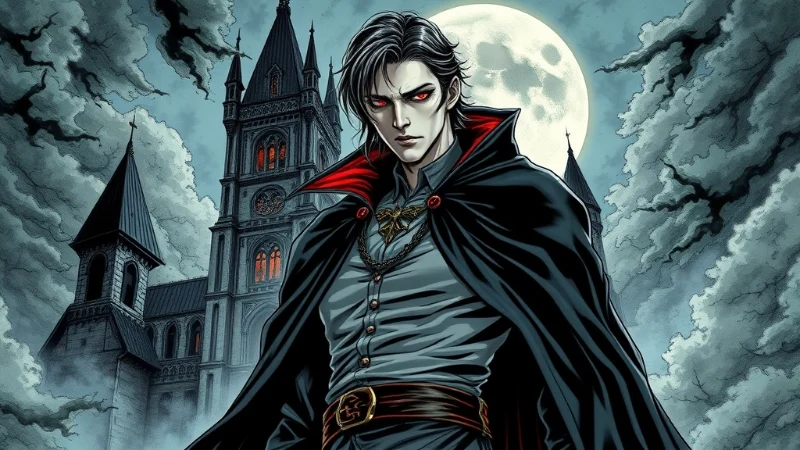
An AI horror manga generator is a specialized tool that transforms text descriptions into sequential manga art—specifically optimized for the horror genre's unique visual demands: atmospheric dread, disturbing imagery, consistent monster designs, and the psychological tension that defines Japanese horror storytelling.
Key capabilities:
- Character and creature consistency: Maintain your monster's exact appearance across 200+ pages of terror
- Atmospheric generation: Heavy shading, cinematic composition, and visual tension building
- Style control: Seinen Dramatic template optimized for horror, thriller, and psychological narratives
- Sequential dread: Panel-to-panel pacing designed for building suspense and delivering shock
- Transformation tracking: Manage body horror progressions, possession states, and visual corruption
Tools like the Manga Creator agent on Jenova specialize in maintaining these elements across long-form serialized horror—essential for stories where consistency amplifies terror.
The Problem: Why Horror Manga Is Uniquely Challenging to Create
Horror manga presents production challenges that exceed even action or romance genres. The visual language of fear requires technical mastery that has historically locked out independent creators.
🎭 The Atmosphere Problem
Horror lives in the details—and those details must remain consistent:
- Shadow consistency: Light sources must behave identically across panels to maintain dread
- Environmental decay: Haunted locations need visual continuity as they transform
- Creature design: Monsters must be recognizable yet disturbing across every appearance
- Psychological states: Character expressions must track their descent into fear or madness
Professional manga artists charge
, with horror pages demanding the higher end due to detailed shading, complex compositions, and the precision required for disturbing imagery. A 200-page horror manga volume costs $10,000-$60,000 in art alone.
👁️ The "Uncanny Valley" of Horror Art
Horror manga requires a specific visual tension—disturbing enough to unsettle, controlled enough to not become unintentionally comedic. According to academic analysis of horror manga, masters like Umezu Kazuo identified that "one of man's greatest fears consists of not being able to understand himself"—a psychological insight that must translate visually across every panel.
Traditional AI image generators fail here. They produce beautiful single images but cannot maintain:
- The exact same monster design across 100 appearances
- Consistent shadow direction for atmospheric continuity
- Progressive visual corruption in body horror sequences
- The specific "beauty-brutality" contrast that defines Japanese horror
⚫ The Seinen Dramatic Challenge
Horror manga typically falls within the Seinen category—mature content requiring:
- Detailed anatomy for body horror sequences
- Heavy shading and cinematic composition
- Psychological depth conveyed through visual storytelling
- Graphic content handled with artistic precision rather than gratuitousness
According to Grand View Research, the manga market is experiencing significant growth in mature genres, with digital platforms enabling content that traditional print distribution restricted.
📱 The Rise of "Dark Shōnen"
The horror manga landscape is evolving. According to industry analysis, 2026 marks "the rise of Dark Shōnen"—manga that embraces body horror and adult themes for a readership where 27.4% are 25 years or older. Works like Chainsaw Man, Jujutsu Kaisen, and Hell's Paradise have normalized graphic horror in mainstream manga, creating unprecedented demand for horror content.
This shift means more creators want to produce horror manga—but the technical barriers remain prohibitive for solo creators.
The Jenova Solution: AI Agents Built for Horror Manga Production
| Challenge | Traditional Approach | AI Horror Manga Generator |
|---|---|---|
| Monster consistency | Single artist for entire project ($10,000+) | Reference sheet system locks in creature design |
| Atmospheric shading | Specialized horror artists ($100+/page) | Seinen Dramatic template with heavy shading |
| Body horror progression | Expensive redesign for each transformation state | Versioned reference sheets tracking corruption |
| Production speed | 3-5 pages per week (solo) | 15-30+ pages per day |
| Style matching | Find artist who captures your horror vision | Seinen template optimized for thriller/horror |
| Long-form projects | Coordination across multiple artists | Persistent story state across 200+ pages |
How the Manga Creator Agent Works for Horror
The Manga Creator on Jenova implements professional horror manga methodology:
Three-Phase Workflow:
-
Setup Phase: Define your horror elements—monster designs, haunted locations, character states (normal → possessed → corrupted). The agent creates reference sheets that lock in exact appearances, including transformation stages.
-
Scripting Phase: Develop your story with mandatory narrative scripting—ensuring each panel builds dread before generation begins. This is where pacing, reveals, and psychological beats get planned.
-
Generation Phase: Produce panels with quality gates that maintain atmospheric consistency and creature accuracy through even the most disturbing sequences.
Horror-Specific Features:
- Seinen Dramatic Template: Detailed anatomy, heavy shading, cinematic composition—optimized for horror/thriller
- Persistent Story State: Track possession progressions, body horror transformations, and psychological deterioration
- Atmosphere Continuity: Maintain shadow direction, environmental decay, and visual tension across chapters
- Plot Memory Engine: Never lose track of which characters know the truth, who has been corrupted, or what horrors have been revealed
Specialized AI Agents for Horror Manga Creation
Manga Creator
Your personal mangaka for crafting complete horror stories. Master visual storytelling, atmospheric dread, and consistent creature design—from one-shots to 200+ page serialized nightmares. The Seinen Dramatic template delivers the heavy shading and cinematic composition horror demands.
Best for: Psychological horror, supernatural thrillers, body horror, long-form serialization
Creative Fiction Writer
Develop your horror manga's mythology, monster lore, and psychological underpinnings before visual production. Three-mode workflow: Planning (plot/character arcs), Writing (polished prose), and Critique (structural feedback). Essential for horror that requires internal logic and escalating dread.
Best for: Story development, horror worldbuilding, psychological depth, mythology creation
Webtoon Creator
Optimized for mobile-first vertical scroll horror content. Perfect for episodic supernatural stories on platforms like LINE Webtoon or Tapas, with strategic cliffhangers and "thumb stop" shock moments. The webtoon format is projected to expand at a 35.62% CAGR through 2031.
Best for: Digital-first horror series, episode-based supernatural stories, mobile optimization
Comic Creator
For creators blending Japanese horror sensibilities with Western comic aesthetics—think Hellboy meets Uzumaki. Supports 200+ page projects with persistent character and creature tracking.
Best for: Hybrid horror styles, Western horror comics, noir horror
Marketing Visual Designer
Create promotional artwork, cover designs, and campaign imagery for your horror manga launch. Generate key visuals that capture your story's dread without spoiling its secrets.
Best for: Cover art, social media assets, crowdfunding visuals
How It Works: Creating Your Horror Manga Step-by-Step
Step 1: Define Your Horror Elements
Start by establishing your story's core visual identity. Horror requires more detailed setup than other genres—your monsters, locations, and transformation states all need reference anchors.
"Create a reference sheet for THE HOLLOW: a supernatural entity that possesses humans. Base form: tall, impossibly thin humanoid silhouette with elongated limbs. No visible face—just a void where features should be. When possessing a victim: the host's eyes become completely black, veins darken and become visible beneath skin, movements become slightly wrong—joints bending at unnatural angles. Full manifestation: the host's body splits open to reveal the Hollow emerging, stretched skin and exposed bone, the void-face now visible."
The Manga Creator generates character reference sheets that lock in these details—including all transformation states—for consistent terror across your entire project.
Step 2: Establish Your Visual Style
Select the aesthetic that matches your horror story's tone:
- Seinen Dramatic: Detailed anatomy, heavy shading, cinematic composition—the default for horror. Think Uzumaki, Tomie, Parasyte
- Shonen Action: For horror with action elements—Jujutsu Kaisen, Chainsaw Man energy
- Shoujo Horror: Soft lines with disturbing content—the contrast amplifies unease. Classic shōjo horā tradition
- Slice-of-Life: For horror that invades the mundane—clean lines make the intrusion of terror more jarring
Step 3: Script Your Horror Sequence
Before generating panels, script the narrative flow. Horror manga requires precise pacing—the build, the reveal, the aftermath:
"CHAPTER 3 - THE FIRST POSSESSION
Page 1: Panel 1 (wide establishing): Night. YUKI's apartment building. One window lit on the third floor. Panel 2 (medium): Yuki at her desk, studying. Normal. Safe. Panel 3 (close-up): Her phone buzzes. Text from KENJI: "Did you hear that noise?" Panel 4 (Yuki's POV): She looks toward her window. Nothing there. Yet.
Page 2: Panel 1 (tight on window): Still nothing. But the reflection is wrong—there's a shape behind her that isn't there in the room. Panel 2 (Yuki turning): She spins around. Empty room. Panel 3 (return to window): The reflection now shows the shape closer. Much closer. Panel 4 (SPLASH): She turns back to the window—THE HOLLOW'S void-face pressed against the glass from outside. Third floor. Nothing to stand on."
Step 4: Generate and Iterate
The agent produces panels matching your script while maintaining atmospheric consistency. Review, request adjustments to shadow direction or creature positioning, and build your pages.
Step 5: Assemble Your Chapter
Compile panels into pages, add dialogue balloons, sound effects (ゴゴゴゴ, ドクン, ザワザワ), and export publication-ready files. For digital distribution, use the PDF Doc Generator to create professional layouts.
Results & Use Cases
👻 Solo Creator: Supernatural Horror One-Shot
Scenario: Writer with a ghost story wants to create a 48-page horror one-shot for portfolio/pitch purposes.
Traditional Approach: Hire horror-specialized artist ($2,400-$14,400), wait 3-6 months for completion, limited revision budget for atmospheric adjustments.
With AI Horror Manga Generator: Use Manga Creator to produce complete horror one-shot in 2-3 weeks. Iterate freely on creature designs and atmospheric elements. Total cost: subscription fee.
🩸 Body Horror Series: Progressive Transformation
Scenario: Creator developing a body horror series where characters progressively transform across 100+ pages.
Traditional Approach: Requires detailed transformation guides, constant artist reference, expensive revision cycles for consistency.
With AI Horror Manga Generator: Create versioned reference sheets for each transformation stage. The persistent story state tracks which characters are at which stage, maintaining visual consistency as the horror progresses.
📱 Digital Publisher: Weekly Horror Webtoon
Scenario: Creator wants to launch horror webtoon with weekly 50-panel episodes featuring consistent supernatural entities.
Traditional Approach: Unsustainable—50 horror panels/week with atmospheric consistency requires full-time artist or team.
With AI Horror Manga Generator: Use Webtoon Creator for vertical-scroll optimized production. Maintain consistent creature designs and atmospheric dread across 100+ episodes. Build audience with sustainable release schedule.
🎬 Studio: Horror IP Visualization
Scenario: Production company needs to visualize horror IP for investor pitch—30 key scenes showing creatures, atmosphere, and visual tone.
Traditional Approach: Commission concept artist ($5,000-$15,000), 6-10 week timeline.
With AI Horror Manga Generator: Generate concept panels in days. Iterate on creature designs, atmospheric elements, and horror choreography until stakeholders approve. Use Marketing Visual Designer for polished presentation materials.
The Horror Manga Renaissance: 2026 Market Context
📈 A Genre Experiencing Unprecedented Growth
The horror manga landscape is transforming:
"Shōnen manga embraces body horror and adult themes in 2026, with the 'Dark Trio' leading a narrative revolution for grown-up readers."
Key market dynamics:
- Digital formats account for 72.12% of consumption—enabling mature horror content that traditional print distribution restricted
- Seinen (mature) manga with horror/thriller themes commands significant market share
- 27.4% of manga readers are 25 or older—a demographic hungry for psychological depth and visual intensity
- AI-generated manga has achieved commercial success—topping Japan's largest e-book charts in January 2026
🎭 The Masters' Perspective
Legendary horror mangaka Junji Ito has expressed concerns about AI, noting that AI can now replicate horror styles effectively. His insight: the future belongs to creators who can "create a story in which the unexpected becomes frightening before AI"—emphasizing that human creativity in horror concept and narrative remains irreplaceable.
This suggests the optimal workflow: human creativity for horror concepts and psychological depth, AI assistance for visual execution and consistency.
📊 The AI Manga Creation Revolution
According to Business Research Insights, the AI Comic Generator Market is projected to reach USD 3.01 billion in 2026 and grow to USD 16.88 billion by 2035 at a 20.6% CAGR.
Mob Psycho 100 manga editor Kazuaki Ishibashi observed: "Readers don't seem to care whether the artist is AI or not. Perhaps it's only the creators themselves who are concerned. Has this era finally arrived? I expect it will explode in popularity this year."
FAQ
Can AI-generated horror manga be published commercially?
Yes. Content created with AI tools like Jenova's Manga Creator can be used commercially under standard subscription terms. Avoid prompting specific copyrighted characters (Sadako, Tomie) or trademarked creature designs. Create original horrors to ensure full commercial rights.
How does the AI maintain monster consistency across a long series?
The Manga Creator uses a reference sheet system—you establish your creature's exact appearance once (including transformation states), and the agent maintains those details across all subsequent generations. This solves the "creature drift" problem that plagues generic AI image tools, even through complex body horror sequences.
What about atmospheric consistency—shadows, lighting, dread?
Horror-optimized agents using the Seinen Dramatic template are trained on manga visual conventions for atmospheric storytelling: consistent shadow direction, heavy shading techniques, and cinematic composition. Specify atmospheric elements in your script—"dim lighting from single overhead source, long shadows"—and the agent maintains consistency.
Can I create body horror with progressive transformations?
Absolutely. Create versioned reference sheets for each transformation stage—Stage 1 (subtle wrongness), Stage 2 (visible corruption), Stage 3 (full manifestation). The persistent story state tracks which stage each character has reached, maintaining visual consistency as the horror progresses.
How does this compare to hiring a human horror artist?
AI horror manga generators excel at speed, iteration, and cost efficiency. Human artists bring irreplaceable creative interpretation, psychological nuance, and stylistic innovation—particularly important for horror's emotional impact. Many creators use AI for drafts, creature design iteration, and background work while commissioning human artists for key splash pages or covers.
What AI models power these tools?
Jenova provides unified access to frontier models including GPT-5.2, Claude Opus 4.5, Gemini 3 Pro, and Grok 4.1—ensuring you're always working with the most capable AI available for both story scripting and visual generation.
Conclusion
The AI horror manga generator has fundamentally changed who can create professional horror manga. The $19+ billion manga market—with horror experiencing a renaissance through the "Dark Shōnen" movement—is no longer gatekept by production costs. Creators with nightmares to share can now produce them.
Whether you're building the next great supernatural thriller, developing a body horror epic, or crafting psychological terror that lingers long after the final page, specialized AI agents like the Manga Creator, Creative Fiction Writer, and Webtoon Creator provide the production pipeline you need.
Your monsters will stay consistent. Your atmosphere will maintain its dread. Your horror will finally escape your imagination and haunt your readers.
The nightmares in your head are waiting. Start creating at Jenova.