AI Horror Adventure: Survive Living Nightmares That Never Repeat (August 2026)
2026-08-06
An AI horror adventure traps you in a story that adapts to your fear — the thing in the hallway moves because of what you did, not because a designer placed a trigger volume there in 2019. On Jenova, you can wake in a mansion with no memory of arriving, investigate a shuttered asylum where something went badly wrong, or run an entirely custom nightmare that remembers every mistake you made last session. Scripted horror games teach you their patterns; an AI-driven horror adventure never gives you the same one twice.
✅ No memorized scares — every threat, timing, and reveal is generated live ✅ Persistent memory so consequences and dead characters stay dead ✅ Any horror subgenre — gothic, cosmic, psychological, survival, folk, found-footage ✅ Web, iOS, and Android with full feature parity for late-night sessions anywhere
To understand why this matters, it helps to look at what actually kills horror as a genre — the second playthrough, the coordination cost of tabletop horror, and the way general-purpose AI collapses tension the moment it forgets who's already dead.
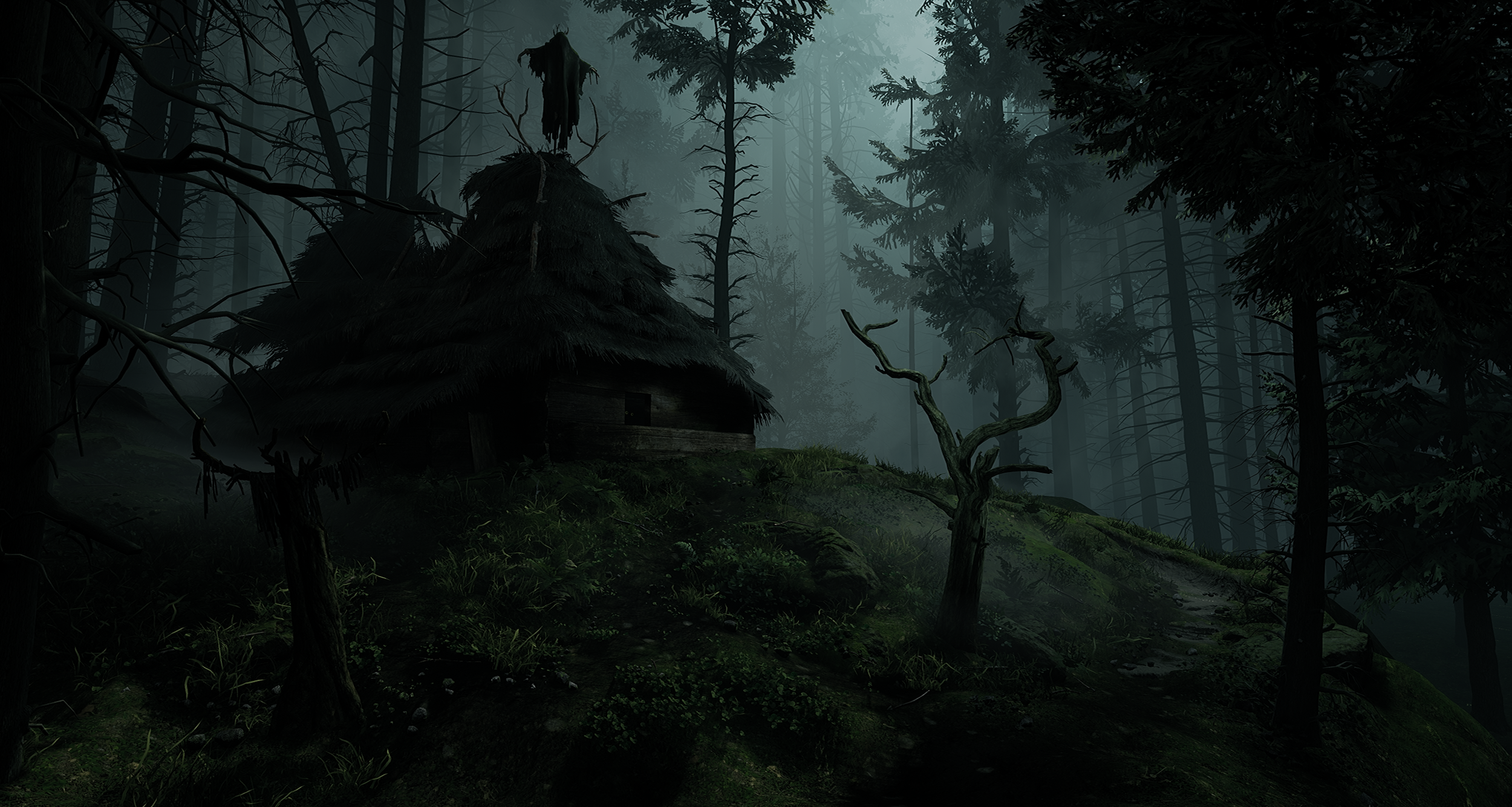
Quick Answer: What Is an AI Horror Adventure?
An AI horror adventure is an interactive horror story where an AI generates the setting, threats, and plot in real time from your choices, so scares are never scripted and no two playthroughs unfold the same way. There is no trigger you can memorize and no safe route you can learn.
Key capabilities:
- Unscripted dread — an AI narrator improvises threats, pacing, and reveals based on what you actually do
- Persistent consequence memory — deaths, injuries, and betrayals carry forward across sessions
- Custom protagonists — build characters with the specific vulnerabilities the story will exploit
- Any subgenre — gothic haunting, cosmic horror, psychological breakdown, survival, folk horror
The Problem: Why Horror Games Stop Being Scary
Horror is the genre most damaged by scripting, because fear depends almost entirely on uncertainty. Once you know the monster spawns after the third door, the monster is a chore. Every conventional horror game has a fixed number of scares authored during production, and every one of them has a shelf life measured in a single playthrough. Meanwhile, the wider industry is pouring resources into generative systems precisely because static content is expensive and finite.
The AI in Games Market, valued at USD 3.4B in 2026, is projected to reach USD 6.73B by 2030 at an 18.6% CAGR — Research and Markets
AI tools could create a $22 billion profit opportunity for video game companies by lowering production costs and shortening development timelines — Morgan Stanley Research
The generative AI in gaming market is growing from $1.79 billion in 2025 to $2.21 billion in 2026 — The Business Research Company
The broader AI in games market is expected to expand by USD 34.1 billion between 2026 and 2030, at a 40.7% CAGR — Technavio
But getting a horror experience that actually stays frightening remains difficult:
- Scripted horror games are neutralized on the second playthrough — you know where everything is
- Tabletop horror campaigns require scheduling four to six adults for a recurring night
- Solo horror play means self-adjudicating the threats that are supposed to surprise you
- Custom horror settings — a cursed town, a haunted ship, an infected station — rarely become playable
- General AI chat forgets who died, breaking the one rule horror can't afford to break
Scripted Horror Has a One-Playthrough Shelf Life
Fear is a function of not knowing. Every authored jump scare, chase sequence, and monster closet is a fixed asset in a fixed location, so the second run through a horror game is a tour, not an ordeal. This is a structural problem, not a design failure — the medium has always required the player to be surprised, and scripted content can only surprise once. Research on how horror games achieve immersion consistently returns to unpredictability and threat uncertainty as core mechanisms; studies on the pathways to immersion in horror games examine exactly which strategies sustain that state.
Tabletop Horror Carries a Coordination Tax
A human game master can improvise a genuinely unnerving scenario, which is why tabletop horror works so well — and why it so rarely survives. Horror campaigns need momentum and consistent atmosphere, and both die when the group can only meet every third week. The GM also absorbs the entire preparation burden: floor plans, NPC voices, escalation timing, and the discipline to withhold information.
Solo Horror Can't Surprise Its Own Player
Solo tabletop and solo journaling horror exist, but they carry an inherent contradiction: you cannot be startled by a threat you designed and rolled for. The moment you're both author and victim, the dread flattens into bookkeeping.
Generic AI Chat Breaks the Rules That Make Horror Work
Horror runs on constraint. The lights stay out. The wound doesn't heal. The person you left in the basement is not upstairs three scenes later. General-purpose chatbots routinely lose track of established state, resurrect dead characters, and soften threats to keep the interaction pleasant — which is fatal to the genre. The core technical problem is narrative state modeling, an area studied for years in interactive narrative research, including Disney Research's work on reasoning about narrative progression and user experience and academic reviews of human–AI co-creativity in storytelling.
This is exactly what Jenova's horror and roleplay agents were built for.
The Jenova Solution: A Complete Horror Adventure Stack
Jenova treats AI horror adventure as a full workflow rather than a single chat window. You get self-contained horror scenarios when you want structure, an open-ended game master when you want to build your own nightmare, and creative agents for the characters and lore around it — all backed by persistent memory that refuses to forget what happened to you.
| Traditional Approach | Jenova |
|---|---|
| Fixed scares authored years in advance | Threats generated live from your choices |
| Neutralized on the second playthrough | Never the same run twice |
| Campaign dies when the group's schedule breaks | Play solo, at 2 AM, at your own pace |
| Hours of GM prep for atmosphere and pacing | Zero prep — the dread starts immediately |
| Chatbot forgets who died | Persistent cross-session memory for consequences |
Ready-Made Nightmares You Can Open Right Now
If you want horror without setup, Jenova has self-contained scenario games. In The Mansion, you wake with no memory of how you arrived — every room hides secrets, every shadow could be your last, and the question is whether you uncover the truth before it uncovers you. In The Asylum, you're an investigator sent to a shuttered psychiatric institution where something went wrong, and every ward holds a piece of a story someone tried to bury.
Both are structured, contained, and immediately playable — ideal for a single tense evening rather than a months-long campaign.
Open-Ended Horror With Persistent Consequence
For nightmares of your own design, the Roleplay Game Master runs your horror campaign as an improvising narrator with unlimited memory and character consistency. It holds the state of your scenario — what's still out there, who you abandoned, which door you jammed shut — and generates escalation that follows from your actual behavior rather than a scripted timeline.
"Folk horror, rural, no phone signal. I'm a land surveyor who just noticed every house in the village has the same thing nailed above the door. Start the moment I understand what it is."
"Jump forward six hours. I've been hiding in the crawlspace and it's gone quiet. Don't tell me whether that's good."
Characters Built to Be Vulnerable
Horror protagonists work when their weaknesses are specific. The Character Creator handles quick-gen or guided builds — motivations, flaws, history, relationships — with portraits to anchor how your cast looks before the story starts taking them apart.
"Build me a paramedic with fifteen years on the job who has stopped being afraid of bodies but is terrified of being alone. Give her a reason she can't leave the building."
Lore, Prose, and the Story Beneath the Story
Horror lives on implication — the history you only half-uncover. The Creative Fiction Writer turns sessions into readable fiction and develops the buried history your setting needs, with deep research so your folklore, medical detail, or period setting is grounded rather than generic.
Design It Properly If It Grows
If your horror scenario starts becoming an actual project, the Game Designer Assistant covers brainstorming, systems analysis, documentation, and concept art across every genre and platform — including the sanity, resource, and escalation mechanics horror depends on.
Any Model, Any Session
Narrative voice matters enormously in horror. Jenova offers always-current access to the newest models from OpenAI, Anthropic, Google, DeepSeek, xAI, and more, with no vendor lock-in — switch mid-campaign for a colder, sparser narrator without losing your story's memory.
Specialized AI Agents for Horror Adventure
🕯️ The Mansion
The fastest entry into AI horror. In The Mansion, you wake with no memory of how you arrived. Every room hides secrets. Every shadow could be your last.
- Amnesia premise with escape stakes and mounting revelation
- Room-by-room pacing that rewards careful exploration
- Self-contained — playable in a single evening
🏚️ The Asylum
For investigation-driven dread. In The Asylum, you're an investigator sent to a shuttered psychiatric institution — but something went wrong, and every ward hides secrets.
- Institutional horror with a buried, discoverable story
- Escalating tension tied to what you choose to uncover
- Strong pick for players who prefer mystery over chase sequences
👁️ Roleplay Game Master
The engine for custom nightmares. The Roleplay Game Master delivers immersive roleplay with unlimited memory and perfect character consistency, plus complete creative freedom over any scenario you imagine.
- Improvises threats, pacing, and consequences in real time
- Holds NPC behavior and world state steady across long campaigns
- Adapts from slow psychological dread to relentless survival horror
🩸 Character Creator
Your cast of victims and monsters. Character Creator handles quick-gen or guided builds for roleplay, fiction, and original characters, with media research and portraits across genres.
- Full builds: backstory, motivation, flaws, and exploitable fears
- Visual portraits for protagonists, NPCs, and antagonists
- Works for a single survivor or an entire doomed household
📖 Creative Fiction Writer
For everything written around the horror. The Creative Fiction Writer is a storytelling partner across any genre, with deep research for authentic worlds and editorial insight from first draft to final manuscript.
- Turn session logs into polished horror prose
- Build folklore, case files, diaries, and in-world documents
- Structural feedback on dread pacing, reveals, and endings
🔪 Game Designer Assistant
For turning a scenario into a real project. The Game Designer Assistant provides brainstorming, systems analysis, documentation, and concept art with expertise across every genre, platform, and regional market.
- Design sanity, resource scarcity, and escalation systems
- Produce concept art and design documentation
- Genre and market expertise for original horror projects
Try any of these free — no credit card required.

How It Works
Step 1: Pick a Ready Nightmare or Build Your Own
For immediate horror with structure, open The Mansion or The Asylum and start. For something custom, open the Roleplay Game Master and set the subgenre, constraints, and your role in one message.
"Psychological horror, single location, unreliable narrator. I'm house-sitting a place I've been to a hundred times and something about the layout is wrong. Begin in the hallway."
Step 2: Define Who You're Playing
Horror needs a specific person to happen to. The Character Creator turns a rough concept into a realized character with motivation, flaws, and visual reference.
"Three versions of a night-shift security guard who can't afford to lose this job. Different reasons in each for why he won't just walk out."
Step 3: Play, and Let the Consequences Stick
Describe your actions in plain language. The narrator resolves outcomes, escalates pressure, and lets damage accumulate. If you break your ankle on the stairs, you limp for the rest of the story — nothing resets for your convenience.
"I don't turn around. I keep walking and I count my steps out loud so I can hear something other than that."
Step 4: Develop What Survived
Take what emerged and build on it. Hand the session to the Creative Fiction Writer to draft it as horror fiction, or use the Game Designer Assistant to formalize your scenario into a real design document.
Step 5: Come Back — It Remembers
Persistent memory means your story is waiting exactly as you left it, with every wound, missing person, and unopened door intact. Continue on your phone, pick up on desktop; settings and history sync across devices.
Results & Use Cases
📊 The Player Who Has Finished Every Horror Game
Scenario: You've played the classics and the indies, and nothing surprises you anymore because you can read level design.
Traditional Approach: Rewatch someone else's playthrough and hope for secondhand tension.
Jenova: The Roleplay Game Master generates threats you've never seen, in configurations no designer authored, with no memorizable triggers.
- No spawn points to learn, no safe routes to discover
- Subgenre, intensity, and pacing adjustable mid-story
- A fresh scenario every session, indefinitely
💼 The Horror GM Who Needs Prep Help
Scenario: You run a tabletop horror group and need floor plans, doomed NPCs, and escalation beats faster than you can write them.
Traditional Approach: Hours of weekly prep, or improvising thin atmosphere at the table.
Jenova: Generate a full NPC roster with the Character Creator, then pressure-test escalation and sanity mechanics with the Game Designer Assistant.
- Complete NPCs with motivations, voice, and secrets in minutes
- Pacing and encounter balance feedback for horror specifically
- Reusable location and lore documents for your campaign
📱 The 1 AM Session
Scenario: You're in bed, the house is quiet, and you want twenty-five minutes of genuine dread rather than a scrolling feed.
Traditional Approach: Boot a console, sit through a loading screen, wake the household.
Jenova: Full feature parity across iOS and Android means The Mansion is one tap away, with the same memory and no setup.
- Same story, same state, any device
- Ideal format for short, high-tension sessions
- Text-driven horror that works in a dark, silent room
🎯 The Worldbuilder With a Cursed Town Nobody Has Visited
Scenario: You've built a horror setting — a town with a history, rules about what happens after dark, a founding incident nobody discusses — and it has never hosted a story.
Traditional Approach: The setting stays a document. Nobody ever goes there.
Jenova: Attach your documents as a knowledge base so agents respond grounded in your canon, then run scenarios inside it with the Roleplay Game Master.
- Upload lore and rules for canon-accurate, consistent horror
- Play inside your own setting instead of a generic haunted house
- Develop the parts you never finished with the Creative Fiction Writer
FAQ
Is AI horror adventure free to play on Jenova?
Yes. The Free tier includes all core features with limited monthly usage — enough to finish scenarios like The Mansion or The Asylum and test several agents. Paid tiers start at $20/month for 30× the usage, custom model selection, and no watermarks on generated content. Usage resets monthly on your billing date with no daily caps.
How is this different from a traditional horror game?
Traditional horror games are neutralized once you learn where the scares are, because every trigger was placed before release. An AI horror adventure generates threats in response to your specific behavior, so there's no pattern to memorize. The Roleplay Game Master also remembers your story across sessions, so injuries and losses stay permanent.
Will the AI forget who died between sessions?
No — and that matters more in horror than any other genre. Jenova provides unlimited chat history and persistent cross-session memory, so deaths, wounds, missing characters, and unresolved threats carry forward. You can also attach setting documents as a knowledge base to keep responses inside your established rules.
Can I create my own horror scenario and characters?
Yes. The Character Creator builds detailed protagonists and antagonists with portraits, while the Creative Fiction Writer develops folklore, case files, and prose. You can also build a fully custom agent in minutes with your own instructions, preferred model, and private knowledge base.
Which horror agent should I start with?
If you want structure and a defined ending, start with The Mansion for a haunted-house mystery or The Asylum for institutional investigation horror. If you'd rather define your own subgenre, setting, and rules, start with the Roleplay Game Master.
Does it work on mobile?
Yes — there's full feature parity across web, iOS, and Android, with state-of-the-art speech-to-text and settings that sync across devices. Text horror is particularly well suited to a phone in a dark room, and you can start on desktop and continue on mobile without losing context.
Conclusion
Horror's oldest problem was never a lack of imagination — it was authorship. Someone had to decide in advance where the monster waits, and the moment you learn that answer, the fear is gone permanently. AI horror adventure removes the pattern entirely. The threat is generated as you play, the story remembers every wound and every abandoned ally, and the dread lasts as long as you're willing to keep going rather than as long as the content budget allowed.
Whether you want a self-contained nightmare tonight, a persistent horror campaign that follows you for months, or a way to finally set a story inside the cursed place you built years ago, the tools are here. Wake up in The Mansion, investigate The Asylum, build your own with the Roleplay Game Master, or explore the full agent library at Jenova.
For Developers: Every agent in this article is available programmatically via the Jenova API — build interactive narrative, character generation, and persistent-memory storytelling into your application with a single integration. Full documentation →