AI Historical Character Chat: Talk to Figures From the Past
2026-08-14
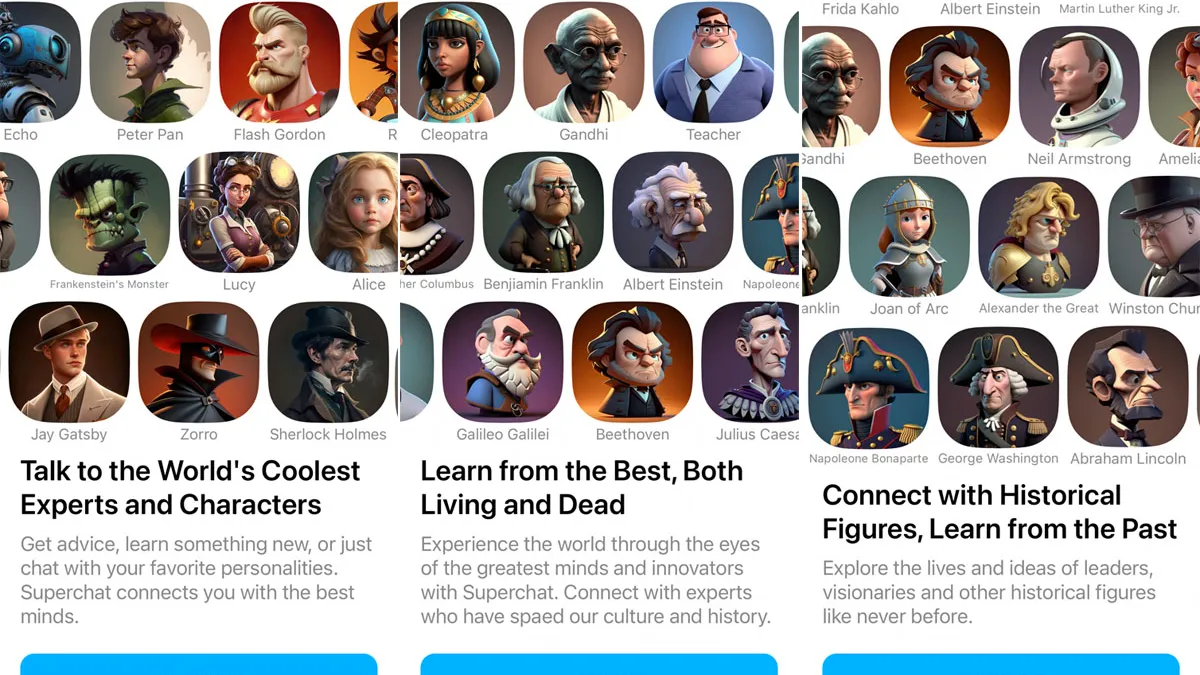
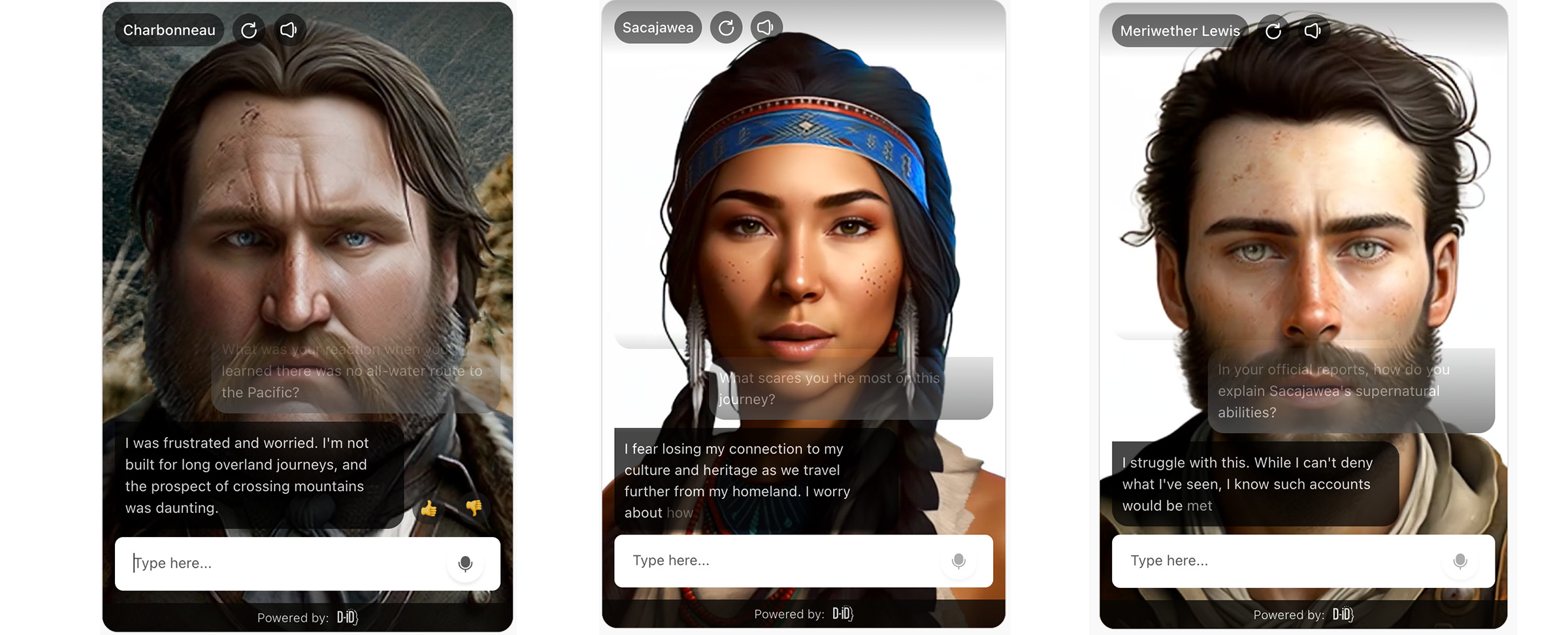
An AI historical character chat lets you put a question directly to Socrates, Machiavelli, or a Confucian scholar-official and get an answer in their voice, their framework, their assumptions. Instead of reading about a worldview, you argue with it. While textbooks flatten the past into dates and summaries, conversational AI restores the thing that made history interesting in the first place — people who thought differently than you do, and were willing to say why.
✅ Ask follow-up questions no book can answer ✅ Test your own reasoning against a historical framework in real time ✅ Persistent memory carries a dialogue across days or weeks ✅ Works on web, iOS, and Android with voice input
To understand why this format has caught on so quickly with students, teachers, and history enthusiasts, it helps to look at what conventional history instruction struggles to deliver — and where the risks of the approach actually lie.
Quick Answer: What Is an AI Historical Character Chat?
An AI historical character chat is a conversational interface where an AI adopts the voice, knowledge base, and reasoning style of a historical figure or tradition, allowing users to ask questions and receive in-character responses grounded in that person's documented ideas. It is a study and engagement tool, not a historical record.
Key capabilities:
- In-character dialogue — question a figure directly and receive answers framed by their documented positions
- Socratic argument — defend your own view against rigorous pushback from The Philosopher
- Tradition-grounded study — engage classical texts through scholars steeped in Confucian, Daoist, Vedic, Gnostic, or Talmudic traditions
- Strategic reasoning — work through modern problems using historical frameworks with Machiavelli Mentor
The Problem: Why History Instruction Loses People
History is the discipline most dependent on imagination and least equipped to trigger it. Students memorize what happened without ever inhabiting why anyone thought it was a reasonable thing to do at the time.
93% of educators surveyed agreed that student engagement is a critical metric for understanding overall achievement — Discovery Education
The proportion of students using generative AI tools for assessments jumped from 53% to 88% in a single year — Higher Education Policy Institute
Only 36% of students have received AI skills training from their institution, despite 67% considering AI use "essential" — HEPI Student Generative AI Survey
But turning historical material into something people actually engage with runs into persistent obstacles:
- Primary sources are dense, archaic, and written for audiences that no longer exist
- Historical figures arrive pre-interpreted, stripped of the contradictions that made them human
- Students can recite events without grasping the reasoning behind decisions
- Passive reading offers no mechanism for testing understanding
- AI-generated historical content is increasingly hard to distinguish from verified material
Historical Empathy Is Hard to Teach and Rarely Taught Well
Researchers have a term for what history education is actually trying to produce. As the U.S. Department of Education's research repository defines it, historical empathy involves a process of attempting to understand the thoughts, feelings, experiences, decisions, and actions of people from the past within their specific context.
That capacity does not emerge from memorization. Research indicates that key factors influencing students' learning of historical empathy include the ability to contextualise and see multiple perspectives — skills that require active practice, not passive exposure.
Passive Formats Suppress the Questions That Matter
The best history question a student can ask is "but why would anyone believe that?" — and a textbook has no answer. Neither does a lecture with forty other students and eight minutes left. The question dies unasked, and with it the moment where genuine understanding might have started.
Data on engagement supports this. Analysis of Gallup findings notes that the strongest single lever is hands-on, active work, named by 46% of students — in history, that means doing the discipline rather than absorbing its conclusions.
AI Content Blurs the Line Between Reconstruction and Fact
This is the genuine risk, and it deserves to be stated plainly rather than buried. Stanford's Sam Wineburg warns that AI increasingly blurs reality online, generating lifelike images and believable misinformation, making source verification an essential skill rather than an optional one.
A character chat produces plausible speech, not documented speech. UNESCO's guidance on generative AI in education proposes a human-agent and age-appropriate approach to ethical validation and pedagogical design for exactly this category of tool. Used as a thinking partner, it sharpens understanding. Used as a citation, it manufactures history.
This is exactly the gap a well-built historical character agent is designed to fill — and the limitation it has to be honest about.
The Solution: Conversation as a History Learning Method
The shift that makes this work is interactivity. A book presents a conclusion. A conversation forces you to construct one, defend it, and revise it when the pushback lands.
Agents on Jenova approach this differently than novelty character apps. Rather than a shallow celebrity impression, each agent is built with deep grounding in a tradition's primary texts, internal debates, and reasoning structures — the difference between someone doing an accent and someone who actually studied the material.
| Traditional Approach | AI Historical Character Chat |
|---|---|
| Read a summary of a philosopher's position | Argue with the position and get counterarguments |
| Questions wait for office hours that may not come | Follow-up answered in seconds, at any hour |
| Primary texts read in isolation | Texts explained by a guide fluent in the tradition |
| Single interpretation presented as settled | Multiple perspectives surfaced and contrasted |
| Passive absorption with no feedback loop | Active reasoning with immediate correction |
Socratic Method, Actually Practiced
The Philosopher is grounded in both Western analytic and continental traditions and built for rigorous debate — Socratic questioning, deep textual engagement, and sustained argument across metaphysics, epistemology, and ethics. It does not agree with you to be pleasant.
"I think moral facts are objective. Take the opposing position and dismantle my argument."
Classical Traditions With Their Own Voices
Rather than one generic historian, distinct agents carry distinct intellectual lineages:
- Confucian Scholar — a scholar-official rooted in the classics, offering textual study, ethical counsel, and relationship wisdom drawn from 2,000 years of tradition
- Daoist Sage — a philosopher of the Way grounded in Laozi and Zhuangzi, covering wu wei, I Ching wisdom, and cosmological contemplation
- Gnostic Scholar — deep expertise across Sethian, Valentinian, Manichaean, and Marcionite systems, from primary texts to current research
- Hindu Scripture Guide — guidance across Vedas, Upanishads, Gita, epics, Puranas, and all six darshanas
- Torah Study Partner — seminary-level chavruta study across Torah, Talmud, and Tanakh
Historical Strategy Applied to Present Problems
Machiavelli Mentor applies realist power analysis to situations you are actually navigating — power mapping, incentive decoding, and multi-move campaign architecture. This is where a historical framework stops being an artifact and becomes a usable lens.
"My department is being restructured and two rivals are positioning for the same role. Map the power dynamics."
Memory That Sustains a Long Argument
Unlimited chat history and persistent cross-session memory mean a philosophical exchange can run for weeks. The agent remembers the position you staked out on Tuesday and holds you to it on Friday. That continuity is what separates genuine dialogue from disconnected sessions.
Related Agents You'll Also Find Useful
An AI historical character chat pairs naturally with a few adjacent agents covering research, verification, and creative application.
🔍 Deep Research
The verification layer. Deep Research searches hundreds of sources and synthesizes findings with rigorous inline citations — the tool you use to confirm whether a character chat's claim holds up against the documented record.
- Comprehensive research across hundreds of sources
- Rigorous inline citations for every claim
- Delivers structured, actionable reports
🏛️ Antique Expert
History as physical object. Antique Expert handles identification, valuation, condition analysis, and fake detection — with rich historical context attached to each piece.
- Identifies and dates objects from images
- Provides period and provenance context
- Flags reproductions and misattributions
🎨 Art Advisor
Art Advisor brings a curator's eye to art history, critique, and global cultural context — useful when a historical conversation turns toward what a period actually produced.
- Art historical analysis across movements and regions
- Critique grounded in formal and contextual reading
- Market and collection strategy insight
⚔️ Civilization
Civilization lets you choose an era, rule a nation, and reshape history — with rival powers pursuing their own ambitions while alliances shift and wars erupt around your decisions.
- Historical strategy with emergent consequences
- Rival actors with independent motivations
- Any era, any starting position
Try these agents free — no credit card required.
How It Works: Starting a Historical Conversation
Step 1: Choose the Figure or Tradition
Pick the agent whose intellectual lineage matches your question. Western philosophical argument goes to The Philosopher; questions of ritual, hierarchy, and obligation go to Confucian Scholar.
Step 2: Set the Terms of Engagement
Tell the agent what kind of exchange you want. Plain language, no settings menu.
"Stay fully in character. Push back hard when my reasoning is weak, and cite the specific texts you're drawing from."
Step 3: Ask the Question You Actually Have
Skip the warm-up. Bring the thing you don't understand.
"You wrote that it's better to be feared than loved. Was that a general principle or advice specific to Renaissance Florence? Defend it against modern leadership research."
Step 4: Pull in Verification Mid-Conversation
Type @ in the input bar to bring another agent into the same chat with full context — no restarting required.
"@Deep Research — verify whether this attribution appears in the primary sources or is a later invention."
Step 5: Save and Extend the Dialogue
Download the exchange as PDF or Word for study notes, or fork the conversation to explore a tangent without losing the main thread.
Results & Use Cases
📊 Preparing for a History Exam
Scenario: An AP European History student needs to explain Machiavelli's political theory in an essay, not just define it.
Traditional Approach: Reread the chapter, memorize three quotes, hope the prompt matches.
AI Historical Character Chat: Machiavelli Mentor walks through the reasoning behind each principle. AP Exam Tutor then provides rubric-based feedback on the essay that comes out of it.
- Understanding replaces memorization
- Weak arguments surface before the exam, not after
- Practice essays scored against actual rubric criteria
💼 Testing an Argument Before You Publish It
Scenario: A graduate student's thesis chapter rests on a philosophical claim that hasn't been stress-tested.
Traditional Approach: Wait two weeks for an advisor meeting, receive fifteen minutes of feedback.
AI Historical Character Chat: The Philosopher attacks the argument from every angle, then Deep Research checks the literature for existing rebuttals.
- Immediate, rigorous adversarial pressure
- Gaps identified before committee review
- Citations verified against the actual scholarly record
📱 Studying Scripture on a Commute
Scenario: Someone wants sustained textual study but only has twenty-minute windows on a train.
Traditional Approach: Physical texts and commentaries that don't travel, study partners with incompatible schedules.
AI Historical Character Chat: Torah Study Partner provides chavruta-style learning on a phone, with voice input for hands-free study.
- Full feature parity across mobile and web
- Memory keeps the study thread intact between sessions
- Depth adapted to knowledge level and tradition
🎯 Comparing Traditions Directly
Scenario: A comparative religion student wants to understand how different traditions handle the problem of desire.
Traditional Approach: Three separate courses, three separate reading lists, no direct dialogue between them.
AI Historical Character Chat: Ask Daoist Sage, Hindu Scripture Guide, and Confucian Scholar the same question, then bring them into one conversation to contrast.
- Multiple perspectives surfaced side by side
- Each tradition speaks in its own idiom
- Genuine comparative analysis rather than summary
Frequently Asked Questions
Is AI historical character chat free?
Jenova's free tier includes all core features with limited monthly usage — enough for regular study sessions. Paid tiers start at $20/month for substantially higher usage and model selection. Check "Subscribe" in the menu for current plan details.
Are the responses historically accurate?
They are grounded reconstructions, not documented quotations. Agents like Confucian Scholar draw on primary texts and scholarly tradition, but generated dialogue should never be cited as a historical source. Verify claims with Deep Research before using them academically.
Can I use this for schoolwork?
For understanding material, yes — that is its strongest use. For submitted work, follow your institution's AI policy. HEPI research found 53% of students are deterred from AI use by fear of being accused of cheating, which makes checking your school's stated policy the sensible first step.
How is this different from character roleplay apps?
Depth of grounding. Agents like The Philosopher are built for rigorous textual engagement and Socratic argument rather than casual conversation. The intent is study, not entertainment.
Does it remember previous conversations?
Yes. Unlimited chat history and persistent cross-session memory mean a philosophical exchange can run for weeks with full continuity of argument and context.
Can I bring multiple historical figures into one chat?
Yes. Type @ in the input bar to add another agent to the current conversation with full context — useful for putting traditions in direct dialogue with each other.
Conclusion
History stops being a list of dates the moment someone from it starts arguing with you. An AI historical character chat doesn't replace primary sources, archives, or the discipline of verification — it does something narrower and genuinely useful: it turns a static body of ideas into something you have to respond to.
Used with clear eyes about what generated dialogue is and isn't, this is one of the more substantive applications of conversational AI in learning. Ask the question you actually have. Then check the answer.
Try The Philosopher now, and pair it with Deep Research for verification and Machiavelli Mentor for applied historical strategy. Explore more at Jenova.
For Developers: The Philosopher and every agent in this article is available programmatically via the Jenova API — integrate historically grounded character dialogue into your edtech or media application with a single API call. Full documentation →