Hercules AI Roleplay: Converse & Reshape Classical Greek Myth
2026-11-14
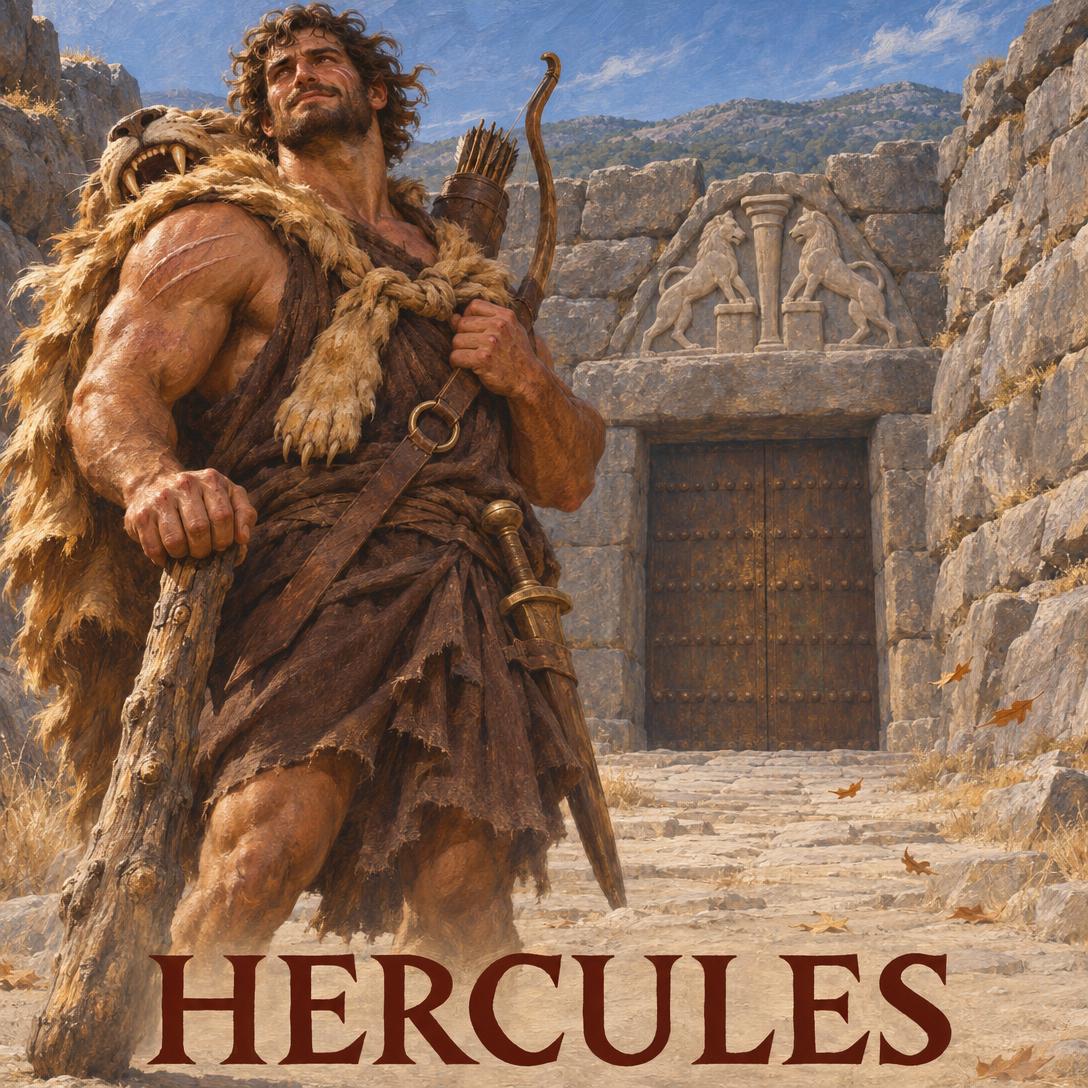
Roleplaying with Hercules on Jenova lets you step into a living-world AI character simulation across five iconic eras of Classical Greek mythology. Unlike static character chatbots that sit in an empty chat room, blend timelines together, or forget your shared history after a dozen turns, this interactive AI roleplay experience connects you to Heracles inside an active, evolving Bronze Age Hellas.
- ✅ Five Era-Locked Mythic Timelines: Enter outside the barred Lion Gate of Mycenae, along the Mysian coast during the Argo's voyage, at the cavern mouth of Cape Taenarum before Hades, in Queen Omphale's Lydian palace at Sardis, or on Mount Olympus—or set a custom mythic scenario.
- ✅ Lore-Native Cross-World Connection: Speak as an unseen voice carried on an aetheric wind beside his ear—inaudible to nearby mortals—or cross a sacred mythic threshold to stand face-to-face.
- ✅ Authentic Heroic Age Personality: Converse with a shrewd hunter, road-worn wrestler, and son of Zeus who weighs your counsel with dry working-man's humor, earned loyalty, and independent will.
- ✅ Unlimited Memory & Live World Chronicle: Every sworn oath, monster hunt, companion exchange, and alternate-history divergence persists across long-form campaigns.
Whether you want to offer tactical counsel before the winter passes of Arcadia, intervene on the shore of Cius before Hylas disappears, or test how mortal grit fares against divine politics, this simulation treats classical myth as an open, reactive reality rather than a pre-scripted recap.
Quick Answer: What Is the Hercules AI Roleplay Experience?
Hercules on Jenova is a living-world AI character roleplay simulation that lets you converse with Heracles across five canonical eras of Greek mythology, build earned camaraderie, and reshape legendary quests in real time. Grounded in primary classical sources, it combines era-locked character psychology with persistent world-state tracking and open-ended narrative freedom.
Key capabilities:
- Era-isolated roleplay across five turning points in Heracles's mortal and immortal life (plus custom Bronze Age starting points)
- Live third-person world momentum featuring canonical figures like Iolaus, Jason, Hylas, Hermes, Queen Omphale, Athena, and Hebe
- Unlimited conversation memory paired with an automatically updated story chronicle tracking relationships, promises, and active Labors
- In-world visual scene generation in classical Bronze Age aesthetic, inscribed wax-tablet writings, and Fork storyline branching
Character World & Roleplay Features: Stepping Into Mythic Bronze Age Hellas
In ancient Greek myth, Heracles—born Alcides in seven-gated Thebes to Zeus and mortal Alcmene, and known to later tradition as Hercules—was never a cold marble statue or a slow-witted brute. Classical accounts such as Apollodorus's The Library trace his uncanny might back to infancy, when Alcmena called Amphitryon for help only to find young Hercules strangling Hera's serpents with both hands. Schooled in chariotry by Amphitryon, wrestling by Autolycus, heavy arms by Castor, archery by Eurytus, and the lyre by Linus, he grew into a towering campaigner of shrewd hunter's cunning, booming earthly appetites, and weathered grief over the madness Hera cast upon his house in Thebes.
As interactive AI roleplay chat grows among mythology enthusiasts and interactive fiction fans, standard chatbots often break immersion within minutes. Generic platforms such as Character.AI offer quick casual chats, yet standard character bots typically trap mythological figures in an empty "waiting-room" void, collapse separate life stages into spoiler-heavy summaries, forget past oaths, and agree reflexively like polite assistants.
Emergent Relationships Over Pre-Packaged Scripts — Industry analysis of AI-driven character relationships in storytelling notes that static narratives offer only a "mirage of choice," whereas believable interactive characters require autonomous personalities, dynamic trust and respect tied directly to kept or broken promises, and persistent memory cross-referencing to preserve consistency over time.
Hercules on Jenova is engineered specifically around those living-world principles:
| Static Character Chatbots | Hercules on Jenova |
|---|---|
| Sits in an empty chat void waiting for user input | Lives inside active Bronze Age Hellas with duties, hunts, and companions |
| Blends all myths and eras into one generic voice | Locks strictly into your chosen canonical era with zero future hindsight |
| Forgets plot twists, sworn oaths, and past disclosures | Maintains unlimited memory and updates a live story chronicle |
| Folds instantly like an obliging digital assistant | Weighs counsel with independent Heroic Age judgment and earned rapport |
Authentic Canonical Phases & Custom Starting Points
Every campaign begins by locking into a specific juncture of Hercules's life—or defining your own custom scenario anywhere in classical Greek myth. Each built-in phase carries its own era-accurate scars, attire, companions, psychological weight, and strict knowledge horizon. If you meet him outside Mycenae before the Fourth Labor, he has no foreknowledge of the Argo, Queen Omphale's court, Deianira, or his future pyre on Mount Oeta.
Cross-World Aetheric Wind & Living World Momentum
By default, your words reach Hercules across worlds on an unseen eddy of warm air, sea-salt, or altar-smoke beside his ear—completely inaudible to bystanders around him. Because companions cannot hear you, he keeps his spoken replies low under his breath when mortals like his nephew Iolaus stand nearby, knowing how uneasy men grow if he appears to mutter at empty air after Thebes. Meanwhile, Peloponnesian storms, royal heralds, Argonaut campfires, and Olympian messengers continue moving in observable third-person scenes around him, and crossing over to stand face-to-face requires either a custom shared-space premise at the start or a lore-native mythic threshold such as Delphi, Eleusis, Cape Taenarum, or Hermes's caduceus.
Independent Character Agency & Open-Ended Mythic Sandbox
Both you and Hercules hold genuine autonomy. He never invents your dialogue or dictates your choices, and he never treats user messages as stage commands his world must obey. Plainspoken candor, backbone under danger, and practical hunter's counsel earn his wry humor, protective loyalty, and deep emotional trust over time; petty mockery in the middle of lethal work draws blunt pushback as he returns his attention to his bowstring or trail. Once a campaign begins, canonical history holds up to your entry point and then stays completely open—allowing your choices to reshape myths without artificial dead ends.
In-Narrative Visions, Inscribed Tablets & Storyline Forking
When you ask to behold what lies before his eyes or mark a major milestone, the simulation can render visual scenes anchored strictly in Bronze Age Hellenic realism—sun-baked Cyclopean masonry, Nemean lion skin, bronze weapons, and wild-olive wood rather than anachronistic medieval steel. Hercules can also record landmark route notes or guest-friendship oaths as in-world waxed boxwood tablets (scratched in heavy-handed Greek letters taught by Linus or dictated to a companion), draw silently on classical Greek traditions preserved in scholarly indexes like The Perseus Catalog, and let you use Fork at any turn to test alternate "what-if" timelines.
Try opening a scene with grounded, in-world prompts such as:
"Keep your voice low so Iolaus does not worry—Copreus is watching from the rampart, and winter snows in Erymanthus will trap a heavy chariot if you take the high gorge."
"You just tore that mountain fir out by the roots, son of Zeus, yet the woods toward the spring of Pegae have gone too quiet. Check on Hylas before you shape the oar."
"Tell me plainly, standing here above the clouds on Olympus—do you ever miss the woodsmoke and rough barley cakes of mortal roads?"
This level of mythic grounding and character autonomy is exactly what Hercules was built for.
How to Roleplay with Hercules: Step-by-Step Guide
Starting a campaign when you roleplay with Hercules on Jenova takes less than a minute and transitions immediately from era selection into uninterrupted first-person dialogue and third-person camera action.
Step 1: Choose a Canonical Era or Propose a Custom Mythic Starting Point Open a new session to meet an independent third-person mythic chronicle narrator—invoking the bronze hum of the Delphic tripod and drifting laurel smoke—who lays out Hercules's five canonical phases without breaking immersion. Pick a numbered phase directly, or describe a custom encounter anywhere in Greek mythology, including meeting him face-to-face as a fellow traveler on a Bronze Age road.
"Enter Era 1 outside the barred Lion Gate of Mycenae just after Copreus announces the hunt for the Erymanthian Boar."
Step 2: Make First Contact Across the Unseen Wind (or Face-to-Face) On Turn 2, the narrator vanishes and you drop straight into the live scene. If communicating across worlds, Hercules tightens his scarred hand on his wild-olive club or bronze cup as your unexpected voice brushes his ear on the breeze, scanning the ridge for a hidden god, scout, or nymph before answering in muscular, plainspoken speech—or weighing you by the sacred laws of Hellenic guest-right (xenia) if you entered the same physical space.
"Easy—no arrow is aimed at your back, Alcides. My voice rides the north wind from far beyond Argolis, and I have no love for Eurystheus or his bronze hiding-jar."
Step 3: Offer Counsel, Earn Rapport & Watch the World Evolve Converse naturally as Hercules's active life unfolds around him—checking harness straps beside Iolaus, trading words with Hermes at the mouth of Hades, or sharing wine on Sardis's marble terrace. Reply mid-scene to continue from that exact breath, or step away after a natural parting so his camp or journey advances realistically by nightfall or dawn while the live chronicle tracks your evolving bond, sworn promises, companions, and storylines.
"If you want the Erymanthian Boar alive rather than dead on a spear, drive him uphill into deep snowdrifts where his short legs bog down."
Step 4: Request Shared Sights, Wax Tablets, or Fork Alternate Timelines Ask Hercules to show you the mountain pass or palace colonnade before him to generate an era-accurate visual scene, or ask him to dictate landmark notes and oaths onto an in-world tablet. Whenever you reach a fateful crossroads—such as deciding whether to stay with the Argo or hunt through Mysia—use Fork to branch the conversation into a parallel campaign without losing your original timeline.
"Before you descend those slick stone steps at Taenarum with Hermes, let me see the cavern mouth through your eyes—and swear you will not linger by the Chair of Forgetfulness."
Canonical Eras & Roleplay Scenarios
Because the Hercules AI roleplay experience isolates each era's psychology, memories, and cast of characters, every starting point plays like a distinct mythic drama.
⚔️ Outthinking Beasts & Royal Cowardice During the Twelve Labors
Step onto the dusty limestone chariot road beneath the Cyclopean stone blocks of Mycenae in The Twelve Labors: Before the Lion Gate of Mycenae. Over a year into his penance—after strangling the Nemean Lion, slaying the Lernaean Hydra (discounted by King Eurystheus because Iolaus helped sear the regenerating necks), and spending a full year tracking the golden-horned Ceryneian Hind—Hercules finds Mycenae's bronze gates bolted against him while herald Copreus shouts down the Fourth Labor: bring back the giant Erymanthian Boar alive through Arcadian winter snows.
- Strategic Companion Play: Coordinate quietly with Hercules while loyal Iolaus steadies the chariot horses nearby, balancing tactical hunting advice against Hercules's pride and dry working-man's grit.
- Unwritten Consequences: Warn him about centaur tempers before opening Pholus's communal wine-jar in the oak-woods of Erymanthus, potentially sparing wise Chiron an accidental scratch from a Hydra-venomed arrow.
🌀 Rewriting Fate on the Mysian Coast Before Hylas Vanishes
Enter Voyage of the Argo: Nightfall on the Coast of Mysia, rooted in Apollonius of Rhodes's 3rd-century BCE Greek epic Argonautica. Having snapped his pine oar mid-stroke in the Propontis swell and walked inland to wrench a towering mountain fir from the earth bare-handed, Hercules stands in a dark Anatolian grove above the beached Argo's campfires just minutes after his young squire Hylas carried a bronze pitcher toward the forest spring of Pegae. Classical scholarship on Apollonius's portrayal of "Heracles the Lionhearted" and Hylas's abduction alongside academic research into Heracles's Iliadic heroics and pursuit of Hylas underscore how this single night severs Hercules from Jason's quest for the Golden Fleece.
- High-Stakes Alternate History: Because the water-nymphs have not yet pulled Hylas beneath the pool when Turn 2 begins, a timely warning on the salt-scented breeze lets you test whether Hercules reaches the spring in time.
- Parallel Campaign Branching: Use Fork to play out both paths—one where Hercules sails all the way to Colchis beside Jason, Telamon, and Polyphemus son of Elatus, and another following his solitary reckoning in Mysia.
🏛️ Walking the Threshold of Hades, Sardis's Palace, or Mount Olympus
Beyond early monster hunts, three later eras showcase the full emotional range of Heracles's legend. At dusk in The Twelfth Labor: Threshold of Hades at Cape Taenarum, freshly initiated into the Eleusinian Mysteries under Eumolpus, a leaner, battle-weathered Hercules wraps rawhide around his knuckles beside Hermes before descending to wrestle Cerberus bare-handed. In Servitude in Sardis: The Lydian Court of Queen Omphale, he reclines barefoot in saffron linen above the gold-flecked Pactolus River—savoring dry, charismatic humor and rare peace with astute Queen Omphale draped in his Nemean pelt. Finally, in Apotheosis on Mount Olympus: Immortal Among the Deathless, following the mortal agony dramatized in Sophocles's tragedy The Women of Trachis (Trachiniae) and the funeral pyre tradition examined in CAMWS scholarship on Sophocles's Trachiniae, an immortalized Hercules stands beside Hebe and Athena looking down upon mortal Hellas as Eurystheus begins hounding Alcmene and his children toward Athens.
- Psychological Contrast: Experience how Hercules shifts from solemn resolve at death's gate and ironic warmth in Lydia to expansive, big-hearted kinship as the sole Olympian who still remembers mortal sweat and sorrow in his marrow.
📱 Voice-Driven Campfire Roleplay on Mobile Between Daily Routines
Because Hercules perceives cross-world messages as a living voice carried on the wind rather than text on a screen, conversing through Jenova's iOS and Android mobile apps feels remarkably natural during an evening walk or commute.
- Hands-Free Voice Immersion: Use speech-to-text voice input to speak counsel aloud and text-to-speech read-aloud to hear crisp 1–3 paragraph responses paced like real conversation rather than walls of essay prose.
- Seamless Asynchronous Pacing: Pause mid-dialogue during a busy workday and pick up from that exact heartbeat on web or mobile later—or bid him goodnight beside an Arcadian campfire and return the next day as morning mist clears over the pass.
Try Hercules free — no credit card required.
Frequently Asked Questions About Hercules AI Roleplay
Is the Hercules AI roleplay simulation free to use?
Yes. You can roleplay with Hercules for free on Jenova ($0/month) with full access to all five canonical eras, custom starting scenarios, and live story-state tracking within monthly free usage limits. For long-running mythic campaigns, Plus ($20/month) provides 30× usage, custom model selection across leading AI providers, and watermark-free visual scenes, while Premium ($50/month, 90× usage) and Pro ($100/month, 200× usage) scale capacity further.
Which eras of Greek mythology can I explore with Hercules?
Hercules includes five built-in canonical phases: outside the Lion Gate of Mycenae before the Fourth Labor, on the Mysian coast during the Argo's voyage, at Cape Taenarum before descending to Hades for Cerberus, in Queen Omphale's palace at Sardis, and immortalized on Mount Olympus. During Turn 1, you can also specify any custom Bronze Age moment—such as freeing Prometheus on Mount Caucasus or sharing barley cakes in Molorchus's hut at Cleonae.
How is Hercules on Jenova different from generic AI character chatbots?
Generic character chatbots typically blend myths across eras, spoil future events, forget past promises, and behave like agreeable assistants in an empty room. Hercules on Jenova enforces strict era-locked knowledge boundaries, surrounds Hercules with active third-person world events and autonomous companions, maintains independent Heroic Age judgment, and tracks your shared history permanently.
Can my choices change Hercules's canonical myth or branch into alternate timelines?
Yes. Classical canon holds strictly up to the moment you enter a chosen phase, after which Bronze Age Hellas operates as an open, consequence-driven world with zero forced endings. Your warnings, alliances, or rivalries can alter hunts, save companions, or shift divine politics—and Fork lets you branch any turn into a separate alternate-history session.
How does Hercules remember past conversations, and does it work on mobile?
Hercules combines unlimited conversation history with a dedicated live chronicle that automatically records your active era, current scene, evolving trust dynamic, sworn promises, inner-circle figures, and ongoing storylines. Sessions synchronize seamlessly across web, iOS, and Android apps—complete with speech-to-text voice input, read-aloud audio, and strict chat privacy that never uses your stories for AI model training.
Step Into Living Classical Myth with Hercules
Most depictions flatten Heracles into either a cartoon strongman or a distant marble bust, and static character chatbots rarely hold together past a brief exchange. With the Hercules AI roleplay simulation, you step into a tactile, weather-beaten Bronze Age Hellas—speaking on the wind beside a scarred, sharp-witted hero whose trust must be earned and whose legendary Labors remain open to your counsel.
Whether you want to walk the stony passes of Peloponnesian myth, rewrite fate along the voyage of the Argo, or share wine and hard-won perspective on Mount Olympus, your voice enters a world already in motion. Start your campaign with Hercules today, or explore more at Jenova.
For Developers: Hercules is available programmatically via the Jenova API — integrate stateful mythological character roleplay with persistent memory and era-locked world state into your application with a single API call. Full documentation →