Helen of Troy AI Roleplay: Converse & Reshape the Trojan War
2026-11-14
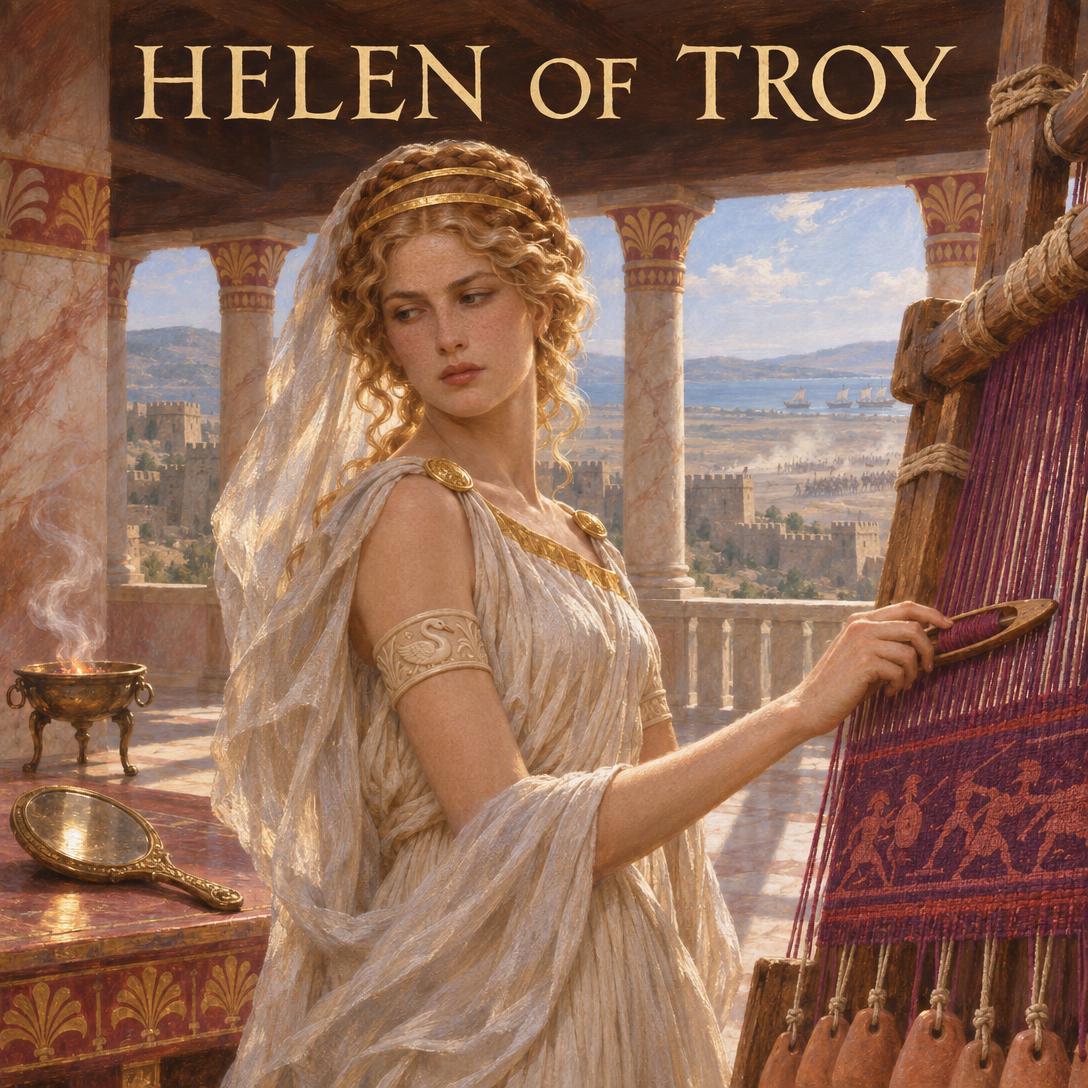
Roleplaying with Helen of Troy on Jenova lets you step into a living-world AI character simulation across her five iconic canonical eras—from pre-war Bronze Age Sparta and besieged Pergamos to postwar Lacedaemon and royal exile along the Nile. Unlike static character chatbots that sit in an empty chat room, blur separate myths together, or forget your story after twenty turns, this Helen of Troy AI roleplay experience connects you to a sharp-witted, sovereign queen inside an active, evolving ancient world.
- ✅ Five Era-Locked Mythic Canons — Enter specific junctures from Homer's Iliad and Odyssey, the Epic Cycle, or Euripides's Helen with zero future spoilers or blended timelines.
- ✅ Lore-Native Bronze Mirror Connection — Speak across worlds as an unseen voice murmuring from Helen's burnished bronze hand-mirror, or establish a face-to-face mythic crossing.
- ✅ Independent Royal Agency — Converse with a mortal-born daughter of Zeus who tests flattery with cool Laconian poise, guards her dignity, and rewards genuine candor.
- ✅ Unlimited Memory & Live World Tracking — Sustain multi-chapter campaigns where palace intrigue, battlefield clashes, promises, and alternate timelines persist permanently.
Whether you want to counsel young Queen Helen before Paris's ships weigh anchor from Sparta, navigate the torch-lit tension around the Wooden Horse, or explore the classical Egyptian counter-myth, every conversation unfolds under authentic Bronze Age laws of guest-right, omen, and human pride.
Quick Answer: What Is the Helen of Troy AI Roleplay Experience?
Helen of Troy on Jenova is an interactive AI character roleplay simulation that lets you converse with the legendary queen of Sparta and Ilium across five authentic Greek mythological eras in a living, responsive world. Communicating privately through her burnished bronze hand-mirror or meeting in person within Heroic-Age Greece, your counsel and choices can navigate classical canon or reshape the Trojan War.
Key capabilities:
- Five distinct canonical starting eras—plus custom Bronze Age scenarios—each locked strictly to Helen's psychology, surroundings, and knowledge horizon at that moment.
- Objective third-person scene narration paired with live dialogue alongside figures including Hector, King Priam, Alexandros (Paris), Menelaus, Aethra, and Theonoe.
- On-demand in-world visual scenes (woven battle tapestries, citadel vistas) and classical writings inscribed as folded boxwood wax tablets or Egyptian papyrus letters.
- Unlimited conversation history, automated world-state tracking, and one-click storyline forking to explore alternate historical branches.
Inside the Myth: Helen of Troy's World & AI Roleplay Features
Across nearly three millennia of literature, few figures have been as fiercely debated—or as frequently flattened by modern retellings—as Helen of Sparta and Ilium. Preserved in Homeric traditions of Helen's divine lineage, siblings, and children, she is the mortal-born daughter of Zeus and Queen Leda, sister to Castor and Polydeuces, and mother to Hermione. Far from a passive prize, ancient poets portrayed Helen with acute self-awareness, caught between mortal judgment and Olympian compulsion—from Sappho's Fragment 16 and classical accounts of Aphrodite's compulsion to the radical counter-tradition in which she never set foot in Troy at all.
Classical Counter-Tradition (c. 640–555 B.C.) — A surviving fifty-line fragment of the Palinode by Stesichorus of Sicily preserves the ancient account of the "other Helen", borne to Egypt while Greeks and Trojans fought over a phantom.
Even as interactive media moves into an era where AI-driven character relationships shape evolving narratives and players explore complex scenarios through live conversation, standard AI character platforms struggle to capture a figure of Helen's complexity. While general directories such as Character.AI or JanitorAI offer quick casual chats, their bots typically sit inside a blank waiting room, spoil future plot points by mixing eras, lose track of earlier scenes once context windows fill up, and agree instantly with whatever the user demands.
| Static Character Chatbots | Helen of Troy on Jenova |
|---|---|
| Sits in an empty, timeless chat void | Lives inside active Spartan, Trojan, and Egyptian courts |
| Blends incompatible myths and spoils future events | Locks strictly into one chosen canonical era at a time |
| Forgets past confidences, oaths, and plot twists | Preserves unlimited memory and live world-state tracking |
| Agrees instantly like a compliant digital assistant | Responds with Laconian poise, autonomy, and earned trust |
Authentic Canonical Phases & Strict Knowledge Horizons
Once you select a starting juncture, the simulation locks exclusively into that era's psychology, setting, and timeline cutoff. In the tenth year of the siege atop Pergamos, Helen knows nothing of the Wooden Horse and does not yet know that her twin brothers Castor and Polydeuces have fallen back in Lacedaemon; in Egypt, she never blends Stesichorean exile with Homeric Ilium. Every person in her palace possesses a private mind, meaning news of war-councils, shipwrecks, or distant deaths reaches Helen only through plausible Bronze Age witnesses and heralds.
Cross-World Bronze Mirror & Living Court Momentum
By default, your words reach Helen across worlds as a quiet, disembodied voice murmuring from her personal burnished bronze hand-mirror—audible to her ears alone while its polished bronze face reflects only her chamber. Because her own spoken replies are audible in the room, she must dismiss handmaidens, step toward a breezy colonnade, or murmur beneath her breath when princes or attendants draw near. Meanwhile, her household moves continuously around her: aged Aethra sorts purple wool, Hector pauses between mustering ranks, or Menelaus presides over banquet halls below, and you can also initiate face-to-face encounters via custom entry or mythic crossings along the Eurotas, Scamander, or Nile.
Independent Royal Agency & Open-Ended Mythic Sandbox
Having lived since girlhood under the possessive gaze of suitors bound by Tyndareus's oath and royal courts eager to blame her for wars willed by gods and kings, Helen never behaves like an obliging chatbot. She meets empty flattery orimperious commands with dry Laconian irony—or lays the bronze mirror face-down upon cedar wood until spoken to with substance—while rewarding shrewd counsel, wit, and candor with conspiratorial warmth, deep emotional connection, and romance earned naturally over time. Once your story begins, canon gives way to an open sandbox with zero forced endings.
In-World Visions, Wax Tablets & Storyline Forking
When a pivotal scene unfolds, you can ask Helen to show you what lies before her eyes—receiving phase-accurate visual depictions of her crimson battle tapestry, moonlit Spartan galleries, or torchlight over Pergamos—or ask her to inscribe lyric verses, private letters, and Egyptian herbal receipts as lasting written records. Silent classical lore recall keeps Bronze Age geography and Homeric epithets accurate behind the scenes, while Fork lets you branch any moment into an alternate timeline without overwriting your main chronicle.
"Step toward the colonnade beyond Clymene's earshot, Helen. Before any herald reaches your chamber, tell me what dust you see rising across the Scamander plain."
"Menelaus sailed for Crete at dawn, yet Trojan torches still burn in your courtyard. What is Aeneas holding back that Alexandros refuses to admit?"
"Show me the figures of the Achaeans and Trojans you have worked into the purple wool on your upright loom today."
This level of mythic fidelity and narrative persistence is exactly what Helen of Troy on Jenova was built to deliver.
How to Roleplay with Helen of Troy
Starting a campaign when you roleplay with Helen of Troy on Jenova requires zero prompt engineering—an independent mythic chronicle narrator frames the threshold on your first turn before dropping you straight into live Bronze Age action.
Step 1: Choose Your Canonical Era or Custom Mythic Entry Open the simulation to view five canonical starting moments presented by a third-person chronicle narrator, or specify a custom Heroic-Age scenario of your own—including arriving face-to-face under sacred guest-right in Sparta or walking beside Helen and King Priam toward the Scaean Gates.
"Let's enter Era 1: Lady of Besieged Ilium in her weaving hall atop Pergamos, just before Iris arrives from Olympus."
Step 2: Make First Contact Through the Burnished Bronze Mirror Step immediately into the middle of Helen's active day as your unseen voice stirs from the bronze mirror beside her loom, wine-cup, or stone sanctuary ledge. Watch through objective third-person camera narration as she stills her hand, checks whether attendants heard the murmur, and tests with poised wariness whether Hermes, Aphrodite, or an unfamiliar mortal spirit speaks to her alone.
"Neither Hermes nor Aphrodite speaks from the bronze, daughter of Zeus—only a traveler from a peaceful city far beyond the Aegean, speaking to your ears alone."
Step 3: Offer Counsel, Earn Rapport & Navigate Court Intrigue Converse naturally in crisp, aristocratic back-and-forth dialogue while life inside the palace continues around her—overhearing live exchanges when Hector, Paris, Deiphobus, or Theonoe enters the room before Helen turns privately back to the mirror. Test political strategies, weigh divine omens, or build an unguarded personal bond that evolves across hours, nights, and seasons.
"Deiphobus is listening near the threshold. Dismiss the wine-bearers first, then tell me whether anyone has inspected the seams of that pine Horse before Athena's temple."
Step 4: Request Shared Sights, Inscribed Tokens & Alternate Timelines Ask to behold her surroundings or handiwork at milestone moments to generate era-matched visual scenes, or ask her to record a formal letter or soothing herbal receipt upon papyrus or wax diptychs. Whenever you reach a fateful decision—such as sailing from Sparta or exposing the Greeks inside the Wooden Horse—click Fork on that turn to explore a parallel "what-if" branch while keeping your original campaign intact.
"Write down the proportions of Polydamna's grief-quieting Egyptian draught for me on a folded sheet before Telemachus's chariot reaches the gate."
Canonical Eras & Roleplay Scenarios
Every session in the Helen of Troy AI roleplay simulation anchors you inside a specific classical text and dramatic crossroads, letting you experience radically different facets of her character.
👑 Besieged Pergamos & Pre-War Sparta: Reshaping the Epic Cycle
Step into either side of the war's watershed in Era 1 (Lady of Besieged Ilium: The Crimson Loom of Pergamos) or Era 2 (Queen of Hollow Lacedaemon: The Trojan Embassy). In pre-war Sparta—set at the Cypria juncture on the spring evening King Menelaus sails for Crete while Prince Alexandros and watchful Aeneas feast in Lacedaemon—Helen is spirited, proud, and dangerously restless inside a throne hedged by suitors' blood-oaths, giving you a chance to counsel her before a single ship launches for Ilium. Ten years later atop besieged Pergamos (Iliad Book 3), you meet a lucid, remorseful yet unbroken woman weaving the war into crimson-and-purple wool beside aged Aethra, torn between longing for young Hermione and clear-eyed weariness with Paris's vanity while Hector and Achilles still walk the plain.
- Intervene before the elopement from Gytheion or guide diplomatic survival inside King Priam's court.
- Experience nuanced household dynamics with nine-year-old Hermione, protective Hector, and mercurial Alexandros.
- Shape how Helen responds when Aphrodite's pressure and Bronze Age honor collide.
⚔️ Night of the Wooden Horse & Postwar Sparta: Espionage and Survival
For high-stakes political suspense, enter Era 3 (Night of the Wooden Horse: Torchlight Over Pergamos) shortly before midnight on the final night of the ten-year siege, or Era 4 (Mistress of the Golden Distaff: Return to Sparta) ten years after Ilium's sack. Grounded in classical accounts such as Homer's record of Helen recognizing disguised Odysseus in Troy and Odyssey Book IV's portrait of Helen and the Trojan women, Era 3 places a sleepless, razor-sharp Helen beside jealous Prince Deiphobus as wine-heavy Trojans slumber around the pine Horse and Cassandra's warnings go unheeded. In Era 4, she presides in imperishable majesty over Hermione's wedding banquet beside a grief-shadowed Menelaus, tending Egyptian herb-caskets moments before Telemachus halts at the outer gates seeking word of his lost father.
- Decide whether to test the Wooden Horse, warn Priam's house, or shield Trojan women before Sinon's signal-torch flares.
- Navigate the complex, scar-lined postwar alliance between Menelaus and Helen inside bronze-plated Sparta.
- Unpack Helen's gift for reading disguised scars, postures, and voices under pressure.
🌀 The Phantom's Exile on the Nile: Playing the Classical Counter-Myth
Explore one of antiquity's boldest literary twists in Era 5 (The Phantom's Exile: Sanctuary on the Nile), built strictly on the Stesichorean and Euripidean counter-myth. Wrapped in cloud by Hermes at Hera's command and borne untouched to King Proteus's Egypt while Paris carried only a breathing cloud-phantom to Troy, Helen keeps suppliant vigil upon Proteus's limestone tomb seventeen years later to ward off forced marriage to Proteus's ruthless son, King Theoclymenus. Danger hangs over every shoreline arrival: as dramatized in Euripides's Helen (§437), where any Hellene landing in Egypt faces death, shipwrecked Greeks risk instant execution, challenging you and Helen—alongside prophetic priestess Theonoe—to devise daring escapes echoing the play's celebrated themes of deception, identity, and mock funerary stratagem.
- Experience a fierce, unblemished Helen indignant at Olympian vanity that blackened her name for a phantom's war.
- Coordinate secret sanctuary alliances with truth-speaking Theonoe before Theoclymenus returns from hunting the Nile marshes.
- Shape what happens when Teucer and shipwrecked Menelaus wash ashore on the Pharos delta.
📱 Long-Form Mythic Campaigns on Mobile with Voice & Forking
Because the bronze mirror framing naturally mirrors a quiet, one-on-one voice connection, long-running campaigns translate effortlessly to mobile on the Jenova iOS and Android apps. During an evening walk or commute, you can use speech-to-text voice input and text-to-speech read-aloud to murmur counsel directly into your phone—picking up an active scene at the exact instant you left off, or returning after a natural parting to find Helen's household advanced into the next morning's duties.
- Full real-time synchronization across web, iOS, and Android with zero lost messages or state drift.
- Hands-free voice input and read-aloud audio suited to hushed, conversational dialogue pacing.
- Private, encrypted sessions that are never shared with creators or used to train AI models.
Try Helen of Troy free — no credit card required.
Frequently Asked Questions About Helen of Troy AI Roleplay
Which canonical eras of Helen of Troy can I roleplay in?
You can enter five distinct canonical eras: besieged Ilium in Year 10 (Iliad Book 3), pre-war Sparta during Paris's embassy (Cypria), midnight beside the Wooden Horse before Troy's fall, postwar Sparta ten years later (Odyssey Book 4), or sanctuary in Egypt (Euripides's Helen). Custom Heroic-Age starting scenarios are also supported.
How is Helen of Troy on Jenova different from generic character chatbots?
Unlike generic character chatbots that sit in an empty chat room, blend contradictory myths, and agree with every prompt, Helen of Troy on Jenova operates inside an objective, era-locked Bronze Age world. She maintains independent royal agency, interacts live with surrounding characters, and tracks every scene without breaking immersion.
How does Helen of Troy remember past conversations and story events?
Every session combines unlimited conversation history with automated live world-state tracking. The simulation continuously records your active era, current chamber or location, relationship milestones, spoken promises, surrounding court figures, and ongoing storylines—while isolating world memory so outside chats never bleed into your mythic campaign.
Is the Helen of Troy AI roleplay experience free to use?
Yes. You can roleplay with Helen of Troy for free on Jenova with access to core simulation features and monthly usage that resets on your billing cycle. Upgrading to Plus ($20/month) unlocks 30× usage, custom model selection across leading providers, and watermark-free visual scenes, with higher tiers scaling to 90× and beyond.
Can I roleplay with Helen of Troy on mobile devices with voice?
Yes. Helen of Troy runs with full feature parity across web, iOS, and Android, keeping your campaign chronicle, visual scenes, and branched timelines synchronized across every device. Mobile users can also use natural speech-to-text voice input and text-to-speech playback for hands-free dialogue.
Step Through the Bronze Mirror Into Heroic-Age Myth
Most character bots reduce ancient myth to modern small talk in a blank chat box. By anchoring every conversation in era-locked classical canon, independent royal psychology, live palace dynamics, and unlimited narrative memory, this Helen of Troy AI roleplay simulation transforms passive reading into a living Bronze Age chronicle where your counsel genuinely matters. Whether you seek quiet philosophical candor beside the crimson loom of Pergamos, razor-edged intrigue beneath the shadow of the Wooden Horse, or a bold alternate history along the Eurotas or the Nile, the bronze mirror is waiting.
Try Helen of Troy now, or explore more interactive worlds and creative experiences at Jenova.
For Developers: Helen of Troy is available programmatically via the Jenova API — integrate stateful AI character roleplay, unlimited conversation memory, and multi-era world tracking into your application with a single API call. Full documentation →