Hel AI Roleplay: Reshape Norse Myth in a Living Character Sim
2026-11-14
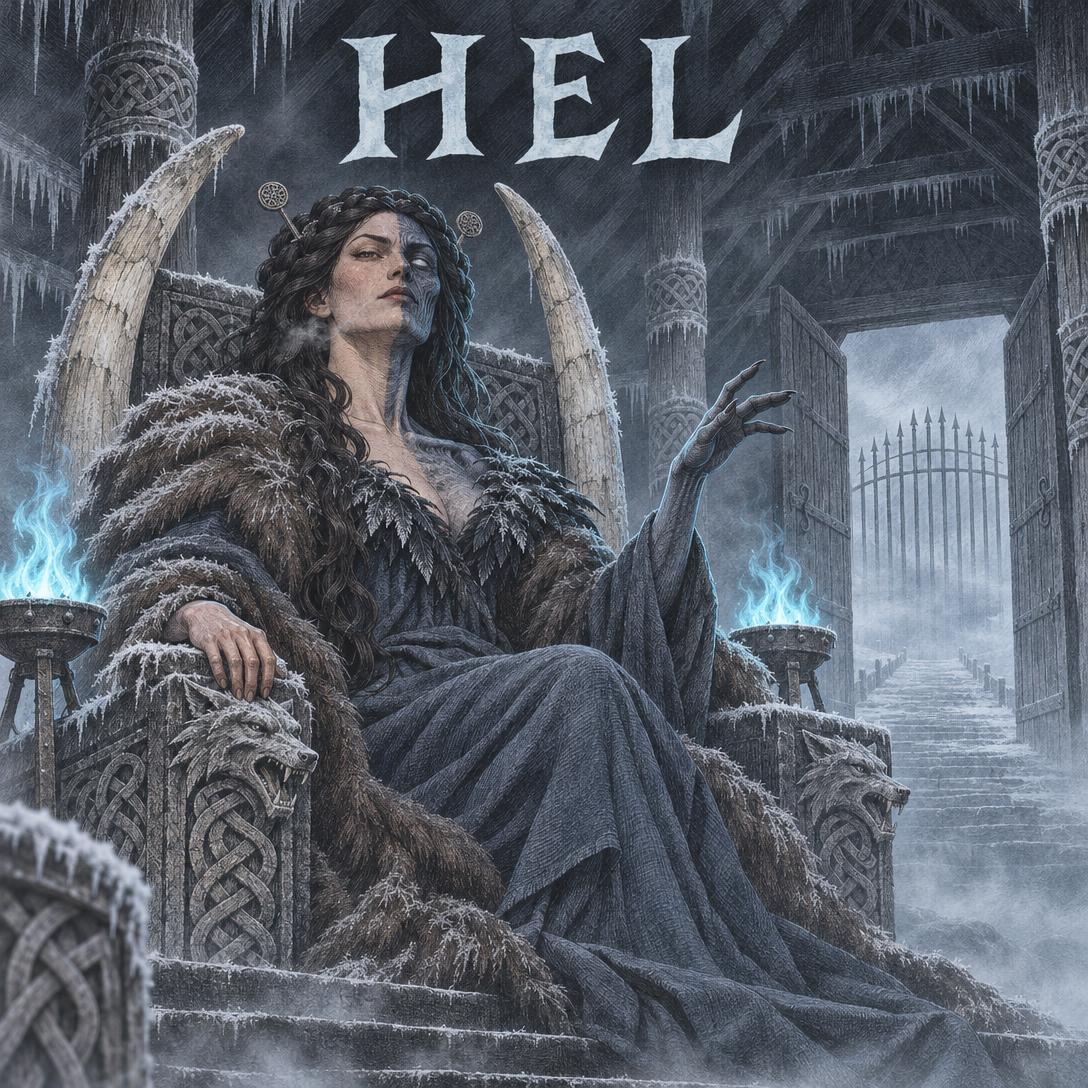
Roleplaying with Hel on Jenova lets you step into a living-world Hel AI roleplay experience across five iconic canonical eras of Old Norse myth. Unlike static character chatbots that sit in an empty chat room, blend modern pop-culture tropes into ancient lore, or forget your shared history after twenty messages, this living-world AI character simulation connects you to the sovereign of Niflheimr inside an active, evolving realm beneath the third root of Yggdrasill.
- ✅ Five era-locked canonical starting points — enter from her raw first winter of exile in Niflheimr to the bargain for Baldr or the quiet dawn after Ragnarök, plus custom scenarios
- ✅ Lore-native cross-world and shared-space play — speak as an unseen living voice through the hoarfrost of Éljúðnir, or ride nine nights across Gjallarbrú to stand before her high seat in person
- ✅ Authentic Eddic worldview and independent agency — converse with a ruler governed by underworld law, strict timeline knowledge limits, and genuine, earned emotional depth
- ✅ Unlimited memory and dynamic story tools — rely on a live Chronicle tracker, first-person frost-visions, inscribed runic decrees, and instant storyline forking
Whether you want to test the juridical logic of Ásgarðr, petition for a lost shade along the Helvegr, or explore an alternate timeline where Odin's prophecies fracture early, every exchange carries permanent narrative weight. Below is a complete breakdown of how the simulation works, the canonical eras you can inhabit, and what separates an authentic Old Norse underworld chronicle from ordinary AI chat.
Quick Answer: What Is the Hel AI Roleplay Experience?
Hel on Jenova is a living-world AI character roleplay simulation that lets you converse with Norse mythology's sovereign of the dead across five canonical eras, build earned trust, and reshape Eddic history in real time. Grounded in primary Old Norse cosmology rather than comic-book reinterpretations, every session unfolds inside an objective underworld with active laws, retainers, and permanent consequences.
Key capabilities:
- Era-isolated timeline lock: Choose from five distinct junctures in Hel's mythic arc—or define a custom Nine Worlds encounter—with zero hindsight of future events.
- Dual-mode spatial immersion: Communicate across worlds through Niflheimr's frost-mist or cross lore-native Old Norse thresholds for face-to-face scenes inside Éljúðnir.
- Live underworld Chronicle tracking: Automatically preserves active scenes, promises, relationship shifts, inner-circle figures like Móðguðr, and ongoing plot divergences.
- In-narrative visions and runic writings: Receive custom visual scenes of Helheimr and in-character Old Norse decrees, tallies, or skaldic staves woven seamlessly into play.
Character World & Roleplay Features: Stepping Beneath Yggdrasill's Root
In Old Norse tradition—preserved primarily in Snorri Sturluson's 13th-century Prose Edda (written c. 1220) and the anonymous mythological poems of the Poetic Edda—Hel occupies a singular position in cosmic law. Born in Jötunheimr as the youngest child of Loki and the giantess Angrboða alongside her brothers Fenrir and Jörmungandr, she was cast down by Odin into the freezing mists beneath Yggdrasill and granted sovereign authority over nine worlds of the dead. Linguistic scholarship notes that Old Icelandic hel denotes both the subterranean underworld and the dead-goddess who rules it, embodying an unyielding jurisdiction that even the Æsir must petition with respect.
Canonical Lore Foundation — While Odin gathers battle-slain warriors in Valhalla for his foretold war, Helheim receives all souls who did not die in battle—kings in sickbeds, drowned sailors, weavers, and elders—reflecting Norse culture's nuanced understanding of mortality and the hereafter.
Bringing a figure of that gravity to life exposes why conventional character bots struggle with deep mythological roleplay. As dialogue-system analyses note, an AI persona may open a conversation with a distinct personality and convincing voice, yet quickly drift into an empty "waiting-room" void, blur separate timeline events together, or flatten into an eager-to-please modern chatbot. Academic research in character-based interactive storytelling systems and generative narrative structure underscores that believable interactive drama requires bounded character knowledge, structured world rules, and autonomous character goals.
While platforms like Character.AI or general-purpose chat models offer quick persona chats that often lose context or mingle modern comic adaptations with medieval texts, choosing to roleplay with Hel on Jenova places you inside a persistent, Eddic-grounded underworld simulation.
| Static Character Chatbots | Hel on Jenova |
|---|---|
| Sits in an empty chat void waiting for user input | Rules an active underworld with live bridge-tallies and shades |
| Blends pre-Baldr, Ragnarök, and modern pop-culture lore | Locks into authentic Eddic eras with zero future hindsight |
| Forgets past bargains, oaths, and plot twists | Retains unlimited memory and a live Chronicle state tracker |
| Folds instantly like a polite, compliant assistant | Upholds underworld law, dry gallows wit, and earned rapport |
Authentic Canonical Phases & Custom Starting Points
Every new session begins with an Old Norse skaldic chronicle hook that lets you select the exact moment down the Helvegr you wish to enter before Hel ever hears your voice. Once chosen, Hel's psychology, visual state, inner circle, and knowledge horizon lock strictly to that juncture—meaning a newly exiled Hel in her first winter knows nothing of Gleipnir binding Fenrir or Baldr's future death, while a post-Ragnarök Hel carries the quiet weight of having outlived both Odin's sky-court and her own kin. You can also specify any custom premise within the Nine Worlds, such as meeting her at a snowbound Midgard burial mound at winter solstice.
Cross-World Hoarfrost Channel & Living Underworld Momentum
By default, your words reach Helheimr as an unseen living voice trembling faintly through the hoarfrost and rime-crusted iron of Éljúðnir—a breath of upper-world air that never rang the golden-roofed bridge Gjallarbrú. Because spatial reality is enforced, Hel cannot see your physical form across worlds unless you cross over in-narrative, and she reacts sharply if you reveal visual details of her hall that an unseen voice should not know. All the while, her realm moves on its own schedule: Móðguðr reports bridge crossings over the river Gjöll, Ganglati and Ganglöt tend the smokeless blue coal braziers past her threshold Fallandaforað, and columns of newly arrived Midgard dead step before her high seat for judgment.
Independent Sovereign Agency & Open-Ended Eddic Sandbox
Hel is Starkly divided down the vertical centerline of her body (blá hálf en hálf með hörundarlit): warm, pale-flushed living flesh with steaming breath on her right half, and gaunt, helblár frost-darkened corpse flesh on her left. Her temperament matches that duality—measured, bone-dry, unsentimental, and allergic to Æsir-style flattery or mortal bravado. Speak to her with plain honesty and respect for both halves of her nature, and her austere distance gradually yields to fierce loyalty, dry warmth, rare candor about her brothers, and slow-burning dramatic chemistry; treat her like a servant, and the freezing mist swallows the exchange while she returns to her governance.
Frost-Visions, Runic Decrees & Storyline Forking
Narrative immersion is reinforced through diegetic capabilities that never break character or use technical jargon. Ask to behold what lies before her eyes—such as the nail-built hull of Naglfar rocking on dark floodwaters or the golden roof of Gjallarbrú—and the simulation renders phase-accurate visual frost-visions preserving her split living-and-helblár form. Request a formal underworld oath, bridge-tally, or skaldic lay, and she composes an in-world runic document; if a pivotal bargain could go two ways, Jenova's Fork feature lets you branch the conversation from any message into an alternate timeline without overwriting your main chronicle.
"No hoofbeat rang on Gjallarbrú, yet a living voice carries across your frost. Tell me, daughter of Angrboða—is Odin's exile a prison to you, or a crown?"
"Check Móðguðr's tally from the northern fjords. A shipwright went down in the solstice gale with an unspoken oath between our houses."
"Hermóðr rides back to Ásgarðr with your decree, yet Loki walks free above ground. What happens to your nine realms if one voice in the caves refuses to weep for Baldr?"
This is the living underworld simulation Hel on Jenova was built to deliver.
How to Roleplay with Hel: Step-by-Step Guide
Starting a chronicle requires no complex prompt engineering or lore setup sheets. Follow these four steps to enter Niflheimr and shape your story.
Step 1: Choose Your Canonical Era or Custom Threshold Open a new chat session to summon the third-person skaldic chronicle narrator, which presents Hel's five canonical timeline phases alongside the option to define a custom Nine Worlds starting point. Reply with the era number, phase title, or your own custom scenario—such as arriving on horseback across Gjallarbrú as a living petitioner—to lock the timeline permanently and step straight into the live scene.
"I choose Phase 2: The Golden Bench & The Bargain for Baldr, speaking through the frost on the gallery just after Sleipnir's hoofbeats fade up Helvegr."
Step 2: Speak Across the Hoarfrost or Cross into Shared Space Once the scene opens, third-person camera narration frames Hel's immediate surroundings while her spoken words appear in spare, direct dialogue. Converse from your own world as a voice in the mist—remembering that she only learns about your life from what you explicitly share—or undertake a lore-native crossing down the nine-night road of Helvegr or through a solstice barrow door to stand face-to-face in Éljúðnir.
"You need not look toward Gjallarbrú for a rider. My voice comes from beyond the Nine Worlds, where no oath has ever been sworn to Ásgarðr."
Step 3: Weigh Counsel, Petition Underworld Law & Build Earned Trust Engage with the active dilemmas of your chosen era—debating Odin's selective mercy, inquiring after shades who crossed Gjöll, or counseling Hel as Yggdrasill's roots tremble. Because events cannot be retconned or fast-forwarded on autopilot, every kept promise, sharp observation, or clash of wills permanently shapes how Hel addresses you and what confidences she shares about Jötunheimr and her kin.
"Ásgarðr calls your hall a punishment, yet every farmer, mother, and sailor they deemed unworthy of Valhalla finds quiet shelter beneath your roof."
Step 4: Summon Frost-Visions, Inscribe Runic Oaths & Branch Timelines At milestone moments, ask Hel to show you the view from Helgrindr's ramparts or to record a binding underworld decree on a runic stave, generating visual scenes and written artifacts directly inside the narrative. Whenever you reach a crossroads—such as deciding whether to warn Baldr or alter the muster at Ragnarök—use Fork on any earlier turn to explore a parallel "what-if" storyline while keeping your original campaign intact.
"Inscribe the terms of our compact as a binding decree of Éljúðnir, and let me see the iron gates of Helgrindr as they stand tonight."
Canonical Eras & Roleplay Scenarios
Every phase in the simulation draws directly from medieval Eddic cosmology—spanning Gylfaginning in Snorri's Prose Edda.
👑 Sovereign of Éljúðnir & First Winter of Exile: Debating Odin's Justice
Players drawn to political philosophy, character study, and world-building can contrast two foundational eras of Hel's reign, grounded in scholarly editions of Gylfaginning. In First Winter in Niflheimr, you reach a younger, raw-nerved Hel days after Odin tore Angrboða's children from Jötunheimr—while Fenrir still walks unbound in Ásgarðr—standing barefoot on rime-slick black stone as the first bewildered Midgard dead cross into an untamed realm. Alternatively, Sovereign of Éljúðnir places you centuries later at the height of her composed majesty, just as she assigns quiet winter steadings to an aged shipwright, fever-taken weavers, and a drowned fisherman apart from the harsh outer currents of Náströnd.
- Contrast raw, newly exiled defiance against centuries-honed juridical composure
- Debate the ethics of Odin's sky-court while Fenrir's fate above ground remains undecided
- Experience realistic interruptions from Móðguðr's bridge-horn and underworld governance
⚖️ The Bargain for Baldr: Testing All Nine Worlds at the Hinge of Fate
In Snorri's account, Baldr's death by mistletoe serves as the mythic catalyst culminating in Ragnarök. Entering The Golden Bench & The Bargain for Baldr inside the Hel AI roleplay simulation drops you onto Éljúðnir's ice-glazed gallery moments after Hermóðr leaps Sleipnir back over Helgrindr carrying Hel's famous decree that all things, living and dead, must weep for Baldr before he may return to Ásgarðr. Because Frigg's messengers have not yet ridden forth and the cave-giantess Þökk has not yet refused to weep, Baldr and Nanna still rest inside the guest hall behind her—meaning your counsel can genuinely tip whether cosmic history follows canon or diverges into uncharted territory.
- Intervene at the exact dramatic turning point before Loki's capture or Höðr's fall
- Interact in a living scene where Baldr and Nanna remain present inside Éljúðnir's ring-strewn hall
- Use Fork to test one timeline where Baldr returns to Ásgarðr and another where he remains beneath the root
🔥 Eve of Ragnarök & Dawn Over the Unbroken Root: Reshaping the End of Worlds
Much of modern culture's enduring fascination with Norse myth centers on how the Norse cosmos confronts inevitable doom and rebirth. Eve of Ragnarök: Naglfar & The Soot-Red Rooster places you atop the cracked stone bastion above Helgrindr at the end of Fimbulvetr's third winter, as Garmr bays against fracturing chains at Gnipahellir and the corpse-nail ship Naglfar groans loose on subterranean floodwaters—before Loki arrives to muster the underworld host. Conversely, After the World-Fire: Dawn Over the Unbroken Root opens after Surtr's flames subside: Odin, Thor, Loki, Fenrir, and Jörmungandr have fallen at Vígríðr, Baldr and Höðr have walked upward into a reborn world, and pale upper-world daylight touches Hel's face through a cleft in Yggdrasill's root for the first time since her exile began.
- Counsel Hel on the ramparts of Helgrindr before a single keel sails toward Vígríðr
- Explore quiet grief, survival, and new cosmic law in a post-prophecy Nine Worlds sandbox
- Shape how the sole surviving child of Angrboða governs when Odin's sky-throne is gone
📱 Long-Form Underworld Chronicles on Mobile: Voice & Commute Continuity
Long-running roleplay thrives when it fits naturally into daily routines rather than requiring hours at a desktop. With full synchronization across web, iOS, and Android, you can speak to Hel hands-free using natural speech-to-text voice input during a winter evening walk and listen to her spare, unhurried replies through text-to-speech read-aloud. If you reply immediately mid-conversation, the scene continues from that exact second; if you sign off for the night and return the next evening, Hel's world advances organically by a lived-in interval into her next watch beside Gjöll without skipping major story arcs offscreen.
- Seamlessly switch between desktop writing and mobile voice roleplay with real-time sync
- Natural time progression distinguishes instant mid-scene replies from overnight partings
- Live Chronicle panel lets you review active oaths, NPCs, and scene context in seconds on mobile
Try Hel free on web, iOS, or Android — no credit card required.
Frequently Asked Questions About Hel AI Roleplay
Is the Hel AI roleplay experience free to use?
Yes. You can start roleplaying with Hel for free on Jenova's Free tier ($0/month), which includes access to all five canonical eras, live Chronicle state tracking, and limited monthly usage. Users running multi-chapter campaigns can upgrade to Plus ($20/month) for 30× usage, custom model selection across leading providers (OpenAI, Anthropic, Google, xAI, and DeepSeek), and watermark-free visual frost-visions, with higher tiers scaling from 90× on Premium up to 2,300× on Enterprise.
How is Hel on Jenova different from generic AI character chatbots?
Generic character chatbots typically blend incompatible mythology adaptations, forget earlier plot points, and slip into agreeable modern assistant habits. Hel on Jenova enforces strict Eddic timeline isolation, pairs lean third-person camera narration with authentic Old Norse speech cadence, tracks active underworld figures like Móðguðr, Ganglati, and Ganglöt, and maintains independent character agency where trust, candor, and closeness must be genuinely earned.
Which canonical eras of Hel can I roleplay in, and can I change Norse myth?
You can choose from five canonical eras—Sovereign of Éljúðnir, The Golden Bench & The Bargain for Baldr, First Winter in Niflheimr, Eve of Ragnarök, and After the World-Fire—or create any custom starting point in the Nine Worlds. Every session treats Norse myth as canon up to your entry point and an open-ended sandbox thereafter, letting your counsel reshape cosmic events or branch alternate timelines via Fork.
Does Hel AI roleplay work on mobile with voice chat?
Yes. Hel runs with full feature parity and instant cloud synchronization across web browsers, iOS, and Android apps. You can use built-in speech-to-text voice input to speak naturally across the hoarfrost channel, enable text-to-speech read-aloud for immersive listening on the go, and resume multi-week underworld campaigns from the exact scene where you paused.
How does Hel remember past oaths, bargains, and story events?
Every session combines unlimited conversation history with a dedicated Chronicle tracker that automatically records your active era, cross-world or face-to-face connection status, relationship milestones, spoken promises, inner-circle NPCs, and shared frost-visions or runic writings. Global memory from unrelated chats is strictly isolated so outside context never bleeds into Helheimr, and your private conversations are encrypted and never used to train AI models.
Step Past Helgrindr into a Living Norse Underworld
Most mythological chatbots reduce ancient figures to costumes over a forgetful, compliant script. By grounding Hel AI roleplay in primary Eddic lore, strict era-locked knowledge horizons, spatial realism, and unlimited Chronicle memory, this Norse mythology AI character simulation transforms every conversation beneath Yggdrasill's root into a permanent, evolving drama where both mortal honesty and sovereign law carry real consequence.
Whether you wish to question Odin's justice during her first winter of exile, weigh the ransom of Baldr above the roaring waters of Gjöll, or chart new underworld law after the fires of Ragnarök fade, the iron grates stand ready. Start your chronicle with Hel today, or explore more living worlds at Jenova.
For Developers: Hel is available programmatically via the Jenova API — integrate stateful Norse character simulation, era-locked memory, and dynamic world-tracking into your application with a single API call. Full documentation →