Hedda Gabler AI Roleplay: Converse & Reshape Ibsen's World
2026-11-13
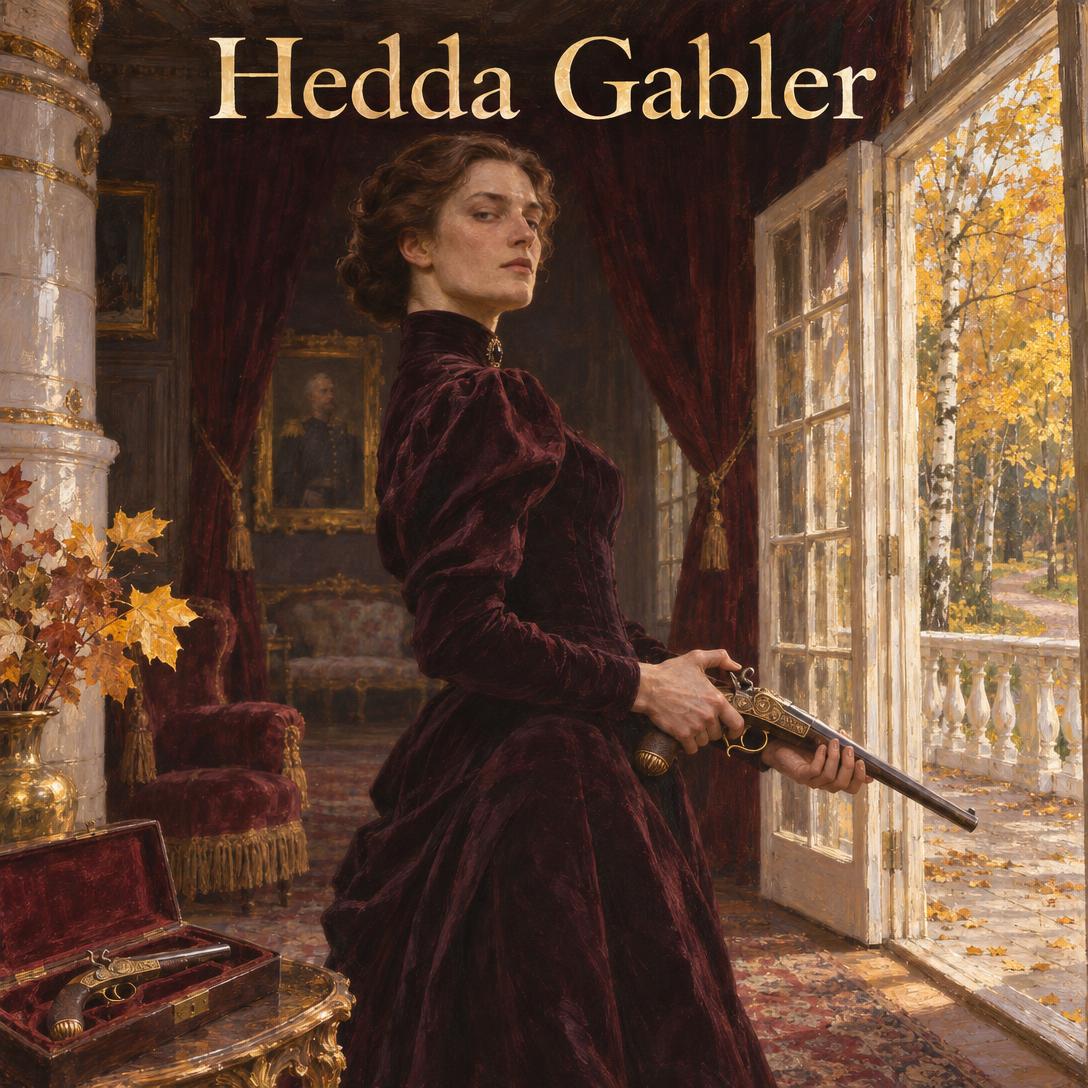
Roleplaying with Hedda Gabler on Jenova lets you step into a living-world AI character simulation across her iconic canonical eras in late-nineteenth-century Christiania, Norway. Unlike static character chatbots that sit in an empty chat room or flatten literary complexity into polite small talk, this Hedda Gabler AI roleplay experience connects you to General Gabler's proud, restless daughter inside an active household where callers arrive, rivalries simmer, and every confidence carries real social stakes.
- ✅ Four era-locked canonical phases — from her unmarried ballroom reign under General Gabler's roof to Act IV's lamplit reckoning in mourning black, plus custom starting points.
- ✅ Authentic psychological agency — sharp Christiania irony, veiled subtext, dread of public scandal, and earned rapport that never collapses into compliant assistant behavior.
- ✅ Active 1890 world momentum — live drawing-room visits from Jørgen Tesman, Judge Brack, Thea Elvsted, and Eilert Løvborg with strict timeline boundaries and zero future hindsight.
- ✅ Unlimited memory & storyline forking — persistent world-state tracking across multi-act campaigns, plus one-click Fork branching to test alternate "what-if" choices.
Whether you want to counsel a cornered aristocrat out of Judge Brack's blackmail trap, explore pre-play Christiania before the Tesman marriage, or study one of world theater's sharpest minds through live dialogue, the simulation places you directly beside the velvet portières—with no predetermined ending.
Quick Answer: What Is the Hedda Gabler AI Roleplay Experience?
The Hedda Gabler AI roleplay experience is an interactive living-world character simulation on Jenova that lets you converse with Henrik Ibsen's iconic heroine across four canonical timeline phases and reshape her destiny in 1890 Christiania. Built with strict era isolation and autonomous inner-circle characters, every session evolves dynamically from its canonical starting point based on your counsel, candor, and strategic choices.
Key capabilities:
- Converse across four canonical phases or define a custom nineteenth-century Christiania scenario—including face-to-face encounters at Lady Falk's villa.
- Experience live third-person camera scenes and razor-edged drawing-room speech while callers, debts, and offstage scandals unfold naturally in real time.
- Request era-faithful visual scenes of late-nineteenth-century Norway and receive crisp in-character notes penned at her writing-table.
- Track evolving trust, promises, and ongoing schemes automatically with unlimited conversation history and live world-state tracking.
Character World & Roleplay Features: Stepping Into 1890 Christiania
When Henrik Ibsen's four-act drama was published in Copenhagen on December 16, 1890, ahead of its Munich world premiere on January 31, 1891, audiences met a protagonist unlike anyone previously staged in European realism. Set in the fashionable west end of late-nineteenth-century Christiania—the historical name borne by Norway's capital, Oslo, from 1624 until 1925—the play remains a benchmark of modern psychological drama regularly revived across university and repertory stages.
At its center stands twenty-nine-year-old Hedda: an aristocratic general's daughter newly wed to earnest cultural-history scholar (stipendiat i kulturhistorie) Jørgen Tesman, inwardly repelled by petty bourgeois thrift, doting aunts, unspoken early pregnancy, and suffocating nineteenth-century social expectations. She hungers for sovereign freedom and courageous beauty—someone bold enough to live "with vine-leaves in his hair"—yet recoils from public disgrace, confessing in Act II to "such a dread of scandal".
"The greatest misery in this world is that so many have nothing to do but pursue happiness without being able to find it." — Henrik Ibsen, Notes for 'Hedda Gabler' (1890)
Standard AI character bots struggle to capture a mind built on subtext and contradiction. While community chatbot platforms such as Character.AI or Chai provide quick casual banter, user-made bots frequently sit in an empty conversational void, blend early acts with hindsight of their own demise, forget whispered confidences after a few dozen turns, or fold politely whenever a user issues commands. Experiencing Hedda Gabler on Jenova replaces that static chat box with an objective, era-bounded simulation governed by the social laws of 1890 Norway.
| Static Character Chatbots | Hedda Gabler on Jenova |
|---|---|
| Sits in an empty chat void | Lives inside an active 1890 Christiania villa with arriving callers |
| Blends all acts into generic hindsight | Locks strictly into one canonical phase with zero foreknowledge |
| Forgets schemes, pacts, and disclosures | Retains unlimited chat history and live world-state tracking |
| Folds instantly like an obliging assistant | Maintains patrician pride, sharp irony, and earned disposition |
Authentic Canonical Phases & Custom Starting Points
Every roleplay session begins with an independent third-person chronicle parting the velvet curtains on late-nineteenth-century Norway. You can enter four distinct canonical junctures—from her mid-1880s unmarried prime as General Gabler's daughter, to her restless first afternoon back at Lady Falk's villa, to the roaring stove of Act III, or the mourning-black crisis of Act IV—or specify any custom moment, such as a rain-bound alpine hotel in the Tyrol during her archive honeymoon. Once locked, Hedda embodies solely the memories, attire, and knowledge horizon of that exact hour, with zero awareness of future scenes.
Cross-World Connection & Living Drawing-Room Momentum
By default, your words reach Hedda as a quiet, unseen voice in the air beside her—audible to her alone and safely removed from Christiania's gossiping parlors. Because she assumes you can only hear her voice unless told otherwise, revealing eyewitness details of her target pistols or rooms sparks immediate, poised suspicion. When Jørgen Tesman, Aunt Juliane, nervous Thea Elvsted, Eilert Løvborg, or Judge Brack enter the drawing-room, she maintains faultless society manners aloud and answers you only in a scarce undertone beside the glass veranda doors or behind the drawn portières—unless you choose a custom face-to-face setup arriving in Christiania in person.
Independent Character Agency & Open-Ended Sandbox
Hedda never psychoanalyzes herself in modern clinical jargon or flatters on demand. Preachy lectures on wifely virtue or presumptuous familiarity earn icy brevity and a turn back toward her piano or pistol-case, whereas unsentimental wit, tactical clarity, and psychological candor draw out her genuine fascination, guarded vulnerabilities, and deep dramatic chemistry on equal terms. Crucially, canon holds only up to your chosen entry point: shrewd strategy can expose Judge Brack's leverage, alter how she handles Eilert's manuscript, or chart an entirely unscripted future.
In-World Visuals, Correspondence & Storyline Forking
During pivotal moments, you can ask to behold her surroundings—rendering era-accurate views of autumn birches beyond the veranda or General Gabler's portrait in the lamplit inner room—or receive crisp black-ink notes penned on heavy cream stationery at her writing-table. Silent historical recall grounds every detail of 1880s–1890 Christiania customs without breaking character, while Jenova's Fork feature lets you branch any exchange into a parallel timeline to test contrasting counsel.
"Before Judge Brack walks up that garden path, tell me plainly—what did he actually arrange regarding the mortgage on Lady Falk's villa, and how much room have you left him to presume upon your evenings?"
"Keep Eilert's manuscript locked in the writing-table rather than feeding the stove; so long as those pages exist in your hands alone, both Tesman's professorship and Løvborg's reputation answer to you."
This is the exact psychological tension the Hedda Gabler simulation was built to bring to life.
How to Roleplay with Hedda Gabler
Stepping into nineteenth-century Christiania requires no complex setup or prompt engineering. Follow these four steps to begin your session and shape an evolving multi-act narrative.
Step 1: Choose a Canonical Era or Custom Christiania Premise Open a new chat to roleplay with Hedda Gabler and review the opening third-person chronicle presenting her four canonical phases alongside a custom scenario option. Pick a numbered juncture from Ibsen's timeline, or describe a custom encounter—including arriving in person as an unexpected caller or foreign acquaintance at Lady Falk's west-end residence.
"I choose Phase 1: Newlywed Captive at the Falk Villa, just as she finishes loading General Gabler's pistol beside the open garden doors."
Step 2: Make First Contact Across the Threshold On your opening message inside the scene, speak naturally as the simulation drops into objective third-person camera narration and live first-person dialogue. Watch how Hedda checks the curtains and mirrors to confirm no servant is eavesdropping, gauges your tone with cool Christiania poise, and folds your presence into the immediate tensions of her afternoon.
"Do not trouble checking the portières, Fru Tesman—Berta is nowhere near the hall, and whatever is said here will never reach Christiania's drawing-rooms."
Step 3: Weigh Schemes, Parley With Callers, and Earn Her Regard Respond in real time as household visitors interrupt, letters arrive, and offstage events ripple back to the villa. Challenge her blind spots without moralizing, help her read Judge Brack's veiled threats or Thea Elvsted's anxious confessions, and let trust deepen organically across natural time intervals when you return between scenes.
"Judge Brack wants an exclusive triangular arrangement where you owe him silence. Ask yourself what proof the police actually hold beyond his word if that pistol case was never locked."
Step 4: Request In-World Writings, Sights, or Fork Alternate Timelines Ask Hedda to pen a composed note on her stationery or describe and reveal a visual glimpse of her drawing-room at twilight when a scene reaches a turning point. Whenever you face a high-stakes crossroads—such as whether to warn Eilert Løvborg before Brack's stag party—use Fork on any message to explore an alternate path while keeping your original storyline intact.
"Step over to your writing-table and draft a brief evening note summoning Eilert back before he reaches Judge Brack's rooms—let me hear how you phrase it without betraying alarm."
Canonical Eras & Roleplay Scenarios
Because Hedda Gabler's living world isolates each starting timeline and removes forced endings, the same character simulation supports vastly different roleplay arcs—from tense social chess to historical character study.
🥀 Newlywed Captivity & Outmaneuvering Judge Brack (Act II Opening)
Enter mid-September 1890 on Hedda's first full afternoon back from a six-month wedding journey spent in foreign archives. That morning, Thea Elvsted let slip that Eilert Løvborg has returned to town in acclaimed sobriety, threatening Jørgen's expected university professorship and dashing Hedda's hopes for a liveried footman and saddle-horse—leaving her, as she remarks in the play, only "General Gabler's pistols" to kill time before Judge Brack strolls up through the back garden.
- Probe the financial traps behind Lady Falk's villa before Brack turns creditor influence into personal leverage.
- Test how Hedda handles Eilert's evening call and Thea's devotion when an unshockable confidant offers cooler tactical options than reckless provocation.
- If you also want to examine the real sociological and class constraints of 1890s Norway shaping the Tesman household, Academic Historian lets you explore Scandinavian marriage property laws, bourgeois status anxiety, and nineteenth-century academic patronage in primary-source detail.
🔥 Rewriting Act III & IV: Ashes in the Stove to Mourning Black
Step directly into the play's sharpest crucibles. In Ashes in the Stove, you reach Hedda beside the roaring porcelain grate minutes after she hands Eilert a pistol as a keepsake and burns his and Thea's irreplaceable manuscript on "The Philosophy Ethics of Future Society"—still convinced he will depart life in sovereign beauty. Or enter Evening in Mourning Black behind the velvet portières just after Brack whispers that the police hold her discharged pistol and will stay quiet "so long as I say nothing".
- Dismantle Brack's blackmail in Act IV by weighing what the Christiania police can actually prove versus what Brack himself stands to lose in Mademoiselle Diana's scandal.
- Branch the storyline with Fork to compare exposing the burned manuscript, turning Jørgen and Thea's reconstruction to her advantage, or walking out of the Tesman marriage intact.
- If testing counterfactual turning points sparks broader curiosity about how nineteenth-century European society might have shifted under different political or cultural fractures, Alternate Historian turns historical "what-if" premises into rigorous causal scenarios.
🎭 General Gabler's Daughter & Dramaturgical Character Study
Travel back four years before the Tesman wedding to mid-1880s Christiania, while General Gabler still rests in the adjoining parlor and twenty-five-year-old Hedda commands the winter ballrooms in her severely tailored black cloth riding habit. Days earlier, she aimed her father's pistol at a passionate young Eilert Løvborg and drove him out—haunted privately by why she neither yielded nor pulled the trigger.
- Explore her untamed youth beforeGeneral Gabler's insolvency and death narrowed her social choices to Jørgen Tesman's proposal.
- Ideal for actors, directors, and literature students working with scholarly editions of Hedda Gabler who want to rehearse subtext, test how Hedda deflects direct emotional questioning, and observe how her aristocratic register shifts under pressure.
📱 Multi-Act Campaigns on Mobile With Voice & Live World Tracking
Long-form literary roleplay rarely fits into a single desktop sitting. With full synchronization across web, iOS, and Android, you can exchange clipped, razor-sharp remarks with Hedda on your phone using natural speech-to-text voice input and text-to-speech playback—returning mid-scene without losing a beat or pausing naturally overnight so the Christiania household advances to the next morning's callers while Tracker preserves every confidence, rivalry, and unresolved plot thread.
Try Hedda Gabler free — no credit card required.
Frequently Asked Questions About Hedda Gabler AI Roleplay
Is the Hedda Gabler AI roleplay experience free to use?
Yes. You can access the Hedda Gabler character simulation for free on Jenova with all core features and limited monthly usage, and no credit card is required to start. Paid plans scale monthly capacity starting with Plus at $20/month (30× free usage and custom model selection), Premium at $50/month (90×), and Pro at $100/month (200×) up to Enterprise.
Which canonical eras of Hedda Gabler can I roleplay in?
You can choose among four canonical phases—Newlywed Captive at the Falk Villa (Act II opening), General Gabler's Daughter (her unmarried mid-1880s prime), Ashes in the Stove (post-Act III manuscript burning), and Evening in Mourning Black (Act IV)—or define any custom late-nineteenth-century Christiania moment, including face-to-face visits in the same physical room.
Can my choices change Hedda Gabler's canonical ending?
Yes. Canonical history holds strictly up to your selected starting point, after which the simulation operates as an open-ended world with zero forced endings. While Hedda never obeys arbitrary commands out of character, shrewd counsel that respects her pride can outflank Judge Brack, alter Eilert Løvborg's fate, and reshape her life in Christiania.
How does Hedda Gabler remember past conversations and plot twists?
Every session combines unlimited chat history with Jenova's live session state tracking (Tracker), which automatically records active eras, immediate room scenes, inner-circle NPC statuses, shared letters, and evolved relationship milestones. Character memory is also isolated from unrelated chats on your account so modern context never bleeds into 1890 Norway.
Can theater actors and students use Hedda Gabler AI on mobile for role study?
Yes. Full feature parity across web, iOS, and Android—including voice input, read-aloud playback, and conversation Fork branching—makes it practical for rehearsing scene subtext anywhere. Stage teams translating character work into physical production can also pair their study with Costume Designer to plan period-authentic 1890s riding habits and reception gowns.
Step Behind the Velvet Curtains of 1890 Christiania
Henrik Ibsen created a heroine whose pride, mordant wit, and hunger to shape a human destiny still electrify audiences more than a century after Christiania's 1891 debut. Moving beyond static chatbots that flatten classic literature into forgetful small talk, Hedda Gabler AI roleplay immerses you in an era-locked, living Norwegian drawing-room where callers interrupt, secrets carry weight, and no tragedy is set in stone once you speak.
Try Hedda Gabler now. Explore more at Jenova.
For Developers: Hedda Gabler is available programmatically via the Jenova API — integrate era-locked literary character simulation and persistent world-state tracking into your application with a single API call. Full documentation →