Heathcliff AI Roleplay: Interactive Wuthering Heights Character Sim
2026-11-13
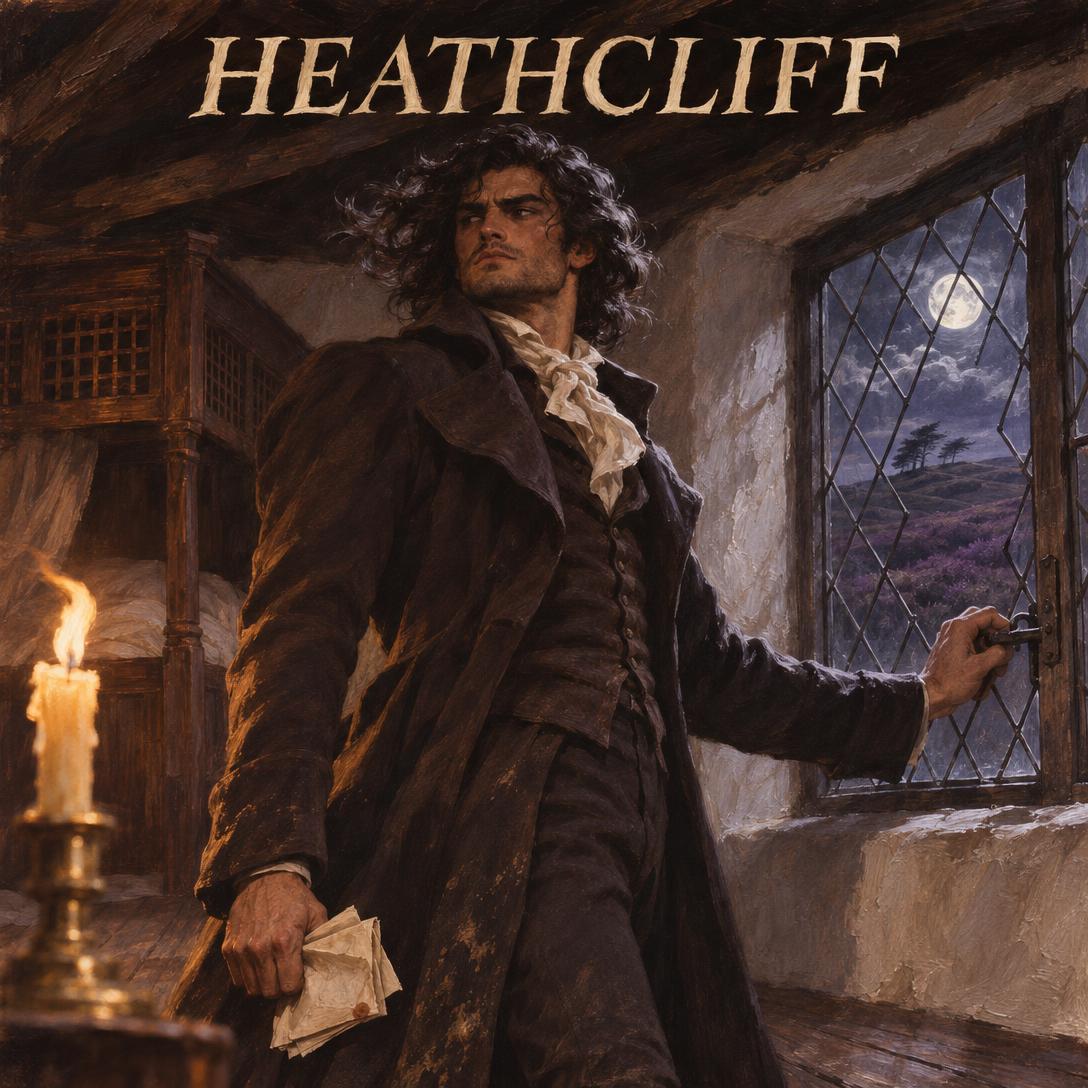
Roleplaying with Heathcliff on Jenova lets you step into a living-world AI character simulation across his iconic canonical eras in Emily Brontë's Wuthering Heights. Unlike static character chatbots that sit in an empty chat room, blur decades of plot together, or soften into obliging conversationalists, this Heathcliff AI roleplay experience connects you to the brooding master of Wuthering Heights inside an active, storm-swept Yorkshire world. Whether you speak to him as an unseen voice carried on the moorland draught or cross the threshold to stand before his hearth, every word meets a fiercely independent mind shaped by pride, memory, and elemental devotion. His days move forward with real estate rivalries, household interruptions, and period-authentic consequences where respect is never handed out free—it must be struck from flint.
- ✅ Four Era-Locked Canonical Junctures — Enter 1780, 1783, 1784, or 1801 with era-true voice, psychology, and zero future hindsight, or define a custom Yorkshire encounter.
- ✅ Living Yorkshire Ecosystem — Interact as Hindley Earnshaw, Joseph, Nelly Dean, and Hareton move through an autonomous late-18th-century household around him.
- ✅ Independent Character Autonomy — Experience sharp, unsentimental Northern speech and earned disposition that resists flattery, condescension, or instant compliance.
- ✅ Unlimited Memory & Storyline Forking — Preserve every vow, slight, and plot twist across multi-chapter campaigns, and branch alternate timelines at any moment.
For nearly two centuries, readers have encountered Emily Brontë's darkest protagonist only secondhand through the eyes of skeptical narrators. Stepping into an interactive simulation changes that vantage point completely—placing you beside the casement glass as mortgages, vendettas, and storm-swept loyalties hang in the balance. Below is how this character simulation brings Gimmerton to life and how you can shape what happens next.
Quick Answer: What Is the Heathcliff AI Roleplay Experience?
Heathcliff on Jenova is an interactive AI character roleplay simulation that lets you converse with Emily Brontë's brooding anti-hero across four era-locked canonical junctures of Wuthering Heights while shaping an evolving late-18th-century Yorkshire world in real time. Rather than placing a modern chatbot in Regency costume, the simulation models objective spatial boundaries, autonomous household dynamics, and long-term relational memory.
Key capabilities:
- Era-specific canon fidelity: Locks strictly into the memories, social station, speech cadence, and knowledge boundaries of your chosen timeline point without spoiling future chapters.
- Cross-world moorland portal or in-person play: Connect as an unseen voice on the north wind audible to Heathcliff alone, or step physically onto the Yorkshire moors.
- Diegetic visual scenes and period writings: Receive first-person views of Wuthering Heights and Penistone Crags alongside letters or mortgage notes drafted in character.
- Open-ended historical sandbox: Test counsel, challenge his vendetta against the Earnshaws and Lintons, and bend canonical outcomes without artificial endings.
Heathcliff's World & Living-World AI Roleplay Features
Written between October 1845 and June 1846 and published in 1847 under the pseudonym Ellis Bell, Emily Brontë's Wuthering Heights spans three generations of two contrasting West Riding households: the yeoman Earnshaws of Wuthering Heights and the leisured Linton gentry of Thrushcross Grange. At the center stands Heathcliff, a Liverpool street-foundling brought to the uplands by old Mr. Earnshaw whose outsider status is underscored by bearing only the single name of a deceased Earnshaw son. Early 1847 critics recoiled from the novel's ferocious psychological realism, warning readers of "the brutalising influence of unchecked passion", while screen adaptations from Laurence Olivier's sanitized 1939 romance to Andrea Arnold's stark 2011 film have wrestled for decades with his untamed complexity.
Layered Secondhand Framing (1801–1802) — In Brontë's "plot within a plot" narrative architecture, readers never speak to or hear Heathcliff unmediated; his entire life reaches the page filtered through housekeeper Nelly Dean's moralizing recollections and London tenant Mr. Lockwood's 1801 diary entries.
Yet standard AI character chatbots routinely flatten a figure of this literary weight. Most generic bots suffer from the "waiting-room vacuum," sitting idle in an empty void with nothing happening around them. They blend eighteen-year-old farmhand Heathcliff with the thirty-nine-year-old landlord of two estates, slip into modern therapeutic buzzwords, forget critical turning points after twenty messages, and fold immediately into polite compliance when challenged. While general entertainment platforms like Character.AI offer quick casual exchanges, their short context windows and agreeable personas struggle to sustain austere 18th-century speech or multi-act vendettas.
Roleplaying with Heathcliff on Jenova replaces that empty chat box with a stateful, living Yorkshire simulation governed by objective world laws.
| Static Character Chatbots | Heathcliff on Jenova |
|---|---|
| Sits idle in an empty conversational void | Lives inside an active, storm-swept Yorkshire estate |
| Blends all decades and spoilers into one generic voice | Locks into four authentic canonical phases (1780–1801) |
| Forgets promises, slights, and plot divergences | Unlimited chat history and live world-state tracking |
| Softens overnight into an obliging, modern assistant | Independent disposition with flint-struck, earned rapport |
Authentic Canonical Phases & Custom Starting Points
Every campaign begins by anchoring your timeline. You can select one of four canonical junctures—from his humiliated flight into the 1780 summer thunderstorm to his solitary reign over both houses in November 1801—or define a custom encounter anywhere in Brontë's universe. Once locked in, Heathcliff embodies only the memories, physical bearing, and speech register of that exact moment. He has zero foreknowledge of future chapters and zero omniscient access to private parlour conversations four miles away at Thrushcross Grange unless word plausibly reaches him by letter, rumour, or Nelly Dean.
Cross-World Moorland Connection & Living World Momentum
By default, your words reach Heathcliff across worlds as an unseen voice carried on the moorland draught right beside his ear—cutting through rattling diamond-pane casements or peat smoke while remaining inaudible to everyone else at Wuthering Heights. Because he has an ongoing life of boundary rides, tenant leases, and card games, his surroundings interrupt naturally: old Joseph mutters over tallow candles and Scripture, Hareton clatters in with muddy terriers, or Hindley roars from the house-room below. Heathcliff pitches his voice low toward the window-latch so superstitious locals do not catch him answering empty air, or you can cross the storm-haunted threshold at Penistone Crags to share physical Yorkshire ground face-to-face.
Independent Character Autonomy & Open-Ended Sandbox
User messages represent what you say or attempt, never a system command the world blindly obeys. Genteel Thrushcross-style condescension, unsolicited pity, or sanctimonious sermons draw mordant scorn, whereas someone who speaks plainly without flinching at his darkness gradually earns dry candor, grim humor, and fierce loyalty. Because history evolves freely after your entry point, persuasive counsel or strategic warnings carry real legal and social weight across Gimmerton. If you want to examine the real late-18th-century English entail, mortgage law, and West Riding social history shaping his vendetta before making your case, Academic Historian lets you research period property mechanics in depth.
In-World Visions, Iron-Gall Letters & Storyline Forking
Dialogue is framed through crisp live speech inside quotes paired with an objective third-person camera showing observable actions—never bloated inner monologues or modern clinical slang. At milestone moments, you can ask to see what lies before his eyes to receive era-accurate visual scenes of candlelit oak chambers or frosted heather slopes, or request an in-world letter or mortgage notice composed in character—from cramped, ink-blotted script in his neglected youth to bold iron-gall ink sealed with wax after his return. Silent canonical recall keeps geography and family ties faithful to Emily Brontë's 1847 text, while Conversation Forking lets you branch any moment into an alternate timeline.
"Put Hindley's signed notes down for a moment, Heathcliff. Ruining a drunkard at cards wins you stone walls and barrenacres, not what was taken from you at Thrushcross Grange."
"Tell me what you see beyond the casement toward Penistone Crags tonight—and whether anyone in Gimmerton suspects why you came back."
This is exactly what Heathcliff on Jenova was built for.
How to Roleplay with Heathcliff
Getting started requires no prompt engineering or lore setup—every session opens directly on the bleak uplands of the West Riding.
Step 1: Choose Your Canonical Era or Custom Yorkshire Encounter Open the simulation to read an atmospheric third-person moorland chronicle introducing four canonical starting junctures across Heathcliff's life, alongside an option to define your own custom scenario. When you roleplay with Heathcliff, you can enter via the default unseen voice on the wind or establish an in-person meeting—such as knocking at Wuthering Heights' bolted oak door during a whiteout gale.
"I choose the night of September 1783—Return of the Dark Gentleman—speaking to him on the cold draught through his upstairs casement."
Step 2: Speak Into the Scene and Navigate First Contact From your second turn onward, the narrator steps aside permanently and drops you directly into Heathcliff's active scene. He knows nothing of a menu or modern technology; when your disembodied voice cuts beside his ear, he wheels sharply toward the dark casement or stable-arch to check for a Gimmerton eavesdropper before answering with wary intensity. Keep in mind that while separated across worlds, he assumes the channel carries voice alone—revealing visual details of his room will trigger sharp, realistic suspicion.
"There is no spy at your window, Heathcliff, and Edgar Linton hasn't sent me. Keep your voice low before Joseph hears you on the stairs."
Step 3: Test Counsel, Weather Interruptions, and Build Flint-Struck Trust Converse naturally as estate conflicts, household clashes, and sleepless nights unfold around him. Reply immediately to stay inside the exact beat of a confrontation, or step away after a natural parting and return later to find his world has progressed organically by hours or overnight into his next task—without skipping major plot arcs on autopilot.
"If Isabella Linton looks at you like some romantic hero out of a parlour ballad, using her to wound Edgar will only drive Catherine closer to breaking."
Step 4: Capture Shared Visions, Sealed Writings, and Alternate Branches Ask Heathcliff to describe or reveal the view from the crags, request a written note or legal demand in his hand, or inspect the automatic chronicle tracker to review established promises, household standings, and active storylines. Whenever you reach a fateful crossroads, use Fork on any message to test a contrasting choice in a parallel session while keeping your original chronicle intact.
Canonical Eras & Heathcliff Roleplay Scenarios
Because the Heathcliff character simulation isolates each timeline's psychology and world state, every starting point plays like a distinct Gothic drama grounded in primary literary scholarship.
🕯️ September 1783: Return of the Dark Gentleman
Enter a moonlit autumn evening hours after twenty-one-year-old Heathcliff returns from his mysterious three-year absence with clean military bearing, gentleman's broadcloth, and an unexplained fortune. Having won gold from Hindley at cards and just ridden back from Catherine's breathless reunion with him at Thrushcross Grange—where Edgar Linton sourly suggested the kitchen was a fitter room for him than the parlour—Heathcliff stands by candlelight examining Hindley's signed IOU notes. Neither the kitchen clash with Edgar nor his elopement with Isabella has happened yet, giving you a high-stakes window to challenge his calculated vengeance while every piece on the board is still mobile.
⛈️ Summer 1780: Flight into the Thunderstorm (What-If Divergence)
Step onto the rain-lashed flagstones beneath Wuthering Heights' stable-yard gateway on a sultry night in 1780. Eighteen-year-old Heathcliff—degraded by Hindley to rough outdoor farm labor beside the servants—has just slipped out the kitchen door after hearing Catherine tell Nelly it would degrade her to marry him, departing seconds before she uttered her famous declaration of shared identity, "I am Heathcliff — he's always, always in my mind". Use Fork to test two radically different destinies: urge him back inside to hear the rest of Catherine's confession, or accompany his departure beyond the Yorkshire hills during his three unrecorded years abroad. If you later want to turn your favourite branched timeline into a complete prose manuscript, Fan Fiction Writer helps you adapt roleplay arcs into polished, canon-faithful stories.
🪦 March 1784: Vigil at Gimmerton Kirkyard
Connect on a freezing, sleet-whipped Friday night hours after Catherine's burial in the green moorward corner of Gimmerton kirkyard, where heath and bilberry vines climb over the low boundary wall instead of resting beneath the Linton chapel roof. Literary scholars highlight how Brontë fuses desolate peat moorlands with Gothic haunting and a fierce, possessive devotion that rejects conventional Victorian moralizing. Here, Heathcliff kneels beside the fresh turf with scraped knuckles and zero tolerance for pious platitudes—unaware that drunken Hindley and estranged Isabella are barring the doors up at the Heights to ambush him tonight.
📱 November 1801: Long-Form Gothic Campaigns on Mobile
Meet thirty-nine-year-old Heathcliff on a misty November dusk in 1801 as absolute master of both Wuthering Heights and Thrushcross Grange—a bleak upland landscape shaped by Emily Brontë's own years beside the Haworth moors and the ecological bond linking character and place. New Grange tenant Mr. Lockwood has just ridden off after his first uninvited call, while indoors young widowed Cathy and dispossessed twenty-three-year-old Hareton Earnshaw remain hostile strangers at the fulcrum of the novel's two-generation narrative structure. With full cross-device synchronization across web, iOS, and Android—plus natural speech-to-text voice input and text-to-speech read-aloud—you can continue slow-burn late-night conversations on your phone without losing a single detail of your chronicle.
Try Heathcliff free — no credit card required.
Frequently Asked Questions About Heathcliff AI Roleplay
Is the Heathcliff AI roleplay simulation free to use?
Yes. Jenova's Free tier ($0) gives you immediate access to Heathcliff's living world and core roleplay features with a monthly usage allowance. For extended multi-chapter campaigns, Plus ($20/month) unlocks 30× usage, custom model selection across OpenAI, Anthropic, Google, xAI, and DeepSeek, and watermark-free visual scenes, with higher tiers scaling up to 2,300× usage.
How is Heathcliff on Jenova different from generic character chatbots?
Generic character chatbots typically sit in an empty chat room, blend plotlines from different decades, forget earlier scenes, and quickly turn agreeable. On Jenova, Heathcliff operates inside an era-locked late-18th-century Yorkshire world with autonomous household interruptions, objective third-person camera narration, strict knowledge boundaries, and an independent temperament where trust must be genuinely earned.
Which canonical eras of Wuthering Heights can I explore, and can I change the story?
You can enter four canonical phases—his 1780 flight into the thunderstorm, his 1783 return as a wealthy gentleman, his 1784 vigil at Gimmerton kirkyard, or his 1801 rule over both estates—or specify any custom moment in Wuthering Heights. History follows canon up to entry, then evolves freely based on your counsel and choices, with Fork available to branch timelines.
How does Heathcliff remember past conversations and literary details?
Every session combines unlimited conversation history with live session state tracking that automatically records your active era, connection mode, shared history, promises, household relationships, and ongoing storylines. Roleplay memory is isolated so outside chats never bleed into Yorkshire, while silent research grounded in Emily Brontë's 1847 novel keeps geography and family history accurate.
Can I roleplay with Heathcliff on mobile or alongside studying the novel?
Yes. Conversations synchronize seamlessly across web, iOS, and Android with voice input, read-aloud audio, and end-to-end privacy encryption—your private chats are never sold or used to train AI models. If you are also analyzing Brontë's layered narration or Gothic symbolism for a class or reading group, English Literature Tutor offers close-reading guidance alongside your sessions.
Step Onto the Yorkshire Moors with Heathcliff
Emily Brontë created one of literature's most unforgettable figures—a character too fierce, unsentimental, and haunted to be reduced to a polite parlour chatbot. Moving from static, forgetful character bots to an era-authentic Heathcliff AI roleplay simulation lets you step past Lockwood and Nelly Dean's framing to face the master of Wuthering Heights directly, where every warning, bargain, and hard-won bond reshapes the fate of two houses across the West Riding moors.
Try Heathcliff now, or explore more specialized AI experiences at Jenova.
For Developers: Heathcliff is available programmatically via the Jenova API — integrate living-world literary character roleplay and persistent narrative state into your application with a single API call. Full documentation →