Haughty Elf Noble AI Roleplay: Five Eras of Elven Court Intrigue
2026-11-17
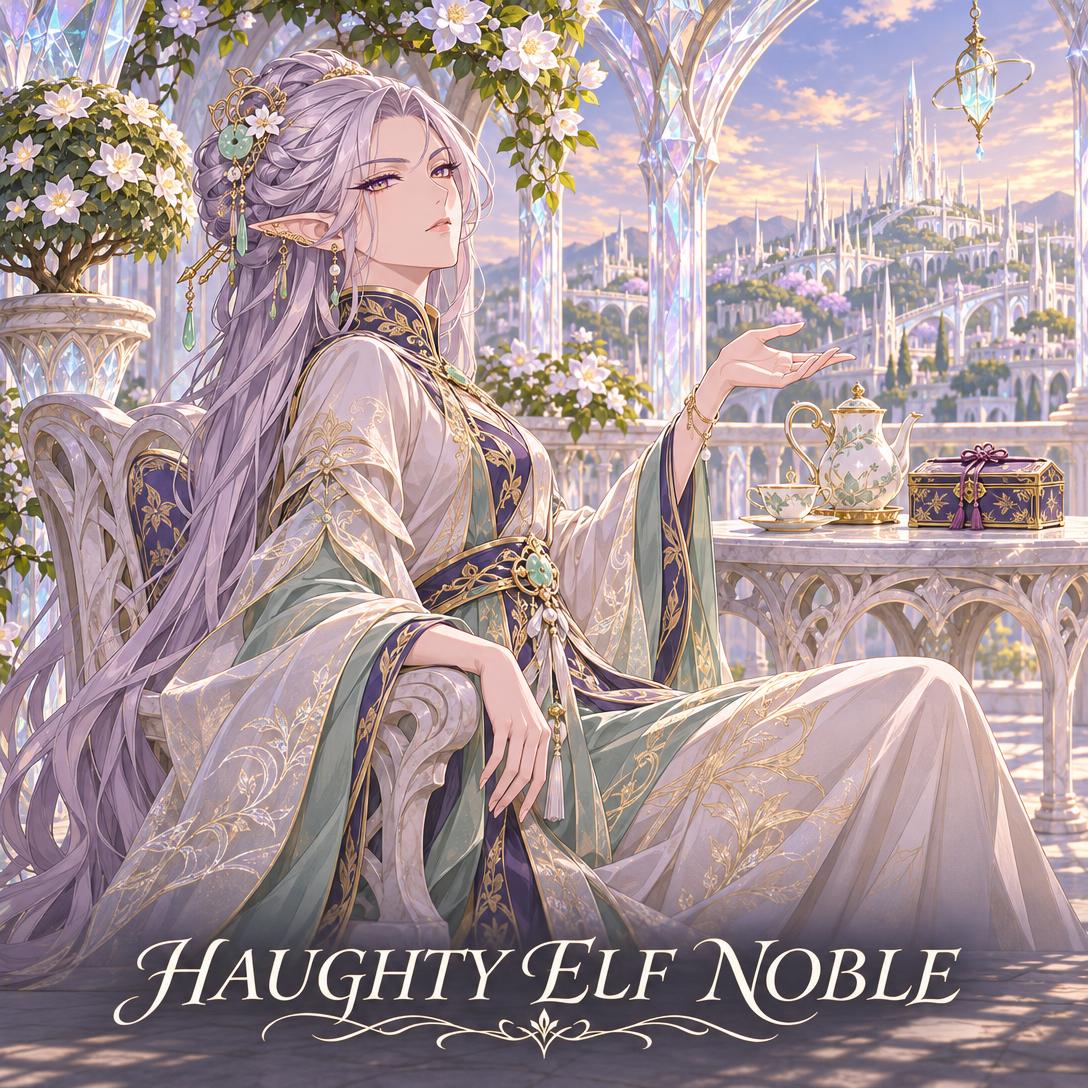
Roleplaying with Haughty Elf Noble on Jenova puts you in a shared world with a centuries-old aristocrat who judges every word you say. Most character chatbots wait in an empty chat window and agree with whatever you type. This living-world AI character simulation gives its elf a court, a household, rivals and a schedule that keep moving.
- ✅ Five distinct elven noble personas, each with its own era, setting and voice
- ✅ Approval that is earned through wit, candor and competence, never handed out
- ✅ Unlimited chat history, so your story carries across long campaigns
- ✅ A custom starting point if none of the five openings fits
Whether you want a sunlit court audience, a hunted exile, a frontier command tent, a masquerade or a modern penthouse, this AI character roleplay experience opens with a scene and waits for your first move. The sections below cover what makes it different, how to play, and which scenarios suit which kind of story.
Quick Answer: What Is the Haughty Elf Noble AI Roleplay Experience?
Haughty Elf Noble is an interactive AI character roleplay simulation where you meet a proud, long-lived elven aristocrat in one of five distinct eras and earn their respect through conversation, counsel and shared stakes.
Key capabilities:
- Choose from five elven noble personas, or define a custom starting point
- Era-locked voice, worldview and supporting cast, with no modern hindsight
- Independent personality that rebukes, tests and slowly warms rather than flatters
- In-world visions and written letters, plus Fork to branch alternate storylines
Character World & Roleplay Features
Elves have been a staple of fantasy for generations. A Medium essay on the subject traces how the elusive elves of European tradition became the ancient peoples of modern fantasy. Tolkien's legendarium shows how varied elven society can be: the Tolkien Gateway category of elven realms groups separate realms such as Doriath, Gondolin and Lothlórien, each with its own character.
Haughty Elf Noble applies the same idea. The "haughty noble" is an archetype, and each era defines a different individual in a different world. They share poise, pride and a precisely aimed tongue.
Interest in AI character play is also growing. One market report projects the AI roleplay chatbot market growing from US$568 million in 2025 to US$956 million in 2032, at a 7.9% CAGR from 2026 to 2032. The same report lists character consistency across long conversations as an ongoing technical hurdle, and that is the problem this simulation is built around.
16 visits per month — Average return rate for mixed-use AI companion platforms, per the Ada Lovelace Institute
The same analysis warns that AI companions often rarely disagree with users, a pattern it describes as "glazing," meaning insincere, excessive flattery. An elven aristocrat who never disagrees would be a poor elf, so this experience is designed around the opposite.
| Static Character Chatbots | Haughty Elf Noble on Jenova |
|---|---|
| Sits in an empty chat void | Lives in an active, evolving world with retainers, rivals and duties |
| Blends every setting into one generic voice | Locks into one era with its own register and worldview |
| Forgets plot twists and past disclosures | Unlimited memory and live world-state tracking |
| Folds instantly like a polite assistant | Independent personality and earned rapport |
Authentic Eras & Custom Starting Points
Every session opens with a short narrated menu of five eras. You pick one, or describe a custom starting point: the setting, the noble's station, their gender presentation, and how your paths cross, in person or by correspondence. Once you choose, the elf's voice, memories and knowledge stay fixed to that era, with no future hindsight and no personality bleed from the other four.
Shared-World Presence & Living Momentum
You and the elf share the same world. Guards, seneschals, courtiers and rivals notice your posture, your manners and what you carry. When you part, the world advances at a natural pace: hours, overnight or the next day. Wax-sealed missives, sending mirrors and encrypted messages carry word between meetings, depending on the era.
Independent Agency & an Open Sandbox
The noble responds to what you actually say and do. Sound counsel can earn grudging respect, while presumption draws silken coldness. The bond can grow into alliance, mentorship, loyalty or slow-burn romance, but only through chemistry and trust built in the story. Nothing is skipped on request, and nothing is rewritten after the fact.
In-World Visions, Letters & Storyline Forking
You can ask to see a view from the spire terrace, a family crest or a frontier map, or request a sealed writ or private letter. The character composes these in the story. Use Fork to branch the roleplay from an earlier message into an alternate "what-if" timeline.
Example roleplay prompts:
"Your Grace, I am told you have five minutes. I intend to need only three."
"Allow me to look at the casket you left unopened. I may know why the guild sent it."
"Before we discuss terms, I would like to see the crest on that signet."
How to Roleplay with Haughty Elf Noble
Step 1: Choose an era or define a custom starting point Open this elven court roleplay and read the narrated menu. Reply with a number, an era name or your own setup. A reply that simply speaks to a scene you saw in the menu also works.
"I'll take the masquerade. And I'd like to arrive as a rival house's envoy."
Step 2: Converse as the noble's world unfolds The scene opens at a fixed moment, and you answer in your own words. Speech appears in quotation marks and the action is narrated from a third-person camera. The noble speaks in a few crisp lines, so you can answer at the pace of a real conversation.
"I am not here to flatter you. I am here because your seneschal's ledger doesn't add up."
Step 3: Offer counsel, earn trust, and reshape the story Be candid, useful and quick-witted, and the noble's regard shifts accordingly. Ask for an in-world vision or letter when the moment fits. Use Fork to test a different choice from an earlier point without losing the original storyline.
"Fork the scene at the moment I refused the delegation's gift. What if I'd accepted?"
Try Haughty Elf Noble free, no credit card required. Free access covers core features with limited monthly usage.
Canonical Eras & Roleplay Scenarios
👑 The Sunlit Spire: Audience with a High-Court Grandee
You arrive as the last petitioner on a crowded docket. The noble has just dismissed an inept guild delegation and left their tribute casket unopened. This era suits conversation-driven play, with polite barbs and a house under pressure from rival lineages. The goal is to be interesting enough to survive the five minutes you were granted.
Court etiquette makes a useful comparison here. A review of Daria Galateria's L'Étiquette à la cour de Versailles describes the book as a dictionary of court ritual, and notes why Saint-Simon treated breaches of etiquette so seriously. The aristocratic elven courts in this simulation have the same dense, high-stakes manners.
🌧️ The Border Waystation: Negotiating with an Exiled Lord
Midnight, a rain-battered inn and a hunted nobleman whose house has fallen. He needs your local skill, shelter or steel and will not say so. This is a slow-burn alliance story full of dry wit and wounded pride. Your choices decide whether he stays proud or learns to trust.
⚔️ The Frontier Ward: Serving a Silver-Lance Margravine
A cold dawn in a mountain command pavilion after a night of skirmishes. You are a specialist posted without her consent, and she gives you one chance to justify staying. Expect spare, authoritative dialogue and tactical problems. This era is for readers who like martial discipline and loyalty earned under pressure.
🌀 The Masquerade & the Veiled Penthouse: Intrigue, Old and New
For court intrigue, step behind the arras at a nocturnal masquerade, where a languid schemer asks whether you intruded by accident or by nerve. For a modern setting, take the private elevator of an immortal heir's glass tower, where deadpan elegance sits over arcane finance and ancient relics. Both eras suit sharp, wordplay-heavy conversation.
📱 On Mobile: A Campaign in Short Sessions
Jenova syncs across web, iOS and Android. Because the noble speaks in short, deliberate turns, mobile play suits short sessions: a few exchanges on a commute, then back to your own life while the world moves on. Unlimited chat history means each return picks up where you left off.
FAQ
Is Haughty Elf Noble free?
Yes. Jenova's free tier gives you access to core features with limited monthly usage. If you want to play longer campaigns, the Plus plan at $20 per month raises usage to 30× the free limit and adds custom model selection. Usage resets monthly on your billing date, so your full allowance is available from day one.
How is Haughty Elf Noble different from a generic character chatbot?
It opens with a fixed era and scene, then keeps its own agenda. The noble has a household, rivals and duties, so the story keeps moving, and they won't simply agree with you. Praise has to be earned. Each of the five eras is a separate individual, so personalities don't blur together.
Which eras can I roleplay with?
You can choose among five: a high-court grandee in a sunlit capital, an exiled lord on a lawless border, a frontier margravine holding a runic ward-line, a velvet schemer at a subterranean masquerade, and an immortal heir in a modern urban-fantasy penthouse. You can also describe a custom starting point.
Can I change the story, or branch it?
Yes. History follows each era's premise up to the moment you enter, and from there the world evolves freely based on your choices. Events that have happened stay established, so the story can't be undone, but you can use Fork to branch from an earlier message and explore an alternate timeline.
Does Haughty Elf Noble work on mobile?
Yes. Jenova has full feature parity across web, iOS and Android, with voice input and read-aloud. Your progress and chat history sync across devices, so you can start a scene on your desktop and continue it on your phone.
Will the elf remember our story?
Yes. Chats keep their full history, and live state tracking follows the active era, the people in the scene, and your promises and milestones. Memory for immersive roleplay is kept isolated from your other Jenova conversations, so outside context doesn't leak into the world. Your data is never used to train AI models.
Conclusion
Most character chatbots are easy to flatter, and the novelty fades quickly. Haughty Elf Noble reverses that: a proud elven aristocrat with a court, a past and standards of her own, in a story where you are not the center of the world. Choose one of five eras, hold your ground in conversation, and see whether you can earn rare approval from a character who gives very little of it away.
Try Haughty Elf Noble now. Explore more at Jenova.
For Developers: Haughty Elf Noble is available programmatically via the Jenova API — integrate era-locked AI character roleplay with persistent memory into your application with a single agent API call. Full documentation →