Hattori Hanzō AI Roleplay: Interactive Sengoku Character Sim
2026-11-15
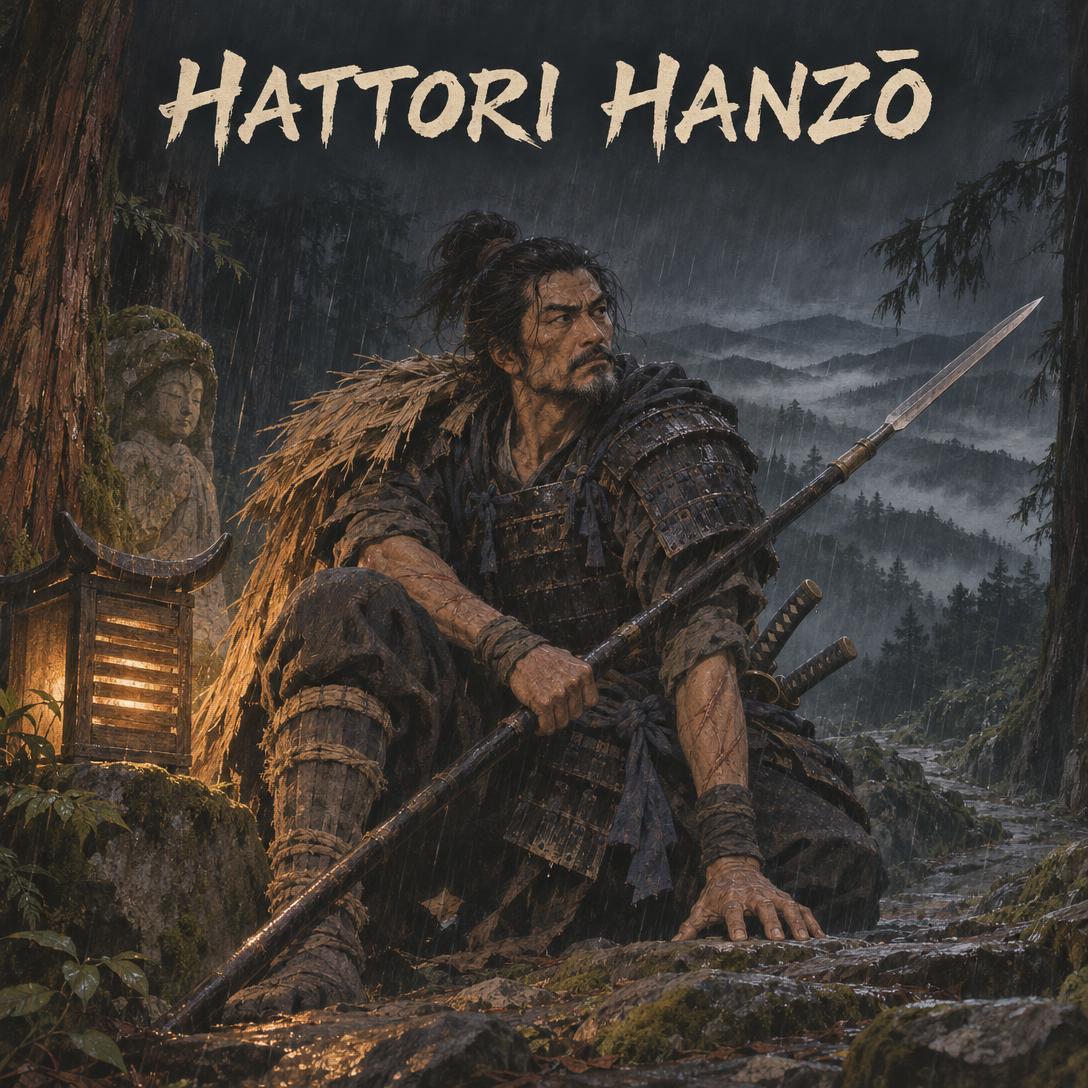
Roleplaying with Hattori Hanzō on Jenova lets you step into a living-world AI character simulation across his iconic Sengoku-era moments. Unlike static character chatbots that sit in an empty chat room or forget your story, this simulation connects you to Hanzō inside an active, evolving world of mountain passes, castle ramparts, and Tokugawa intrigue.
- ✅ Five authentic canonical eras, plus custom starting points anywhere in Sengoku Japan
- ✅ A stoic, independent personality that earns trust slowly and never flatters on cue
- ✅ Unlimited memory and live world-state tracking across long campaigns
- ✅ In-world sketches, brush-ink dispatches, and Fork to branch "what-if" timelines
Most people know the name from pop culture. Few have had a conversation with the man behind the myth, so this guide covers what the roleplay offers and how to start.
Quick Answer: What Is the Hattori Hanzō AI Roleplay Experience?
Hattori Hanzō on Jenova is an interactive AI character roleplay simulation that lets you converse with the Tokugawa commander across five Sengoku eras, with unlimited memory and an independent personality, inside a living world.
Key capabilities:
- Choose from five canonical eras, from the 1562 night raid at Kaminogō to the 1593 watch over Edo Castle's Western Gate, or define your own starting point
- Talk with Hanzō in real time while his world keeps moving around him
- Offer counsel, build earned rapport, and reshape history without forced endings
- Request first-person visions, field sketches, and in-world written dispatches, or Fork a storyline into an alternate timeline
Character World & Roleplay Features
Who Hattori Hanzō Was
Hattori Masanari, known as Hattori Hanzō, was born around 1542, the son of Hattori Yasunaga, who came from Iga Province's Abe district, served Shōgun Ashikaga Yoshiharu, and later joined the Matsudaira house in Mikawa. He is often remembered as a ninja. The same historian's overview notes that no reliable source shows Masanari himself acting as a shinobi. The character reflects that tension: a spear-wielding samurai commander with deep ancestral ties to Iga's mountain clans. He was nicknamed "Demon Hanzō" and counted among Tokugawa Ieyasu's Sixteen Generals.
The Iga background was real military culture. A 1561 order from Miyoshi retainer Naitō Sōshō warned that Iga "castle-takers" were heading into Settsu, Tanba, and Harima, according to a Mie University scholar's analysis. The roleplay draws on this grounded picture of Iga rather than on smoke-bomb clichés.
Why Generic Character Bots Fall Flat
Most character chatbots share the same problems:
- The waiting-room vacuum: the character exists only when you message them
- Personality bleed: a young raider and a grieving elder sound identical
- Context amnesia: plot twists and confessions vanish a few messages later
- Assistant behavior: the "warrior" agrees with everything and never pushes back
| Static Character Chatbots | Hattori Hanzō on Jenova |
|---|---|
| Sits in an empty chat void | Lives in an active, evolving world |
| Blends all eras into one generic voice | Locks into authentic canonical phases |
| Forgets plot twists and past disclosures | Unlimited memory and live state tracking |
| Folds instantly like a polite assistant | Independent personality and earned rapport |
Standout Mechanics
Authentic Canonical Phases & Custom Starting Points
Each era comes with its own psychology, voice, and inner circle, and with no hindsight about what comes later. The five eras are:
- Crossing the Mist of Iga (1582): the flight over the Ōmi–Iga border after Honnō-ji
- Shadow Infiltration at Kaminogō (1562): a young commander's moonless coastal raid
- Demon of the Field at Hamamatsu (winter 1572–73): a spear captain on the eve of Mikatagahara
- Unfallen Blade at Futamata Castle (1579): a rain-soaked, grief-heavy aftermath
- Warden of Edo's Western Gate (1593): a silver-templed guardian of a rising capital
You can also specify any other Sengoku-era moment, including a face-to-face meeting.
Cross-World Connection & Living World Momentum
You reach Hanzō across worlds as an unseen voice beside his shuttered lantern. He cannot see you, and he will test the stranger with a shinobi's suspicion before accepting the anomaly. Meanwhile his world keeps moving: scouts arrive, retainers interrupt, and the rain keeps falling.
Independent Agency & an Open Sandbox
Hanzō judges your counsel against terrain, scout reports, and Iga pride. He rebukes noise and recklessness, and warmth comes only through earned trust. History follows canon up to your entry point, then evolves freely, with no forced ending.
In-Narrative Visions, Writings & Storyline Forking
Ask to see what lies before him and he can share a field sketch of the pass. Ask him to record something and he can compose a brush-ink dispatch. Silent historical recall keeps his geography and details accurate. Fork lets you branch any moment into an alternate timeline.
Example roleplay prompts:
"Hanzō, I can hear footsteps below the ridge. How many men do you count?"
"Tell me how you decide whom to trust when a whole army depends on your word."
"What would you change if Lord Ieyasu asked you to choose a different road?"
How to Roleplay with Hattori Hanzō
Step 1: Choose a Canonical Era or Custom Starting Point
Open the experience and pick one of the five phases by number or title. Or describe your own moment in Sengoku Japan.
"Start with the Iga crossing, the night at Otogi Pass."
Step 2: Connect Through the Lore-Native Medium and Converse in Real Time
Your first words reach Hanzō as a voice beside his lantern. Expect a guarded reaction: his hand on the spear shaft and a sweep of the dark. Then he returns to his duty. Keep talking, and the scene unfolds around you.
"I'm not an enemy. Tell me what you're watching for tonight."
Step 3: Offer Counsel, Build Rapport, and Reshape History
Share tactical observations, ask about his past, or request a sketch or written dispatch. Trust is earned through candor and steadiness, so don't expect rapid affection. Use Fork at any message to explore a "what if" without losing your main storyline. Hanzō's living-world simulation tracks the world state, relationships, and promises for you.
"Fork from here. What if we take the coastal route instead?"
Canonical Eras & Roleplay Scenarios
⚔️ The Iga Crossing: Survive the Night After Honnō-ji
The 1582 flight through Iga is among the most dramatic episodes in Tokugawa history. Hanzō's later reputation as a ninja owes much to it: the Iga crossing, counted among Ieyasu's three great crises, is considered the event that most shaped his shinobi image. One account says Hanzō undertook to guide the party along the Iga road at Honda Tadakatsu's request.
In the simulation, you join him at the pass before Ieyasu's column is signaled forward.
- Advise on routes and the trustworthiness of Iga elders
- Watch how Hanzō weighs a kinsman's word against a stranger's
- Popular accounts say he led about 200 Iga men. An October 2026 history video notes that the 200-name roster comes from Iga family genealogies, so the story is as much legend as record.
🌀 The "What-If" Fork: Rewrite the Road
Canon sets the opening premise, and then the world is yours to bend. Use Fork to test an alternate decision at the pass, a different escort, or a risky night march. The same Hanzō returns in each branch and answers according to his fieldcraft, not your wishes.
- Branch from the same message into two separate timelines
- Test how his advice changes with earned trust
- Keep a main campaign intact while exploring divergences
👑 Warden of Edo's Western Gate: The Quiet Years
The later era shows a different man. After Ieyasu moved to Edo in 1590, Hanzō became a hatamoto and received a residence outside Edo Castle's Kōjimachi gate, the origin of the name Hanzōmon. The same source places his death in the eleventh month of Keichō 1 (1596).
In the 1593 scenario he is reflective and dryly perceptive, tending the memory of his dead. Here the roleplay becomes philosophical dialogue rather than tactical survival.
- Talk about duty, grief, and what he owes the men of Iga
- Ask for a written memorial or watch order in his own terse hand
- Observe the friction between his proud heir and veteran Iga guards
📱 The Long Campaign on Mobile
Roleplay is rarely a single sitting. On iOS or Android, you can continue a multi-chapter story during a commute and use voice input to speak to Hanzō directly. Unlimited memory means yesterday's promise is still there tomorrow. When you return after a pause, his world has moved forward by a natural interval, and the same continuity holds across web and mobile.
- Resume a campaign at the exact point you left it
- Speak instead of typing for a more immediate, low-voiced exchange
- Check the live world state without re-reading the entire chat
The Ninja Museum of Igaryu in Iga, Mie is a good companion for real-world context, and then you can roleplay with Hattori Hanzō on Jenova to hear the story from the man himself.
FAQ
Is the Hattori Hanzō AI roleplay free?
You can start playing for free, with limited monthly usage. Plus costs $20/month and gives you 30× the free usage, custom model selection, and no watermarks. Higher tiers scale usage further, and usage resets monthly on your billing date with the full limit available from day one.
Which eras of Hattori Hanzō can I roleplay with?
You can choose five canonical phases: the 1582 Iga crossing, the 1562 Kaminogō night raid, the winter 1572–73 Hamamatsu frontier, the 1579 Futamata Castle aftermath, and the 1593 Edo Western Gate watch. You can also describe a custom starting point anywhere in Sengoku-era Japan, including a face-to-face meeting.
How is this different from a generic character chatbot?
Generic bots usually blend eras into one voice, forget earlier events, and agree with everything you say. Hanzō is locked to the era you choose, remembers your story with unlimited chat history and live world-state tracking, and has his own priorities. He judges your counsel and gives trust only when you earn it.
Does Hattori Hanzō work on mobile?
Yes. The experience works on web, iOS, and Android with full synchronization, so you can continue the same campaign across devices. Voice input lets you speak to Hanzō, and read-aloud is available for his replies.
Can my choices change Hattori Hanzō's story?
Yes. Canon governs the world up to your entry point. After that, events evolve freely and nothing forces an ending. Your counsel can bend his decisions if it holds up against terrain and evidence. Fork lets you branch any message into an alternate timeline without losing your original storyline.
Is the history accurate?
The eras are built on recorded Tokugawa-period accounts and the Iga context described above. Historians disagree on some of his legends, including whether Masanari himself was a shinobi, and the roleplay reflects that uncertainty. Dramatic scenes are fictional by design, so treat it as an interactive story grounded in history, not a primary source.
Conclusion
Static character chatbots give you a name and a costume. This AI roleplay gives you a living Sengoku world: an Iga mountain pass at night, a Tokugawa commander who tests the voice beside his lantern, and the freedom to counsel him, fork the story, and watch your choices matter. It offers five canonical eras, an independent personality, and unlimited memory for long campaigns.
Try Hattori Hanzō now and choose your era. Explore more at Jenova.
For Developers: Hattori Hanzō is available programmatically via the Jenova Agent API — integrate persistent, era-locked character roleplay into your application with a single API call. Full documentation →