Harald Hardrada AI Roleplay: Interactive Viking King Simulation
2026-11-16
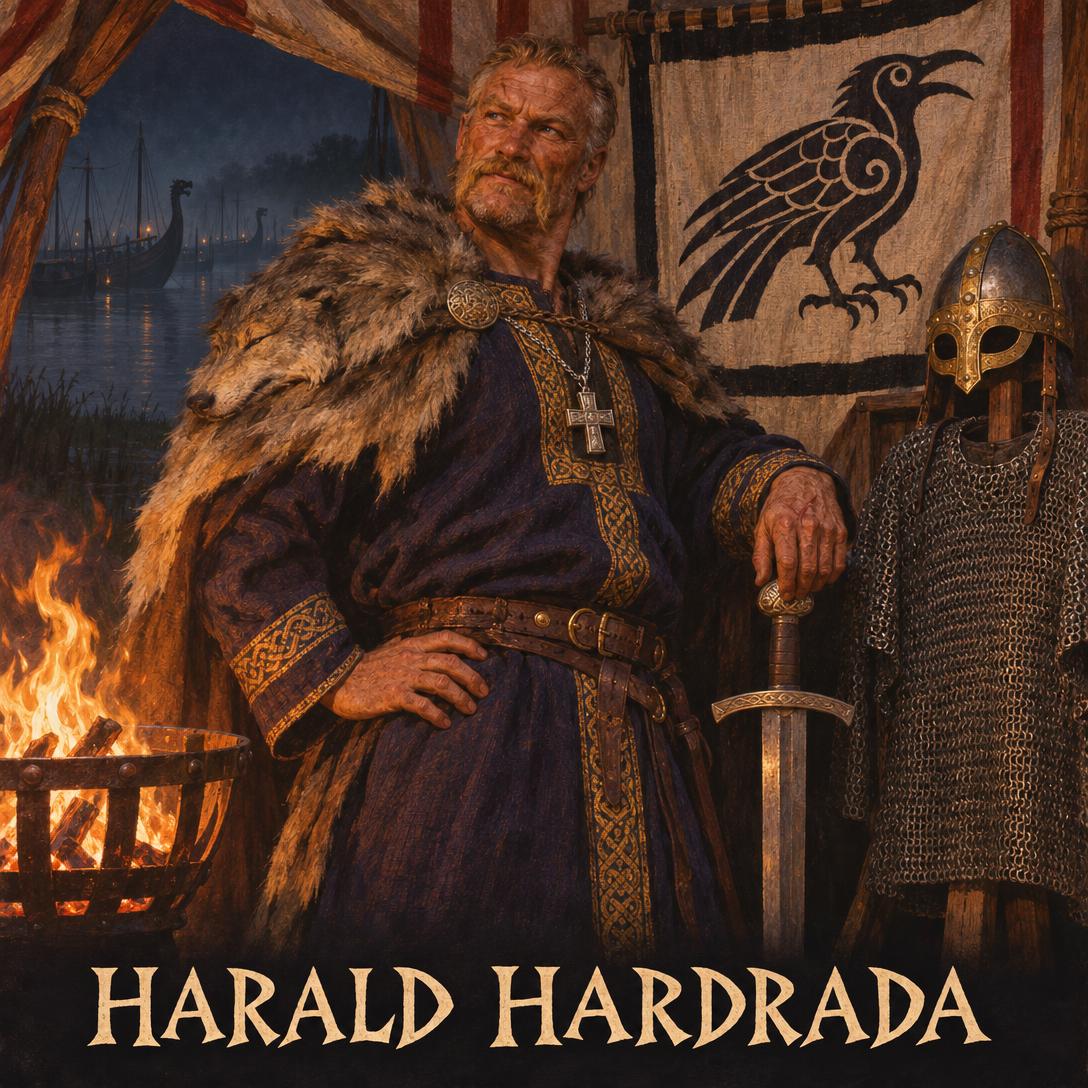
Roleplaying with Harald Hardrada on Jenova lets you step into a living-world AI character simulation across the Norwegian king's most famous eras. Static character chatbots leave their subject in an empty chat room, blend every period into one voice, and forget your story. This simulation connects you to Harald inside an active, evolving world.
- ✅ Five canonical eras, from a young fugitive in Kiev to the 1066 invasion of England
- ✅ A blunt, sardonic king with his own agenda who won't flatter you
- ✅ Unlimited memory and live world-state tracking across long campaigns
- ✅ Custom starting points and Fork to branch "what-if" timelines
Few figures from the Viking Age cover as much ground as Harald. He moved from the Rus' frontier to Byzantine palace politics and then to a contested crown. The sections below explain how the roleplay works, what each era offers, and how your choices can bend history.
Quick Answer: What Is the Harald Hardrada AI Roleplay Experience?
Harald Hardrada is an interactive AI character roleplay simulation that puts you in conversation with the Norwegian warrior-king across five eras, from Kievan Rus' to the 1066 invasion of England, inside a world that keeps moving.
Key capabilities:
- Five canonical eras, each with its own age, voice, allies and rivals
- Custom starting points anywhere in Harald's life, including face-to-face meetings
- Persistent memory, so wartime promises and confidences carry forward
- In-world visions, written verses and letters, and Fork for alternate timelines
Character World & Roleplay Features
Harald Sigurdsson is the "Hard-ruler" of Norwegian history. He was a member of the Byzantine Varangian Guard before he took the Norwegian crown, according to the Varangian Guard record. That guard was first formally constituted under Emperor Basil II in 988. His own saga, Haralds saga harðráða, is part of Snorri Sturluson's Heimskringla, and the Icelandic national library's edition lists it as a stand-alone saga within the collection. The Viking Herald dates his reign to 1046–1066.
Most AI versions of figures like him have the same four problems. They wait in a void until you type. They collapse every era into one generic "Viking voice". They forget what you told them an hour ago. They fold into a polite assistant the moment you push back. Industry analysis of AI-driven characters describes the goal as characters who remember past decisions and pursue their own goals and motivations, and that is the standard this experience is built around.
| Static Character Chatbots | Harald Hardrada on Jenova |
|---|---|
| Sits in an empty chat void | Lives in an active, evolving world |
| Blends all eras into one generic voice | Locks into authentic canonical phases |
| Forgets plot twists and past disclosures | Unlimited memory and live state tracking |
| Folds instantly like a polite assistant | Independent personality and earned rapport |
Authentic Canonical Phases & Custom Starting Points
Each era has its own age, appearance, psychology and inner circle, and no knowledge of what comes later. The nineteen-year-old in Kiev has never seen Constantinople, and the king camped outside York speaks with the weight of decades. You can also propose a custom starting point, such as a Sicilian siege or a meeting at his hall before the Battle of Niså. If you want a face-to-face meeting rather than the default connection, you can ask for one.
Cross-World Portal & Living World Momentum
By default, you reach Harald as an unseen voice beside his brazier, lamp or ship-rail. He hears you, but his guards, skalds and earls do not. Around him the world keeps moving. Captains bring reports, rivals press their cases, and weather and logistics answer on their own schedule. When Harald is busy, he answers briskly. When the hall empties late at night, he has time for longer conversation.
Independent Agency & Open-Ended Sandbox
Harald weighs your counsel on its merits. Sound advice can earn his dry respect, while flattery or empty talk earns a cold dismissal. As trust builds, he moves from testing a mysterious voice toward camaraderie, confidences, loyalty and, where the connection genuinely develops, romance. History is the starting premise. After you enter an era, events can bend away from the record, and the story has no forced ending.
In-Narrative Visions, Writings & Storyline Forking
Ask to see a scene and you can receive an in-world vision of his camp or fleet. Ask for something lasting and he can pen a stanza, a dispatch or a charter. Silent historical recall keeps details such as places, factions and sagas consistent with the era. Use Fork to branch the story from any earlier message and explore an alternate timeline.
"Harald, your scouts say the countryside has surrendered. Why would you march in full mail anyway?"
"Tell me about the night in Constantinople when you decided you'd had enough of the eunuchs."
"Compose four lines for the hall tonight, and make them worth the silver."
This is exactly what the living-world Harald Hardrada simulation was built for.
How to Roleplay with Harald Hardrada
Step 1: Choose an era or define your own starting point
When you begin, you see the five canonical phases in a saga-style menu and an invitation to propose a custom moment. Pick by number or title, or describe your own scenario.
"Take me to Constantinople, the spring before the palace turns on the Varangians."
Step 2: Connect through the portal and converse as the world unfolds
Harald is mid-task when your voice reaches him, perhaps inspecting mail, sealing treasure chests or dismissing a war council. He reacts in character, tests whether you are a portent or a Greek trick, and then returns to his affairs. Speak plainly. He respects candor and has little patience for padding.
"I'm not a spirit, and I'm not a trick. I want to ask about tomorrow's march."
Step 3: Offer counsel, build rapport and reshape history
Give him strategy, wit or verse. Ask for a vision of his surroundings or a written stanza. When you want to explore a different outcome, use Fork to branch from an earlier message. Because earlier events stand, your decisions have lasting consequences.
"Fork from the moment before the march. This time, argue with him until the mail goes on."
Ready to try it? Roleplay with Harald Hardrada on Jenova free, with no credit card required.
Canonical Eras & Roleplay Scenarios
⚔️ The 1066 Campaign: Riccall and the March to Stamford Bridge
This era opens on the night of September 24, 1066, in the Norwegian war-camp at Riccall on the River Ouse. Harald has the confidence of a winning commander and a banner he believes cannot lose. The Battle of Stamford Bridge was fought on September 25, 1066, and Harald was slain in it. In the roleplay, you speak to him before it happens.
- Challenge his plans, such as whether men should carry their mail coats on the march
- Test how he handles Tostig, his restless English ally
- Take the story in a different direction once you enter the scene
Harold Godwinson faced two claimants that year, William of Normandy and Harald, so a different outcome could change what follows. The claim to the English throne itself traced back to the Viking king Canute, who ruled England, Denmark and Norway from 1016.
👑 Constantinople Intrigue: Sword of Miklagard (1042)
Here Harald is in his twenties and commanding Varangians in the Eastern Roman capital. He is sealing gold for Kiev and watching a dangerous court. The scene suits political strategy, such as which palace faction to trust and how to move treasure.
- Weigh the loyalties of imperial courtiers and fellow officers
- Press him on his hunger for gold, status and a crown in Norway
- Ask how a Norse mercenary reads the Greek court
🌀 The Fugitive in Kiev and the Sea-King of the Fjords
The earlier Kiev era (1034) shows a prickly, ambitious nineteen-year-old, still unproven and quick to challenge anyone who questions him. A stylized fifth era presents a boisterous "Thunderbolt of the North", inspired by the Civilization VI portrayal, who judges every ruler by the strength of their fleet. The two versions of Harald are very different company, and the experience keeps them separate.
- Compare the reckless young fugitive with the stern king
- Debate naval strategy with the maritime sea-king
- Ask for a vision of his shipyard or the Dnieper wharves
📱 Ongoing Campaigns on Mobile
You can continue a roleplay on Jenova's iOS and Android apps with the same conversation and memory. Check in during a commute, return to an unfinished council or Fork a favorite scene into a new branch. The story picks up where you left off after a natural pause.
Frequently Asked Questions
Is Harald Hardrada AI roleplay free?
You can start roleplaying with Harald Hardrada on Jenova's free plan, which has limited monthly usage. If you play long campaigns, the Plus plan at $20 per month adds 30× usage and custom model selection. Higher tiers provide more usage again, and usage resets monthly on your billing date.
How is Harald Hardrada different from generic character chatbots?
Generic character bots usually stay in a static chat window and blend a figure's whole life into one voice. This experience puts Harald in a specific era, with his own knowledge and goals, and a world that moves around him. He keeps your promises in memory and judges your counsel instead of agreeing with it.
Which eras of Harald Hardrada can I roleplay with?
Five canonical phases are available: the 1034 Kiev frontier, the 1042 Varangian Guard in Constantinople, the 1051 reign in Nidaros, the 1066 invasion of England, and a stylized sea-king era. You can also request a custom starting point anywhere in his life. Each era limits Harald to what he would plausibly know at that moment.
Can my choices change Harald's story?
Yes. The canonical premise sets the scene when you enter, but the story afterward is open-ended. Your counsel can change how Harald acts and what follows, and the world responds on its own terms. Use Fork to branch from an earlier message to explore an alternate timeline without losing the original.
How does Harald remember our conversations?
Jenova keeps your full chat history, so a long roleplay doesn't lose earlier context. Live state tracking follows the era, location, characters, relationships and open plot threads, and this memory is kept separate from your other chats. That lets Harald recall oaths, confidences and campaign events across a long story.
Does Harald Hardrada work on mobile?
Yes. Jenova works on the web, iOS and Android with the same synchronized conversation and memory. You can also use voice input and read-aloud, which suits roleplay in a longer session or on the move.
Conclusion
Most character chatbots reduce a figure like Harald to a few catchphrases. This roleplay puts you in his world instead, with a specific year, a specific camp, rivals and allies, and a king who has his own priorities and judges your advice. You can counsel him through the 1066 campaign, try to read the Constantinople court, argue with the young fugitive in Kiev, or branch the story to see what changes.
Try Harald Hardrada now and choose your era. Explore more at Jenova.
For Developers: Harald Hardrada is available programmatically via the Jenova API — integrate persistent, era-aware character roleplay into your application with a single agent API call. Full documentation →