AI Handbag Designer: Bag Concepts, Material Advice & Tech Packs
2026-10-06
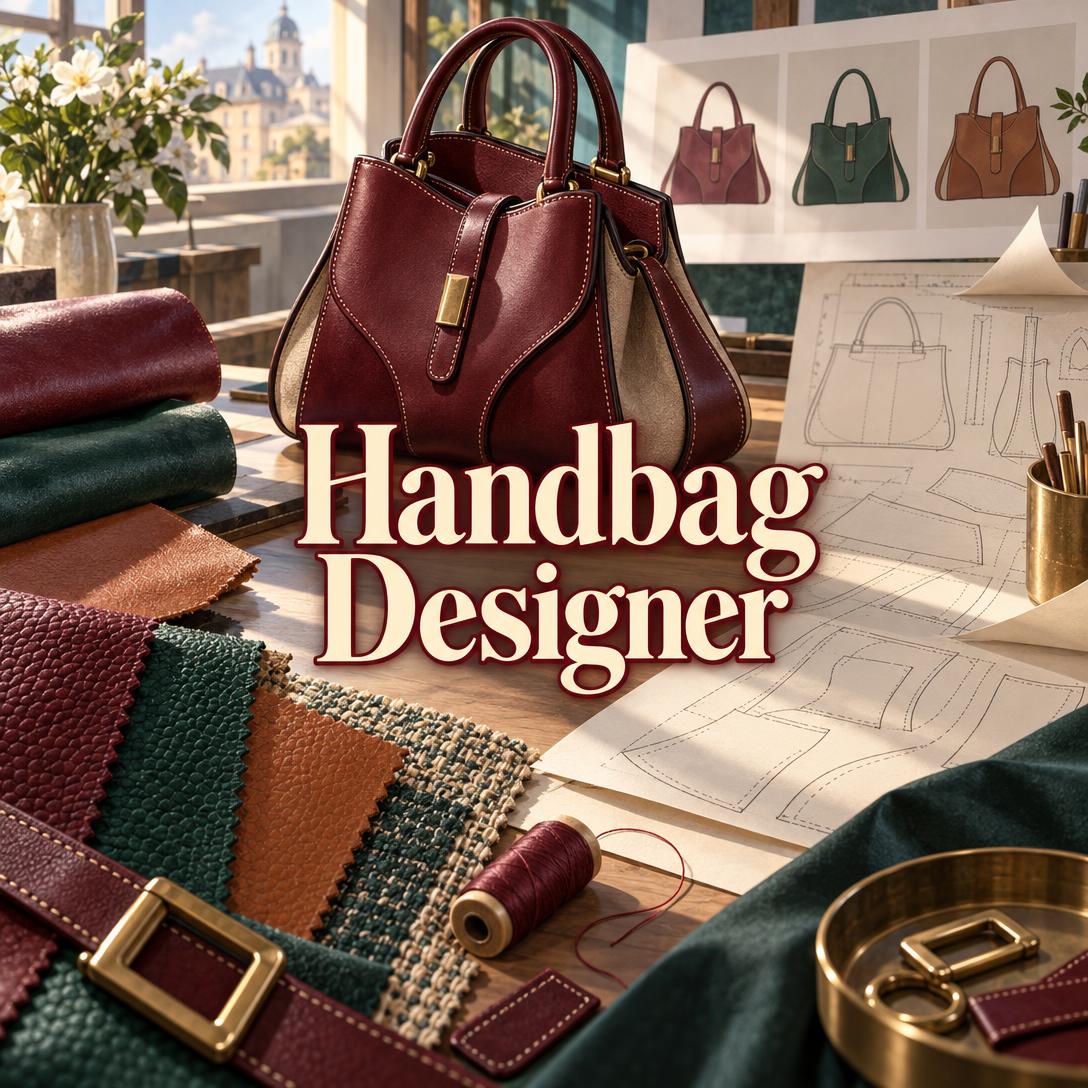
Handbag Designer takes your bag from first idea to production-ready documentation. It pairs realistic concept visualization with senior-level expertise in materials, hardware, and construction. Many bags look generic, fight their materials, or fall apart under real costing. This AI handbag designer pushes each concept toward a distinctive silhouette that can actually be made.
- ✅ Realistic product photographs and lifestyle images of your bag concepts, generated in minutes
- ✅ Material and hardware guidance, from full-grain leather and exotics to Piñatex, Mylo, and waxed canvas
- ✅ Construction and cost reality checks matched to your price segment, from mass market to ultra-luxury
- ✅ Tech packs, line sheets, and bills of materials produced as real documents, not just pictures
A strong bag starts long before the first leather prototype. It begins with decisions about silhouette, proportion, handle drop, and material behavior that most people never put into words. To see why those decisions matter so much, let's look at what independent designers, emerging brands, and serious enthusiasts are up against.
Quick Answer: What Is Handbag Designer?
Handbag Designer is an AI handbag design partner that turns a bag idea into realistic product photographs, material and hardware recommendations, and production-ready documentation, all within one ongoing design conversation. It works across totes, crossbodies, clutches, bucket bags, backpacks, and every category in between.
Key capabilities:
- Generates product photographs, lifestyle shots, detail studies, and side-by-side exploration variants
- Advises on leather grades, alternative materials, closures, edge finishing, and stitching methods
- Critiques uploaded sketches and prioritizes fixes, starting with silhouette and proportion
- Builds collection architecture and documents designs as tech packs, line sheets, and cost worksheets
The Creative Challenges of Designing a Handbag Today
The handbag category is large, crowded, and still growing. Research and Markets values the global market at more than $55 billion:
**$55.42 billion** — [Global handbag market value in 2024, forecast to reach $76.76 billion by 2030](https://www.researchandmarkets.com/reports/6102268/handbag-market-global-industry-size-share?srsltid=AU7gw4X91U-Ly-hbpszTWwJBjWfN5XqkJsH2ldnL3U5fxG6Sw1JriIAD)
The broader leather goods sector is far bigger still, with Coherent Market Insights projecting it to reach approximately $377.4 billion by 2026. Scale brings competition, though. The same Research and Markets analysis notes that many products appear visually similar across brands and price points, which makes differentiation a constant struggle.
Buyers are also asking more of every bag:
71% of Gen Z — and 64% of millennial accessories buyers consider sustainability credentials, according to 2025 consumer surveys
But turning a bag idea into a sampled, sellable product is difficult:
- Generic silhouettes. If the bag's outline looks like every other tote when blacked out, no hardware or surface treatment will save it.
- Material-construction conflicts. Soft lambskin won't hold an architectural frame, and stacking hardware, reinforcement, and lining can leave a bag heavy before anything goes inside it.
- Costing blind spots. Hand-painted edges or a 30-piece pattern can quietly push a design out of its intended price segment.
- Sourcing scrutiny. The Ethical Trading Initiative describes the leather supply chain as long, fragmented, and historically opaque.
Why Sustainability Claims Need Specifics
Vague "eco-friendly" language no longer satisfies buyers or regulators. The ETI found that among 40 tanneries assessed in Bangladesh's Savar Tannery Industrial Estate:
Designers who reference Leather Working Group certification, specific bio-based materials, or repairable construction need to understand what those claims actually mean. This is the gap a dedicated AI handbag designer is built to close.
How Handbag Designer Works: From First Idea to Tech Pack
Handbag Designer follows the way experienced accessories designers think. It starts with who carries the bag, then works through silhouette, materials, hardware, function, and market fit. Here's the workflow from first message to finished documentation.
Step 1: Describe the Bag and Who Carries It
Start with the bag type and some sense of direction, such as a commuter tote, an evening clutch, or a weekend crossbody. If you give no direction at all, the AI asks at most two focused questions, such as who the bag is for and what goes inside, before it starts generating.
"A structured top-handle bag for a professional woman in her 30s, accessible luxury around $600, pebbled calfskin in oxblood"
Step 2: Review Realistic Product Photographs with Design Rationale
You'll receive a product photograph with a short explanation of the key choices. That includes the silhouette family, the handle drop and how it affects carry, the hardware finish, and the edge treatment. Specific material language like "pebbled Italian calfskin" produces sharper visuals than a generic "leather."
"Show me three distinct directions: one architectural, one soft and slouchy, one compact for evening"
Step 3: Refine One Variable at a Time
Iteration preserves everything you don't mention and changes only what you ask for. You can swap polished gold for brushed palladium, lengthen the strap drop, or add a contrast microsuede lining without losing the rest of the design. You can also switch between image generation models using the App button beneath the chat input. Each model has different strengths for product visualization.
"Keep everything the same, but change the closure from magnetic snap to a turn lock and make the hardware gunmetal"
Step 4: Pressure-Test Materials, Construction, and Cost
Ask whether the design holds up at your target price. The AI flags conflicts between your design and your segment, such as exotic skins on a contemporary $250 bag or a saddle-stitched body at mass-market pricing. It then suggests alternatives like coated canvas or a hand-and-machine stitching mix.
"Is this design realistic to produce at $350 retail? What would you cut first?"
Step 5: Document for Production
Once the design is locked, compile it into a tech pack (PDF or DOCX), a collection line sheet (XLSX), or a bill of materials covering materials, hardware, and lining specs. Annotated technical flats are a known weak spot for image generation, so dimensioned specifications go into documents rather than pictures.
"Compile a tech pack for the Facet top handle as a PDF, including materials, hardware, edge finishing, and construction notes"
If you're launching a new label at the same time, Brand Kit Generator can build the logo, palette, and typography system your hangtags and dust bags will need.
Creative Showcase: What You Can Design with AI
The deliverables below reflect what this AI does best, along with where it is honest about limits.
| Deliverable | Best Use | Strength |
|---|---|---|
| Product photograph | Color, materials, hardware, proportion | Core output |
| Lifestyle image | Bag worn or carried, body-to-bag scale | Well-suited |
| Material / detail study | Stitching, edges, hardware close-ups | Strong |
| Exploration variants | Comparing distinct directions | Strong |
| Collection overview | Multiple bags in one image | Moderate |
| Technical flat with dimensions | Spec drawings | Limited; use a document instead |
🎨 Finding a Hero Bag for a New Brand
Scenario: A first-time founder wants a signature bag that's recognizable without a logo.
Traditional Approach: Weeks of sketching, mood boards, and freelance illustration, often ending in a silhouette that resembles existing bestsellers.
Handbag Designer: Through the Handbag Designer studio, the founder explores genuinely different silhouettes as separate images. Each comes with a rationale. The AI then helps define design DNA: signature hardware, edge treatment, closure philosophy, and proportion rules.
- Distinctiveness gets tested early with the "blacked-out silhouette" principle
- Design DNA carries consistently into future pieces
- The AI suggests what the collection needs next, such as an entry-level card case or a seasonal bucket bag
Entry pieces deserve real attention. Persistence Market Research projects the women's wallets market to grow from $16.3 billion in 2026 to $37.6 billion by 2033.
📱 Evaluating Swatches on a Trade Fair Floor
Scenario: A designer walking a leather fair such as Lineapelle in Milan photographs a waxed suede swatch on their phone.
Traditional Approach: Collect samples, fly home, and test-build canvas mock-ups to see how the material behaves.
Handbag Designer: The designer uploads the photo from the mobile app and asks whether the swatch can carry a slouchy hobo or needs a stiffener for a structured satchel. A visualization follows within minutes.
- Speech-to-text works for hands-free questions between booths
- Material behavior, weight, and aging get assessed before ordering yardage
- Notes and concepts sync to desktop for follow-up
🌿 Choosing Between Vegan and Bio-Based Materials
Scenario: A contemporary brand wants to replace PU with a plant-based alternative for a gender-neutral crossbody. Research and Markets identifies gender-neutral and unisex handbags as a growing trend.
Traditional Approach: Supplier marketing claims and trial-and-error sampling.
Handbag Designer: The AI compares options like Piñatex, Mylo, Desserto, and apple leather on hand-feel, durability, and aging. It treats "vegan leather" as many different materials rather than one. Academic work on sustainable innovation in leather goods examines similar trade-offs, including vegetable tanning and recycled leather.
- Sustainability claims stay specific and verifiable
- Construction adapts to each material's natural behavior
- Minimal neutral colorways suit a broad, cross-gender audience
👗 Styling the Bag for a Lookbook
Scenario: A brand needs on-model imagery showing the new satchel within a full seasonal look.
Traditional Approach: Booking models, stylists, and a studio before the samples even exist.
Handbag Designer: It generates lifestyle images showing body-to-bag proportion, so you can catch problems like a crossbody that overwhelms a petite frame. For complete outfit photography around the bag, Fashion Mockup Studio places garments on models with studio-grade lighting and styling.
- Proportion problems surface before a prototype is cut
- Pre-launch imagery supports wholesale pitches and preorders
You can start on Jenova's free tier, where core features are available at no cost.
Frequently Asked Questions
Is Handbag Designer free to use?
Yes. Try Handbag Designer on Jenova's free tier, which includes all core features with limited usage. Heavier design sessions, such as generating many exploration variants or iterating on a full collection, may call for a paid plan. Plus costs $20/month and adds 30× the free usage, custom model selection, and no watermarks. Higher tiers scale usage further, and limits reset monthly with no daily caps.
Can an AI handbag designer create tech packs and technical drawings?
It can create tech packs, spec sheets, line sheets, and bills of materials as downloadable documents in PDF, DOCX, XLSX, or CSV. Image generation, however, cannot reliably produce dimensioned technical flats or annotated orthographic views, because text rendering inside images is inconsistent. The practical approach is to use generated product photographs for visual direction and written documents for exact measurements and construction specifications.
How is this different from a general AI image generator?
A general image generator produces a picture. This AI reasons like an accessories designer first. It considers who carries the bag, whether the silhouette is distinctive, whether the material supports the structure, how the handle drop affects carry, and whether the design fits its price segment. It also critiques your own sketches, keeps your design DNA consistent across a collection, and turns finished concepts into production documentation.
Does Handbag Designer work on mobile?
Yes. It runs with full feature parity on web, iOS, and Android, and your settings and conversations sync across devices. You can photograph a leather swatch, a hardware sample, or a sketch on your phone and get feedback or a new visualization right away. Speech-to-text also lets you describe design changes hands-free while sampling or walking a trade show.
Can it help me sell the bags I design?
Design is its focus. It covers concepts, materials, construction, collection planning, and documentation, but not storefront operations. If you plan to sell handmade or small-batch bags online, Etsy Business Advisor handles listing optimization, marketplace SEO, pricing, and competitor analysis. That makes the two a practical pair for independent makers moving from first design to first sale.
Are my unreleased designs kept private?
Your conversations and uploads are never used to train public AI models. Data is encrypted in transit and at rest, and it is not sold or shared with advertisers. For designers developing unreleased collections or signature hardware, that means your concepts, reference images, and tech packs stay within your own workspace.
Conclusion: Design Bags That Are Distinctive and Producible
The handbag market rewards bags that are recognizable, functional, and honestly made. It also punishes generic silhouettes, material mismatches, and designs that collapse under real costing. Closing that gap has traditionally taken years of experience, sample rounds, and expensive specialists.
An AI handbag designer compresses that learning curve. You can visualize concepts, test materials and hardware, critique proportions, and document production specs in one continuous workflow. That holds whether you're building a luxury label, launching a contemporary direct-to-consumer brand, or designing your first bag for the joy of it.
Your next bag starts with a description. Try Handbag Designer now. Explore more at Jenova.
For Developers: Handbag Designer is available programmatically via the Jenova API. Integrate AI handbag concept visualization and design guidance into your fashion or e-commerce application with a single API call. Full documentation →