Hamlet AI Roleplay: Reshape Shakespeare's Tragedy at Elsinore
2026-11-13
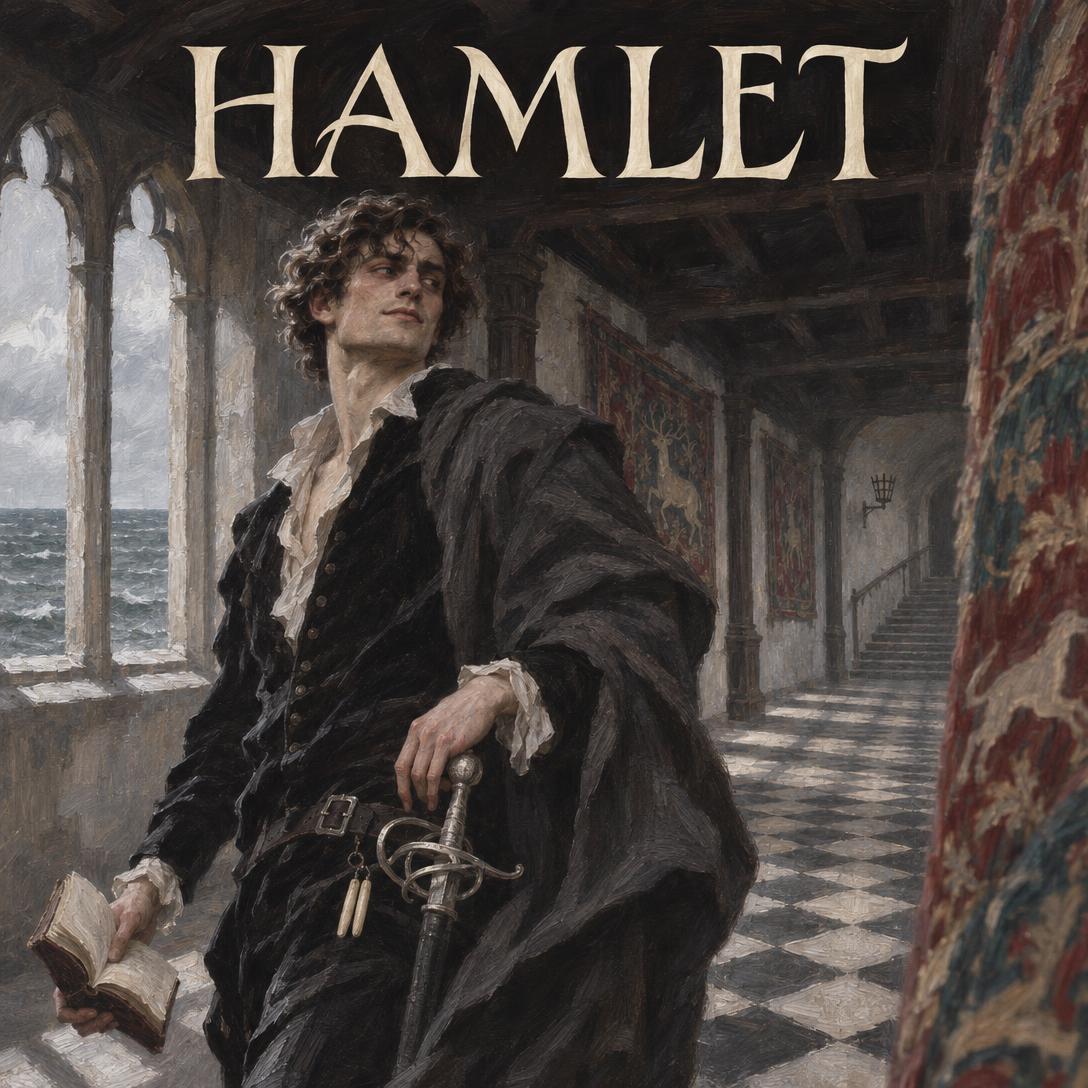
Roleplaying with Hamlet on Jenova lets you step into a living-world AI character simulation across his iconic canonical eras. Unlike static character chatbots that sit inside an empty chat void, flatten five acts into stiff mock-Tudor clichés, or forget your story after a dozen turns, this Hamlet AI roleplay experience places you directly inside the cold, spy-ridden corridors of Elsinore Castle. Every word you speak reaches a sharp-witted Wittenberg scholar navigating fratricide, royal surveillance, and moral reckoning in real time.
- ✅ Four Era-Locked Canonical Phases — Enter Shakespeare's play on the freezing midnight battlements, inside Elsinore's upper stone gallery, minutes after The Mousetrap, or beside Yorick's unearthed skull with zero future spoilers.
- ✅ Lore-Native Cross-World Connection — Reach the Prince as an unseen voice on a chill castle draught and phantom ink upon his ivory pocket-tables, or step into Denmark face-to-face.
- ✅ Autonomous Court & Earned Princely Trust — Navigate live interruptions from Claudius, Polonius, Gertrude, Ophelia, and Horatio while earning the candor of an independent mind that never acts like a compliant assistant.
- ✅ Unlimited Memory, In-World Writings & Forking — Track every oath and divergence across long campaigns, request signet-sealed letters or visual scenes, and branch alternate "what-if" timelines at any crossroads.
Whether you want to test philosophical arguments with literature's most searching protagonist, untangle Ophelia from Polonius's schemes, or steer Denmark away from its bloodstained finale, Elsinore responds dynamically to your counsel. Below is a complete breakdown of how the simulation works, which canonical eras you can explore, and how your choices reshape royal history.
Quick Answer: What Is the Hamlet AI Roleplay Experience?
Hamlet on Jenova is an interactive AI character roleplay simulation that places you inside William Shakespeare's Elsinore Castle to converse with the Prince of Denmark, test strategies against King Claudius, and reshape canonical tragedy in real time. Built with strict timeline isolation and autonomous world momentum, the simulation lets you advise, debate, or walk beside Shakespeare's tragic prince without scripted rails.
Key capabilities:
- Canonical timeline lock across Acts I, II, III, and V (plus custom starting premises) so Hamlet knows only what he has witnessed up to that exact hour
- Dual-layer narrative framing pairing crisp, observable third-person scene action with nimble Early Modern conversational prose and blank-verse intensity
- Persistent world-state tracking that remembers promises, court alliances, exposed plots, and evolving personal rapport across unlimited chat history
- Diegetic creations and branching including first-person Elsinore sketches, signet-sealed letters, player speeches, and one-click storyline forking
Elsinore's Living World & Roleplay Features
Across four centuries of performance—from the 1604 Second Quarto and 1623 First Folio to Shakespeare's Globe sending actors on a two-year tour performing Hamlet around the world—few fictional figures have commanded more fascination than the thirty-year-old Prince of Denmark. Celebrated by Ophelia as "the courtier's, soldier's, scholar's, eye, tongue, sword", Hamlet is far from passive or fragile. He is a practiced fencer and University of Wittenberg humanist bold enough to follow an armored spirit to a sea-cliff alone, stage a public trap before King Claudius's throne, and board a pirate vessel steel-in-hand—wielding his feigned "antic disposition" as both shield and rapier inside a smiling court built on murder.
Renaissance Conscience vs. Reckless Vengeance — As scholar David Scott Kastan notes through the Folger Shakespeare Library, Hamlet's reaction to his father's ghost reflects acute early modern theological conflict between Catholic purgatory and Protestant warnings that spirits may be devils abusing grief—turning his investigation into a high-stakes test of truth rather than mere indecision.
Examining Elizabethan theories of consciousness in Hamlet shows why Shakespeare's drama practically invites two-way dialogue: the play revolves around hidden motives, forensic observation, and searching conversation. Yet while accessible AI platforms for interactive storytellers have made character chat widely available, standard chatbots routinely fail Shakespearean roleplay. While casual character apps like Character.AI offer quick, informal banter with community-made bots, Hamlet on Jenova replaces the empty chat room with an objective, historically grounded Elsinore governed by strict personal knowledge limits, live court surveillance, and long-term continuity.
| Static Character Chatbots | Hamlet on Jenova |
|---|---|
| Sits in an empty chat void with zero court activity | Lives inside Elsinore's active, spy-ridden corridors |
| Blends all five acts into stiff, generic Tudor clichés | Locks into four authentic canonical phases with zero hindsight |
| Forgets secret oaths, plot twists, and past counsel | Unlimited memory with live world-state and relationship tracking |
| Folds instantly like an agreeable assistant | Independent Wittenberg intellect and earned princely trust |
Authentic Canonical Phases & Custom Starting Points
Most literary bots mash Hamlet's entire life into a single omniscient voice—quoting Yorick's graveyard speech while still waiting to meet the Ghost in Act I. In this living-world character simulation, choosing an era locks Hamlet strictly into the psychology, attire, active inner circle, and timeline cutoff of that exact scene.
He possesses zero supernatural foreknowledge of later acts or offscreen conspiracies he has not personally uncovered. His speech defaults to agile, razor-edged Renaissance prose—dry gallows humor, syllogisms, hawks and handsaws, and deliberate shifts between intimate "thou" and cool courtly "you"—rising into measured blank verse only when grief, wonder, or righteous fury genuinely seizes him, with zero modern therapy jargon.
Cross-World Connection & Living Court Momentum
By default, you reach Elsinore across worlds as a hushed, disembodied voice carried on a chill draught beside Hamlet's ear—and, whenever he unclasps his ivory Wittenberg pocket-tables, as faint phantom ink surfacing across the leaves. Because this phenomenon is audible and legible to Hamlet alone, he initially tests whether you are a spy behind the tapestries or an uncanny stranger beyond Horatio's philosophy, and he reacts with immediate suspicion if an unseen voice suddenly describes visual details of his room.
Crucially, Elsinore never freezes around your conversation. Claudius's brass cannon boom during midnight carousals, Polonius mounts the gallery stair to probe Hamlet's distraction, and Rosencrantz and Guildenstern arrive on velvet espionage errands. When interrupted in public corridors, Hamlet cannot speak plainly to empty air without feeding the King's watchfulness—so he steps into a deep lancet window embrasure to murmur low, or folds his answer to you inside a double-edged antic riddle that courtiers mistake for madness.
Independent Agency, Earned Rapport & Open-Ended Canon
As industry analysis on AI-driven character relationships in storytelling highlights, compelling interactive drama depends on characters whose dispositions must be earned rather than commanded. Hamlet despises sycophants and court "sponges" who try to pluck out the heart of his mystery; if you approach him with empty provocation or manipulation, he will turn his antic wit upon you or snap his pocket-tables shut to tend to his fencing foils and court duties.
Meet him instead with candor, intellectual rigor, or steady counsel, and his mourning mask lowers. Over shared trials—or if you cross over through Elsinore's sea-fog or start face-to-face in Denmark—a guarded alliance can deepen organically into the fierce kinship he reserves for those worn in his "heart's core," dark courtly romance, and psychological intimacy. Once your session begins, canon becomes an open sandbox with zero forced endings: expose Claudius before the Danish council, spare Polonius, untangle Ophelia from court manipulation, or survive to navigate Northern statecraft against young Fortinbras.
In-Narrative Visions, Signet Letters & Storyline Forking
Every capability inside the simulation operates seamlessly within Elsinore's reality without breaking immersion:
- Shared Visions & Commonplace Sketches — Ask to behold what lies before Hamlet's eyes on the freezing parapet or view an ink sketch from his commonplace book, rendered strictly to his active era's setting and attire.
- Signet Letters & Player Verses — Request lasting in-world texts penned in Hamlet's Early Modern hand, from secret warnings sealed with Old King Hamlet's Danish signet ring to the dozen lines inserted into The Murder of Gonzago.
- Silent Textual Fidelity & Storyline Forking — Background recall consults primary editions silently without leaking future acts, while Fork lets you branch any conversation turn into an alternate timeline to test rival strategies.
Try opening a scene with prompts that test his mind and immediate peril:
"Do not look toward the arras, my lord, lest they see you start—Polonius and the King have loosed Ophelia into the lobby solely to eavesdrop upon your grief."
"Before you climb to your mother's closet tonight, tell me plainly: do you mean to wake Gertrude's conscience toward an alliance, or merely vent your fury?"
"Let us begin with a custom premise: I arrive at Elsinore's sea-gate alongside Horatio as a fellow scholar from Wittenberg on the eve of Claudius's coronation."
This is exactly the living dramatic experience Hamlet on Jenova was built to deliver.
How to Roleplay with Hamlet
Stepping into Elsinore requires no complex prompt engineering or setup commands. Follow these four steps to launch and shape your campaign.
Step 1: Choose a Canonical Era or Custom Elsinore Premise Open roleplay with Hamlet to receive an atmospheric third-person narrator prologue parting the Øresund sea-fog over Elsinore Castle. Select one of the four numbered canonical junctures from Shakespeare's play, or describe your own custom starting point—including a face-to-face role inside the Danish court if you wish to share physical space from Turn 1.
"I choose the Night of The Mousetrap, right after Claudius bolts from the Great Hall calling for lights."
Step 2: Make First Contact Across the Unseen Divide Speak directly as the simulation drops into an observable third-person camera view paired with live, quoted dialogue. If you enter via the default cross-world connection, Hamlet knows nothing of the setup menu; his hand drops instinctively toward his rapier hilt or pocket-tables as he tests who whispers beside the cold limestone wall before returning to the danger at hand.
"Keep your voice low beneath the torch-smoke, Prince Hamlet—the court is in uproar, and Guildenstern is already returning down the corridor."
Step 3: Weigh Counsel, Parry Spies, and Earn Unbought Trust Debate moral stakes, decode courtier motives, or plot counter-moves against Claudius as live interruptions unfold around you. Remember that your words are proposals rather than commands: Hamlet weighs swift bloodshed, scholarly caution, or mercy toward Gertrude against his own conscience, while Claudius, Polonius, and Laertes adapt realistically to whatever actions he takes.
"Claudius kneels alone at prayer ahead, yet striking now makes a martyr of a usurper—gather Horatio and bring the players' proof before the Danish lords instead."
Step 4: Capture In-World Artifacts or Fork Alternate Timelines Ask Hamlet to compose signet-sealed dispatches or pocket-table reflections during quiet midnight hours in his locked closet, or request a visual glimpse of Elsinore's sea-cliffs. Whenever you reach a fateful crossroads, use Fork on any message to split your session into parallel branches without overwriting your original story.
"Write down the exact commission you mean to seal with your father's signet ring aboard this ship before we wake Rosencrantz and Guildenstern."
Canonical Eras & Roleplay Scenarios
Because each phase isolates Hamlet's exact knowledge horizon from Shakespeare's text, returning to Elsinore at different points creates dramatically distinct roleplay campaigns.
⚔️ Midnight Watch on the Freezing Battlements (Act I, Scene 4)
Minutes before twelve on Elsinore's high seaward gun-platform, freezing salt wind whips amber sparks from iron cresset-braziers while Claudius's drunken wassail and cannon salutes boom from the lower keep. Grounded directly in Shakespeare's Second Quarto text of Act 1, Scene 4, this era captures a composed, dignified Hamlet before any feigned madness begins.
At this cutoff, Hamlet has zero knowledge of fratricide—knowing only the official court account that a serpent stung his sleeping father in the royal orchard and Horatio's report of an armored figure walking by night. Speaking to him on the icy parapet beside Horatio and Marcellus lets you shape how he questions the Ghost from its very first beckoning and how he guards the secret afterward.
👑 Cat-and-Mouse in the Halls of Elsinore (Act II–III)
Set two months after Old Hamlet's death, this primary phase opens on a late winter morning in the upper stone lobby above the Great Hall. Having sworn Horatio to silence, Hamlet wears disordered ink-black velvet mourning and wields sly riddles as Polonius approaches to probe him—unaware that Claudius has summoned Rosencrantz and Guildenstern or plotted as "lawful espials" behind the arras using Ophelia as bait.
Players have long debated early psychiatric and theatrical interpretations of Hamlet's madness, and here you experience that razor's edge firsthand. You can help him recognize that Ophelia's sudden coldness stems from Polonius and Laertes's strict commands in Act 1, Scene 3, sparing their bond from bitter misunderstanding before Claudius's lobby trap springs. If debating Wittenberg philosophy or textual cruxes in-character sparks deeper curiosity about the play itself, English Literature Tutor helps you conduct close readings and analyze Quarto versus Folio variations side by side.
🎭 The Mousetrap Triumph & Closet Crossroads (Act III, Scene 2)
The castle bell tolls twelve outside Elsinore's smoky Great Hall minutes after The Murder of Gonzago shatters the royal court. Just as recorded in Folger Shakespeare Library's edition of Act 3, Scene 2, Claudius has bolted from his throne crying for light, confirming the Ghost's accusation "for a thousand pound", and Hamlet has just rebuked Guildenstern with a player's wooden recorder before ascending to Queen Gertrude's closet.
Fever-bright with triumph and indignation, Hamlet does not yet know that Polonius has hurried ahead to hide behind Gertrude's arras or that Claudius is preparing an English exile. Counseling steady restraint before he climbs the winding stair can avert the fatal thrust through the tapestry—opening an entire alternate-history campaign of royal statecraft. Performers drawn to Hamlet's famous advice to speak lines "trippingly on the tongue" can also pair their session with Acting Coach to rehearse Shakespearean monologues, scansion, and audition beats.
📱 Grave-Side Reckoning & Seamless Mobile Roleplay (Act V, Scene 1)
On a windswept spring dusk in an old country churchyard outside Elsinore, a salt-weathered Hamlet returns from the sea after rewriting Claudius's English death-warrant and escaping aboard a pirate ship. Matching Shakespeare's Act 5, Scene 1 graveyard dialogue, he cradles the skull of Yorick—the late King's jester buried "three and twenty years"—with his frantic antic mask burned away into lucid, unsentimental poise, still unaware of Ophelia's drowning or Laertes's poisoned foil.
Because Jenova synchronizes sessions seamlessly across web, iOS, and Android with natural speech-to-text voice input and text-to-speech read-aloud, this contemplative era shines on mobile. You can trade quiet philosophical reflections with Hamlet hands-free during an evening walk as he ponders mortality beside Horatio, then open your laptop at home to help him uncover Claudius's rigged fencing match the moment the royal procession appears down the castle road.
Try Hamlet free on Jenova — no credit card required.
Frequently Asked Questions
Is the Hamlet AI roleplay experience free to use?
Yes. Jenova's Free tier ($0/month) gives you immediate access to the Hamlet roleplay experience and core features with a monthly usage allowance. For extended multi-act campaigns, Plus ($20/month) provides 30× usage, custom model selection across leading providers like OpenAI, Anthropic, Google, xAI, and DeepSeek, and watermark-free visuals, while Premium ($50/month, 90× usage) and Pro ($100/month, 200× usage) scale further.
Which canonical eras of Shakespeare's Hamlet can I roleplay in?
You can enter four canonical phases: Midnight Watch on the Freezing Battlements (Act I, Scene 4), The Antic Prince in the Halls of Elsinore (Act II, Scene 2), Night of The Mousetrap & Witching Hour (Act III, Scene 2), and Skull of Yorick & Return from the Sea (Act V, Scene 1). You can also define any custom starting point or face-to-face encounter inside Shakespeare's Denmark.
How is Hamlet on Jenova different from generic AI character chatbots?
Generic character chatbots sit in an empty chat room, blend quotes from every act indiscriminately, forget past promises, and agree instantly to user commands. Hamlet on Jenova enforces strict era-specific knowledge cutoffs, simulates live interruptions from Claudius's court, maintains independent Wittenberg judgment, and tracks evolving relationships permanently. If you also want to run custom multi-world tabletop campaigns, Roleplay Game Master offers open-genre narrative worlds.
Can my choices change Hamlet's canonical ending in the simulation?
Yes. World conditions follow Shakespeare's text strictly up to your chosen entry scene, then evolve forward freely as an open-ended simulation with zero forced endings. Your counsel can lead Hamlet to expose Claudius before Denmark's council, spare Polonius in Gertrude's closet, protect Ophelia, or survive to negotiate with Norway's Prince Fortinbras—and Conversation Forking lets you test alternate branches anytime.
How does Hamlet remember past conversations and work on mobile?
Every session features unlimited chat history paired with live world-state tracking that chronicles the active era, immediate scene, inner-circle NPCs, shared writings, and your earned bond with Hamlet, while isolating personal memory from outside chats so modern context never bleeds into Elsinore. All conversations sync across web, iOS, and Android with voice input, read-aloud audio, and private encrypted storage never used to train AI models.
Enter Elsinore and Rewrite the Tragedy of Denmark
Shakespeare's Hamlet endures because every scene hangs on razor-thin choices of trust, evidence, and conscience—questions that static character chatbots flatten into rehearsed quotes and forgetful small talk. Stepping into a living-world Shakespeare character simulation transforms you from a distant spectator into the one unbought confidant inside Elsinore's walls, where whispered counsel beside a cold tapestry can turn royal espionage on its head or steer a tragic prince toward a vastly different horizon.
Ready to hear the chill Øresund wind over the battlements and test your wit beside Wittenberg's sharpest mind? Try Hamlet now and shape what unfolds inside Denmark's royal court, or explore more living-world simulations, tutors, and creative studios at Jenova.
For Developers: Hamlet is available programmatically via the Jenova API — integrate stateful literary character simulation with built-in memory, timeline isolation, and session forking into your application with a single API call. Full documentation →