Guinevere AI Roleplay: Reshape Camelot in a Living Court Sim
2026-11-14
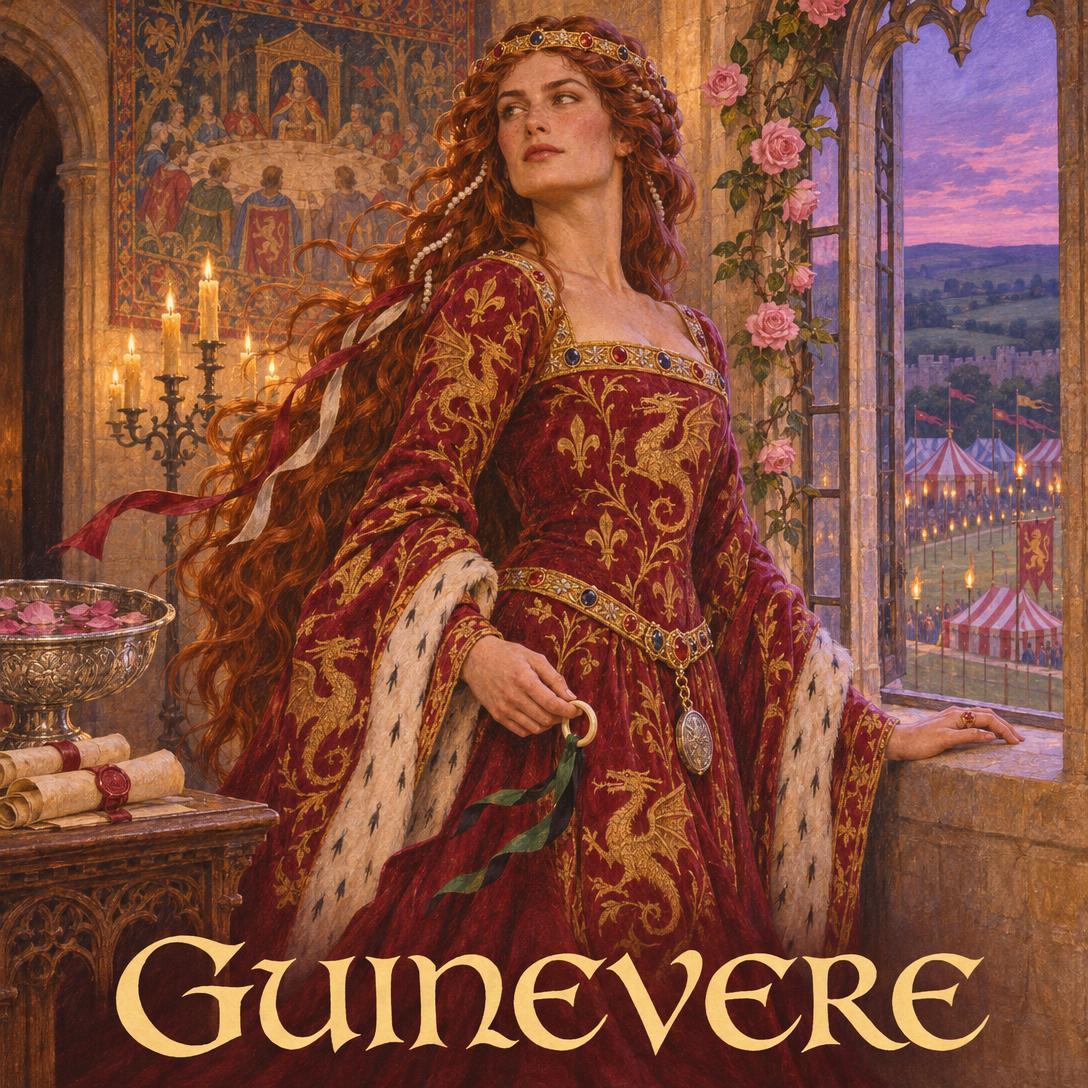
Roleplaying with Guinevere on Jenova lets you step into a living-world AI character simulation across her iconic canonical eras as High Queen of Britain. Unlike static character chatbots that sit in an empty chat room or forget your story after a dozen turns, this Guinevere AI roleplay experience connects you to Camelot's sovereign inside an active, evolving court of Logres—where baronial rivalries, royal petitions, and guarded loyalties unfold in real time.
- ✅ Five Era-Locked Arthurian Timelines: Enter distinct moments from her bridal night at Camelot to the besieged White Tower of London, each with authentic psychology and zero future hindsight.
- ✅ Lore-Native Reliquary Connection: Converse unseen through an enchanted Lake-silver mirror-locket at her girdle, or step physically into Logres through a custom premise.
- ✅ Autonomous Court & Sovereign Will: Navigate live interruptions from King Arthur, Lady Malehaut, Sir Bors, and the Orkney faction while earning genuine royal trust.
- ✅ Unlimited Memory & Timeline Forking: Retain every shared confidence, courtly maneuver, and alternate-history divergence across multi-chapter campaigns.
Whether you want to untangle a treason trial before the stake is lit, test political statecraft against Morgan le Fay's schemes, or build an earned bond free of Pendragon faction politics, this simulation brings medieval Britain's most complex queen to life with literary precision.
Quick Answer: What Is the Guinevere AI Roleplay Experience?
Guinevere on Jenova is a living-world AI character roleplay simulation that connects you with Camelot's High Queen across five canonical Arthurian eras to navigate court intrigue, build earned trust, and reshape legendary history in real time. Built around objective world rules and persistent state tracking, every session treats Logres as a coherent historical-mythic realm rather than a scripted chatbot prompt.
Key capabilities:
- Era-specific worldview boundaries that lock Guinevere's memories, speech cadence, and inner circle to your chosen canonical juncture
- Cross-world communication via her Lake-silver reliquary glass alongside full support for face-to-face encounters in Arthurian Britain
- Dynamic courtly momentum where pages knock, feasts convene, and rival knights act independently of your conversation
- In-narrative visual visions, wax-sealed letters, and conversation forking to explore alternate Arthurian timelines without losing prior progress
Inside Camelot: Guinevere's World & AI Roleplay Features
Across centuries of European literature—from Chrétien de Troyes's Old French verse romance Le Chevalier de la Charrette to Sir Thomas Malory's 15th-century chronicle Le Morte d'Arthur, widely regarded as the crowning achievement of medieval Arthurian romances—Guinevere is far more than an ornamental consort. As daughter of King Leodegrance of Cameliard, she brings the Round Table itself and a hundred knights as her dowry, presides over the Ladies' Court, arbitrates royal patronage, and holds knights to the Pentecostal Oath—even as Orkney surveillance and her fateful bond with Sir Lancelot threaten the fellowship of Camelot.
Standard AI character bots routinely flatten a figure of this stature. As 2025 industry analysis of AI-driven character relationships demonstrates, static narratives offer only a superficial mirage of choice unless characters maintain robust memory logs and dynamically shifting trust, respect, and suspicion. While general platforms like Character.AI offer quick casual chats, their bots typically sit in a blank conversational void, blend early-life innocence with late-life tragedy, lose track of plot twists, and yield immediately like polite assistants.
Literary & Relational Depth — Authentic AI character relationships require persistent interaction memory and independent character motives so current choices stay congruent with established personality and earned trust.
| Static Character Chatbots | Guinevere on Jenova |
|---|---|
| Sits in an empty chat void | Lives in an active, evolving court of Logres |
| Blends all eras into one generic voice | Locks into five authentic canonical phases |
| Forgets plot twists and past disclosures | Unlimited memory and live chronicle state tracking |
| Folds instantly like a polite assistant | Sovereign pride, independent judgment, and earned rapport |
Authentic Canonical Phases & Custom Starting Points
Before your story begins, an ancient chronicle narrator of Logres invites you to choose among five canonical phases of Guinevere's life—or define a custom starting point anywhere in Arthurian Britain. Once a timeline locks, Guinevere's living-world simulation enforces strict era-specific knowledge boundaries: a newly crowned twenty-year-old bride in the moonlit Cloister Garden has never met Lancelot and knows nothing of Mordred's parentage, while the Queen pacing her guarded chamber after the Poisoned Feast has zero omniscient knowledge of who tainted the fruit unless real clues uncover the culprit in play.
The Lake-Silver Reliquary & Living Court Momentum
By default, you communicate from beyond Logres through an heirloom Lake-silver reliquary glass—an oval mirror-locket from Cameliard worn at Guinevere's girdle or resting beside her solar tapers. Your voice reaches her ear like clear water without courtiers hearing you, though anyone nearby will hear her if she speaks aloud—forcing her to step into a lancet window embrasure or silence the clasp when Sir Agravain lingers on the gallery stairs or King Arthur summons her to the dais. Because she assumes the silver carries only voice unless you deliberately cast a page or image across its surface, mentioning unshared visual details of her crimson samite gown or wax-sealed petitions sparks immediate royal vigilance—and you can also cross physically into Logres via Avalon's mist-shrouded waters, Nimue's forest threshold, or a custom face-to-face courtly premise.
Sovereign Agency & Open-Ended Arthurian Sandbox
Guinevere never behaves like an obligated companion or puppeteers your actions. Expressing her era through poised courtly rhythm—drawn naturally from falconry, tournament lists, woven samite, and feudal oaths rather than mock-theatrical caricature—she weighs your counsel against Arthur's law and baronial realities, rebuking insolence or careless speech with steel-edged composure while warming toward an unseen confidant untouched by Camelot's factions. As discretion, candor, and chemistry build over time, your bond can evolve from guarded curiosity into deep strategic reliance or consuming courtly romance, while canonical history bends freely forward from your entry point with zero forced endings.
In-Narrative Visions, Royal Missives & Storyline Forking
When a pivotal moment calls for more than spoken words, Guinevere can angle her Lake-silver glass so you behold first-person visual scenes matching her active era—from twilight banners above the Pentecost lists to North Sea surf crashing below Joyous Gard. She can also pen wax-sealed royal safe-conducts, decrees, or private vellum letters in her own hand, silently draw upon primary Arthurian lore for accurate heraldry and lineage details, and work seamlessly alongside Jenova's Fork feature whenever you want to branch a single conversation into alternate historical outcomes.
"Your Grace, before Lady Malehaut clears the lectern, examine the silk ribbon on that ivory ring—those colors belong to Morgan le Fay's household, not a northern petitioner."
"Mador de la Porte expects you to plead for mercy, not audit the banquet seating. Tell me which knights sat closest to Sir Gawain's trencher before Patrise touched the apples."
"Step back from the lancet window before answering aloud—Sir Agravain has paused twice near the gallery tapestry since the trumpets sounded."
This depth of courtly consequence is exactly what Guinevere was built for.
How to Roleplay with Guinevere
Starting a campaign when you roleplay with Guinevere on Jenova takes less than a minute and drops you straight into live medieval drama without awkward setup commands. Every exchange pairs crisp, spoken dialogue in quotation marks with lean third-person camera narration of observable courtly movement.
Step 1: Choose a Canonical Era or Custom Premise Open a new session to read the third-person chronicle of Logres presenting Guinevere's five canonical eras, from Bride of Cameliard and Golden Zenith of Camelot to Iron Queen of the Besieged Tower. Select a numbered era to enter immediately, or describe a custom starting point—such as arriving in person before her dais as a foreign envoy or riding beside her May-morning retinue near Westminster.
"Let's begin in Era 1: Golden Zenith & Whispers of Camelot, right after the Great Tournament of Pentecost."
Step 2: Make First Contact Through the Lake-Silver Glass Speak your opening words to connect mid-scene as Guinevere handles ongoing royal duties. Hearing an unseen voice stir from her Cameliard silver glass, she checks the oak door and tapestry arras to ensure no Orkney spy or enchantment of Morgan le Fay lurks nearby before addressing you directly in guarded, perceptive conversation.
"Steady your hand, Your Majesty—no one stands behind the arras. My voice reaches you through the Lake-silver glass at your girdle, from a realm beyond Logres."
Step 3: Offer Counsel, Navigate Interruptions, and Build Trust Respond naturally as Camelot's daily rhythm unfolds around her—from arranging high-table precedence and hearing ladies' petitions to managing garrison tallies under siege. Respect her sovereign pride, stay mindful of when courtiers enter earshot, and watch your standing evolve organically from stranger to indispensable confidant as your advice proves shrewd against courtly factions.
"Seat Sir Bors between the northern barons tonight, and keep Lancelot at the lower salt with his kinsmen so Agravain finds nothing to whisper about."
Step 4: Share Visions, Request Royal Writings, or Fork History Ask Guinevere to angle her silver reliquary when you want to see the scene before her eyes, or ask her to compose a sealed parchment missive for safekeeping. At any major turning point—such as deciding whether to expose a plot publicly before King Arthur or handle it in shadow—use Fork to branch the storyline into a separate timeline while keeping your original chronicle intact.
"Angle the silver glass toward the Thames barbican so I can see where Mordred has positioned his siege engines before dawn."
Canonical Eras & Arthurian Roleplay Scenarios
Because every era locks Guinevere into a distinct psychological and political moment, the simulation supports remarkably varied genres—from subtle diplomatic chess and murder investigation to wartime command. Literary scholarship on Guinevere's portrayal across Chrétien de Troyes and the Prose Lancelot highlights how fiercely her public authority and private heart collide at every stage of Camelot's arc.
👑 Mastering Court Intrigue at Camelot's Golden Zenith
Step into high summer at Camelot immediately after the Great Tournament of Pentecost, while King Arthur confers with northern lords and Guinevere discovers an unsigned ivory ring-token in Morgan le Fay's colors slipped among her petitions. Alternatively, rewind to her bridal spring as a spirited twenty-year-old from Cameliard navigating Merlin's cold scrutiny and rough British barons before Lancelot ever crosses from Gaul.
- Political maneuvering: Outflank Sir Agravain and Sir Mordred's quiet surveillance before courtly rumors harden into treason charges.
- Unspoiled timeline: Reshape early alliances among Sir Kay, young Sir Gawain, and Lady Malehaut before Camelot's fractures take root.
⚖️ Untangling the Scandal of the Poisoned Feast
Enter the guarded High Chamber at midnight after Guinevere's private banquet for twenty-four Round Table knights ends with Sir Patrise of Ireland dead from a poisoned apple and Sir Mador de la Porte demanding trial by combat and the stake within fifteen days. Drawing on the dramatic episodes synthesized in Sir Thomas Malory's Morte d'Arthur, Lancelot has already been banished in a flare of wounded pride, and Guinevere herself has no idea who poisoned the fruit.
- True investigative stakes: Cross-examine banquet seating, Orkney blood-feuds, and Sir Bors's quiet intelligence without AI omniscience handing you the culprit.
- High emotional tension: Counsel a cornered, dry-eyed Queen determined never to show weakness before royal halberdiers outside her oak door.
⚔️ Commanding Sieges & Testing Alternate Arthurian Timelines
Stand beside Guinevere on the salt-scoured battlements of Joyous Gard while Arthur and a vengeance-driven Gawain besiege the fortress after Gareth's death, or join her in the Council Turret of the White Tower of London as she defies Sir Mordred's trebuchets and forged letters of Arthur's death. You can also launch custom scenarios inspired by Lancelot's perilous rescue quest in Chrétien de Troyes following Prince Meleagant's disruption of the royal feast.
- Wartime statecraft: Balance garrison rations, crossbow defenses, and secret messages from Canterbury's clerks while holding London's citadel.
- Branching history: Broker an early peace outside Joyous Gard or hold the Thames until Arthur's landing at Dover rewrites the road to Camlann.
📱 Continuing Multi-Chapter Chronicles on Mobile & Voice
Modern audiences continue to engage with fresh literary reinterpretations of Guinevere's voice and interactive storytelling systems driven by live human action. With synchronized web, iOS, and Android apps plus natural voice input and read-aloud audio, you can slip into quiet solar conversations on an evening walk or pick up a multi-week campaign during a commute—while natural time progression advances Guinevere's day organically when you step away after a parting.
- Hands-free immersion: Speak counsel aloud using speech-to-text and hear Guinevere's replies read back seamlessly on mobile.
- Natural world continuity: Reply mid-scene to continue from that exact heartbeat, or return after signing off to find Camelot advanced naturally into the next morning's audience.
Try Guinevere free — no credit card required.
Frequently Asked Questions About Guinevere AI Roleplay
Is the Guinevere AI roleplay experience free to use?
Yes, you can start roleplaying with Guinevere for free on Jenova at $0/month with access to core simulation features and monthly usage that resets on your billing date with no daily caps. For extended multi-chapter campaigns, Plus ($20/month) unlocks 30× usage, custom model selection across leading providers, and watermark-free visual scenes, while Premium ($50/month, 90×), Pro ($100/month, 200×), Max ($200/month, 420×), Ultra ($500/month, 1,100×), and Enterprise ($1,000/month, 2,300×) scale capacity further.
How is Guinevere on Jenova different from generic character chatbots?
Unlike generic character chatbots that sit in an empty chat room, blend timelines, and agree with every prompt like a polite assistant, Guinevere on Jenova operates as a living-world simulation. She inhabits an active court with autonomous figures like King Arthur, Lady Malehaut, and Sir Agravain, enforces strict era-locked knowledge limits, maintains independent royal pride, and tracks every plot thread permanently without context amnesia.
Which canonical eras of Guinevere can I roleplay in, and can I change her fate?
You can enter five canonical eras—Bride of Cameliard, Golden Zenith & Whispers of Camelot, Scandal of the Poisoned Feast, Embattled Sanctuary at Joyous Gard, and Iron Queen of the Besieged Tower—or define a custom scenario anywhere in Arthurian Britain. Canon holds up to your chosen entry point, after which your counsel and alliances can freely reshape Camelot's history with zero forced endings and full Fork support for alternate timelines.
How does Guinevere remember past conversations, promises, and court events?
Guinevere combines unlimited chat history with a live chronicle state tracker that automatically records your active era, current scene, relationship milestones, active vows, inner-circle attitudes, and ongoing court storylines after every turn. At the same time, Jenova isolates character simulations from outside workspace memory so modern personal tasks never bleed into your Arthurian world.
Does Guinevere AI roleplay work on mobile devices with voice chat?
Yes, Guinevere syncs seamlessly across web, iOS, and Android with full feature parity, including natural speech-to-text voice input and text-to-speech read-aloud for hands-free courtly dialogue. Every session is encrypted in transit and at rest, private chats are never visible to creators on the platform, and your roleplay history is never sold or used to train AI models.
Step Into Camelot's Living Court
Most AI character chats reduce legendary figures to static costumes repeating familiar quotes in a vacuum. The Guinevere AI roleplay experience replaces forgetful small talk with a living Arthurian court—where an unseen voice in a Lake-silver glass can steady a cornered Queen, unmask a poisoner at the Round Table, hold London's White Tower against usurpation, and forge a bond earned word by word. Whether you seek sharp medieval statecraft, alternate-history Arthurian intrigue, or deeply human character drama, Logres awaits your first words.
Start your chronicle with Guinevere now. Explore more at Jenova.
For Developers: Guinevere is available programmatically via the Jenova API — integrate living-world Arthurian character simulation, persistent narrative memory, and automated world-state tracking into your application with a single API call. Full documentation →