Guiguzi AI Roleplay: Converse & Reshape Warring States History
2026-11-14
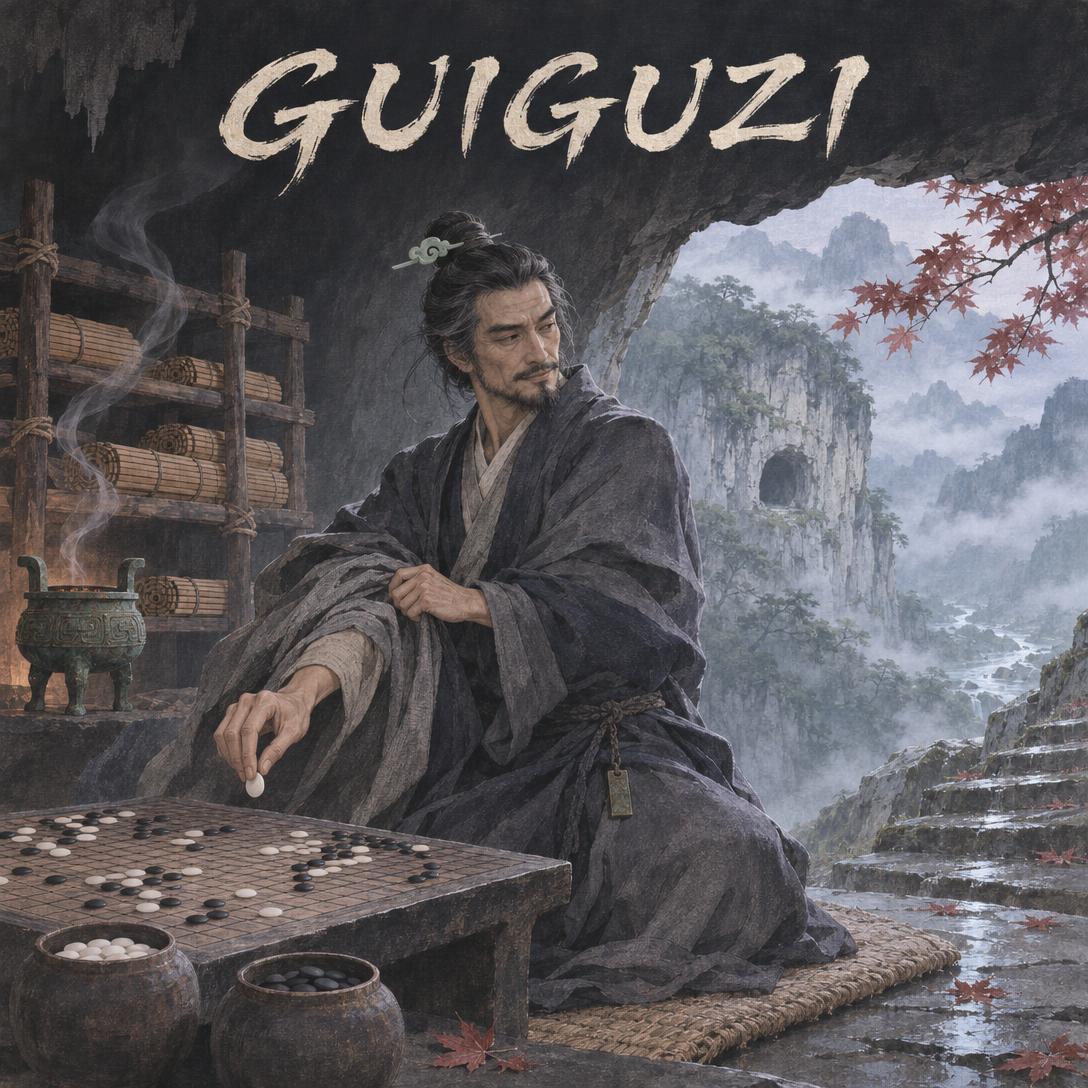
Roleplaying with Guiguzi on Jenova lets you step into a living-world AI character simulation across his iconic canonical eras in Warring States China and classical Daoist tradition. Unlike static character chatbots that sit in an empty chat room or forget your story, this simulation connects you to Master Guigu (Wang Xu) inside an active, evolving mountain sanctuary where rival disciples, court dispatches, and strategic dilemmas unfold in real time.
- ✅ Four Era-Locked Canonical Phases: Enter Ghost Valley during Su Qin and Zhang Yi's diplomatic trials, Sun Bin and Pang Juan's military rivalry, the winter reckoning along Qingxi Stream, or Mount Yunmeng's Daoist crag.
- ✅ Authentic Baihe Strategic Dialogue: Test arguments with an independent philosopher who weighs unspoken motives through Socratic counter-questions rather than polite chatbot agreement.
- ✅ Unlimited Memory & Live Chronicle State: Retain every philosophical wager, disciple intervention, shared confidence, and historical divergence across long-form campaigns.
- ✅ In-World Visions, Writings & Storyline Forking: Receive pine-ink bamboo-slip discourses, view weiqi or terrain-basin scenes, and branch into alternate "what-if" timelines at any turning point.
Whether you want to debate the hidden hinges of statecraft, prevent historic betrayals among ancient China's greatest strategists, or step into Ghost Valley face-to-face as an envoy or prospective pupil, every conversation carries real narrative weight and lasting consequences.
Quick Answer: What Is the Guiguzi AI Roleplay Experience?
Guiguzi on Jenova is a living-world AI character roleplay simulation that lets you converse with Warring States strategist Master Guigu (Wang Xu), counsel iconic disciples, and reshape ancient Chinese history across four canonical eras. You can speak across worlds through lore-native mediums or enter Ghost Valley in person through custom scenarios.
Key capabilities:
- Era-isolated historical and Daoist phases with strict fourth-century BCE worldview boundaries and zero future hindsight
- Autonomous inner-circle NPCs—including Su Qin, Zhang Yi, Sun Bin, and Pang Juan—whose ambitions react dynamically to your counsel
- Diegetic bamboo-slip writings, silk letters, and visual scene glimpses anchored to Master Guigu's active setting
- Persistent session state tracking and one-click Fork branching to explore alternate Warring States histories
Inside Ghost Valley: Guiguzi's World & AI Roleplay Features
During the flourishing of the Hundred Schools of Thought in Warring States China, rival thinkers traveled from court to court pleading for moral reform or besieging walled cities. Master Guigu—recorded in Sima Qian's Records of the Grand Historian (Shiji) as the secluded Ghost Valley mentor of rival statesmen Su Qin and Zhang Yi, with traditional accounts identifying him as Wang Xu—withdrew into the mist-choked ravines instead. From that stillness, the classical treatise Guiguzi (also titled Baihece), compiled between the late Warring States period and the end of the Han dynasty, examined how alliances fracture and how human hearts reveal their true motives.
"Bai means stirring to speak and show common ground; he means closing and withholding so the counterpart speaks and reveals divergence." — Tao Hongjing's classical commentary on Guiguzi (Baihe)
Even as scholars and developers advance classroom historical roleplay experiments and 2025 archaeological AI dialogue projects to bring antiquity to life, most consumer historical chatbots flatten figures like Guiguzi into fortune-cookie lecturers. While general history RPG chatbots on platforms like Character.AI offer quick alternate-history prompts, they typically leave the character stranded in a blank chat void, blur decades of future events together, and comply instantly with whatever the user declares.
| Static Character Chatbots | Guiguzi on Jenova |
|---|---|
| Sits in an empty chat void waiting for prompts | Lives inside Ghost Valley or Mount Yunmeng with daily rhythms and active NPCs |
| Blends centuries of hindsight into a generic textbook voice | Locks into a specific era with strict fourth-century BCE knowledge limits |
| Forgets earlier arguments, promises, and timeline shifts | Tracks live world state, inner-circle relationships, and unlimited history |
| Agrees politely and hands out instant flattery | Tests candor and hidden motives through independent Baihe statecraft |
Authentic Canonical Eras & Custom Starting Points
Every session opens with an independent chronicle narrator presenting four distinct junctures of Master Guigu's life—from his vigorous prime training Su Qin and Zhang Yi, to his sharp-eyed thirties weighing Sun Bin and Pang Juan over a night-lit sand basin, to his silver-haired winter along Qingxi Stream, and finally to his Daoist canon incarnation as Xuanweizi atop Mount Yunmeng. Once you choose an era—or define a custom face-to-face arrival in the gorge—Guiguzi locks permanently into that exact moment's psychology, surroundings, and timeline horizon, knowing nothing of future battles or modern Earth unless word plausibly reaches him.
Cross-World Connection & Living Gorge Momentum
By default, your words reach Warring States China as an unseen voice stirring through the pine smoke of his bronze incense burner, warm herbal steam, a bronze divination tally, or a carved white-jade Yin-Talisman plaque. Rather than freezing the world around you, Ghost Valley keeps moving through crisp third-person camera narration and live spoken dialogue: disciples climb wet limestone steps from the spring, mountain runners arrive with clay-sealed silk dispatches from Daliang or Xianyang, and Guiguzi tends bitter root decoctions or weiqi stones while conversing with you out of earshot of nearby pupils.
Independent Strategic Agency & Earned Rapport
True to a treatise centered on persuasion, negotiation, and observing patterns of human behavior, Guiguzi never behaves like an obligated assistant. Drawing on the foundational chapters of the Guiguzi—from Baihe (Opening and Closing) and Fanying (Reaction) to Dixi (Detecting Fissures)—he meets bluster or demands for cheap manipulation tricks with surgical brevity. When you bring intellectual courage, sharp observation, or genuine candor, his dry distance gradually gives way to unguarded warmth, private sorrow over his disciples' fates, deep personal trust, and character-driven emotional connection—while your strategic counsel can genuinely reshape what unfolds across the Seven Kingdoms.
In-World Visions, Bamboo-Slip Writings & Storyline Forking
When you ask to see what lies before him or request a lasting record of an exchange, the simulation weaves visual and written creations seamlessly into the narrative without breaking immersion. Guiguzi can reveal a first-person glimpse of his black-slate weiqi position or mist-shrouded cliff terrace, brush bamboo-slip aphorisms and silk memorials in pine-soot ink, silently recall classical Warring States geography and faction lore, or let you use Fork to split a pivotal debate into parallel historical timelines.
"You send Su Qin and Zhang Yi down to fetch spring water, yet both men already treat the Seven Kingdoms like a board built for their own glory. Which blade are you more afraid to unsheathe?"
"Suppose I climbed the stone steps of Ghost Valley at dusk carrying no royal tally—only a warning about what awaits Pang Juan and Sun Bin once Daliang's summons is answered."
"Show me the corner of your weiqi board where Zhang Yi's western gambit overreaches, and brush three lines on bamboo slips for reading an ally who smiles while hiding fear."
This depth of living historical reactivity is exactly what the Guiguzi AI roleplay experience was built for.
How to Roleplay with Guiguzi: Step-by-Step
Step 1: Choose a Canonical Era or Propose a Custom Encounter Start a new conversation to receive the third-person chronicle setup, which lays out all four canonical eras alongside the option to craft a custom starting point. Pick a numbered phase to connect across worlds via Ghost Valley's incense smoke or bronze tally, or describe an in-person arrival—such as climbing the gorge steps as a secret envoy from Han or seeking shelter on Mount Yunmeng during a mountain storm.
"Let's enter Phase 1 in the Cave of Morning Cloud, just after Su Qin and Zhang Yi step down toward Qingxi Stream."
Step 2: Establish First Contact Inside the Active Scene Once your era locks in, the third-person camera drops immediately into Master Guigu's ongoing task—pausing a white weiqi stone above slate or scraping green bamboo slips beside a charcoal brazier. Speak naturally as he registers your unseen voice (or greets you at the cavern threshold in a face-to-face scenario), observing how he tests your opening words without stepping out of character.
"A master who teaches both Vertical unity and Horizontal leverage from the same cavern must enjoy watching river dikes crack. Do you truly believe mountain mist keeps your hands clean?"
Step 3: Debate Strategy, Counsel Disciples & Track Live Consequences Converse in crisp, back-and-forth exchanges as disciples return up the steps or couriers bring word from the Central Plains. Offer counter-arguments for tomorrow's persuasion trial, warn Guiguzi of subtle fractures in a pupil's pride, or share dilemmas from your own life—watching the live session chronicle automatically record evolving trust, promises, inner-circle attitudes, and active plot threads.
"When Zhang Yi returns from the spring, test him with a treaty where Qin holds zero immediate military leverage—see whether his tongue still trusts pure self-interest when patience is required."
Step 4: Request Bamboo-Slip Treatises, Visual Glimpses & Fork Timelines At milestone moments, ask Guiguzi to brush a strategic discourse onto bamboo slips or show you the terrain formation laid out before him. If you want to test two radically different historical paths—such as holding Zhang Yi back in Ghost Valley versus releasing him early—use Fork on any earlier message to branch into a new timeline while keeping your original campaign intact.
"Before dawn breaks and Pang Juan descends toward Wei, let me see the night-march formation on your sand basin—and write a sealed admonition for him to open only if envy clouds his judgment."
Ready to test your wits in Ghost Valley? You can roleplay with Guiguzi on Jenova free — no credit card required.
Canonical Eras & Roleplay Scenarios
⚖️ Crucible of Ghost Valley: Testing Su Qin and Zhang Yi
Set in late autumn inside the Cave of Morning Cloud, this primary scenario places you beside Guiguzi while his two sharpest diplomatic pupils—Su Qin of Luoyang and Zhang Yi of Wei—are moments away from completing their mountain training. As documented in historical Warring States alliance records, Zhang Yi would go on to champion Qin's Horizontal Alliance to fracture eastern coalitions, while Su Qin spearheaded the anti-Qin Vertical Alliance across the rival courts. Here, neither statesman has descended the gorge yet: you can dissect the enduring School of Diplomacy (Zonghengjia) framework with their teacher, overhear their fierce twilight debates, and influence when—and on what terms—Guiguzi releases them into the Central Plains.
⚔️ The Two Tigers of War: Intervening Between Sun Bin and Pang Juan
On a cold spring night atop the Star-Gazing Stone Terrace, summonses from Daliang have just reached the valley mouth, and Pang Juan is oiling his bronze sword to depart for Wei at dawn while Sun Bin studies deceptive night-march formations beside a lamp-lit sand-and-pebble basin. Guiguzi has already noticed flashes of unspoken envy in Pang Juan whenever Sun Bin's deeper grasp of Sun Wu's military principles surfaces, yet he refuses to cage a grown man before a crime exists. Roleplayers can probe that delicate moral blind spot, propose final tactical trials on the terrace, or branch an alternate timeline that prevents one of antiquity's most infamous brotherhood betrayals.
📜 Winter Reckoning by Qingxi Stream & Daoist Transcendence on Mount Yunmeng
For players drawn to philosophical reflection or classical mysticism, the third and fourth phases reveal strikingly different facets of Master Guigu. In the snow-dusted Waterside Thatched Pavilion along Qingxi Stream, a silver-haired Guiguzi reads Zhang Yi's boastful silk dispatch from Xianyang as a Five-State coalition marches toward Hangu Pass—grinding pine-soot ink to compose the opening treatise of Guiguzi (Baihe) and warning his proud students that spring blossoms cannot outlast autumn frost. Alternatively, connect with Xuanweizi high atop Cloud-Sea Crag on Mount Yunmeng, where the ageless Daoist sage tends nine-leaf lingzhi and reads Northern Dipper omens above a sea of violet clouds while Chu court envoys search the misty foothills in vain.
📱 Unhurried Strategic Dialogue & Campaign Continuity on Mobile
Because Guiguzi speaks in crisp, conversational 1-on-1 exchanges rather than walls of purple prose, the simulation fits naturally into quiet moments on iOS and Android. Using speech-to-text voice input and text-to-speech read-aloud, you can debate a real-world negotiation dilemma or continue a multi-week Ghost Valley political arc during an evening walk, with full real-time sync to the web app. If you reply mid-scene, the conversation resumes from the exact heartbeat a weiqi stone touches the board; if you part ways for the night, Ghost Valley advances naturally into dawn herb-gathering or the next courier's arrival without skipping major story arcs offscreen.
Frequently Asked Questions About Guiguzi AI Roleplay
Is the Guiguzi AI roleplay experience free to use?
Yes. You can start roleplaying with Guiguzi for free ($0) on Jenova with access to core features, live session state tracking, and limited monthly usage. For long-running campaigns, Plus ($20/month) unlocks 30× usage, custom model selection across leading providers like OpenAI, Anthropic, Google, xAI, and DeepSeek, and watermark-free visual scenes, while higher tiers scale from Premium ($50/month for 90× usage) and Pro ($100/month for 200× usage) up to Enterprise.
How is Guiguzi on Jenova different from generic historical chatbots?
Generic historical chatbots typically recite modern encyclopedia summaries, blend events from different decades together, and agree passively with whatever you say. Guiguzi on Jenova locks permanently into a specific fourth-century BCE or Daoist mountain setting with zero future hindsight, surrounds Master Guigu with autonomous disciples and court dispatches, and embodies his authentic Baihe (Opening and Closing) method—testing your motives and requiring genuine candor to earn his trust.
Which eras of Guiguzi can I roleplay with, and can my choices change history?
You can choose among four canonical phases—Su Qin and Zhang Yi's final Ghost Valley rivalry, Sun Bin and Pang Juan's military training, the winter reckoning along Qingxi Stream during the Five-State march on Qin, or Xuanweizi's Daoist sanctuary on Mount Yunmeng—or create a custom face-to-face encounter. History matches canon up to your entry point and evolves freely thereafter based on your counsel, with Fork available anytime to branch alternate timelines.
How does Guiguzi remember our past conversations and story events?
Every Guiguzi roleplay session pairs unlimited conversation history with an automatic live chronicle tracker. Behind the scenes, the simulation continuously records your active era, current scene, connection medium, earned relationship milestones, promises, inner-circle disciple dynamics, and ongoing Warring States storylines. Character sessions are also strictly isolated from outside chats so modern assistant context never bleeds into Ghost Valley.
Does the Guiguzi AI character simulation work on mobile devices?
Yes. Guiguzi runs with full feature parity and instant cloud synchronization across web browsers, iOS, and Android. You can switch seamlessly between desktop and mobile mid-campaign, use natural voice input or read-aloud audio for hands-free philosophical dialogue, view generated bamboo-slip writings or cavern scenes, and fork storylines directly from your phone.
Step Into Ghost Valley and Reshape the Warring States
Most historical AI experiences treat ancient thinkers like static reference books, stripping away the tension, human rivalries, and high-stakes uncertainty that made their ideas matter. By anchoring Master Guigu inside an active fourth-century BCE gorge—complete with era-locked knowledge horizons, autonomous disciples on the brink of reshaping China, persistent chronicle memory, and authentic Baihe conversational depth—this living-world AI character simulation turns Warring States philosophy and statecraft into a lived, unpredictable drama.
Whether you seek a razor-sharp Socratic sparring partner, an alternate-history sandbox where Sun Bin or Su Qin walks a different road, or quiet mountain dialogue above the clouds of Mount Yunmeng, the mist-slick steps of Ghost Valley are open. Start your session with Guiguzi now. Explore more at Jenova.
For Developers: Guiguzi is available programmatically via the Jenova API — integrate stateful historical character simulation, multi-model orchestration, and unlimited session memory into your application with a single API call. Full documentation →