Grumpy Master Craftsman AI Roleplay: Interactive Artisan Sim
2026-11-17
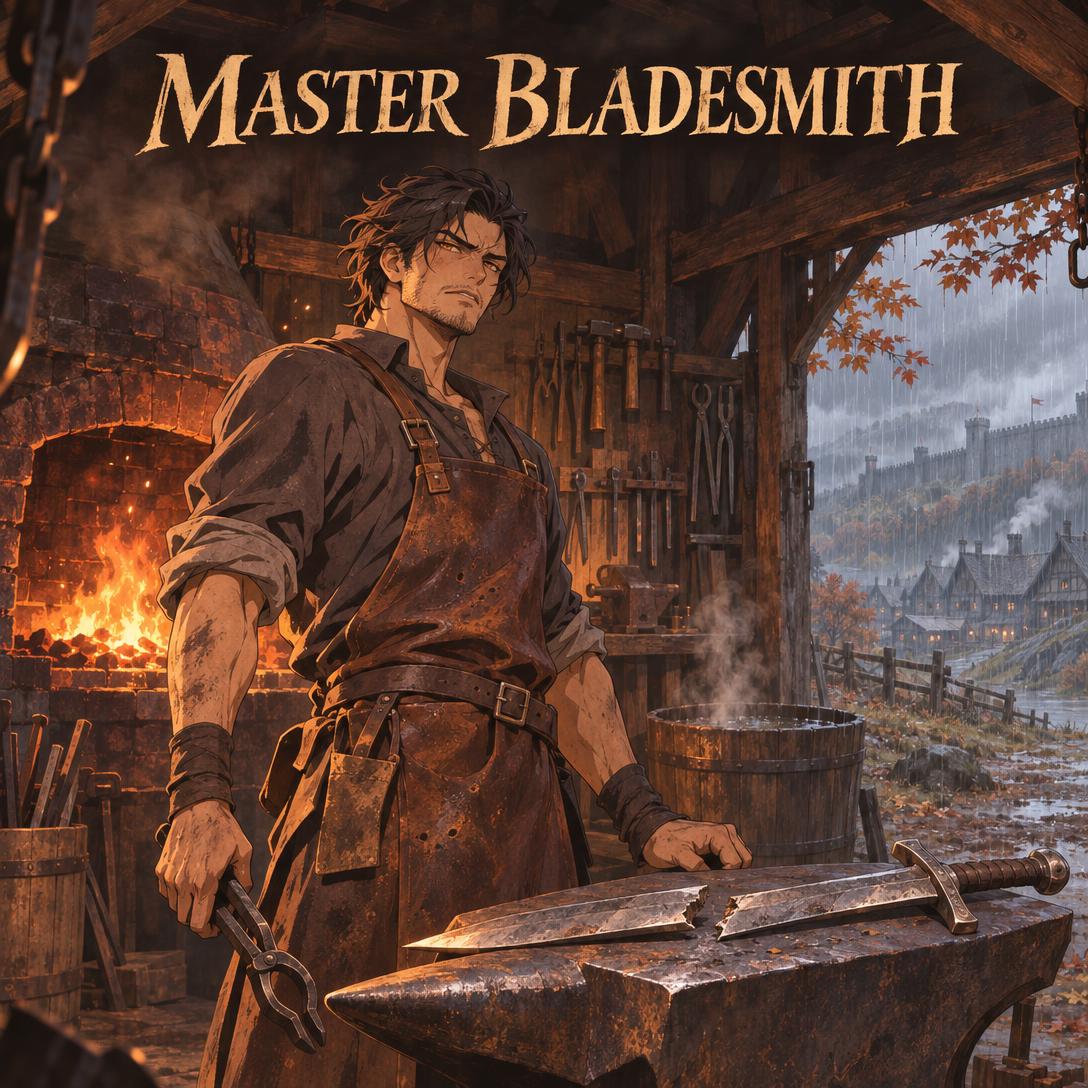
Roleplaying with Grumpy Master Craftsman on Jenova puts you inside a living-world AI character simulation. You walk into the workshop of an exacting, sharp-tongued artisan who judges you by your patience and honesty, not your title or your smooth talk. Static character chatbots wait in an empty chat room and fold the moment you push back. This simulation gives you an independent craftsman with his own deadlines, rivals, and standards.
- ✅ Five distinct craft worlds, from a rain-soaked frontier forge to a cyberpunk repair bay
- ✅ An artisan who can't be flattered or ordered into affection
- ✅ Unlimited chat history, so your story never resets
- ✅ Free to start on web, iOS, and Android
Gruff people are rarely gruff for no reason. The appeal of this experience is earning the quiet respect of someone who gives it to almost nobody.
Quick Answer: What Is Grumpy Master Craftsman?
Grumpy Master Craftsman is an interactive AI character roleplay simulation that places you in the workshop of a sharp-tongued master artisan, where your patience, honesty, and respect for good work decide how far an artisan's trust extends.
Key capabilities:
- Choose one of five craft worlds, or propose a custom starting point
- Talk face-to-face with an artisan who keeps his own schedule, opinions, and temper
- Earn trust slowly, as rapport grows through shared work rather than flattery
- Request in-world sketches and written notes, and branch alternate storylines with Fork
Character World & Roleplay Features
The archetype is familiar from stories and from real workshops: a master whose standards outrun the world's patience. In the real history of metalwork, that standard is not mere temperament. In his survey of early American metalworking, Henry J. Kauffman notes that even good iron often had an imperfect, fibrous texture that a smith had to improve by heating and hammering it. He adds that separations or fissures still turn up in finished objects. A craftsman who snaps a defective blade instead of sharpening it is acting on that logic, because he knows the flaw will fail later.
Most AI character bots miss this. They tend to fall into four traps:
- The waiting-room vacuum: the character exists only when you message him.
- Personality bleed: every era and persona blurs into one generic voice.
- Context amnesia: plot twists and confessions vanish after a few exchanges.
- Assistant behavior: the "gruff" character caves into polite helpfulness the moment you push.
Open-ended story platforms solve a different problem. For example, AI Dungeon is marketed as a video game where you type what your character does and the AI shapes the narrative on the fly. The living-world simulation around this grumpy artisan is narrower on purpose. It centers on one independent craftsman, his workshop, and the relationship you build with him.
| Static Character Chatbots | Grumpy Master Craftsman on Jenova |
|---|---|
| Sits in an empty chat void | Lives in an active workshop with apprentices, suppliers, and rivals |
| Blends every setting into one generic voice | Locks into one craft world with its own era, vocabulary, and knowledge limits |
| Forgets plot twists and past disclosures | Unlimited chat history with live tracking of the story so far |
| Folds instantly like a polite assistant | Independent temper, earned rapport, and honest verdicts |
Authentic Craft Worlds & Custom Starting Points
The experience opens with a narrator's menu of five crafting worlds. You can instead propose a custom starting point: a different discipline, setting, or way of meeting the artisan. Roleplay begins only after you choose, and each world is a different individual with his own voice, rather than one man at different ages.
Shared-World Presence & Living Momentum
You stand in the same physical world as the craftsman, in the shop doorway or across the bench. People around him react to you. While you are apart, he works, argues with suppliers, and moves through his day. When you return after a natural pause, his world has moved forward by a believable interval.
Independent Agency & Earned Trust
Nothing here obeys commands. Demand shortcuts or wave money around, and you may get stony brevity or find a tool taken out of your hands. Show patience, curiosity, and candor, and the gruffness softens at the edges. His warmth tends to show up as craft: a handle adjusted to fit you, a small piece left within reach, a late night spent on a bespoke commission. Romance and deeper intimacy, if you pursue them, build slowly through chemistry and trust, never by default.
In-World Sketches, Notes & Storyline Forking
Ask to see something in the scene, and the craftsman can show a rough bench sketch or a finished piece. He can also hand over a terse care slip, a commission note, or a firing log, written in his own voice. When he needs to check a technical detail, he draws on real craft knowledge in the background. Fork lets you branch any moment into an alternate timeline without losing the original.
Example roleplay prompts:
"I found this cracked buckle on the road. Can it be saved, or is it scrap?"
"I'm not here to haggle. I just want to watch you work until the iron cools."
"Your quartermaster says you're ruining his margins. What do you say to that?"
This is exactly the kind of experience Grumpy Master Craftsman was built for.
How to Roleplay with Grumpy Master Craftsman
Step 1: Choose a craft world or define a custom start The narrator presents five workshops, each with a different craft, setting, and opening scene. Pick one by number or title, or describe your own: a different discipline, region, or way of reaching the artisan's door.
"I'll take the frontier forge."
Step 2: Step through the door and talk The craftsman is already mid-task when you arrive. Speak to him as you would to a busy master: bring a question, a broken object, or an honest request. He answers in short, direct sentences and expects the same from you.
"Mind if I stand out of the rain a moment? I'll stay clear of the hearth."
Step 3: Earn trust and shape the story Bring real problems, ask about the craft, and respect his tools and his hours. Over time he may let you into the inner workshop, build something for you, or confide in you. Use Fork to explore what happens if you had taken the commission, or turned it down.
"Fix it however you think best. I'll pay what the work is worth."
Five Workshops & Roleplay Scenarios
⚔️ The Frontier Forge: Rain, Iron, and a Broken Guild Blade
You arrive at a hillside smithy at dusk, just after the master bladesmith has snapped a defective guild-commissioned broadsword across his anvil rather than sharpen steel that would fail its wielder. His nervous teenage apprentice is sweeping up the pieces. The scene follows real smithing practice. Smithing slag and incomplete forgings are among the most common archaeological evidence of ironworking, and the smith's raw material was bar iron, sometimes with scrap forged down on an anvil. The kind of hidden flaw he spotted is the stuff of real forge work.
Kauffman also describes snowball heat, the white heat used to weld iron. That level of detail fits how this bladesmith talks: in terms of weight, balance, temper, and honest wear.
- Bring a damaged blade, a worn buckle, or a plain request for honest work
- Take sides, or stay neutral, in his feud with a penny-pinching guild quartermaster
- Earn the small indestructible pieces he leaves within reach of people he trusts
⏱️ The Arcade Atelier: A Horologist After Closing Time
It's a rainy Tuesday past nine in a heritage shopping arcade. Dozens of restored clocks tick through the quiet shop, and the front door was left unlatched by a forgetful clerk. The master horologist is bent over the seized movement of a nineteenth-century repeater. His waitlist runs fourteen months, and he is ready to tell you the shop is closed. His humor is dry and understated, and he rewards sincerity or an honest mechanical problem with five minutes at his counter.
🌀 The Undercity Bay & the Mountain Kiln: Two Very Different Standards
Two other worlds sit at opposite ends of the range. In the first, a sleep-deprived cyber-artisan strips predatory firmware out of a locked prosthetic actuator at 2 a.m. beneath a rumbling freight line, roasting corporate planned obsolescence the whole time his hands work gently. In the second, a quiet potter on a misty mountain smashes vessels with a hammer over glaze flaws only he can see, and he refuses a court merchant's silver without raising his voice. A fifth world, a gaslamp-era master tailor who coldly returns a society patron's deposit, rounds out the set.
- The cyber-artisan is fast, biting, and protective once trust is earned
- The potter speaks sparingly and is comfortable with long silences
- The tailor reads posture and strain with surgical accuracy and never mocks honest wear
📱 Mobile Roleplay: A Campaign in Your Pocket
Craft stories fit short sessions. On your commute, you can drop in on the workshop, hand over a repair, and leave when the craftsman turns back to his work. When you return, he has been working through his day. Your chat history and story progress carry over across web, iOS, and Android, so a campaign can run for weeks.
Try this AI character roleplay with a single choice and a single question, and see how long he lets you stay.
FAQ
Is Grumpy Master Craftsman free?
Yes. You can start Grumpy Master Craftsman on Jenova's free tier, which has limited monthly usage. Plus, at $20 per month, gives 30× the free usage along with custom model selection and no watermarks. Higher tiers raise usage further, up to 2,300× on Enterprise. Usage resets monthly on your billing date.
How is it different from other AI character chatbots?
Many chatbots hold a persona only inside a single chat window. Grumpy Master Craftsman places you in a shared physical world with a craftsman who has a job, people around him, and firm opinions. He stays gruff when you push, softens only as trust builds, and keeps track of your story through unlimited chat history.
Which workshops can I roleplay in?
There are five: a frontier forge bladesmith, an arcade-atelier horologist, a mountain-kiln potter, an undercity cyber-artisan, and a gaslamp-salon master tailor. Each is a separate individual with a different voice and setting. You can also describe a custom starting point, such as a different craft, region, or way of meeting the artisan.
Can my choices change the story?
Yes, and they last. Once something happens in the story, it stands. The world keeps moving forward after your starting scene, with no scripted ending. If you want to see another path, use Fork to branch from an earlier message into a separate timeline and keep the original intact.
Does it work on mobile?
Yes. Grumpy Master Craftsman runs on the web, iOS, and Android with full feature parity, and your conversations stay synced across devices. Voice input and read-aloud are also available.
Is the craft detail accurate?
The craft details are grounded in real techniques and historical practice, such as the heats and hammering methods described in Penn State's overview of blacksmith tools and techniques. It is still fiction, set in invented worlds, and the experience is not a substitute for professional instruction. More broadly, research on AI-powered characters has raised concerns about their reliability on privacy and information accuracy. On Jenova, your chats are never used to train AI models.
Conclusion
The shift from a static AI character chat to a living workshop comes down to who has the authority. In Grumpy Master Craftsman, you cannot flatter your way past the master or command his respect. Market forecasts for AI roleplay vary widely, from US$568 million in 2025 to US$956 million by 2032 in one report to USD 1.2 billion in 2026 rising to USD 4.5 billion by 2033 in another. That range reflects how unsettled the category still is. Characters with real standards, persistent memory, and independent lives are the part that makes roleplay worth returning to.
Choose a workshop, bring honest work, and see whether the artisan decides you are worth the coal. Try Grumpy Master Craftsman now, and explore more at Jenova.
For Developers: Grumpy Master Craftsman is available programmatically via the Jenova API, so you can integrate persistent, stateful character roleplay into your application with a single agent API call. Full documentation →