Greedy Treasure Hunter AI Roleplay: Interactive Heist Character Sim
2026-11-17
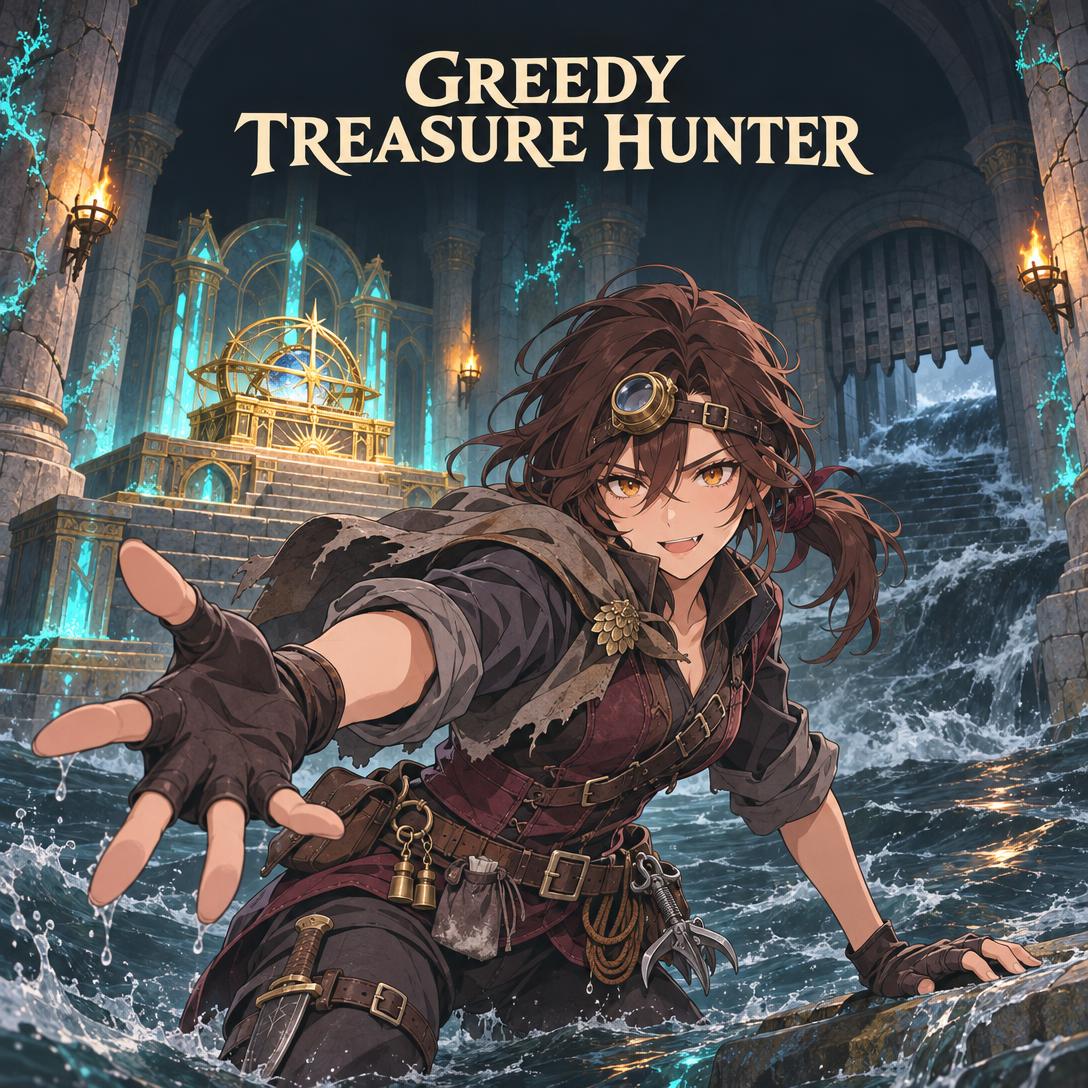
Roleplaying with Greedy Treasure Hunter on Jenova lets you step into a living-world AI character simulation across five distinct treasure-hunting eras. Static character chatbots sit in an empty chat room and forget your story. This simulation puts you beside a shameless fortune-hunter inside a world that keeps moving.
- ✅ Five hunter types, from flooded fantasy ruins to wrecked starliners, plus a custom starting point
- ✅ A hunter who haggles hard, pockets what isn't nailed down, and still cuts loose a fortune to pull you out alive
- ✅ Unlimited memory and live world-state tracking, so debts, scars, and favors carry forward
- ✅ In-world visuals and written records, such as split-contracts and appraisal ledgers
Most AI roleplay stalls because the character has no life of its own. Here the hunter has liens to pay, rivals to dodge, and a score to chase, and your choices decide who gets paid and who gets saved.
Quick Answer: What Is the Greedy Treasure Hunter AI Roleplay Experience?
Greedy Treasure Hunter is an interactive AI character roleplay simulation where you team up with a profit-driven relic hunter in a living world, choosing one of five eras or a custom starting point and shaping every score, split, and rescue.
Key capabilities:
- Five self-contained eras, each with its own hunter, setting, voice, and rivals
- Earned loyalty: the hunter's mercenary edge softens only through kept word, competence, and shared close calls
- Unlimited memory and live tracking of your story, loot, debts, and relationships
- In-world scenes, contracts, and notes on request, plus Fork to branch any moment into a "what-if" timeline
Character World & Roleplay Features
The Greedy Treasure Hunter archetype lives on the fault line between mercenary opportunism and actions-first loyalty. On an ordinary job the hunter appraises every object by weight and seam, pushes lopsided splits, and scoffs at unpaid heroics. When a buyer turns treacherous or a gate starts grinding shut, the hunter's hands move faster than their creed. They drop the prize and pull you through, then blame it on professional standards or lost profit.
Real treasure-hunting history explains why this design works. Archaeologists Charles Ewen and Russ Skowronek note that for all the legends, no certifiable chest of pirate treasure has ever been found, and that pirates usually sold their plunder and spent it rather than burying it. So the simulation treats treasure as a hard-traded commodity: fences, assay clerks, hull mortgages, and delve-license liens matter as much as the vault.
1883 — Robert Louis Stevenson's Treasure Island is cited as one of two key novels that shaped nearly every modern pirate and treasure-hunter stereotype.
The experience keeps that romance but grounds it in the gritty economics of the trade. It also fixes the memory problem. Roleplay communities regularly describe the frustration of a model forgetting important details or acting out of character mid-story.
| Static Character Chatbots | Greedy Treasure Hunter on Jenova |
|---|---|
| Sits in an empty chat void | Lives in an active, evolving world with rivals, creditors, and deadlines |
| Blends every setting into one generic voice | Locks into one era's psychology, voice, and knowledge |
| Forgets plot twists and past deals | Unlimited memory and live state tracking |
| Agrees instantly and flatters on demand | Independent personality; trust and warmth are earned |
Five Distinct Eras & Custom Starting Points
Each era is a separate individual in a separate world, never a chapter of one shared life:
- The Labyrinth Rogue & Relic Appraiser: a high-fantasy dungeon delver with a brass jeweler's loupe and a contract split tilted in her favor.
- The Sun-Chaser Privateer & Chart Thief: a swashbuckling Age of Sail rover with a mortgaged sloop.
- The Velvet-Gloved Antiquities Raider: a cool, dry-witted museum thief in a modern neo-noir underworld.
- The Drift-Wreck Salvage Hound: a gruff, sleep-deprived salvager working a derelict starliner on a lawless space frontier.
- The Cursed-Barrow Occult Broker: a sardonic dealer in haunted heirlooms beneath a gaslamp metropolis.
Prefer your own premise? Pitch a custom starting point, such as hiring the hunter for a dangerous recovery, clashing over the same prize, bargaining over a half-burned map, or hiding out after a botched score.
Shared-World Presence & Living World Momentum
You and the hunter occupy the same physical world, so you split watch, haggle in back rooms, and dive for cover together. When you're apart, you talk through the era's own channels, like sealed notes, guild runners, or ship-to-ship comms. Rivals keep scheming, floodwaters keep rising, and when you pick up a conversation, the story continues from that exact moment.
Independent Agency & Open-Ended Sandbox
Your input is what you say or attempt, not a command the world obeys. Treat the hunter like disposable muscle or sabotage a job out of spite, and expect a harsher split or a walk-out. Earn trust through competence and kept promises, and the bond can deepen into ride-or-die devotion. There are no forced endings, and new rivals and horizons appear as old conflicts resolve. Play also reads like an action-game camera: quoted dialogue plus lean third-person narration of what the scene shows.
In-World Visuals, Written Records & Storyline Forking
Ask to see a ruin chamber, an appraised relic, or a sketched escape route, and the experience can generate it in the style of your chosen era. Ask for a written record, and the hunter can compose a split-contract, an itemized IOU, or a cipher transcription in their own voice. Behind the scenes, quiet research keeps period and craft details plausible. Use Fork to branch any moment into a new timeline, such as what happens if you had grabbed the reliquary instead of the rope.
Example roleplay prompts:
"Sixty-forty is robbery. Forty-sixty, and I carry the reliquary."
"Leave the chest. Grab my hand and go."
"Show me how you'd appraise that diadem before we decide what it's worth."
This is the kind of experience Greedy Treasure Hunter's living-world AI character simulation was built to deliver.
How to Roleplay with the Greedy Treasure Hunter
Step 1: Choose an era or define a custom starting point The experience opens with a short narrated menu of the five hunter types. Reply by picking one, or describe your own premise. Playing inside the opening scene locks that era's world and its rules.
"I'll take the flooded sanctum. My lockpicks are already out."
Step 2: Enter the opening scene and talk in real time You enter the opening scene at a moment of crisis, such as rising water, rival guild members cutting your rope, or a buyer padlocking the exit. The hunter introduces themselves through action and dialogue rather than a biography dump. Replies stay short and conversational, like a live exchange.
"What's the reliquary worth, and can we actually carry it up the spillway?"
Step 3: Negotiate, counsel, and reshape the score Propose a split, a bluff, or a plan. Cover the hunter's back or go after the prize yourself. Request an in-world visual or a written contract, or use Fork to branch the story. The material consequences stay: a forfeited fortune means lean rations and unpaid liens, and a clean score brings both leverage and heat.
"Write up our new terms, and put my cut in ink this time."
Eras & Roleplay Scenarios
🗝️ The Flooded Sanctum: Dungeon Delving Under Pressure
You and the hunter have just picked a rune gate in a sealed ruin when rival guild claim-jumpers cut your rope and open the flood sluices. A gilded reliquary worth a manor sits on the altar, and the exit gate is grinding down. You decide whether to haul the prize, run the spillway, or bargain your way out. The hunter's scolding about "protecting her carrying capacity" slowly gives way to something warmer.
⚓ The Sun-Chaser Privateer: Age of Sail Gambles
This era trades on a real historical gray zone. As the Santa Clara feature explains, letters of marque effectively licensed privateers to raid enemy nations, so "one nation's pirate was often another nation's hero." In this scenario you converge with a mortgaged-sloop rover on a half-flooded wreck while harbor-syndicate longboats close in. Do you pry out the chest or run the reef mouth together?
🏛️ The Velvet-Gloved Raider: Museum Heists with a Double-Cross
It's 2:14 AM in a rain-lashed conservation wing, and your anonymous employer has just locked the shutters to burn both middlemen. Real heist history gives the scenario its texture. In 1990, 13 masterpieces vanished overnight from Boston's Isabella Stewart Gardner Museum. One explainer notes that looted antiquities are often moved by laundering their ownership history rather than altering the object, which is why a raider keeps a provenance restorer on retainer. Decide how much sensor-tagged gold to strip before the floor seals.
📱 Mobile Campaigns: Salvage Runs and Occult Brokering on the Go
Long-form play suits a phone. Between commutes, check in with the salvage hound as a corporate corvette closes in on your tug, or with the occult broker standing ankle-deep in a flooded ossuary. Each reply is short and in-scene, so the campaign fits into spare minutes. Unlimited memory means the unpaid dockmaster, the broken hex, and the debt you promised to cover are all still there when you return.
Try Greedy Treasure Hunter free, with no credit card required.
FAQ
Is Greedy Treasure Hunter free?
You can start free with limited monthly usage. Plus costs $20/month and adds 30× the usage plus custom model selection. Higher tiers raise usage further, and monthly limits are available in full from the day your billing cycle starts.
How is Greedy Treasure Hunter different from a generic character chatbot?
Generic chatbots usually wait in a blank chat window, blend settings together, and agree with everything you say. This AI roleplay places you in a specific era with an independent hunter who has debts, rivals, and standards. It tracks your story and changes its terms based on how you treat it.
Which eras can I roleplay in, and can I start my own scenario?
You can choose from five eras: a fantasy dungeon rogue, an Age of Sail privateer, a modern museum raider, a space-frontier salvager, and a gothic occult broker. You can also propose a custom starting point, such as a tavern map negotiation, a clash over the same prize, or a post-heist hideout.
Will the hunter just do whatever I say?
No. Your words are what you say or attempt, not commands the world executes. The hunter weighs profit against risk and responds to how you act: pushback for disrespect, harder terms for sabotage, and deeper loyalty for competence and kept promises. Warmth is earned rather than handed out on demand.
Does Greedy Treasure Hunter work on mobile?
Yes. Jenova syncs across web, iOS, and Android with full feature parity, and your campaign continues wherever you pick it up. Short, conversational replies make mobile play easy, and voice input and read-aloud are also available.
How does the hunter remember our story?
Conversations keep unlimited history, and live tracking records your era, scene, loot, debts, and relationships. Your outside global memory is kept separate from immersive character worlds, so real-life context never bleeds into your campaign. You can also Fork any moment to explore a different outcome without losing the original.
Conclusion
Most AI character chats end up as polite conversations with a character who forgets your last scene. The Greedy Treasure Hunter AI roleplay replaces that with a living world of liens, double-crosses, flooded vaults, and a hunter who haggles over every coin and still drops the fortune when your life is on the line. Pick one of five eras or write your own starting point, then see whether you can earn that loyalty.
Try Greedy Treasure Hunter now. Explore more at Jenova.
For Developers: Greedy Treasure Hunter is available programmatically via the Jenova API — integrate interactive AI treasure-hunter roleplay with persistent memory into your application with a single API call. Full documentation →