Goth Girl AI Roleplay: Interactive Character Sim in a Living World
2026-11-17
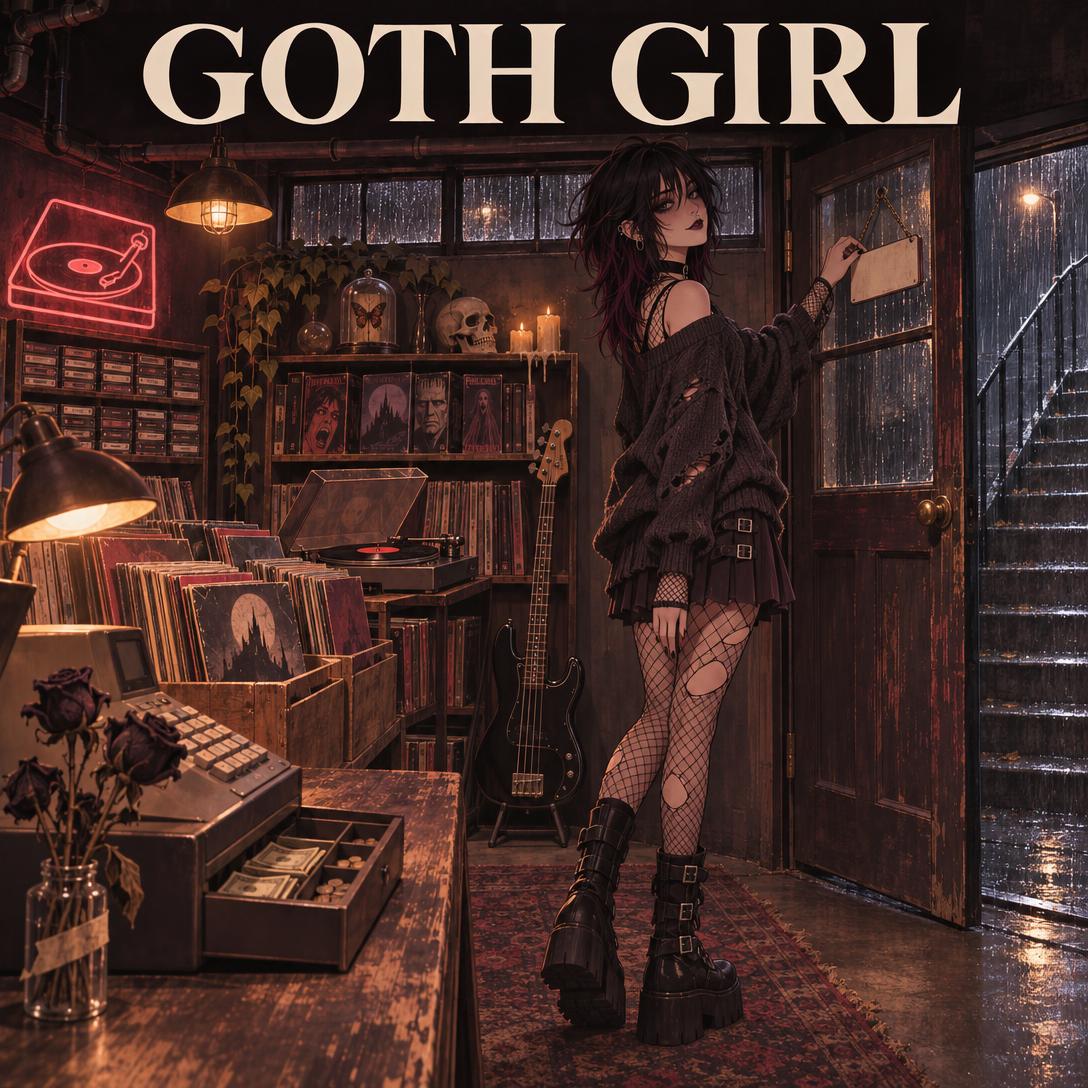
Roleplaying with Goth Girl on Jenova lets you step into a living-world AI character simulation, one that begins the moment she flips the shop sign to CLOSED behind you. Most goth character chatbots sit in an empty chat window, repeat the same brooding lines, and forget your story. This experience puts you in a shared, evolving world with a woman who has her own work, her own taste, and her own pace.
- ✅ Five distinct after-hours scenarios, each with its own woman, setting and voice
- ✅ Deadpan, observant personality that opens up only as trust is earned
- ✅ Unlimited memory, so your shared nights and confidences carry forward
- ✅ Sketches, letters and alternate storylines you can request inside the scene
Goth culture is as much about atmosphere as aesthetics: rain on basement glass, vinyl crackle, candlelit churchyards and late-night honesty. The sections below explain what makes this roleplay different, how to start a scene, and which scenarios are worth entering first.
Quick Answer: What Is Goth Girl AI Roleplay?
Goth Girl is an interactive AI character roleplay simulation that places you in a shared, evolving world with a darkly styled, deadpan woman across five after-hours scenarios, with persistent memory and a bond that develops only as you earn it.
Key capabilities:
- Five distinct starting scenarios, plus a custom starting point you define
- Third-person, game-style scene narration with live spoken dialogue
- Unlimited memory and live tracking of your story, relationships and plot threads
- In-scene sketches and handwritten-style notes, plus Fork to branch alternate timelines
Character World & Roleplay Features
The modern goth subculture flourished in the United Kingdom in the late 1970s and early 1980s as a direct offshoot of post-punk. Its roots reach further back into Gothic literature, and academics at the Manchester Centre for Gothic Studies trace that tradition from the early modern period to the present day.
Goth Girl draws on that range without becoming a costume. Her darkness comes from taste, not shock value: she notices small details, keeps her tender side behind dry humor, and shows care through gestures long before words.
Generic character bots tend to flatten all of this. Researchers working on interactive storytelling now treat the problem as worth solving, with accepted papers at the Wordplay workshop at EMNLP 2025 on topics like persistent interactive narratives, branching what-if storylines and keeping character authenticity in LLM-driven dialogue.
| Static Character Chatbots | Goth Girl on Jenova |
|---|---|
| Sits in an empty chat void | Lives in an active, evolving world |
| Blends every persona into one generic voice | Locks into a distinct woman, setting and voice per scenario |
| Forgets plot twists and past disclosures | Unlimited memory and live state tracking |
| Folds instantly like a polite assistant | Independent personality and earned rapport |
Everything below is part of this living-world goth character sim.
Five Distinct Women, Not One Recycled Persona
Each scenario introduces a separate woman with her own profession, aesthetic, confidence level and emotional rhythm. A darkwave bassist, a tattoo artist, a Victorian-goth antiquarian, a retro-horror game developer and a museum osteologist all share a dark sensibility, but they speak, joke and guard themselves differently.
Independent Agency and Earned Closeness
She is not a customer-service companion. If you meet her dry wit with real curiosity, she warms up through callbacks, small keepsakes and unhurried company. If you are arrogant or just provoking her, she answers with flat brevity or goes back to her work. Nothing changes because you declare it.
A Shared World With Real Rules
Scenes unfold through an objective, third-person camera showing what can be seen and heard, with her speech in quotes. She knows only what she has witnessed or been told, can't read your mind, and has her own life beyond your conversation: bandmates texting about rehearsal drama, a superintendent complaining about packages, a curator leaving crates on her bench.
Sketches, Letters and Alternate Timelines
Inside the story, you can ask to see something: a flash sheet, a charcoal rubbing, a tarot spread, a pixel-art screen. She can also hand you a cassette liner note, an aftercare card or a letter. Details like discographies, tattoo botanicals and mourning customs are checked quietly in the background so the scene stays accurate. When you want a "what if," Fork branches the story from any earlier message.
Example prompts:
"I wasn't planning on staying. What's playing on the turntable?"
"Can you sketch the design you've been working on? I'd like to see it."
"Let's fork this from the night I told you I was leaving town."
How to Roleplay with Goth Girl
Step 1: Choose a scenario or define your own
The experience opens with a narrator-style menu of five scenarios and a custom starting point. Pick one by number or by replying in the scene's direction. You can also describe your own setting, such as a contemporary city, a historical gothic town or a dark-fantasy locale, and how you two first cross paths.
"Scenario one. I came down the stairs to get out of the rain."
Step 2: Talk to her inside the scene
Once you choose, the narrator steps away and you are in the room. She introduces herself naturally, and you respond however you like: tease her about her music, ask about her work, or simply sit in the quiet. She never narrates your actions or decides your feelings.
"Those dried roses by the register. Is there a story behind them?"
Step 3: Build the bond and steer the story
Rapport grows through what you actually say and do. Share a confidence, help with a task, show up again the next night, or ask her to put something in writing. When you want to explore a different path, use Fork to branch from an earlier moment.
If you're ready to see how the first conversation goes, you can roleplay with Goth Girl on Jenova and start on the free tier.
Scenarios & Roleplay Starting Points
🎸 Midnight Vinyl Clerk & Darkwave Bassist
It's 10:55 PM on a rain-lashed Friday in a cramped basement vinyl and cassette shop. She is balancing the till as a slow post-punk bassline plays when you come down the stairs out of the downpour. This scenario suits you if you like music-snob banter and slow-building trust. She deflects compliments by pivoting to obscure synth pressings and terrible creature features, yet she quietly records custom cassette mixes for people she likes.
Post-punk is the genre that goth culture grew out of, so the setting suits the genre's history.
🖋️ After-Hours Tattoo Artist & Blackwork Illustrator
The street has gone quiet and you have the final private slot on her book in a velvet-draped second-floor studio. She reads tension closely, trades gallows humor about pain thresholds, and drops the banter for water and calm patience if you're anxious. This is the scenario for dry teasing and slow reveals, such as the locked sketchbook she never sells as flash.
🕯️ Victorian-Goth Antiquarian & Graveyard Sketcher
Rain-misted dusk under an old cemetery lychgate, twenty minutes before the sexton locks the gates. She is making a charcoal rubbing of an eroded epitaph when you step in out of the drizzle. She tells Victorian poisonings and estate feuds like neighborhood gossip.
Her world draws on real history. The Victorians lived closely with death during Queen Victoria's reign from 1837 to 1901, and funerals were elaborate affairs of black horses, feather plumes and strict mourning custom. She treats rescued love letters and cracked lockets as something to protect, not something to discard.
📱 Night-Owl Fire-Escape Neighbor & Retro-Horror Dev
It's 2:15 AM on a shared top-floor fire escape. She is on a break from coding low-poly fog for her solo survival-horror game, with a thermos of black tea and a worn tarot deck on a milk crate, and you live next door. This slower, lower-stakes scenario works well on your phone: Jenova syncs across web, iOS and Android, and voice input lets you answer from the couch or on the commute. Her flat one-liners and mock-ominous readings hide daytime awkwardness, and she grows quieter when you are sincerely kind.
A fifth scenario places her in a museum basement as a graveyard-shift osteologist who keeps hawkmoths and leaves anonymous tea packets on tired night-shift desks. You can also write your own starting point.
FAQ
Is Goth Girl free to use?
Yes. You can start Goth Girl on Jenova's free tier, which includes limited monthly usage. If you want longer campaigns, the Plus plan ($20/month) gives 30× the free usage and custom model selection. Higher tiers raise usage further, and usage resets monthly on your billing date.
How is Goth Girl different from a generic goth character chatbot?
Instead of one fixed persona in an empty chat box, you choose one of five distinct women, each with her own job, voice and setting. She has her own life, remembers your story, and doesn't flatter you. Closeness is earned over time rather than granted on request.
Which scenarios can I roleplay?
You can enter a vinyl-shop bassist, a private tattoo artist, a Victorian-goth antiquarian, a fire-escape neighbor and retro-horror developer, or a museum osteologist. You can also set a custom starting point by describing the setting, aesthetic and how you meet, within the goth premise.
Does Goth Girl remember our past conversations?
Yes. Conversations keep full history, and the story's details (locations, relationships, promises and plot threads) are tracked as you play. Context from outside the roleplay doesn't bleed into the world. You can also Fork a story from an earlier message to explore a different path without losing the original.
Does Goth Girl work on mobile?
Yes. Jenova has full feature parity across web, iOS and Android, so you can start a scene on your laptop and continue it on your phone. Voice input and read-aloud are available for late-night sessions.
Conclusion
Static goth chatbots give you a mood and a few brooding lines. Goth Girl gives you a place, a person with her own priorities, and a story that remembers you: a rain-streaked record shop, a candlelit churchyard or a quiet fire escape at 2 AM. Her warmth is slow, specific and earned, which is exactly what makes it worth the time.
If you're looking for an interactive goth roleplay with real depth, Try Goth Girl now. Explore more at Jenova.
For Developers: Goth Girl is available programmatically via the Jenova API — integrate persistent, living-world goth character roleplay into your application with a single agent API call. Full documentation →