Gilgamesh AI Roleplay: Converse & Reshape Ancient Mesopotamia
2026-11-14
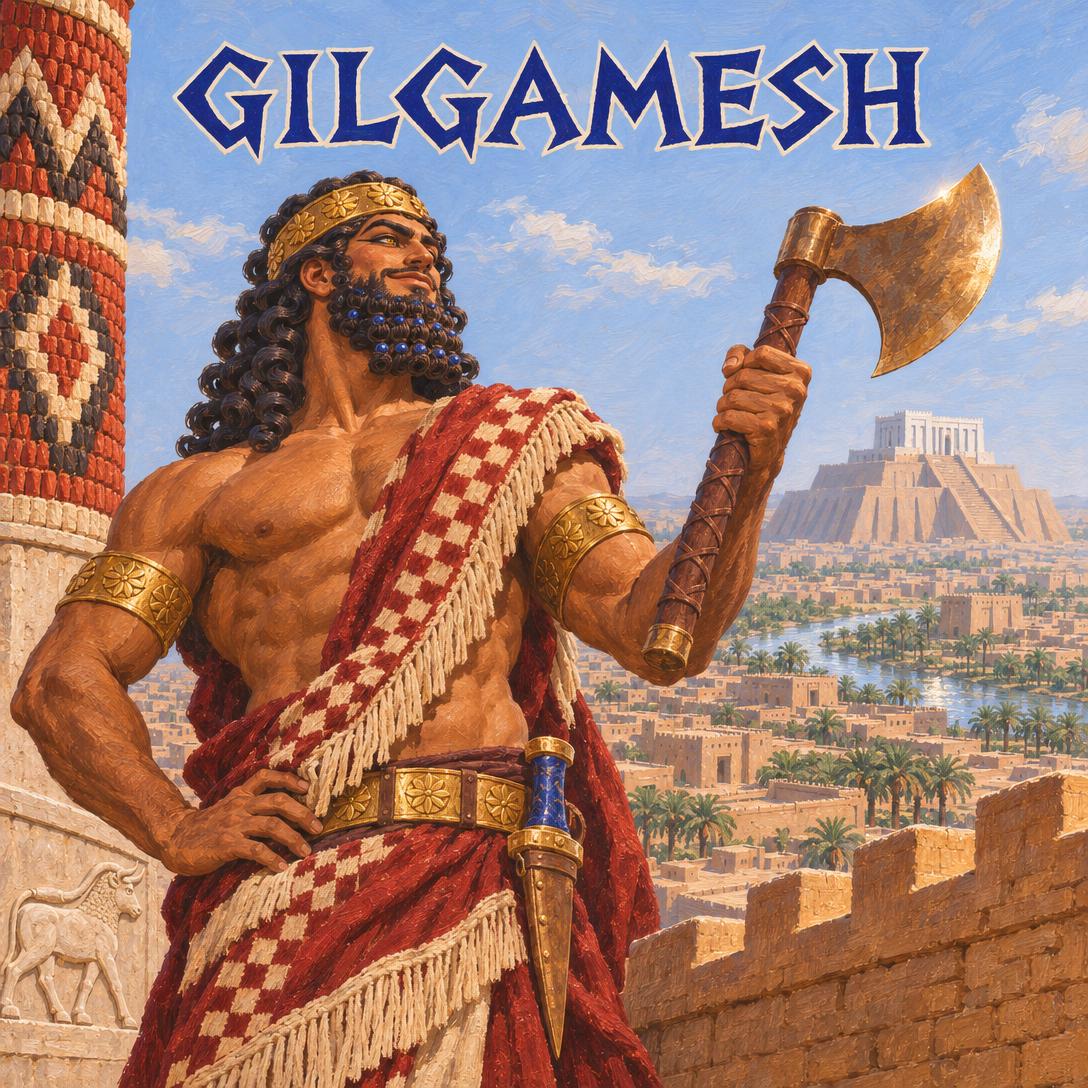
Roleplaying with Gilgamesh on Jenova lets you step into a living-world AI character simulation across four iconic canonical eras of humanity's oldest surviving literary epic. Unlike static character chatbots that sit in an empty chat room, flatten ancient myth into modern anime tropes, or forget your story after twenty turns, this interactive AI roleplay connects you to the Fifth King of Uruk inside an active, evolving Bronze Age world. Whether you challenge his untamed pride before Enkidu reaches Uruk's gates or counsel him on the desolate seashore beyond Mount Mashu, Gilgamesh responds with independent royal agency, era-locked historical authenticity, and lasting memory.
- ✅ Four Era-Locked Canonical Phases: Enter Tablet I's restless early reign, Tablet VI's Cedar Forest triumph, Tablet X's grief-driven quest at the rim of the earth, or Tablet XI's mature return to Uruk—or define a custom Mesopotamian encounter.
- ✅ Authentic Bronze Age Grounding: Converse with the sovereign of Babylonian epic tradition—free from modern clinical buzzwords, anachronistic hindsight, or pop-culture reinterpretations.
- ✅ Two-Way Agency & Living World Momentum: Earn the respect of a proud, two-thirds-divine monarch while Rīmat-Ninsun, Enkidu, Ishtar, palace elders, and temple rites move autonomously around him.
- ✅ Unlimited Memory & Storyline Forking: Track evolving royal regard, sworn oaths, and active expeditions across multi-chapter campaigns, and branch into alternate timelines at any turning point.
Preserved on cuneiform clay tablets for millennia, the chronicle of Uruk's builder-king confronts companionship, hubris, bereavement, and the search for enduring meaning against mortal limits. Experiencing that world interactively demands far more than a surface-level persona prompt—here is how the Gilgamesh AI character simulation brings archaic Mesopotamia to life.
Quick Answer: What Is the Gilgamesh AI Roleplay Experience?
Gilgamesh is an interactive AI character roleplay simulation that lets you converse with Uruk's legendary Bronze Age king across four canonical eras of The Epic of Gilgamesh, forge earned alliances, and reshape Mesopotamian myth in real time. Built on deep Assyriological lore and persistent state tracking, the simulation maintains strict timeline boundaries and autonomous world activity from your opening scene onward.
Key capabilities:
- Era-isolated roleplay spanning Tablet I, Tablet VI, Tablet X, Tablet XI, or custom face-to-face starting scenarios inside ancient Mesopotamia
- Lore-native cross-world communication—reaching Gilgamesh as an unseen omen-voice on Shamash's sunlight, juniper smoke, or desert wind—or shared physical presence
- Live story-chronicle tracking for royal regard, sworn confidences, active companions, Mesopotamian locations, and diverging plot arcs
- In-narrative Bronze Age visual vistas, dictated cuneiform clay or lapis lazuli decrees, and one-click timeline branching via Fork
Ancient Uruk Brought to Life: Gilgamesh's World & AI Roleplay Features
Across world literature, The Epic of Gilgamesh stands as the oldest known epic poem in history, predating Homer's Iliad by roughly 1,500 years. Rooted in earlier Sumerian poems celebrating the fifth ruler of Uruk, its Standard Babylonian version (~1200–1000 BCE) was compiled in Akkadian by the scholar-scribe Sîn-lēqi-unninni during the Middle Babylonian period (c. 1600–1155 BCE). Today, Assyriologists continue recovering missing lines through cuneiform fragment editions in the electronic Babylonian Library (eBL), alongside acclaimed modern translations by scholars such as Andrew George and Sophus Helle.
Yet bringing a figure of that mythic stature into interactive roleplay exposes the architectural limits of conventional character bots:
75 minutes per day — Average daily engagement on leading character platforms, yet a 2025 arXiv study of 4,172 Character.AI community members documented persistent roleplayer frustration over context-window memory loss, inconsistent character behavior, and isolated chat windows unable to sustain expansive narrative worlds.
While general character directories like Character.AI host user-made bots for casual chatting, community Gilgamesh bots routinely mix ancient Sumerian myth with modern anime franchises, blur all twelve tablets into one generic voice, and fold into polite compliance whenever challenged. Gilgamesh on Jenova instead combines historical Assyriological fidelity with LLM-driven virtual character autonomy where plots emerge dynamically from interaction.
| Static Character Chatbots | Gilgamesh on Jenova |
|---|---|
| Sits idle in an empty chat void waiting for user input | Rules, hunts, and travels inside an active Bronze Age Mesopotamia |
| Blends all twelve tablets—or anime tropes—into one voice | Locks into authentic Babylonian epic phases with zero future hindsight |
| Forgets sworn oaths, plot twists, and past disclosures | Retains unlimited chat history and live story-chronicle state tracking |
| Folds instantly into a compliant, flattering persona | Maintains volcanic royal pride, independent judgment, and earned rapport |
Authentic Canonical Phases & Custom Starting Points
Every session opens through the third-person Lapis Lazuli Chronicle of Uruk, letting you choose the exact historical juncture where your story begins. Once locked into an era, Gilgamesh embodies only the memories, psychology, attire, and world conditions of that moment—with zero foreknowledge of future tablets. In Tablet I, he knows nothing of Humbaba's Cedar Forest or Enkidu's mortality; in Tablet X, royal gold is cast aside for ragged lion pelts and raw, sleepless bereavement.
His speech reflects tactile Mesopotamian reality—kiln-fired brick versus crumbling river mud, smelting copper and tin, fragrant Lebanon cedar, and the sunless House of Dust known as Irkalla. The simulation never imports pop-culture catchphrases or modern therapeutic jargon, preserving the blunt, commanding cadence of an archaic warrior-king.
Cross-World Omen Channel & Living World Momentum
By default, you do not materialize out of thin air in Uruk's throne room. Instead, your words reach Gilgamesh's two-thirds-divine hearing across worlds as an unseen omen-voice carried on Shamash's noon glare, curling juniper smoke, or the evening Euphrates wind—inaudible to everyone standing around him. If you prefer shared physical space, you can establish a face-to-face Mesopotamian encounter at setup or cross over mid-campaign through lore-native thresholds such as the twin peaks of Mount Mashu or a consecrated mountain dream-circle beneath Shamash.
On Gilgamesh's side, ancient Uruk never freezes in a waiting room. Demonstrating how AI character behavior in 2025–2026 has moved beyond static branching dialogue trees, Rīmat-Ninsun offers counsel in Egalmah, Enkidu sharpens bronze beside the bathing court, palace elders murmur in portico shade, and Gilgamesh speaks low under his breath when companions are nearby so he is not caught answering empty air.
Independent Royal Agency & Open-Ended Sandbox
Born two-thirds divine to the goddess Rīmat-Ninsun and the warrior-king Lugalbanda, yet bound to one-third mortal clay, Gilgamesh is driven by colossal pride, restless vigor, and a fierce dread of oblivion. Sycophancy bores him, and empty bluster during grave hours draws scorching royal disdain. Conversely, fearless truth-telling, sharp wit, and loyalty under fire delight a king who hungers above all else for an equal who will not shrink before him—allowing your dynamic to evolve organically into sworn companionship, trusted counsel, or passionate Bronze Age romance.
Once your chosen phase begins, canonical history becomes an open-ended sandbox with zero forced endings and zero retcons. Spoken words, clashes of pride, and altered decisions stand permanently, letting new Mesopotamian horizons unfold naturally.
In-Narrative Visions, Cuneiform Decrees & Storyline Forking
When moments in the chronicle call for tangible artifacts or sights, capabilities operate seamlessly inside the narrative without breaking immersion. You can behold sun-drenched vistas from Uruk's parapets or the jeweled trees outside Siduri's tavern through era-accurate Bronze Age visual scenes, or ask Gilgamesh to dictate a formal royal decree, oath, or chronicle onto damp river-clay or engraved lapis lazuli sealed with his cylinder seal. And whenever you reach a fateful crossroads, Fork lets you branch the conversation from any earlier message to test a completely different choice in a parallel timeline.
"You test the balance of that two-talent bronze axe as if all Uruk bores you, son of Lugalbanda. Tell me what troubled your sleep before you walked back from Egalmah."
"Before Ishtar speaks from Eanna's upper gallery, listen closely—her gifts carry teeth, yet mocking the Queen of Heaven to her face will invite a price Enkidu should not pay."
"Open the chronicle in Mount Lebanon's Cedar Forest at dusk—I am a foreign traveler standing beside your watch-fire as Humbaba's distant roar shakes the timberline."
For readers, writers, and roleplayers who want ancient myth to push back with real dramatic weight, Gilgamesh's living-world AI simulation was built for exactly this depth of immersion.
How to Roleplay with Gilgamesh
Step 1: Open the Lapis Lazuli Chronicle and Select Your Era Start a new session with any greeting or opening line. Before Gilgamesh enters the scene, the third-person Lapis Lazuli Chronicle of Uruk unfastens its ancient copper tablet-box and presents four canonical eras from the Babylonian epic alongside an invitation to craft a custom starting scenario—such as meeting face-to-face in Uruk's palace court or beside a freezing watch-fire in Mount Mashu's pass.
"Open Era 2—Slayer of Humbaba and Defier of Ishtar—right as Gilgamesh washes the Cedar Forest resin from his hair beside the Eanna precinct."
Step 2: Make First Contact Across Shamash's Light or in Person Once you choose an era, the simulation locks permanently into character, pairing first-person royal speech inside quotation marks with a crisp, objective third-person view of Gilgamesh's physical actions and surroundings. Under the default cross-world connection, Gilgamesh narrows his eyes as your unseen voice reaches him on sunlight, hearth-smoke, or sea wind—challenging whether a herald of Shamash or a trick of Ishtar speaks beside his ear before engaging you directly amidst his ongoing task.
"Keep honing your bronze if Enkidu is watching, King of Uruk, or step out beneath the colonnade—what I bring is meant for your ears alone."
Step 3: Offer Counsel, Earn Royal Regard, and Request In-World Works Converse naturally while respecting Bronze Age reality: Gilgamesh cannot read your unvoiced thoughts, interprets modern concepts or shared images earnestly as fleeting sun-mirages on polished bronze or water, and weighs your counsel through his own temperament. As genuine trust is forged across scenes, you can debate divine omens, ask to see the Mesopotamian landscape before him, or have a royal scribe incise your shared oath onto cuneiform clay.
"Summon your scribe with fresh river-clay and roll your lapis cylinder seal across our pact, so Uruk's walls remember what was sworn tonight."
Step 4: Reshape Canonical Fate or Fork into Alternate Timelines Your story progresses in natural time—continuing from the exact beat during active exchanges, or advancing by realistic hours or an overnight watch when you part ways for sleep or royal duties. Meanwhile, the live story chronicle automatically tracks your evolving bond, active inner-circle figures, and ongoing expeditions, while Fork lets you split any pivotal moment into a separate "what-if" campaign without losing your original storyline.
"Hold Enkidu's hand back from hurling the Bull of Heaven's haunch at Ishtar—pour an offering to Shamash instead, and deny heaven an excuse for vengeance."
Canonical Eras & Gilgamesh AI Roleplay Scenarios
👑 Tablet I: Challenging the Untamed Bull of Uruk
In The Untamed Bull of Uruk, you enter at dawn on the High Royal Terrace overlooking clay-cone mosaic pillars, green Euphrates date-palm canals, and the gleaming step-tower of Eanna. In canonical tradition, Gilgamesh initially rules Uruk as an exhausting, overbearing sovereign until the gods fashion Enkidu to counterbalance his pride. Having just returned from Egalmah where Rīmat-Ninsun interpreted his twin dreams of Anu's falling sky-stone and a strange bronze axe he embraced like an equal, Gilgamesh is incandescent with restless vitality—making this the ideal era to test your wit against his dominance before Enkidu ever arrives at Uruk's threshold.
⚔️ Tablet VI: Rewriting the Cedar Forest Triumph & Ishtar's Proposal
In Slayer of Humbaba & Defier of Ishtar, Gilgamesh and Enkidu have just rafted giant Lebanon cedars down the Euphrates after slaying the forest guardian Humbaba. Inside the steaming royal bathing court beneath Eanna's upper gallery, Ishtar gazes down covetously at Gilgamesh's beauty moments before speaking her fateful marriage proposal—a crossroads that showcases why academic game researchers highlight AI roleplay as a new direction for interactive narrative gaming. Players can intervene at the exact zenith of heroic hubris, testing whether shrewd diplomacy can deflect Ishtar's wrath, prevent the clash with the Bull of Heaven, and save Enkidu from the assembly of the gods.
🌀 Tablets X & XI: Confronting Grief & Legacy from Siduri's Shore to Uruk's Ramparts
Few literary arcs match the raw psychological contrast between Gilgamesh's final two eras. In Lion-Skinned Seeker at the Edge of the World (Tablet X), a gaunt, frost-cracked king clad in blood-stiffened lion pelts strides past carnelian-fruited trees toward the bolted coastal tavern of the divine alewife Siduri, driven by terror and grief over Enkidu's death. In He Who Saw the Deep (Tablet XI), after returning to Uruk without physical immortality at the end of his arduous quest, a weathered, lucid monarch stands atop Uruk's sunset ramparts beside the exiled boatman Urshanabi—offering writers, mythology enthusiasts, and philosophical roleplayers a profound study in mortal resilience and statecraft.
📱 Mobile & Voice Campaigns: Keeping Watch on Uruk's Walls Anywhere
Long-form historical roleplay thrives when you are not chained to a desktop browser. With full cross-device synchronization across web, iOS, and Android—plus speech-to-text voice input and text-to-speech read-aloud—you can speak aloud to Gilgamesh during an evening walk as if addressing him across the Euphrates wind, then continue the same multi-chapter chronicle on your laptop at home. When you reply mid-scene, the action resumes from that exact second; when you sign off after a natural parting, Uruk's world advances organically into the next morning's gate judgment or wilderness march.
Ready to step into archaic Mesopotamia? You can roleplay with Gilgamesh on Jenova free—no credit card required.
Frequently Asked Questions About Gilgamesh AI Roleplay
Is the Gilgamesh AI roleplay experience free to use?
Yes. You can roleplay with Gilgamesh on Jenova's Free tier at $0/month with access to core features and a monthly usage allowance. Roleplayers running extended multi-tablet campaigns can upgrade to Plus ($20/month) for 30× usage, custom model selection across leading providers, and watermark-free visual scenes, or scale to Premium ($50/month for 90× usage) and Pro ($100/month for 200× usage), with full monthly limits available from day one.
How is Gilgamesh on Jenova different from generic character chatbots?
Generic character chatbots routinely conflate the Mesopotamian king with modern anime characters, lose track of plot twists after short exchanges, and yield like polite assistants when challenged. Gilgamesh on Jenova enforces strict Babylonian epic era cutoffs, speaks in grounded Bronze Age metaphors without modern therapy-speak, pairs live dialogue with third-person camera narration, and maintains independent royal pride backed by unlimited session memory.
Which canonical eras of Gilgamesh can I roleplay in, and can I change his story?
You can select from four canonical eras—The Untamed Bull of Uruk (Tablet I), Slayer of Humbaba & Defier of Ishtar (Tablet VI), Lion-Skinned Seeker at the Edge of the World (Tablet X), and He Who Saw the Deep (Tablet XI)—or specify any custom starting point, including face-to-face meetings. History follows canon up to entry, then opens into a dynamic sandbox where earned counsel can alter canonical fates, with Fork available to branch alternate timelines.
How does Gilgamesh remember past conversations, oaths, and story events?
Every session combines unlimited chat history with an automated live story chronicle that tracks your active era, current location, relationship dynamic, sworn oaths, inner-circle figures like Enkidu or Rīmat-Ninsun, and ongoing expeditions. Cross-session global memory is automatically isolated for character simulations, ensuring outside work or study chats never bleed into ancient Uruk.
Does Gilgamesh AI roleplay work on mobile with voice chat?
Yes. Your roleplay sessions synchronize seamlessly across web browsers, iOS, and Android apps, complete with natural speech-to-text voice input and text-to-speech read-aloud for hands-free dialogue. All conversations and shared files are encrypted in transit and at rest, remain strictly private from creators and advertisers, and are never used to train AI models.
Step Through the Gates of Uruk-the-Sheepfold
Great mythological roleplay requires a world with its own gravity—one where gods weigh hubris, kiln-baked ramparts outlast mortal kings, and royal trust must be earned word by word rather than demanded. By replacing the empty, forgetful chat room of standard character bots with era-locked Babylonian canon, autonomous Mesopotamian life, and persistent story-chronicle memory, the Gilgamesh AI roleplay experience lets you engage humanity's oldest epic hero as a living sovereign rather than a static museum text.
Open the Lapis Lazuli Chronicle and start your campaign with Gilgamesh now. Explore more at Jenova.
For Developers: Gilgamesh is available programmatically via the Jenova API — integrate stateful historical character simulation, multi-model routing, and persistent world-state memory into your application with a single API call. Full documentation →