George Washington AI Roleplay: Interactive 18th-Century Character Sim
2026-11-16
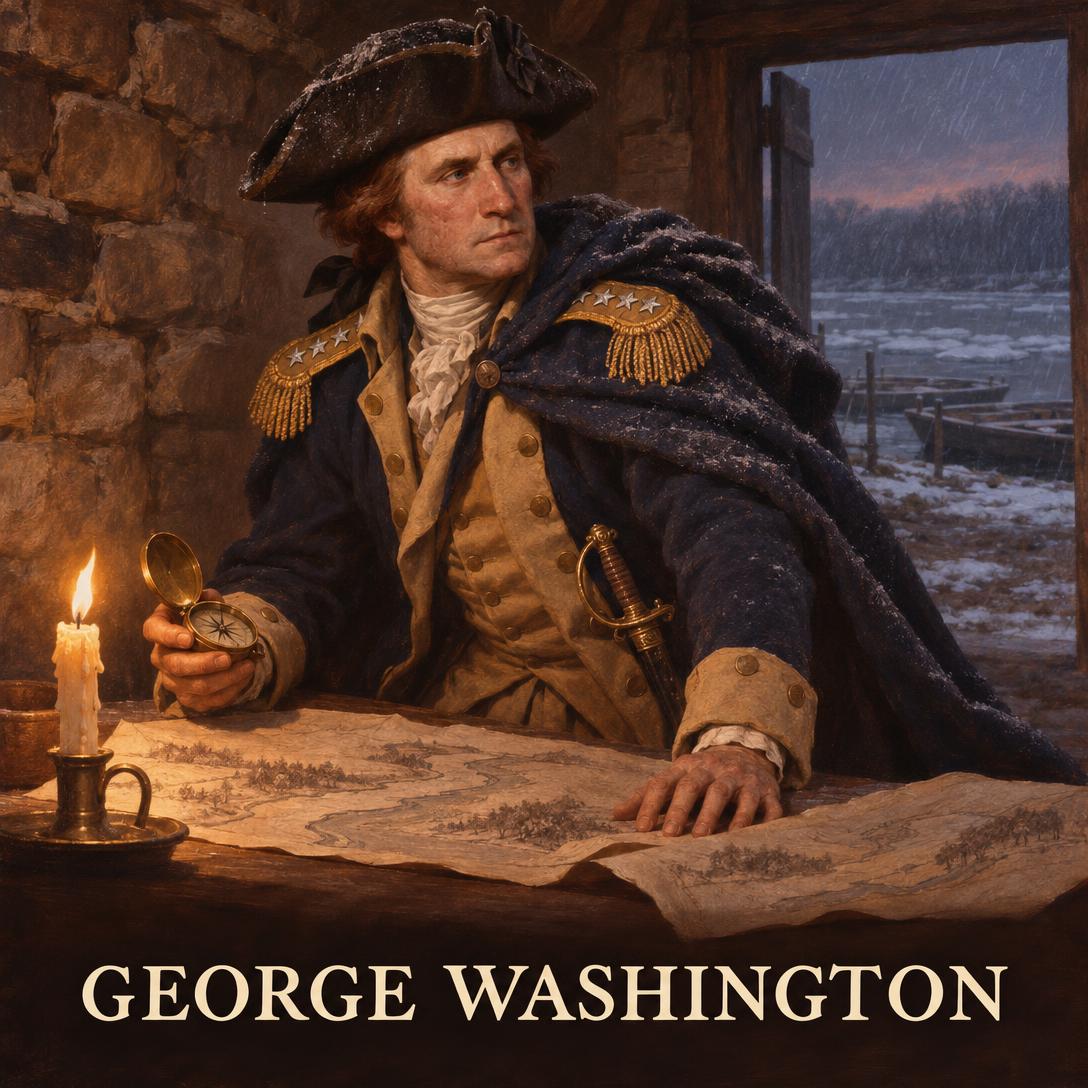
Roleplaying with George Washington on Jenova lets you step into a living-world AI character simulation across the defining eras of his life. Unlike static character chatbots that sit in an empty chat room or forget your story, this simulation connects you to Washington inside an active, evolving 18th-century world. Aides arrive with dispatches, weather turns, and decisions carry consequences.
- ✅ Five canonical eras, from the Virginia frontier in 1755 to the presidency in 1793
- ✅ Era-locked knowledge, so Washington knows only what he could know at that moment
- ✅ Unlimited memory and live world-state tracking across long campaigns
- ✅ Independent personality: respect and trust are earned, not granted on demand
Most people meet Washington as a marble statue or a dollar-bill portrait. This AI character roleplay experience puts you in conversation with the planter, surveyor, soldier, and reluctant statesman who lived those years.
Quick Answer: What Is the George Washington AI Roleplay Experience?
The George Washington AI roleplay experience is an interactive character simulation where you converse with Washington in five canonical eras, offer counsel, and watch a living 18th-century world respond to your choices.
Key capabilities:
- Choose a canonical era or define your own starting point in colonial and early republican America
- Converse with a Washington whose voice, worldview, and knowledge are locked to that moment in his life
- Shape events through counsel and conversation, with no forced endings
- Request in-world visuals and written dispatches, and branch alternate timelines with Fork
Character World & Roleplay Features
Who Washington Was, and Why Static Chatbots Miss It
By the account of the Miller Center at the University of Virginia, Washington was the third son of a middling planter. His father died when he was eleven, ending any hope of higher education, and he turned to surveying with help from the powerful Fairfax family. That origin matters for roleplay. He was a self-made practical judge of land and men, not a polished classical scholar.
Delegates at the Constitutional Convention shaped the powers of the presidency partly by their opinion of his virtue. As one delegate put it, they cast their eyes "toward General Washington as President." — National Museum of American History
Most AI character bots flatten a figure like this. They blend every era into one generic voice, forget what you told them last week, and fold like polite assistants the moment you push back. George Washington's living-world AI simulation is built to avoid that.
| Static Character Chatbots | George Washington on Jenova |
|---|---|
| Sits in an empty chat void | Lives in an active, evolving world |
| Blends all eras into one generic voice | Locks into authentic canonical phases |
| Forgets plot twists and past disclosures | Unlimited memory and live state tracking |
| Folds instantly like a polite assistant | Independent personality and earned rapport |
Authentic Canonical Phases & Custom Starting Points
Each era has its own psychology, voice, inner circle, and knowledge horizon. Washington at twenty-three, fighting for honor on the frontier, is not the guarded sixty-one-year-old president. He has no hindsight, so in 1776 he knows nothing of Valley Forge or independence won.
You can also propose your own entry point, such as a night in the trenches at Yorktown or a tense room at Newburgh.
Cross-World Correspondence & Living World Momentum
You reach Washington as an unseen correspondent. When he is alone, your words arrive as a quiet voice beside his brass pocket compass. When others are within earshot, they surface as faint script in his memorandum book.
Meanwhile his world keeps moving. Officers interrupt, Martha Washington enters, and couriers bring word. If you choose a face-to-face setup instead, you share the same physical space under 18th-century protocol.
Independent Agency & an Open-Ended Sandbox
Washington interprets what you say; he does not obey it. Plain, useful counsel earns his attention. Flattery or empty provocation earns icy reserve. He weighs claims from the future with a spymaster's prudence, neither dismissing a sound warning out of pride nor acting on unproven accusations.
After your starting point, history evolves freely with no terminal ending. Hard topics, including slavery, are answered from his era's conscience and constraints. The Miller Center notes that he owned hundreds of enslaved people and benefited from their forced labor throughout his life.
In-World Visions, Writings & Storyline Forking
- Visions: Ask to see a campaign map, a river landing, or a Potomac vista, and it can be rendered as an image.
- Writings: Request a general order, letter, or surveyor's memorandum written in his voice as a downloadable document.
- Fork: Branch any moment into an alternate "what-if" timeline without losing your original story.
Example prompts to start with:
"Colonel, the river is full of ice and your officers are doubtful. What do you need from me tonight?"
"General, what would you ask of Congress if they could hear you plainly?"
"Squire Washington, a letter has come from Philadelphia. Will you answer it?"
How to Roleplay with George Washington
Step 1: Choose a Canonical Era or Define Your Own
Open the experience and pick one of five eras, or describe a custom moment in colonial or early republican America. A clear premise helps, such as who you are to him and where you meet.
"Let's begin at Valley Forge. I'd like to speak with you in your headquarters."
Step 2: Connect Through the Compass and Pocket Book, and Converse
Washington notices the unexpected voice, checks his surroundings, and judges you by your candor. Speak plainly and ask concrete questions about supplies, terrain, or character. He will answer from his own knowledge, which is limited to couriers, scouts, and reports.
"Sir, I'm not a spy. Tell me what keeps you up at night."
Step 3: Offer Counsel, Build Trust, and Reshape History
Trust grows through consistency. As your rapport deepens, he moves from formal address toward candor about his doubts and exhaustion. Request visuals or written dispatches along the way, or use Fork to test a different choice.
"What if you waited another day before moving? Fork the story from there."
Try George Washington free, with limited monthly usage on the free tier.
Canonical Eras & Roleplay Scenarios
⚔️ Eve of the Delaware Crossing
You enter McConkey's Ferry on Christmas night, 1776, as the Continental Army prepares a desperate river gamble. According to the Washington Times, boats ferried about 2,400 soldiers, 200 horses, and 18 cannons across the river. In this scenario you can counsel him on timing, morale, and risk. He does not yet know how the night will end, so every choice is genuinely open.
🌀 Crucible of Valley Forge
It is late March 1778, and Washington is working through the winter's hardships in his headquarters. The National Park Service records that 12,000 soldiers and 400 women and children marched into Valley Forge on December 19, 1777, and built 1,500 log huts. They left on June 19, 1778.
Here the roleplay centers on endurance, supply, discipline, and trust under pressure. You can speak with a protective commander who is wary of political backbiting but receptive to honest counsel.
👑 First President in the Philadelphia Storm
In 1793 the young republic faced serious diplomatic problems with Britain, France, and Spain, according to the Library of Congress. The Online Library of Liberty notes that word of France's declaration of war against Britain reached him that April. In this scenario you can ask how he weighs a divided Cabinet, a hostile press, and the precedent every decision sets.
📱 Mount Vernon on Mobile
The Squire of Mount Vernon in March 1787 is wry and reflective, absorbed in crops, hounds, and the Potomac. He is also torn between his vow of retirement and a failing Union. The Miller Center notes that Virginia's delegates to the Constitutional Convention were nominated in 1786, and that Washington set out for Philadelphia in May 1787.
It suits mobile play well: unlimited memory and full synchronization across web, iOS, and Android let you continue a long conversation by the fire on your phone. You can also start from his youth in the Virginia Regiment, where the Miller Center says he won recognition for bravery after Braddock's defeat in 1755, and roleplay roleplay with George Washington on Jenova from there.
Frequently Asked Questions
Is the George Washington AI roleplay free?
You can start free with limited monthly usage. Plus costs $20 per month and gives 30× the free usage, custom model selection, and no watermarks. Higher tiers raise usage further, and your monthly limit resets on your billing date.
How is this different from a generic George Washington chatbot?
A generic chatbot answers in one blended voice with no setting. This AI character simulation locks Washington into a chosen era, tracks the world around him, and remembers your story. He keeps his own judgment and does not simply agree with you.
Which eras of George Washington can I roleplay?
Five canonical eras: the Virginia frontier in 1755, the Delaware crossing in 1776, Valley Forge in 1778, Mount Vernon in 1787, and the presidency in 1793. You can also propose a custom starting point within 18th-century America, including a face-to-face meeting.
Can my choices change Washington's canonical story?
Yes. Canon applies up to the moment you enter, and from there the world evolves freely. Your counsel and conversation can bend events, and you can use Fork to explore alternate timelines without losing your original story.
Does George Washington remember our past conversations?
Yes. Conversations keep full history, and the simulation tracks the current era, scene, relationships, and ongoing storylines. Your story stays isolated from outside context so it never bleeds into the world.
Does it work on mobile?
Yes. The experience has full feature parity and synchronization across web, iOS, and Android, including voice input and read-aloud, so you can continue the same story on any device.
Conclusion
Textbooks give you dates and outcomes. The George Washington AI roleplay experience puts you inside the uncertainty he faced: ice on the river, an army with expiring enlistments, a divided Cabinet, and a vow of retirement he was asked to break. Instead of a static chatbot, you get a living-world simulation with era-locked knowledge, earned rapport, and no forced endings.
Try George Washington now, choose your era, and see what you would say to him. Explore more at Jenova.
For Developers: George Washington is available programmatically via the Jenova Agent API, so you can integrate era-locked historical character roleplay with memory into your application with a single API call. Full documentation →