AI Gaming Companion: Meta Advice, Strategy & Roleplay Partners
2026-08-14
An AI gaming companion is an always-available partner that plays alongside you — analyzing your builds, calling your gacha pulls, running an infinite dungeon, or acting as a persistent character in a story that never repeats. Solo gaming has always had a ceiling: no one to strategize with at 2 a.m., no one to argue team comps with, no one to run the campaign when your group cancels again. AI companions remove that ceiling entirely.
✅ Meta-level strategy analysis tailored to your actual account, not generic tier lists ✅ Unlimited roleplay adventures with perfect character consistency across sessions ✅ Persistent memory — your companion remembers your roster, your choices, your storylines ✅ Available instantly, on web and mobile, with no scheduling and no group coordination
The appetite for this is not speculative. Research on AI-driven characters in games is producing consistently strong player-satisfaction numbers, and the broader AI companion market is expanding at a pace few entertainment categories can match. To understand why, it helps to look at what's actually broken about how most people play today.
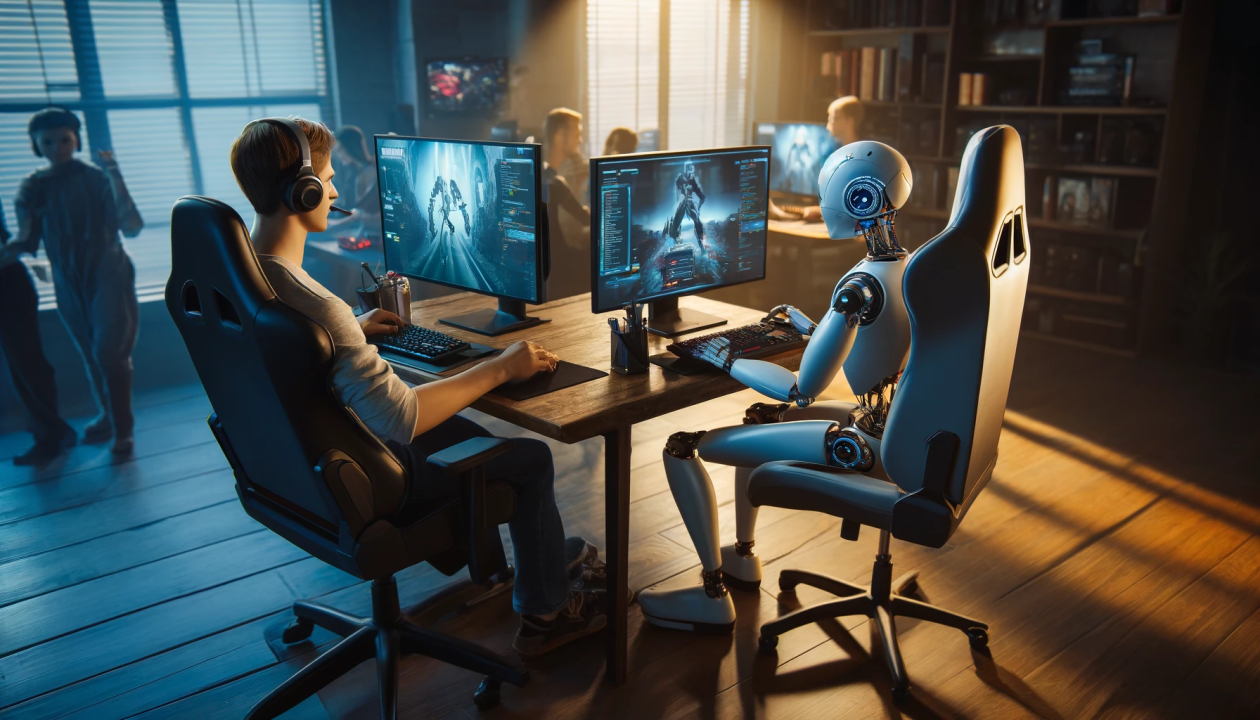
Quick Answer: What Is an AI Gaming Companion?
An AI gaming companion is a conversational AI that plays, strategizes, or roleplays alongside you — analyzing your game account, recommending builds and team compositions, and running interactive adventures with persistent memory across sessions. It functions as a knowledgeable co-player rather than a static guide or wiki.
Key capabilities:
- Account-aware meta analysis — pull verdicts, team comps, and endgame strategy grounded in your actual roster
- Interactive text adventures with emergent outcomes and no predetermined script
- Unlimited memory that keeps characters, plot threads, and preferences consistent
- Game design collaboration for creators building their own worlds
- Multi-genre coverage — grand strategy, horror investigation, social simulation, gacha optimization
The Problem: Solo Gaming Hits a Hard Ceiling
Gaming is increasingly a social activity built on infrastructure that assumes other humans are available. When they aren't, the experience degrades sharply — and the tools meant to fill the gap are static, generic, and disconnected from your actual game state.
But getting genuinely useful gaming companionship is frustratingly difficult:
- Tier lists are generic — they assume a roster you don't have and a playstyle that isn't yours
- Wikis and guides are static — they answer yesterday's question, not the one you have right now
- Communities are noisy — Discord and Reddit threads bury the answer under 200 replies of argument
- Tabletop groups are unreliable — scheduling five adults reliably is harder than any raid boss
- Narrative games end — once you've seen every branch, the replay value evaporates
Generic Advice Doesn't Fit Your Account
Gacha and live-service games are optimization problems with thousands of variables: your character roster, your investment level, your available resources, the current banner cycle, and the specific content you're trying to clear. A community tier list collapses all of that into a single ranked column. It tells you a character is "S-tier" without knowing you lack the supports that make them work.
The advice you actually need is conditional — given what you own and what you're trying to beat, what's the correct move? That requires a partner who knows your situation, not a static ranking.
The Static Content Problem
Every scripted narrative game has a finite branch tree. Traditional NPCs, as the Harvard Journal of Sports & Entertainment Law notes in its analysis of AI in game design, "operated through pre-scripted dialogue trees" where players select from predefined menu options. Once you've exhausted those options, you've exhausted the game.
Generative characters break that constraint. As gaming industry analyst firm Naavik describes it, AI-driven characters "gain depth and dynamism that enable lifelike personalities and interactions — imagine an NPC that remembers past decisions, learns over time, and has its own goals and motivations."
Players Actually Want This — When It's Done Right
The debate about AI in gaming is loud, but empirical player data is more nuanced than the discourse suggests. A study conducted by the University of Bristol with developer Meaning Machine tested 68 participants playing an AI-powered murder mystery game:
95% of participants found the experience enjoyable, 97% found it rewarding, and 75% said it allowed them to "express themselves or make meaningful choices" — University of Bristol / Meaning Machine study, reported by GamesIndustry.biz
The researchers were careful about what this means. Lead researcher Dr. Richard Cole framed the goal as grounding "what is otherwise quite an emotionally charged debate" by "asking what they feel about AI-powered experiences in practice, not just in theory." Meaning Machine co-founder Thomas Keane drew the distinction more sharply: "Players kick back at AI that is taking away from creativity. But when AI is used to power totally new types of interactive experience, then it's a very different story."
That distinction matters. Player sentiment surveys on generative AI in games skew heavily negative when AI is perceived as replacing human creative labor — Quantic Foundry found 85% of respondents held below-neutral attitudes toward generative AI in video games. The enthusiasm appears where AI enables experiences that couldn't exist otherwise, not where it substitutes for craft.
The Market Is Moving Fast
Consumer demand for AI companions broadly is growing at a rate that makes gaming applications inevitable. [Fortune Business Insights valued the global AI companion market at $37.73 billion in 2025](https://www.fortunebusinessinsights.com/ai-companion-market-113258), projecting growth to $49.52 billion in 2026. Insightace Analytic tracks a parallel figure for AI virtual companions specifically — $35.87 billion in 2025, forecast to reach $344.71 billion by 2035 at a 25.9% CAGR.
This is exactly what Jenova's game and gaming-strategy agents were built for.
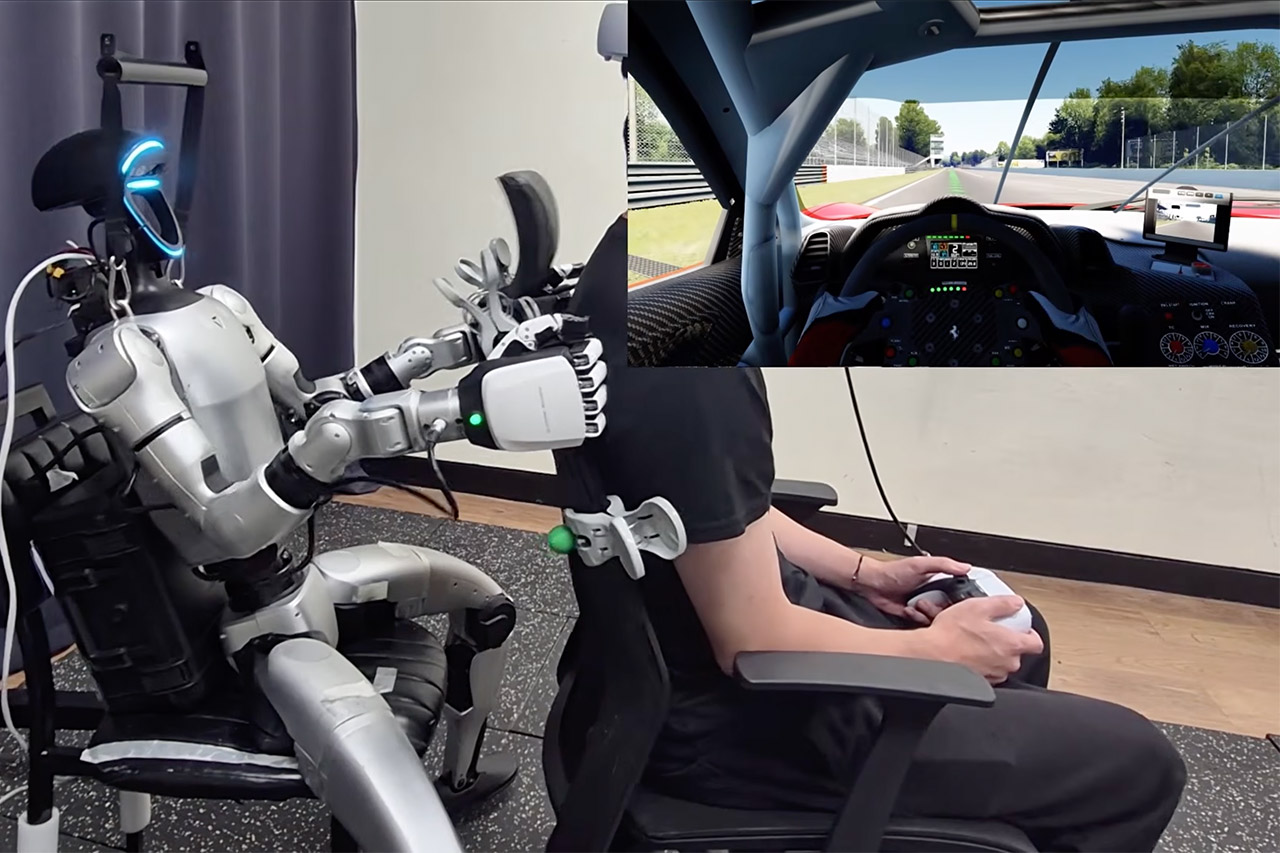
Why an AI Gaming Companion Works
The value isn't novelty. It's that a conversational companion with unlimited memory solves three problems no static resource can touch: personalization, persistence, and availability.
| Traditional Approach | AI Gaming Companion |
|---|---|
| Generic tier lists built for an average account | Recommendations grounded in your actual roster |
| Static wikis with outdated patch info | Live analysis of the current meta |
| Discord threads with 200 conflicting replies | One coherent answer, reasoned through |
| Scripted narratives with finite branches | Unlimited scenarios that never repeat |
| Tabletop groups that cancel | A game master available at 3 a.m. |
| NPCs that forget you between sessions | Persistent memory across every conversation |
Account-Aware Strategy, Not Tier Lists
The most useful gaming advice is conditional. A pull recommendation depends on what you already own, how much premium currency you've saved, what content you're stuck on, and which future banners you care about. A companion that holds all of that in memory gives you a real answer instead of a ranked list.
"I have C0 Furina, R1 Sacrificial Sword, and 92 pulls saved. I'm stuck on Abyss floor 12-2. Should I pull on the current banner or save?"
Emergent Narrative, Not Branch Trees
Interactive fiction agents don't select from predetermined options — they generate the world in response to what you do. Rival factions pursue their own objectives. Social dynamics shift based on your choices. The story doesn't have an ending you can exhaust, because there was never a script to exhaust.
"I want to play as a minor noble house in 12th-century Iberia. Start me with limited resources and hostile neighbors. Don't go easy on me."
Memory That Makes Long Campaigns Possible
The single biggest limitation of most AI interactions is that they reset. Jenova's game agents maintain unlimited chat history and persistent cross-session memory — which means a campaign you started three weeks ago resumes with every character, grudge, and plot thread intact. That's the difference between a novelty and an actual ongoing game.
Multi-Model Access for Different Play Styles
Strategic analysis and creative narration reward different model strengths. Subscribers can switch between the latest models from OpenAI, Anthropic, Google, DeepSeek, xAI, and others, plus toggle reasoning modes for deeper analysis when a decision actually matters. Sharper reasoning for meta math; richer prose for narrative sessions.
AI Gaming Companions You Can Play With Today
Jenova's gaming agents split into two categories: strategy companions that make you better at games you already play, and game agents that are the game itself.
🎯 Meta & Strategy Companions
Genshin Meta Analyst — Your Genshin Impact meta advisor covering pull planning, team builds, Abyss strategy, and patch analysis, tailored to your account.
- Pull verdicts based on your actual roster and resources
- Team composition optimization for specific Abyss floors
- Patch-by-patch meta shifts and their impact on your characters
Honkai Star Rail Meta Analyst — Pull verdicts, team comps, builds, and endgame strategy grounded in your account and the live meta.
- Relic and light cone optimization per character
- Memory of Chaos and endgame mode planning
- Warp budgeting across upcoming banner cycles
Game Designer Assistant — Your game design partner for brainstorming, systems analysis, documentation, and concept art, with deep expertise across every genre, platform, and regional market.
- Mechanic prototyping and systems balance analysis
- Design document structuring and concept art generation
- Genre and market context for design decisions
🎲 Interactive Game Agents
Roleplay Game Master — Immersive roleplay with unlimited memory and perfect character consistency, with complete creative freedom to explore any scenario you imagine. This is the closest thing to a tabletop GM who is never unavailable and never loses the campaign notes.
Civilization — Choose an era, rule a nation, and reshape history. Every rival pursues its own ambitions — alliances shift, wars erupt, and the world never waits for you.
The Mansion — You wake in a mansion with no memory of how you arrived. Every room hides secrets. Every shadow could be your last.
The Asylum — You're an investigator sent to a shuttered psychiatric institution, but something went wrong. Every ward hides secrets.
Vesper Court — A lone woman wakes in a hidden vampire court with no memory of why. Dark romance, blood intrigue, and forbidden desire.
College Life and Love Island — Open-world social simulation with emergent dynamics, where friendships, connections, and rejections all unfold from your choices.
K-Pop Producer — You're a producer tasked with debuting the next breakout group. Select trainees, navigate power dynamics, and shape careers over 60 intense days.
Try any of these free — no credit card required.
How to Play With an AI Gaming Companion
Step 1: Pick your companion type
Decide whether you want strategy support for a game you already play or an interactive experience to play directly. Open the agent from Jenova and start with context.
Step 2: Give it your actual game state
For strategy companions, specificity is everything. Vague questions get generic answers.
"Here's my Honkai roster: E0S1 Acheron, E2 Pela, E0 Silver Wolf, E6 Gallagher. I'm stuck at MoC 10. What's my best comp and what should I build next?"
Step 3: Set the rules for narrative sessions
For game agents, define tone, difficulty, and constraints upfront. The more parameters you set, the more the world pushes back.
"Run The Mansion in slow-burn horror mode. No jump scares — build dread through detail. Let me die if I make a stupid decision."
Step 4: Play, then let memory do the work
Long sessions accumulate. Ask for a recap whenever you return, and the companion picks up with every thread intact.
"Recap where we left off — who's still alive, what I know about the third floor, and what I was about to do."
Step 5: Screenshot for instant analysis
Upload build screens, roster shots, or damage numbers directly. Image analysis means you don't have to type out every stat line manually.
Results & Use Cases
📱 The Commute Gamer
Scenario: Forty minutes of transit twice a day, and mobile gacha grinding has gone stale. Traditional Approach: Auto-battle on repeat, or scrolling tier lists you've already read. AI Gaming Companion: A full narrative session in Roleplay Game Master, or a planning session mapping out your next three banners.
- Full feature parity across web, iOS, and Android
- Sessions resume exactly where you left off
- Speech-to-text input for hands-free narrative play
💰 The Gacha Optimizer
Scenario: 140 pulls saved, three banners incoming, and every content creator says something different. Traditional Approach: Cross-referencing four YouTube videos and a Reddit megathread, still uncertain. Genshin Meta Analyst: A conditional recommendation based on your specific roster gaps, resource situation, and target content.
- Reasoning you can interrogate, not just a verdict
- Opportunity cost modeled across upcoming banners
- Account state remembered between patch cycles
🎲 The Abandoned Tabletop Group
Scenario: Your D&D group has cancelled four sessions running and the campaign is effectively dead. Traditional Approach: Wait for scheduling that never materializes. Roleplay Game Master: A solo campaign that runs on your schedule with perfect continuity, or a low-stakes sandbox for testing character concepts before the group reconvenes.
- Unlimited memory keeps multi-month campaigns coherent
- Complete creative freedom over setting and tone
- Fork a session to explore an alternate path without losing the original
🛠️ The Indie Developer
Scenario: You're prototyping a roguelike and need a design partner who won't just tell you the idea is great. Traditional Approach: Forum feedback from people who haven't read your design doc. Game Designer Assistant: Systems analysis, economy balancing, and documentation support with genre context.
- Mechanic interrogation before you spend weeks building
- Concept art generation for pitch materials
- Design doc structure that survives contact with a team
Worth noting for developers: the regulatory environment around conversational AI characters is tightening. The Harvard Journal of Sports & Entertainment Law reports that as of July 2026, twelve states have enacted legislation specifically targeting AI chatbots and companions, with narrowly drawn and inconsistent video game carve-outs. If you're shipping AI characters commercially, factor compliance in early.
🌙 The 3 A.M. Player
Scenario: You can't sleep, and every friend is offline. Traditional Approach: Passive content consumption until you drift off. The Asylum or Vesper Court: An interactive story that responds to you, available with zero coordination.
- No matchmaking, no lobby, no scheduling
- Difficulty and tone adjustable mid-session
- Sessions saved and resumable indefinitely
Frequently Asked Questions
Is an AI gaming companion free?
Yes. Every game and strategy agent on Jenova is available on the free tier with all core features and limited monthly usage. Paid plans start at $20/month for substantially higher limits and custom model selection. Usage resets on your billing date with the full allowance available immediately — no daily caps.
Can an AI gaming companion actually play games with me?
It plays text-based and narrative games directly as a full game master or opponent. For graphical games like Genshin Impact or Honkai: Star Rail, it functions as a strategic advisor rather than a controller — analyzing your account, recommending builds, and planning your resources. You can upload screenshots for direct analysis of builds and stats.
Will it remember my previous sessions?
Yes. Chat history is unlimited and persistent memory carries your roster, campaign state, characters, and preferences across sessions. A story you started weeks ago resumes with full continuity — the same NPCs, the same unresolved plot threads, the same consequences from your earlier decisions.
How is this different from AI NPCs inside games?
In-game AI characters are constrained to their game's world and rules. A standalone AI gaming companion has no such boundary — it can run any genre, discuss any title, switch from strategy analysis to narrative roleplay mid-conversation, and carry memory across all of it. You also aren't waiting on a studio to ship the feature.
Do gamers actually like AI in games?
The evidence is split by application. Player sentiment is broadly negative toward generative AI that displaces human creative work — Quantic Foundry measured 85% below-neutral attitudes. But when AI enables genuinely new interactive experiences, the University of Bristol study found 95% enjoyment and 97% reward ratings. Application matters more than the technology.
Does it work on mobile?
Full feature parity across web, iOS, and Android with settings synced across devices. Speech-to-text lets you narrate a roleplay session hands-free, which works well for commutes and downtime away from a screen.
Start Playing
Solo gaming's ceiling was never about the games themselves — it was about the absence of someone to strategize with, argue with, or build a story alongside. An AI gaming companion removes that constraint: account-aware meta advice that beats any tier list, narrative worlds with no branch tree to exhaust, and a memory that turns scattered sessions into an actual ongoing campaign.
The research is clear that players respond to AI that creates experiences which couldn't otherwise exist. That's precisely what these agents are — not a replacement for the games you love, but a companion for the hours when no one else is online.
Pick your companion and start: Roleplay Game Master for unlimited adventures, Genshin Meta Analyst or Honkai Star Rail Meta Analyst for account-tailored strategy, or Civilization if you'd rather rule an empire tonight.
Explore the full agent library at Jenova — free to start, no credit card required.
For Developers: Every gaming agent in this article is available programmatically via the Jenova API — integrate persistent-memory AI characters and strategy engines into your game with a single integration. Full documentation →