AI Game Master: Solo TTRPG Campaigns With Unlimited Memory
2026-09-03
Roleplay Game Master helps you run immersive tabletop campaigns by acting as a dedicated AI game master with unlimited memory and perfect character consistency. While finding a human GM, locking a weekly slot, and keeping NPCs consistent remains difficult in September 2026, this AI provides on-demand storytelling that never drops a plot thread, a promise, or a villain's voice.
✅ Unlimited campaign memory that persists across every session ✅ Perfect NPC and character consistency from the first scene onward ✅ Complete creative freedom across any genre, system, or tone ✅ Play solo whenever you have a spare stretch of time
To understand why a dedicated AI game master matters, it helps to look at how tabletop play actually breaks down today — not in theory, but at the table, on the calendar, and in the notes no one has time to keep.
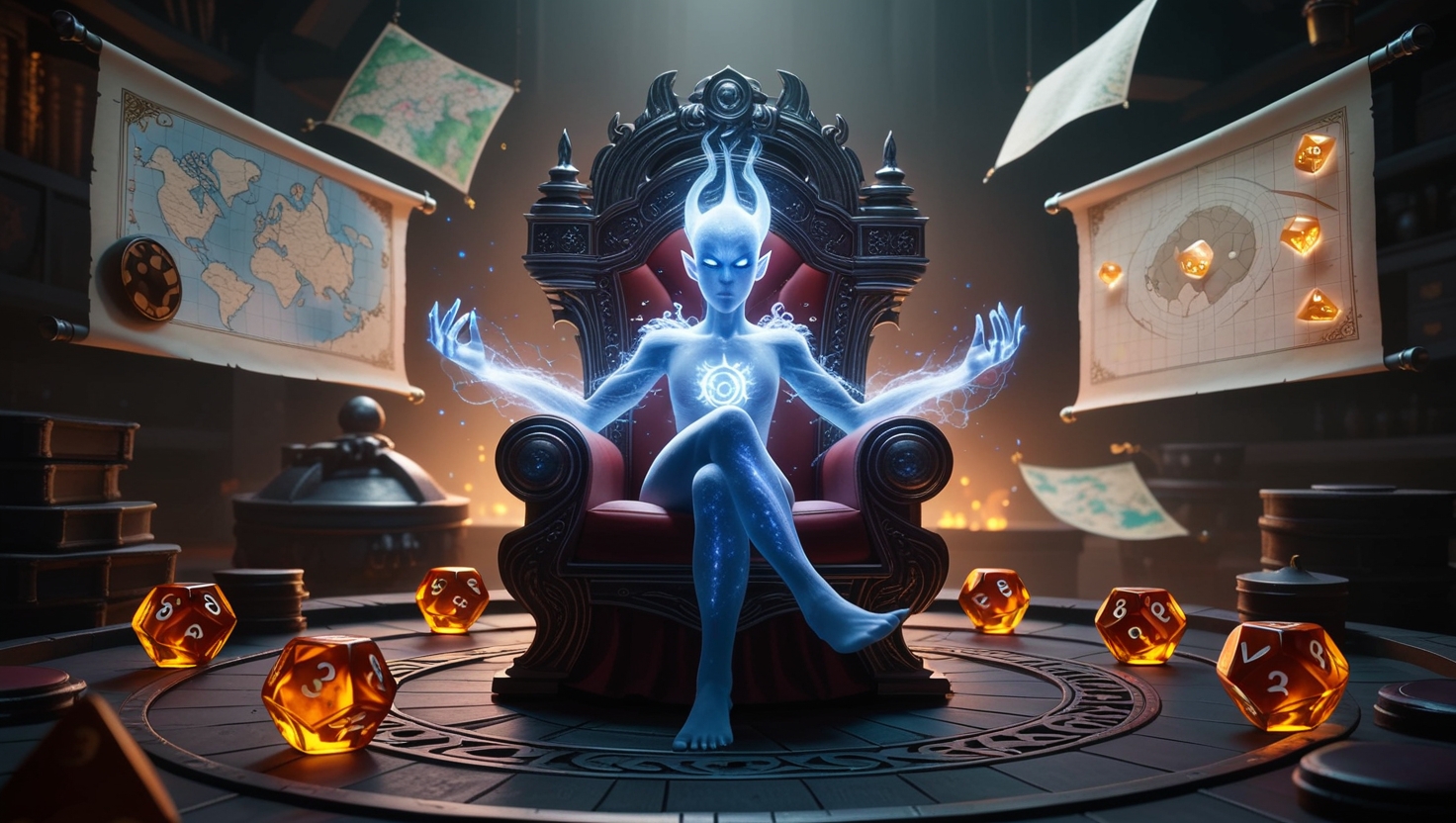
Quick Answer: What Is an AI Game Master?
Roleplay Game Master is an AI game master that runs immersive tabletop campaigns with unlimited memory and perfect character consistency, so you can play any scenario on demand. It is built for long-running stories, not one-off chat sessions.
Key capabilities:
- Persistent campaign memory so last month's cliffhanger still matters
- Character-consistent NPCs, villains, and companions across every scene
- Open-ended play in any setting — grimdark sandbox, cozy mystery, science fantasy, or custom lore
- Session-ready storytelling without a prep document, battlemap stack, or scheduled table
The Problem With Running Stories When No One Can GM
Tabletop role-playing is growing, not shrinking. Demand for narrative play keeps rising even as the hardest part of the hobby stays the same: someone has to run the world.
$21.43 billion — Projected tabletop gaming market value in 2026
$39.14 billion — Forecast tabletop gaming market size by 2030, at a 16.3% CAGR
$2.41 billion — Global tabletop RPG market size in 2026, with a path to $6.59 billion by 2035
13% of people in the US — Share who say they collect and play tabletop RPGs or wargames
$460 million — Estimated Dungeons & Dragons revenue in 2025
Those numbers explain the appetite. They do not explain the empty chair. But accessing this hobby at the quality players actually want is frustratingly difficult:
- A willing GM is rarer than a willing player, and burnout is common
- Scheduling a recurring table collides with work, time zones, and cancelled sessions
- Campaign continuity dies in scattered notes, forgotten NPCs, and dropped subplots
- Generic chatbots can improvise a scene, then contradict last week's lore
- Solo players often get railroaded modules instead of a living world
Finding a GM Is Still the Bottleneck
RPG Research's AI GM project exists for a blunt reason: many groups cannot find a game master they like, or any GM at all. A human at the table is still the gold standard for social play. That does not help the player who has a character sheet, a setting bible, and no one to sit in the big chair.
Prep time compounds the shortage. A serious session can mean maps, factions, stat blocks, and recaps before anyone rolls. When the only available GM is also the most tired person in the group, campaigns stall.
Memory Failures Break Immersion Faster Than Bad Dice
Interactive stories only work when choices have consequences. AI-driven narratives can adapt in real time to user decisions, but most general-purpose chat tools do not carry a campaign the way a GM's notebook does.
Players notice immediately when the innkeeper's limp vanishes, the stolen relic changes names, or a sworn rival greets them like a stranger. Continuity is not a nice-to-have in TTRPGs. It is the difference between a story and a random encounter generator.
Solo Play Should Not Mean a Thin Adventure
Plenty of people want to play when the table cannot. Commutes, late nights, and off-week cravings are real. Too many solo options respond with a short dungeon, a canned quest hook, and a reset. That is not a campaign. It is a vending machine with flavor text.
This is exactly what Roleplay Game Master was built for.
Why Roleplay Game Master
Roleplay Game Master is a dedicated AI game master for immersive roleplay — not a generic chatbot wearing a dice-skin. It holds the campaign, stays in character, and follows your premise wherever you take it, with complete creative freedom.
Many AI dungeon tools are built for one-shot text adventures. This one is built for the thing players actually miss: a world that remembers.
| Traditional Approach | Roleplay Game Master |
|---|---|
| Hunt for a GM, then hunt for a night that works | Start a session in minutes, on your schedule |
| Recap docs, wikis, and Discord archaeology | Unlimited memory of NPCs, promises, and plot beats |
| Modules that railroad you back to the printed path | Open-ended play in any genre, tone, or custom lore |
| Chatbots that forget last session's cliffhanger | Perfect character consistency across the whole campaign |
| Prep-heavy homebrew that never leaves the outline | Play the world as you invent it |
Unlimited Memory, Not a Session Amnesia Loop
A campaign is a chain of consequences. This AI game master keeps the chain intact — who you spared, what you stole, which rumor you planted in the docks, and how the duke's spymaster said your name.
You can leave for a week and return to the same political mess, the same injured companion, and the same unfinished job. That is what makes a sandbox feel real instead of freshly generated.
Character Consistency That Survives the Third Act
NPCs are where most AI play collapses. Voices drift. Motives reset. Relationships flatten into helpful quest-givers.
Here, a character who lied to you in the first hour still has a reason to lie in the tenth. A rival stays a rival unless you change the relationship. Companions remember how you treat them. That consistency is the core of roleplay, and it is the product's defining job.
Complete Creative Freedom, Any Scenario You Imagine
You are not locked to one licensed ruleset or a single fantasy skin. Grimdark plague ports, quiet cottage mysteries, mecha diplomacy, vampire courts, or a custom world you have been outlining for years — the AI game master follows the brief.
If you want mechanics, ask for them. If you want fiction-first play with occasional rolls, say so in session zero. The constraint is your taste, not a content catalog.
Built for the Way People Actually Play Now
AI in media and entertainment was already valued at $10.24 billion in 2024 and is projected to reach $51.37 billion by 2034, as audiences look for stories that respond to them. Tabletop players were asking for that long before the market reports caught up: a living scene, a reacting world, and a GM who is present when they are.
You can play a full arc or a twenty-minute scene. You can test a character concept before bringing it to a human table. You can run the campaign your group cancelled, without waiting for the group.
"Session zero: a rain-soaked port city under quarantine. I am a disgraced cartographer with a stolen coastal chart. Tone is grim, morally gray, and slow-burn. Track factions, debts, and every promise I make."
"The innkeeper from two sessions ago just appeared in the duke's gallery. Keep her accent, her limp, and her debt to the guild. She is terrified of being recognized."
"Skip combat theater. Adjudicate a social heist in the counting house — guards, ledgers, and one NPC who already knows my alias."
Related Agents You'll Also Find Useful
If you want a ready-made haunted house instead of a blank campaign map, The Mansion drops you into a locked estate with no memory of how you arrived. Every room hides something. It is a strong next session when you want structured mystery pressure rather than a wide-open sandbox.
- Memory-loss opening that forces investigation immediately
- Room-by-room secrets instead of a traditional tavern hook
- Horror pacing for players who want dread over dungeon crawls
If dark romance and court intrigue are the table you actually want, Vesper Court runs a vampire court where a lone woman wakes with no memory of why she is there. Blood politics, forbidden desire, and nightly shifts in loyalty give you a different kind of campaign engine.
- Court intrigue rather than wilderness hex-crawling
- Relationship stakes that change the power map
- A defined gothic frame when you do not want to worldbuild from scratch
If you are the person who enjoys designing the game as much as playing it, Game Designer Assistant helps you pressure-test systems, document factions, and turn a half-built setting into something you can actually run — then hand that bible to your AI game master.
- Systems analysis across genres and platforms
- Campaign documentation that stays coherent
- Concept work before you spend a month on a map that never sees play
Try Roleplay Game Master free — no credit card required.
How It Works
Step 1: State the World, the Tone, and Your Character Open a session and brief your AI game master the way you would brief a human GM at session zero. Name the setting, the lines you want respected, the rules weight, and who you are playing. Specificity here pays off for the entire campaign.
"Low-magic river republic. I play a barge-lawyer who forges cargo manifests. I want political heists, no gore, and NPCs who keep ledgers of favors."
Step 2: Play the Scene — Do Not Wait for a Menu Speak in character, ask questions, poke the environment, and take foolish risks. The AI game master narrates consequences, voices NPCs, and keeps the world's logic intact. You are not picking from three highlighted options. You are playing.
"I slide the forged writ across the table and watch the harbormaster's face. If he hesitates, I mention his brother's gambling markers."
Step 3: Let Memory Do the Campaign Work Return later and pick up the same thread. Ask what the city remembers about you. Revisit an NPC and test whether their motive still holds. Continuity is the product, not an extra mode you have to enable.
"It has been two weeks. Who collected on the debt I left unpaid, and what rumor reached the counting house?"
Step 4: Steer Genre, Pacing, and Rules Mid-Stream Need a sharper mystery clock, less combat, or a one-shot nested inside the campaign? Say so. You can tighten pacing for a commute session or open the sandbox for a long evening. The AI game master adjusts without throwing away established lore.
Results & Use Cases
📊 A Sandbox Campaign You Can Actually Continue
Scenario: You have a city map, three factions, and no weekly table. You want a grimy port campaign that still exists on Thursday if you last played on a Sunday.
Traditional Approach: A human GM needs prep hours, a recap, and a group that does not cancel. A generic chatbot forgets the smuggler you spared and regenerates the docks.
Roleplay Game Master: You get a living port that remembers your alliances, your aliases, and the cargo you should not have signed for.
- Faction heat that accumulates instead of resetting
- NPCs who change posture based on prior scenes
- A campaign you can pause without killing
💼 Worldbuilding That Becomes Play the Same Night
Scenario: You have pages of lore and zero sessions. The setting is the fun part — until it dies in a notebook.
Traditional Approach: Weeks of documents, then a first session that ignores half of them because nobody can hold it all in working memory.
Game Designer Assistant, then the AI game master: Use Game Designer Assistant to tighten factions, economy, and conflict loops. Then drop that bible into play and run it immediately.
- Design work that does not stay theoretical
- A setting that gets stress-tested by actual choices
- Less time formatting wikis, more time at the table
📱 A One-Shot on the Train, Same Continuity Later
Scenario: You have a 25-minute commute and a character you care about. You do not have a VTT, a battlemap, or privacy for voice chat with a group.
Traditional Approach: Mobile text adventures that cannot remember your campaign, or waiting until the weekend for a real session.
Roleplay Game Master on your phone: Full play on iOS or Android — same memory, same NPCs, same unfinished job waiting at the next station.
- Short scenes that still advance the long plot
- Speech-to-text when your hands are full
- No "mobile version" that throws away campaign state
🎯 Horror When You Want the House to Hunt You
Scenario: You do not want to invent a hexcrawl. You want locked doors, bad lighting, and a reason to keep checking the next room.
Traditional Approach: A published one-shot that takes longer to read than to run, or a chatbot that cannot sustain dread past the first jump scare.
The Mansion, or a custom horror brief in your AI game master: Either a ready-made estate mystery or a bespoke haunting that still remembers which door you refused to open.
- Investigation pressure without a six-hour prep stack
- Atmosphere that builds on prior discoveries
- An easy alternate table when high fantasy is not the mood
FAQ
What is an AI game master?
An AI game master is a dedicated storyteller that runs tabletop-style play: scenes, NPCs, consequences, and pacing. Unlike a general chatbot, a true AI game master is judged on campaign memory and character consistency. Roleplay Game Master is built for that job — immersive roleplay with unlimited memory, so the world you left last session is the world you re-enter next time.
Is Roleplay Game Master free?
Yes. You can start on the free tier with core play and limited usage. Paid plans increase usage if you run long campaigns or daily sessions. There is no requirement to enter a credit card to try a first adventure, which matters if you only want to test whether an AI dungeon master fits your style.
How is an AI game master different from ChatGPT for D&D?
General chat tools can improvise a tavern. They struggle to remain a GM across a campaign — voices drift, facts collide, and last week's bargain disappears. A dedicated AI game master is scoped to roleplay: holding lore, keeping NPCs in character, and treating your choices as canon. That is the gap this AI game master is designed to close.
Can an AI game master run D&D, Pathfinder, or a homebrew system?
You can brief any rules weight you want — fiction-first, light rolls, or a structured d20 loop. It is not a licensed virtual tabletop with official stat blocks baked in. It is a story engine that will adjudicate the system you describe, including homebrew. State the rules in session zero and correct drift the same way you would with a human GM.
Does an AI game master work on mobile?
Yes. Play continues on web, iOS, and Android with the same campaign memory. That is what makes commute one-shots and late-night scenes practical. If you start a heist on a laptop, you can finish the getaway on your phone without rebuilding the table.
Will the AI game master forget my campaign?
Forgetting is the failure mode of most AI Dungeon-style play. This product is built around unlimited memory and character consistency so NPCs, debts, and plot threads persist. You should still state critical facts clearly, the same way you would remind a human GM after a two-week gap. Treat it as a collaborator with a deep notebook, not an omniscient referee.
Conclusion
The shortage in tabletop play is not dice, rules PDFs, or even players. It is a GM who can show up, remember the story, and keep the cast in character. An AI game master does not replace a great human table. It replaces the empty night when that table cannot exist.
Roleplay Game Master gives you that session: unlimited memory, perfect character consistency, and complete creative freedom to run any campaign you can describe. Solo sandbox, mobile one-shot, or a setting you finally want to play instead of outline — the story stays standing when you come back.
Try it with the campaign you have been waiting to run. Explore more at Jenova.
For Developers: Roleplay Game Master is available programmatically via the Jenova API — integrate immersive AI game master roleplay into your application with a single API call. Full documentation →