AI Game Lore Generator: Build Worlds, Factions & Histories
2026-09-11
Game Designer Assistant helps you generate production-ready game lore by turning a premise into interconnected worlds, factions, histories, and systems. While most teams still stitch wiki pages, chat threads, and spreadsheet timelines together by hand, this AI provides structured canon you can drop into a design document. As of September 2026, that speed is no longer optional: studios are shipping into a market where 90% of games developers already use AI in their workflows.
✅ Genre-aware worldbuilding across fantasy, sci-fi, horror, historical, and hybrid settings ✅ Interconnected factions, pantheons, economies, and political timelines ✅ Documentation writers, designers, and artists can actually share ✅ Concept direction that matches the lore instead of generic tropes
To understand why a dedicated game lore generator matters, it helps to look at where worldbuilding usually breaks—long before a player ever opens a journal entry or talks to an NPC.
Quick Answer: What Is a Game Lore Generator?
Game Designer Assistant is an AI game lore generator that builds interconnected worlds, factions, histories, and systems so you can ship consistent canon in hours instead of weeks. It treats lore as design, not decoration.
Key capabilities:
- World bibles covering geography, cultures, religions, and power structures
- Faction briefs with goals, taboos, slang, and historical grudges
- Magic, tech, and economy rules that hold up under player exploitation
- Timeline and documentation output you can hand to a production team
- Concept-art direction aligned with the setting, not stock fantasy clichés
Why Game Lore Still Falls Apart in Production
Worldbuilding is the high-level work of designing a setting and its history so every quest, item, and conversation has somewhere to live. Narrative design then decides how the player actually encounters that story. When those two layers drift apart, players feel it immediately: a “rich world” that cannot answer a simple question about who owns the harbor, why the temple forbids steel, or what the war was actually about.
That gap is getting more expensive. Newzoo estimated the global games market at $197 billion in 2025**](https://newzoo.com/articles/year-in-review-2025/), while the [**U.S. industry alone supports more than 250,000 jobs and $95.8 billion in economic impact. Players now expect worlds that feel alive, and 89% of developers say AI is already changing those expectations.
But building lore that survives contact with gameplay is still frustratingly difficult:
- Canon lives in too many places—docs, chats, spreadsheets, and someone’s memory
- Cultures, religions, and political systems are sketched, then contradicted in the next quest
- Magic or tech rules look elegant on paper and collapse the moment a player tests them
- Writers, designers, and artists never share one source of truth
Canon drift across the team
Worldbuilding only works when writers, artists, and designers are building the same world. In practice, the narrative bible, the systems doc, and the concept folder diverge within a sprint. A city is coastal in the map, landlocked in a cinematic, and “famous for its shipyards” in an NPC greeting.
Histories without cause and effect
Strong narrative worldbuilding develops histories, cultures, religions, and societal rules that stay consistent with the lore. Weak lore lists names. A kingdom, a goddess, a war, a relic—none of them connected. Players do not need an encyclopedia. They need a world where yesterday’s famine explains today’s riots and next season’s raid event.
Systems that the story cannot support
A magic system that can resurrect anyone makes your tragic death scene unplayable. A teleport network makes travel quests meaningless. If lore and mechanics are written in isolation, one of them will have to be thrown out—usually after you have already commissioned art.
Time you do not have before the vertical slice
Preproduction is where worldbuilding is supposed to happen, but indie teams and live-service squads rarely get a quiet month to write a setting bible. The result is improvisation in production: quest text that invents holidays, item flavor that invents metals, and a wiki that nobody trusts.
This is exactly what Game Designer Assistant was built for.
Why Game Designer Assistant
Game Designer Assistant is a dedicated AI game lore generator for people who have to ship a world, not just describe one. You give it a premise, constraints, and the kind of game you are making. It returns geography, factions, history, and systems that lock together—then keeps iterating when combat, economy, or narrative design changes the brief.
It is built for brainstorming, systems analysis, documentation, and concept direction across genres and platforms. That combination is the difference between a pretty setting pitch and a bible a production team can use.
| Traditional Approach | Game Designer Assistant |
|---|---|
| Notes scattered across wikis, chats, and spreadsheets | One structured lore bible: geography, factions, history, systems |
| Weeks to draft a setting document before a vertical slice | Hours from premise to canon you can review and revise |
| Magic, tech, and culture rules that contradict the gameplay | Systems stress-tested against player exploits and quest design |
| Generic tropes with no causal history | Cause-and-effect timelines, rivalries, and founding myths |
| Writers and designers working from different assumptions | Documentation both disciplines can annotate and ship from |
Worlds with geography that implies politics
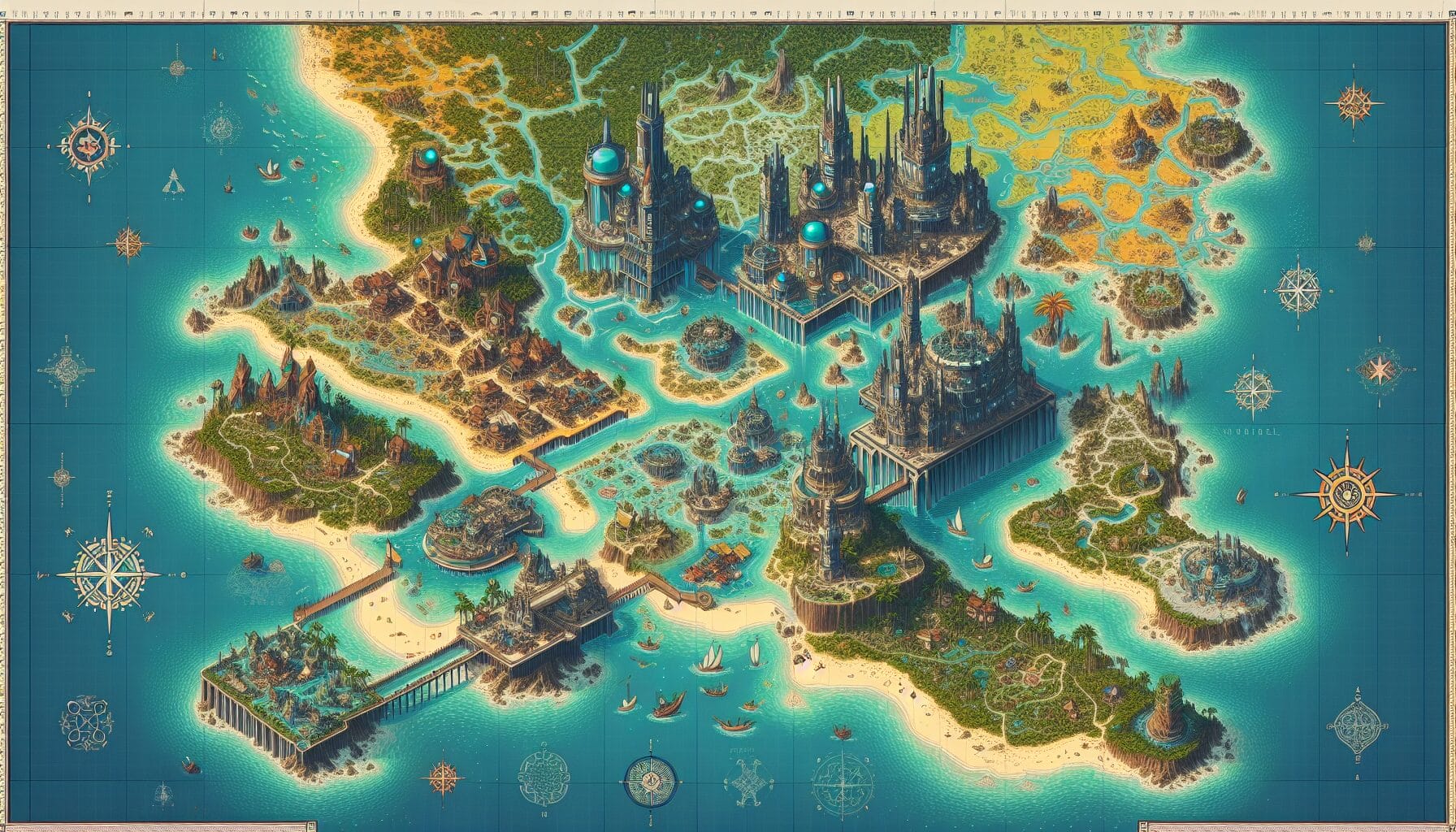
A coastline is not flavor. It is a reason for navies, smuggling, salt taxes, and a religion that fears the deep. This AI lore generator treats biomes, resources, and borders as engines for conflict. Ask for an archipelago and you should get trade winds, disputed straits, and a city that only exists because the monsoon makes the opposite shore unreachable for four months.
Factions that want incompatible things
Factions fail when they are costume racks: “the assassins,” “the merchants,” “the church.” Useful factions have budgets, taboos, succession crises, and a reason they have not already won. The generator builds those pressures in—then shows how they spill into street-level slang, architecture, and the quests a player would actually be offered.
Myth, magic, and technology with rules
If a god answers prayers, you need to know whose prayers, how often, and what it costs the temple. If nanites rewrite memory, you need to know who sells the backups. The tool writes cosmology and science as constraint systems so combat, travel, crafting, and religion all obey the same physics.
History as a chain of consequences
A good timeline is not a list of dates. It is a sequence of decisions that made the present unavoidable: a broken treaty, a failed harvest, a heresy that became a state. That is the material designers use for ruins, relics, grudges, and “why is this dungeon here?”
Documentation and concept direction in the same pass
Lore that cannot be handed to an artist is unfinished. Alongside the bible, you can request visual briefs—silhouette language for a citadel, color rules for a caste system, what “holy” looks like in this culture—so concept work starts from canon instead of vibes.
Use prompts like these when you want depth instead of a name dump:
"Generate a bronze-age archipelago with four rival city-states, a dying sea god, and a trade system that explains why piracy is legal in one port and a capital crime in another. Include a one-page timeline and three player-facing myths that contradict each other on purpose."
"Build a post-collapse sci-fi city where three megacorps control water, data, and memory. Give me faction goals, slang, neighborhood layout, and three historical events that still shape street-level politics."
"Audit this magic system for exploits a player would find in the first hour, then rewrite the rules so combat, travel, and religion all obey the same constraints. Flag any quest types this world can no longer support."
Related Agents You'll Also Find Useful
If you are generating lore, you are probably one step away from writing the scenes, comics, or illustrated recaps that carry that lore to players. These agents extend the same workflow.
Film Screenwriter
Once the bible exists, Film Screenwriter turns it into playable narrative: cinematic outlines, NPC dialogue, and character arcs that respect the world’s rules. Use it when a faction brief needs a traitor’s monologue, a cold-open, or a branching reunion scene that does not violate the timeline you just locked.
- Structure, dialogue, and character development from concept through revision
- Visual storytelling notes that match established geography and culture
- Scene work that stays inside the magic, tech, and political constraints of the setting
Comic Creator
Codex pages, origin one-shots, and in-world propaganda are often how players meet lore. Comic Creator builds sequential art—from a single issue to a graphic-novel arc—so your history primer is something people read instead of a wall of text.
- Sequential layouts for myths, battles, and founding legends
- Visual styles that can match illuminated manuscripts, wartime posters, or pulp pulps
- Issue-to-saga structure for lore comics that ship beside the game
Manga Creator
If your audience lives in manga-paced storytelling, this agent is the right companion: panel flow, consistent character art, and long-form serialization for side stories, companion volumes, or prologue chapters that teach the world without a tutorial dump.
- One-shots through 200+ page epics with stable visual continuity
- Panel rhythm suited to character-first lore and political intrigue
- Read-along worldbuilding that still respects the game’s canon
Try Game Designer Assistant free — no credit card required.
How to Generate Game Lore Step by Step
You do not need a finished GDD to start. You need a premise, a genre, and the constraints you refuse to break. This AI lore generator works best when you treat each pass like a design review, not a one-shot wish.
Step 1: State the game, the premise, and the hard limits Name the genre, camera, and platform, then list what the world must never do. A souls-like that cannot have fast travel, a cozy sim that cannot have on-screen death, a tactics game whose magic cannot skip line of sight—those constraints are the brief.
"Tactical RPG, isometric, 20-hour campaign. Low fantasy. No resurrection. Steel is rare because the last meteor iron fell two centuries ago. I need a border duchy caught between an empire and a theocracy."
Step 2: Generate the world spine Ask for geography, the dominant power, the central scarcity, and the conflict a player would smell in the first hour. If the map does not create politics, regenerate until it does.
"Give me the duchy’s map logic: three regions, one scarce resource, two neighboring powers, and the single event that made this border impossible to ignore. Keep it to a world spine I can expand."
Step 3: Deepen factions, cultures, and systems Pick the spine, then request faction dossiers, religious practice, economy, and the rules of magic or technology. Insist that every system create quests, not just flavor.
"Write four factions with incompatible victory conditions. For each: public goal, private goal, taboo, slang, and the quest they would offer a penniless outsider."
Step 4: Stress-test the canon Attack your own bible. Ask what a min-maxing player, a speedrunner, or a villainous run would break. Then patch the rules before they reach combat design.
"Find three ways a clever player breaks this world’s magic, economy, or travel. Rewrite the minimum number of rules to close those holes without deleting the fantasy."
Step 5: Lock documentation the rest of the team can use Request a lore bible outline, item naming rules, location blurbs, and visual direction. Export language that can move into a wiki, a GDD, or an art brief without a rewrite.
"Compile a production bible: one-page timeline, faction sheet, naming conventions, and visual rules for sacred vs. secular architecture. Flag anything still ambiguous."
Results & Use Cases
📊 Indie RPG world bible before a vertical slice
- Scenario: Two-person studio. They have a combat prototype and a mood board, but no answer for why the capital sits on a dead volcano or why healing potions are heresy.
- Traditional Approach: A designer spends two or three weekends writing a 40-page doc that still contradicts the dungeon layout.
- Game Designer Assistant: An evening pass produces a spine, four factions, and a magic constraint that makes potions illegal—and makes the volcano the reason.
Key benefits:
- Playable history instead of leftover flavor text
- Systems and story using the same scarcity
- A document an artist can brief from on Monday
💼 Narrative preproduction at a small studio
- Scenario: A 12-person team needs a shared bible before outsourcing environment art. Writers and combat designers are already inventing different pantheons.
- Traditional Approach: A narrative lead runs three alignment meetings, then manually reconciles a wiki nobody updates.
- Game Designer Assistant: One constrained brief becomes the source of truth: gods, succession law, and why the raid boss is a deposed saint rather than a random dragon.
Key benefits:
- Fewer retcons after art is commissioned
- Faction goals that survive combat tuning
- A clean handoff into cinematic work with a film screenwriting partner
📱 Live-service lore from a phone between meetings
- Scenario: A narrative designer is on the train. Tomorrow’s patch needs a 150-word event, a vendor’s backstory, and a reason the new banner faction hates the old one.
- Traditional Approach: Recycle last season’s war, hope the wiki search works on mobile, and ship copy that veterans immediately poke holes in.
- The AI lore generator: Voice or type the patch constraints, pull the existing canon, and generate an event that extends the timeline instead of overwriting it—then send the brief to Comic Creator for a six-panel recap.
Key benefits:
- Canon-safe patch copy without opening a dozen docs
- Full feature parity on iOS and Android, including speech-to-text
- Season stories that accumulate instead of resetting
🎯 Tabletop campaign that has to survive session zero
- Scenario: A GM wants a sandbox with three starting towns, a secret history, and player-facing myths that are only half true.
- Traditional Approach: Buy a setting book, file off the serial numbers, and still improvise every faction’s motive at the table.
- Game Designer Assistant: Generates a map logic, rumor table, and contradictory myths so player investigation has something real to uncover.
Key benefits:
- Rumors that point at an actual timeline
- Factions that react when players pick a side
- Prep you can extend between sessions instead of rewriting
FAQ
What is an AI game lore generator?
An AI game lore generator is a specialized design tool that builds a playable setting—geography, factions, history, religion, and systems—from a brief you control. Unlike a generic chatbot that invents disconnected names, a dedicated game design partner keeps those pieces causally linked so combat, quests, and flavor text can share one canon. The output is documentation you can revise, not a one-off paragraph of atmosphere.
Is Game Designer Assistant free?
Yes. You can use Game Designer Assistant on the free tier with no credit card. Paid plans increase monthly usage if you are generating full bibles, iterating systems, and producing art direction in the same week. Start with a single world spine, then expand factions and timelines as the project hardens.
How is this different from using a general chatbot for worldbuilding?
General models will happily invent a pantheon, a map, and a war that do not imply each other. A game lore generator is prompted and structured around production constraints: genre, camera, scarcity, exploit resistance, and documentation format. You can ask it to audit its own magic system the way a systems designer would, then rewrite the minimum rules so the fantasy still holds.
Can it generate lore for any genre or an existing project?
Yes. Fantasy, sci-fi, horror, historical, sports-adjacent, and hybrid settings are all in scope, including regional market conventions if you specify them. For an existing project, paste the current bible, GDD excerpt, or faction list and instruct the tool to extend canon rather than replace it. Always mark what is locked so new material cannot overwrite shipped names.
Does a game lore generator work on mobile?
Yes. You can brief a world, dictate a faction rewrite, or generate patch copy from iOS or Android with the same capabilities as desktop. That matters for live-service teams and GMs who need a consistent answer between sessions, not just at a desk. Speech-to-text makes it practical to capture a design argument the moment it happens.
Is AI-generated lore consistent enough for production?
It is as consistent as your constraints and review pass. The right workflow is generate, attack, patch, then lock. Use the tool to find contradictions—resurrection vs. tragedy, teleportation vs. travel quests, infinite money vs. scarcity—before those contradictions reach quest text or concept art. Human direction still chooses tone, themes, and what the game is actually about.
Conclusion
Players do not remember a list of gods. They remember a world that had answers when they pushed on it. Building that world by hand, across scattered docs, is how canon dies in production. An AI game lore generator gives you a single, revisable source of truth: maps that imply politics, factions that want incompatible futures, and systems that survive the first clever player.
Game Designer Assistant is built for that job—brainstorming, systems analysis, documentation, and concept direction in one place. Generate the spine, stress-test the rules, and hand the bible to the rest of the team before the vertical slice, not after the retcon.
Try it with the setting you have been postponing. Then explore more at Jenova.
For Developers: Game Designer Assistant is available programmatically via the Jenova API — integrate AI game lore generation into your worldbuilding pipeline or editor with a single API call. Full documentation →