AI Game Generator: The Complete 2026 Guide to AI-Powered Game Creation
2026-02-09
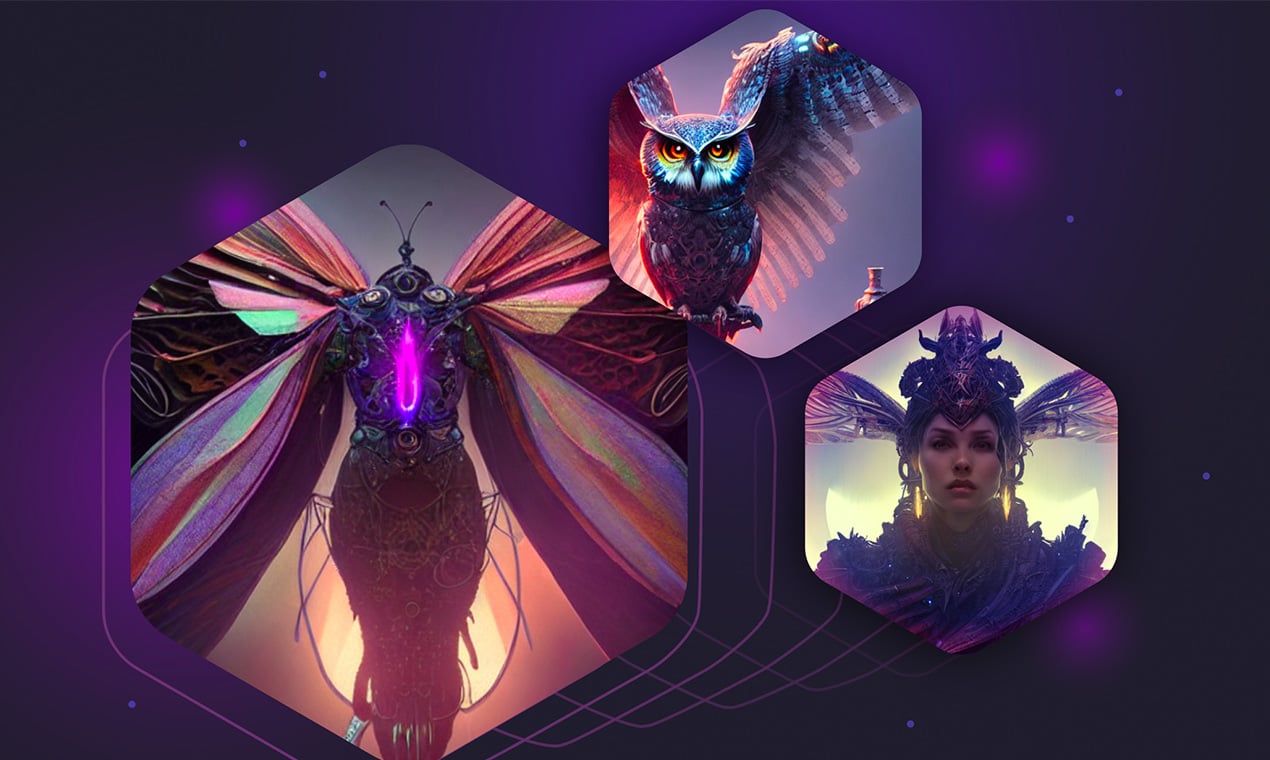
The video game industry stands at an inflection point. What began as experimental tooling has become production reality: AI game generators now enable developers to create characters, environments, narratives, and entire game systems through natural language prompts rather than manual construction. In 2026, Jenova provides immediate access to this capability through specialized AI agents powered by frontier models including GPT-5.2, Claude Opus 4.5, Gemini 3 Pro, and Grok 4.1.
The market trajectory confirms this shift. According to SNS Insider research, the AI in gaming market reached $4.54 billion in 2025** and is projected to grow to **$81.19 billion by 2035 at a CAGR of 33.57%. The AI game generator segment specifically—focused on automated asset and content creation—is expanding even faster, with Industry Research projecting growth from $1.94 billion in 2026 to $32.48 billion by 2035 at 31.19% CAGR.
Developer adoption has crossed the threshold from early adopter to mainstream. A Google Cloud survey conducted by The Harris Poll found that 90% of game developers now integrate AI into their workflows, with 97% believing generative AI is reshaping the industry. This isn't future speculation—it's present-day infrastructure.
The following sections examine what AI game generators actually produce, the specialized agents that enable different creation modes, and how developers can leverage these tools immediately.
Quick Answer: What Is an AI Game Generator?
An AI game generator is a system that uses large language models and generative AI to automate game development tasks—including 2D/3D asset creation, procedural world generation, narrative scripting, character behavior modeling, and code generation—that previously required specialized human labor. These tools transform natural language descriptions into playable content, reducing development timelines from months to hours.
Key capabilities and platforms include:
- Roleplay Game Master — Unlimited memory and perfect character consistency for dynamic narrative generation
- Manga Creator — Complete visual storytelling from one-shots to 200+ page epics with consistent art style
- Film Screenwriter — World-class screenwriting partner for concept, outline, draft, and revision
- K-Pop Producer — Management simulation with 60-day trainee development cycles
- The Mansion — Mystery escape scenarios with AI-driven environmental storytelling
The Problem: Why Traditional Game Development Falls Short
Game development has always operated under constraints that limit creative output: finite budgets, fixed timelines, and the linear relationship between team size and content volume. These structural limitations create persistent problems that AI game generators now address.
The Content Production Bottleneck
Traditional game development requires massive human effort for asset creation. A single AAA title may involve hundreds of artists, writers, and designers working for years to produce finite content. According to Capitol Technology University analysis, top-tier games regularly exceed $300 million in development costs with multi-year production cycles. This creates an impossible resource constraint: players demand ever-larger, more personalized experiences, but human production scales linearly at best.
"Traditional game development is often resource-intensive, requiring large teams of designers, artists, writers, and developers to spend months or even years building content." — Market.us AI Game Generator Report
Indie developers face even harsher constraints. As documented in academic research on generative AI in game design, solo creators typically possess expertise in programming, 3D modeling, music composition, narrative design, or gameplay systems—but rarely all simultaneously. The barrier to creation excludes countless potential designers with compelling visions but limited technical execution capabilities.
Static Worlds, Exhaustible Content
Handcrafted games operate on finite content. Writers script dialogue trees; artists create fixed assets; designers build levels that remain identical across playthroughs. The result is inevitable: players exhaust available content, memorize patterns, and lose engagement. Research from AI and Games notes that over 7,000 Steam titles disclosed AI use in 2025—representing roughly one-third of all releases—as developers seek solutions to the content exhaustion problem.
The Replayability Ceiling
Even critically acclaimed games face diminishing returns. A narrative-driven title may deliver 20-40 hours of exceptional content, then offer nothing new. Roguelikes and procedural games extend longevity through randomization, but often at the cost of handcrafted quality—generated content feels repetitive, thematically inconsistent, or mechanically shallow. Academic analysis confirms that traditional procedural generation methods struggle with narrative coherence across genres beyond platformers.
Quality Control at Scale
The 2025-2026 period introduced the industry to "gameslop"—low-effort titles assembled primarily through AI tools with minimal human curation. According to Whimsy Games analysis, user review scores for AI-heavy games average 15-20% lower than traditionally developed titles, with refund rates running 2-3x higher than industry averages. This phenomenon demonstrates that AI without human oversight produces mediocrity at scale, forcing a reckoning about quality standards and the proper role of human judgment in AI-assisted creation.
The Jenova Solution: AI-Native Game Creation Infrastructure
Jenova addresses these limitations through specialized AI agents with deep domain knowledge, unlimited memory, and access to frontier language models. Rather than treating AI as a feature layered atop traditional design, Jenova enables creation workflows where AI constitutes the core infrastructure.
Comparison: Traditional vs. AI-Assisted Game Development
| Aspect | Traditional Approach | Jenova AI Agents |
|---|---|---|
| Asset creation | Manual modeling, texturing, rigging | Natural language prompt → generated output |
| Narrative | Pre-written, branching paths | Dynamically generated, context-aware |
| World building | Static, hand-crafted environments | Procedural generation with thematic coherence |
| Content volume | Finite, exhaustible | Near-infinite, adaptively generated |
| Development time | Months to years | Minutes to hours for prototypes |
| Team size | Large specialized teams | Small teams or individuals |
How Frontier Models Enable New Creation Modes
The convergence of several technical advances makes 2026's AI game generation possible:
- Context windows exceeding 100K tokens allow systems to remember entire project histories, player decisions, and world states across sessions
- Multimodal capabilities enable agents to process and generate not just text but structured game data, character sheets, and environmental descriptions
- Reasoning improvements in models like GPT-5.2 and Claude Opus 4.5 support complex causal chains—systems understand consequences, form plans, and react appropriately to unexpected inputs
- Latency reduction to 200-300ms for conversational responses makes real-time creation and iteration feasible
These capabilities manifest across distinct creation categories, each served by specialized Jenova agents.
Specialized AI Agents for Game Creation
Visual Storytelling & Asset Generation
Manga Creator Personal mangaka for complete stories from one-shots to 200+ page epics. The agent handles visual storytelling, panel flow, and consistent art style—generating narrative structure that creators then refine through dialogue. Unlike static illustration tools, this agent maintains character consistency and thematic coherence across extended productions.
Comic Creator Sequential art partner for dynamic layouts and bold visual styles. Supports single issues through graphic novel sagas with AI-generated plot structures, character arcs, and visual direction. The agent understands comic pacing, page-turn mechanics, and the visual grammar of sequential storytelling.
Webtoon Creator Mobile-first vertical scroll storytelling with episode hooks and full-color consistency. Optimized for the distinctive pacing and visual language of webtoon platforms, including cliffhanger structures and paywall-aware episode design.
Narrative & Interactive Fiction
Roleplay Game Master The foundational agent for tabletop-style experiences. Features unlimited memory, perfect character consistency, and support for any rule system or homebrew setting. Unlike scripted CRPGs, this agent adapts to player creativity without boundary—if a user describes an action not covered by rules, the AI evaluates plausibility, consequences, and narrative fit in real-time.
Film Screenwriter World-class screenwriting partner covering concept, outline, draft, and revision—specializing in structure, dialogue, character, and visual storytelling for cinematic experiences. The agent understands three-act structure, character arcs, and the economy of visual storytelling.
Microdrama Screenwriter Vertical microdrama specialist for 60-100 episode seasons with cliffhangers and paywall-aware storytelling—reflecting the explosive growth of short-form mobile narrative content.
Simulation & Management
K-Pop Producer Management simulation spanning 60 intense days of trainee selection, skill development, and career shaping. The AI manages individual trainee progress, market dynamics, and group chemistry—producing emergent narratives about ambition, sacrifice, and stardom.
The Mansion A complete mystery escape scenario where players wake with no memory in an enigmatic estate. The AI manages environmental storytelling, clue distribution, and escalating tension based on investigation patterns. Each playthrough generates distinct puzzle configurations and narrative revelations.
Love Island Romance simulation featuring eight AI characters with distinct personalities, preferences, and relationship dynamics. The open-world social system responds to player choices without scripted outcomes—relationships develop organically based on interaction history.
Creative Writing & Worldbuilding
Creative Fiction Writer Storytelling partner for deep research, editorial insight, and polished prose. While not a game per se, this agent enables interactive fiction creation where players collaboratively develop narratives with AI assistance—effectively blurring creation and play.
Alternate Historian Opinionated historian for "what if" scenarios with bold causal reasoning. Users propose historical divergences ("What if Rome never fell?") and the AI constructs plausible alternative timelines with economic, technological, and social consequences.
How AI Game Generators Work: Step-by-Step
Step 1: Define Creation Parameters
Unlike traditional game engines with fixed starting states, AI game generators begin with collaborative setup. Users define:
"I'm creating a cyberpunk detective story set in 2087 Neo-Shanghai. My character is a former corporate security analyst who left after uncovering human experimentation. I want moral complexity—no clear heroes or villains."
The AI agent processes these constraints, generating appropriate world details, potential plot threads, and character relationships that will matter throughout the experience.
Step 2: Engage Through Natural Language
Creation requires no interface learning or button memorization. Users describe needs, ask questions, or provide feedback as they would to a collaborator:
"I need a supporting character who runs an underground neural implant clinic. They should seem helpful but have hidden motives connected to the protagonist's past. Give me three variations with different approaches to their secret agenda."
The AI evaluates: narrative context, thematic consistency, plot requirements, and character dynamics—then responds with options that maintain coherence with established world elements.
Step 3: Iterate Through Conversation
AI game generators accommodate evolution. Users can request adjustments ("Can we shift the tone from noir to more optimistic?"), expansions ("Add a subplot about corporate espionage"), or mechanical additions ("Track faction reputation numerically"). The agent adapts rather than requiring restart.
Step 4: Export and Implement
Final outputs can be exported in various formats: structured narrative documents, character sheets, dialogue scripts, or integration-ready assets. The unlimited memory ensures continuity across sessions—projects evolve over weeks or months without losing context.
Results & Use Cases
📊 Rapid Prototyping for Indie Developers
Scenario: A solo developer wants to test a game concept without investing months in asset creation.
Traditional Approach: Learn multiple disciplines (modeling, texturing, animation, coding) or hire contractors, requiring significant capital and timeline extension.
Jenova Solution: The Manga Creator generates visual prototypes from descriptions, allowing immediate visualization of concepts. The Creative Fiction Writer produces narrative frameworks and dialogue samples that establish tone and pacing. Combined, these agents enable concept validation in days rather than months.
💼 Scalable Content for Live-Service Games
Scenario: A mobile game requires continuous content updates to maintain player engagement.
Traditional Approach: Maintain large content teams producing finite assets that players exhaust, creating unsustainable cost structures.
Jenova Solution: The Mansion demonstrates how procedural generation with AI oversight produces near-infinite content variations. Applied to live-service contexts, similar agents generate new scenarios, dialogue, and environmental storytelling that maintains quality standards while scaling beyond human production capacity.
📱 Accessible Creation for Non-Technical Users
Scenario: A writer with game ideas but no technical skills wants to create interactive fiction.
Traditional Approach: Learn game engines, programming, and asset tools—barriers that exclude most non-technical creators.
Jenova Solution: Roleplay Game Master requires only natural language interaction. The AI handles system mechanics, world consistency, and narrative branching. The writer focuses entirely on creative direction while the agent manages technical implementation.
FAQ: AI Game Generators in 2026
What makes AI-native game generation different from traditional game engines?
Traditional engines provide tools for human creators to build content manually. AI-native generation creates content from descriptions, with the AI handling implementation details. Jenova's specialized agents enable this by combining frontier model capabilities with domain-specific knowledge and unlimited memory for project continuity.
How do frontier models like GPT-5.2 and Claude Opus 4.5 improve game generation?
Larger context windows enable genuine continuity—agents remember project details from weeks prior. Improved reasoning supports complex causality; systems understand why narrative choices matter and plan accordingly. Multimodal capabilities allow processing of structured game data alongside natural language. These technical advances translate to outputs that feel meaningfully responsive rather than template-driven.
What about the "gameslop" quality problem?
Quality depends on implementation. As AI and Games analysis documents, 2026 sees both exceptional AI-assisted creation and significant low-quality output flooding storefronts. The difference lies in thoughtful integration—Jenova agents combine generation with architectural safeguards (consistency filters, content boundaries, human oversight workflows) that maintain quality standards.
Can AI game generators replace human developers?
No. According to Bain & Company research, only 20% of gaming executives believe generative AI will reduce costs, and 60% don't expect it to significantly affect talent models. The technology handles execution, but human judgment remains essential for creative direction, emotional storytelling, and quality curation. The most effective workflows treat AI as amplification of human vision, not replacement.
How does Jenova handle content safety and originality?
Jenova agents implement multiple safeguards: content filtering for inappropriate generation, consistency prompts that maintain project boundaries, conversation logging for quality assurance, and fallback responses when generation produces low-quality output. These measures address the hallucination and coherence problems identified in academic research on generative AI.
Can I create commercial games using Jenova's AI generators?
Yes. Beyond prototyping and experimentation, outputs from Jenova's platform can form the basis of commercial releases. The specialized agents include commercial-appropriate licensing, and the natural language interface enables rapid iteration toward production-ready content. Custom agent creation allows tailoring of generation parameters to specific commercial requirements.
Conclusion: The New Economics of Game Creation
The question is no longer whether AI will transform game development, but how creators will balance AI efficiency with human creativity. The SNS Insider projection of $81.19 billion by 2035 and the Google Cloud finding of 90% developer adoption confirm that this transformation is structural, not speculative.
What remains constant is the human desire for meaningful experience: challenge, discovery, connection, narrative satisfaction. AI doesn't replace these needs; it removes the technical barriers that previously limited their fulfillment. A creator with vision but no art skills can now generate visual stories. A designer with narrative ambition but limited resources can now produce persistent worlds. A small team competing against AAA studios can now match their content velocity.
The Roleplay Game Master, Manga Creator, Film Screenwriter, and dozens of other specialized agents represent not endpoints but beginning points—templates for experiences that will grow more sophisticated as underlying models improve and as creators discover new applications.
The gaming industry's next era belongs to those who understand AI not as threat or gimmick, but as infrastructure for previously impossible experiences. Jenova provides that infrastructure today.