AI Game Cutscene Storyboard Generator: Shot-Ready Cinematic Panels
2026-09-14
Comic Creator helps you generate game cutscene storyboards by turning a script excerpt, beat sheet, or rough cinematic brief into sequential panels a director can actually shoot from. While in-engine cinematics stall waiting on a storyboard artist, a shot list, and another round of coverage notes, this AI maps framing, blocking, and narrative timing in one working pass.
✅ Shot-by-shot panels with camera direction and action beats ✅ Continuity across characters, eyelines, and screen direction ✅ Fast iteration when gameplay or level layout changes the scene ✅ Useful for indie cinematic designers and lean narrative teams
As of September 2026, more game teams are compressing previsualization into smaller crews. To understand why a dedicated game cutscene storyboard generator matters, look at where cinematic production actually breaks.
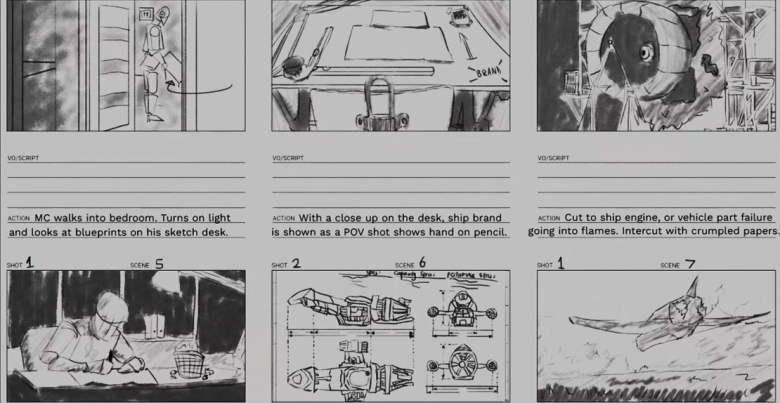
Quick Answer: What Is a Game Cutscene Storyboard Generator?
Comic Creator is an AI game cutscene storyboard generator that turns scripts and beat sheets into sequential cinematic panels you can direct from in minutes. It is built for visual continuity, not isolated concept frames.
Key capabilities:
- Sequential panels that preserve screen direction, eyelines, and staging
- Camera language (wide, medium, close-up, insert, POV) attached to each beat
- Action, dialogue, and hybrid cutscenes from the same brief
- Revision passes when a designer changes timing, location, or payoff
A still image of a spaceship on fire is concept art. A row of panels that shows the engine failing, the camera holding on crumpled plans, then the ship clipping the terrain is a storyboard. Game cinematics live or die on that difference.
Why Game Cutscenes Stall in Previsualization
Cutscenes are where narrative, camera, animation, audio, and gameplay constraints collide. The cheapest place to discover a bad idea is on paper. The expensive place is after mocap, facial capture, or a week of in-engine camera work.
That pressure is landing on smaller teams. Industry surveys show studios are being asked to ship cinematic quality with fewer specialists and tighter schedules:
1 in 10 — developers reported being laid off in the past year
Half of all developers — are self-funding their games
1 in 3 developers — now use generative AI to streamline game development
Self-funded and lean teams still need previz. They rarely have a dedicated storyboard artist on call for every boss intro, betrayal scene, or vehicle chase. But accessing professional cinematic coverage is frustratingly difficult:
- Generic image models produce striking frames that do not cut together
- Shot lists written in prose leave camera and blocking ambiguous
- Gameplay changes force the cutscene to be reboarded from scratch
- Action coverage (exits, inserts, reactions) is the first thing skipped under deadline
Continuity Beats Pretty Frames
A cutscene is edited in the player's head at 24, 30, or 60 frames per second. If panel 2 reverses screen direction, panel 4 loses the eyeline, and panel 6 invents a doorway the level does not contain, the board is unusable. Testing against real editorial rules—180-degree line, shot-size progression, who holds the frame on the emotional beat—shows why one-off image generation fails as a storyboard pipeline.
Gameplay Constrains the Camera
Film storyboards assume the camera can go anywhere. Game cutscenes often cannot. Collision, streaming, animation budgets, and “the player already knows this room” all limit coverage. A board that ignores those constraints looks cinematic in isolation and falls apart in the engine.
Indies Carry the Cinematic Load Themselves
When half the industry is self-funding, the narrative designer is frequently also the cinematic director. They need boards the same afternoon a combat encounter is retimed, not a two-week illustration cycle.
60% of game developers — report having 10 years or less of industry experience
Less tenure does not mean lower cinematic ambition. It means more people must storyboard without a classical previz department behind them.
Action Scenes Multiply Coverage
Chases, gunfights, and vehicle beats need inserts, wide geography shots, and reaction cutaways. Skip that coverage and animation wastes days on a sequence that cannot be cut. This is exactly what Comic Creator was built for.
Why Comic Creator
Comic Creator treats the cutscene as sequential art: ordered panels, clear staging, and readable camera intent. It is a standalone storyboard studio for people who have to communicate a scene before anyone opens the engine.
| Traditional Approach | Comic Creator |
|---|---|
| Wait on a storyboard artist or draw stick figures in a slide deck | Generate ordered cinematic panels from a brief the same session |
| Isolated concept images that do not edit together | Sequential coverage with screen direction and beats |
| Shot lists that leave framing ambiguous | Panel-level camera size, angle, and action notes |
| Full reboard when combat timing changes | Fast revision passes on the beats that actually moved |
| Action scenes under-covered to save illustration time | Inserts, reactions, and geography shots in the same sequence |
The value is not “an image of your cutscene.” The value is a board a cinematic animator, camera artist, or indie developer can disagree with productively—because the shots are specific.
Sequential Panels, Not Mood Boards
Describe the scene the way a director talks: who enters, where the camera sits, what the player is not allowed to see yet. The output is a strip of panels, not a pile of disconnected key art. That is the difference between previsualization and inspiration.
"Board a 20-second in-engine cutscene: player enters a hangar, finds burning blueprints on a desk, then we cut wide as a prototype fighter clips the ridgeline. Mark shot sizes, eyelines, and two inserts of the crumpled plans."
Camera Language Built Into Each Beat
Call for wides to establish geography, mediums for blocking, close-ups for the tell, POVs for HUD-adjacent tension. If you need an over-the-shoulder on the reveal and a crash zoom into a failing engine, say so. The board should read like a shot list you can hand to animation.
Coverage for Action, Not Just Dialogue
Dialogue cutscenes fail on faces and eyelines. Action cutscenes fail on geography. A usable game cutscene storyboard generator has to do both—reaction shots, muzzle direction, vehicle exits, and the one wide that tells the player where everyone is.
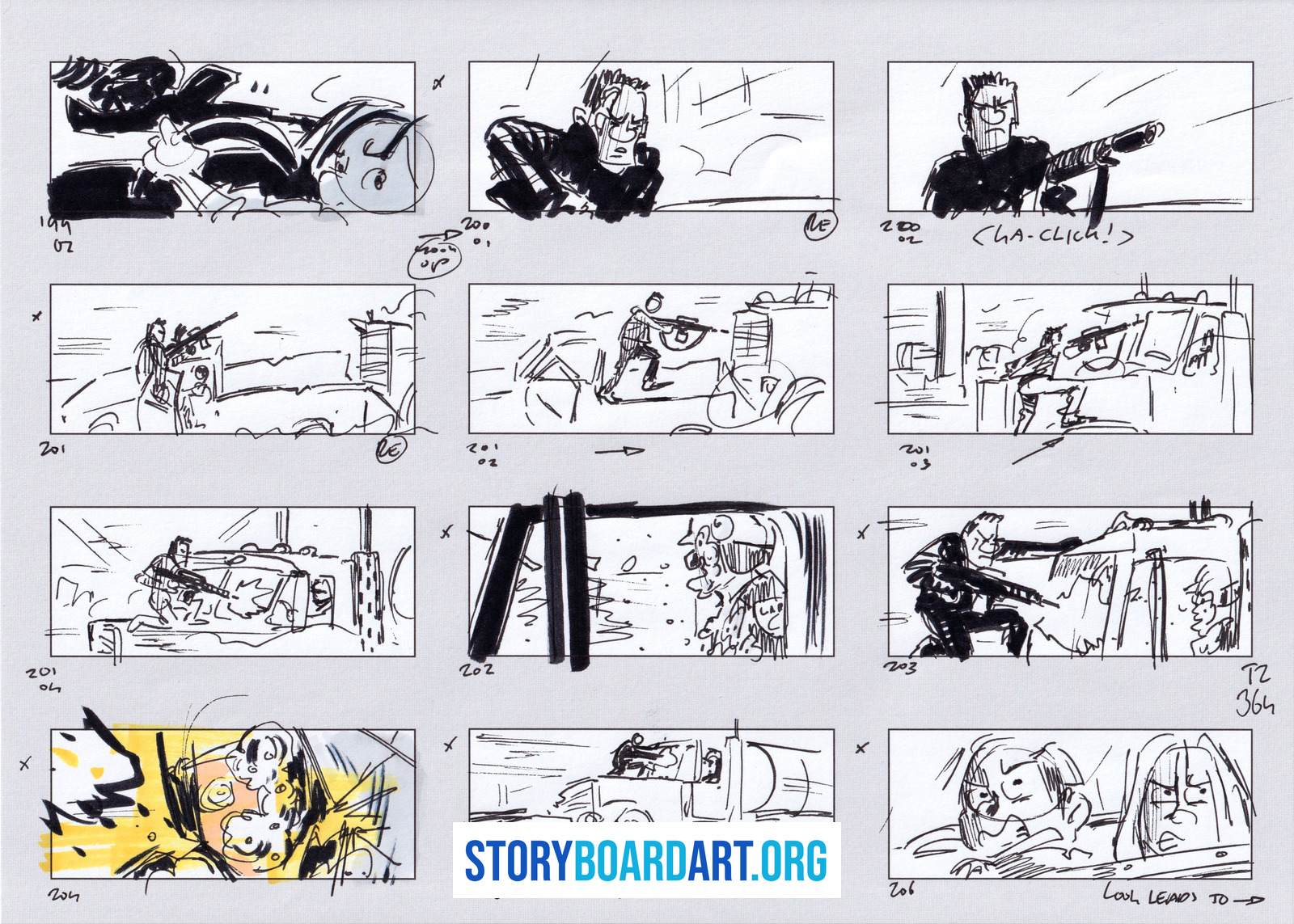
Hand-drawn action boards work because every panel earns its place in the cut. That same discipline—setup, pressure, payoff—is what you want from an AI pass before anyone blocks the scene in Maya, MotionBuilder, or Sequencer.
Revision When the Level Changes
Games rewrite cinematics. A door gets moved. A boss phase is shortened. A companion is cut. Feed the new constraint and reboard only the beats that broke, instead of commissioning a new illustration set.
Generative tools are already inside production pipelines; the gap is using them for editorial continuity rather than one-frame spectacle.
70% of respondents — now integrate generative AI into their workflows
86% of media and entertainment respondents — use generative AI for content creation, imaging and prototyping, or code generation
A storyboard that survives contact with the level is the prototype that matters.
Related Agents You'll Also Find Useful
If the cutscene still needs a script, a different sequential style, or key art around the boards, these partners sit next to the storyboard pass.
Film Screenwriter
If you are still finding the scene on the page, Film Screenwriter drafts the cutscene as a cinematic scene: sluglines, visual action, and dialogue that can be boarded panel by panel. Use it before you generate coverage so the storyboard is solving picture, not inventing plot.
- Structure, visual action, and dialogue for in-engine cinematics
- Beat-level revision when a gameplay moment has to carry the story
- Language that translates cleanly into shot sizes and camera intent
Manga Creator
When the cutscene should feel like a manga chapter—speed lines, dramatic aspect ratios, silent reaction beats—Manga Creator is the sequential alternative. Useful for stylized action games and for boards that will be shown to an art team that already thinks in panel flow.
- Panel rhythm and visual emphasis for stylized cinematics
- Consistent character acting across a long sequence
- Strong silent-beat storytelling when VO is not the point
Graphic Designer
Boards sell the cut. Pitch decks, vertical-slice slides, and store trailers often need a cleaned-up frame, a title card, or a one-sheet around the sequence. Graphic Designer handles that surrounding visual system so the storyboard is not also doing marketing art.
- Key frames and presentation layouts from selected panels
- Consistent treatment for cinematic pitch materials
- Support for HUD, title, and still frames that sit beside the board
Try Comic Creator free — no credit card required.
How to Generate a Game Cutscene Storyboard
Step 1: Drop in the Cutscene Brief Open the storyboard studio and paste what you actually have—script pages, a bullet beat sheet, or a voice note transcribed into text. Name the characters, the location as it exists in the level, and the duration you can afford.
"12-second mid-mission cutscene. Arena is the warehouse from Level 4. No new geometry. Companion pins the warlord; player does not fire until the line 'Now.' End on the player's hands, not a hero wide."
Step 2: Lock Camera Rules and Constraints State what the engine and the design will allow. Locked-off cameras, no flies through walls, keep the boss’s weak point off-screen until the fight starts, stay on the left-to-right chase axis. Constraints are the job.
"180-line along the truck. Player always screen-left. No crane shots. One insert of the shotgun pump. Cut on the explosion, do not show the body."
Step 3: Generate the Panel Sequence Ask for numbered panels with shot size, camera height, and the action in each frame. Require establishing, acting, and payoff coverage—not nine mediums of the same two-shot.
"Generate 10 panels. Label each WS / MS / CU / INSERT / POV. Note head turns and who owns the eyeline. Panel 7 is the only geography wide."
Step 4: Interrogate the Cut Read the board as an editor. If two panels repeat the same information, cut one. If the emotional tell is a wide, promote it to a close-up. If gameplay already taught the layout, drop the extra establish.
"Revise panels 4–8. The tell should be the companion’s hand, not the villain’s face. Shorten the chase by two panels. Keep the reload insert."
Step 5: Hand Off a Shot-Ready Board Export or copy the sequence with panel numbers and action notes into your cinematic ticket, ShotGrid note, or Slack thread. Animation should be able to block from it without a meeting to decode your intent.
Results & Use Cases
🎯 Boss-Intro Cutscene on an Indie Schedule
Scenario: A two-person studio needs a 15-second intro before a hangar boss. There is no storyboard artist, and the fighter asset is still changing.
Traditional Approach: Stick-figure slides, a written shot list nobody interprets the same way, then a wasted day of Sequencer cameras.
Comic Creator: A 12-panel board covering the desk POV, blueprint insert, and the flaming fly-by—specific enough to block in-engine the same afternoon.
- Establishes geography before combat UI takes over
- Keeps the prototype aircraft on a consistent screen direction
- Gives audio a clear list of hits (paper crumple, engine pop, terrain scrape)
💼 Narrative Designer Iterating a Betrayal Scene
Scenario: A narrative designer rewrites a companion betrayal after playtest. The dialogue is new; the room is not.
Traditional Approach: Re-brief illustration, wait, discover the new line wants a different close-up, wait again.
Comic Creator plus Film Screenwriter: Script the new exchange with visual action, then reboard only the panels whose eyelines and tells changed.
- Dialogue and picture stay in lockstep
- Coverage stays inside existing set dressing
- Design can approve emotion before animation spends a cycle
📱 Cinematic Notes Between Meetings on Mobile
Scenario: A cinematic designer is on a train after a combat review. The chase was shortened by four seconds. They need a new board before the next stand-up.
Traditional Approach: Memory, a notes app, and hope the tablet drawing file is in sync.
The storyboard generator on phone: Dictate the new duration and “cut two geography wides,” generate a revised strip, drop it in the production channel before the meeting starts.
- Full feature parity for briefing and revision on iOS and Android
- Faster than opening a desktop drawing file for a coverage change
- Keeps the conversation on shots, not on when someone can draw
📊 Action Coverage for a Vehicle Chase
Scenario: A mid-size team must previz a gunfight that exits into a truck chase. Under-covering the sequence will blow the animation budget.
Traditional Approach: Two hero frames and a paragraph of “then they shoot a lot.”
Sequential boards: Setup on the rifle, movement along the vehicle, explosion cutaway, and the two-shot of the drivers—the same coverage logic you see in professional action boards.
- Inserts and reactions are scheduled, not improvised on the stage
- Screen direction stays readable at chase speed
- Cinematics and combat design can argue from the same pictures
The broader production market is still expanding even as individual teams stay lean, which is why previz that does not require a full art department is becoming a default skill rather than a luxury.
USD 1.83 billion in 2025 — game development market size, projected to USD 2.07 billion in 2026
1 in 3 AAA games — are adapted for film or TV, which raises the bar for cinematic clarity even inside the game
FAQ
What is a game cutscene storyboard generator?
A game cutscene storyboard generator produces ordered cinematic panels from a script or beat sheet so a team can plan camera, blocking, and timing before animation. Unlike a single concept image, it is built for continuity: shot size, screen direction, and the cuts between beats. Comic Creator is designed for that sequential job.
Is Comic Creator free to use?
Yes. There is a free tier with core features and limited usage, and paid plans if you need more volume. You can storyboard a cutscene without a credit card. If you are generating boards every sprint, a higher tier simply raises the monthly usage ceiling.
How is this different from a generic AI image generator?
Generic image tools optimize for a single impressive frame. Cutscenes fail on the frames between: eyelines, the 180-degree line, inserts, and whether the room matches the level. A storyboard generator is evaluated on whether the sequence edits, not whether panel 3 would look good on ArtStation.
Can it replace a storyboard artist?
It replaces the blank page and the two-week wait for a first pass. A specialist still wins on complex action choreography and on-model precision. For most indie and mid-size cinematic tickets, an AI-generated board is the working document you iterate until a human artist—or the engine—takes over.
Does a game cutscene storyboard generator work on mobile?
Yes. Brief the scene, generate panels, and send revisions from a phone or tablet with the same workflow as desktop. That matters when combat reviews happen away from a drawing tablet and the cutscene duration just changed.
Can I board both dialogue scenes and action chases?
Yes. Dialogue scenes need acting, eyelines, and the close-up that lands the line. Action scenes need geography, inserts, and directional continuity. If the cutscene is still prose, draft it with a screenwriting partner, then generate coverage from the locked beats.
Direct Your Next Cutscene on the Page First
Cutscenes go over budget when the first time anyone sees the scene is in the engine. Layoffs, self-funded teams, and rising cinematic expectations have made that habit more expensive, not less. A dedicated AI game cutscene storyboard generator gives you sequential panels, camera intent, and revision speed before animation spends a cycle.
Try Comic Creator on the next scene that is blocking your vertical slice. Explore more at Jenova.
For Developers: Comic Creator is available programmatically via the Jenova API — integrate sequential storyboard generation into your cinematic pipeline with a single API call. Full documentation →