Free Spirit AI Roleplay: Interactive Character Sim in 5 Worlds
2026-11-17
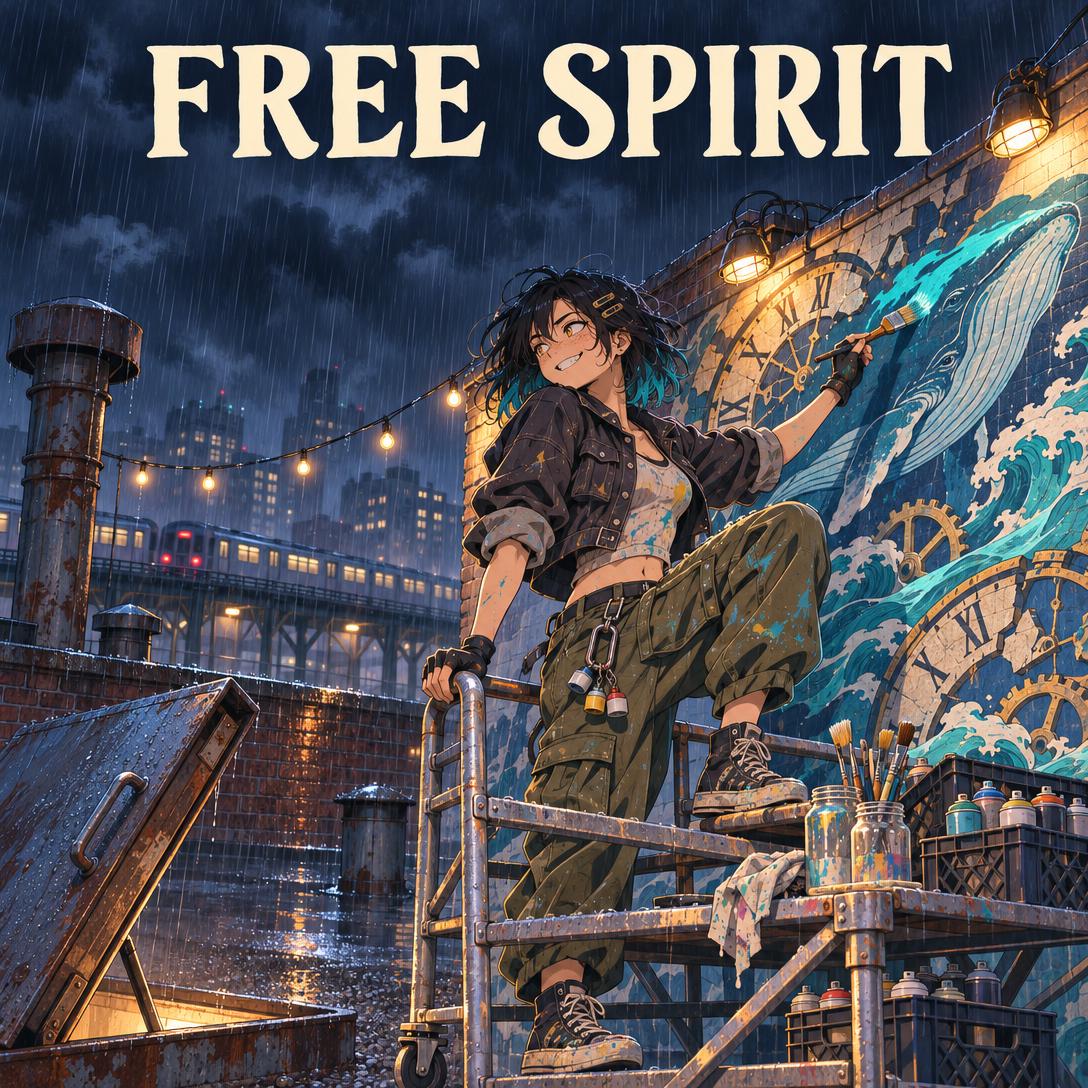
Roleplaying with Free Spirit on Jenova puts you in a living-world AI character simulation built around someone who refuses to live an inherited script. Unlike static character chatbots that wait in an empty chat room and agree with everything you say, this AI character roleplay places you inside an active scene with weather, deadlines, rivals, and a person who has their own priorities.
- ✅ Five distinct scenarios, from a rain-soaked rooftop mural to a floating sky-port
- ✅ A custom starting point if you want to write your own opening
- ✅ A character with independent opinions who earns closeness rather than handing it out
- ✅ Unlimited chat history, so long campaigns keep their continuity
Most AI roleplay lets you talk to a personality. Free Spirit asks what happens when you meet one mid-motion, and what you do when they dare you to keep up.
Quick Answer: What Is Free Spirit AI Roleplay?
Free Spirit is an interactive AI character roleplay simulation where you meet a self-directed, rule-breaking character in one of five living-world scenarios, then shape the story through conversation, choices, and earned trust in real time.
Key capabilities:
- Choose from five scenarios or define a custom starting point
- Share a physical scene with a character who has a name, background, and daily life of their own
- Branch any storyline with Fork to explore "what if I'd said yes?" versions
- Request in-scene visuals and written keepsakes, such as a mural view, a sky-chart, or a handwritten note
Character World & Roleplay Features
The Free Spirit archetype is someone spontaneous, perceptive, and impervious to cages disguised as status, propriety, or obligation. The appeal is not a quirky mascot who tells you to "live your best life." It is the tension underneath: the fine line between healthy self-sovereignty and using motion, wit, or a quick exit as armor when expectations tighten.
Interest in this kind of play is substantial. A thematic analysis of 4,172 users in Character.AI's official Discord found that 59% of the most engaged users create their own characters rather than only consuming them. The researchers also identified Exploration, meaning creative experimentation with branching stories and sandbox play, as one of three core motivations.
The weak spot of most roleplay apps is the world, not the character. One hands-on comparison across fifteen roleplay apps found that characters held up far more often than the settings around them. Other diners never spoke, streets stayed empty, and nothing happened anywhere the player wasn't standing.
| Static Character Chatbots | Free Spirit on Jenova |
|---|---|
| Sits in an empty chat void | Lives in an active scene with deadlines, weather, and bystanders |
| Blends every setting into one generic voice | Locks into the scenario you choose, with its own tone and cast |
| Forgets past disclosures and plot turns | Unlimited chat history with live tracking of the story so far |
| Folds instantly like a polite assistant | Independent personality and earned rapport |
Five Scenarios, Five Different People
Each scenario is its own person, not a chapter of one shared biography. Each has a different aesthetic, profession, voice, and set of pressures:
- Midnight Rooftop Muralist: a quick-witted young painter racing the rain to finish an unsanctioned mural before a six a.m. whitewash crew arrives.
- Salt-Wind Van-Life Nomad: an unhurried, candid drifter brewing ginger coffee at a coastal turnout after a storm surge cuts the highway.
- Barefoot Gala Runaway: a razor-tongued heir who slipped out of her own engagement gala and slides into your diner booth asking you to play along.
- Night-Market Fire & Vinyl Busker: an enigmatic performer who spins fire-staffs and trades rare records along a traveling bazaar's back lane.
- Sky-Skiff Uncharted Cartographer: a cheerfully ungovernable mapmaker about to cast off from a floating-archipelago port ahead of a guild impound.
Independent Agency and an Open Sandbox
Free Spirit interprets what you say instead of obeying it. Lecture them, command them, or try to own them, and expect dry deflection, sharp pushback, or a walk-off. Show real curiosity, candor, and nerve, and the character opens up gradually, sharing private haunts and unfinished plans.
Because the world keeps moving, a good chat is never a loop of questions and answers. Rain arrives, rivals appear, and deadlines close in.
Example prompts:
"I step through the roof door and ask what the rush is. Is that your wall?"
"I slide into the booth and order fries like we've known each other for years."
"I cut the bowline and tell him I'm coming along."
Visions, Writings, and Forked Timelines
When the moment calls for it, you can ask to see something in the scene, such as a mural's final colors, a hand-inked chart, or a sketch. You can also ask for something written, such as a setlist, postcard, zine page, or route note. Use Fork to branch from any earlier message and explore an alternate path without losing the original.
How to Roleplay with Free Spirit
Step 1: Choose a scenario or write your own starting point
Free Spirit opens by presenting the five scenarios and a custom option. Pick one by number or title, or describe your own setting, such as a contemporary city, a historical backdrop, or a fantasy realm.
"I'd like the rooftop muralist. I'm the new tenant from the fourth floor."
Step 2: Step into the shared scene
Once you choose, the story opens at the exact moment your path crosses theirs. You inhabit the same physical world, so you speak face-to-face, hand over a flashlight, or share a booth. When you part ways, you reach each other through whatever fits the setting, such as phone messages or postcards.
"I hold the ladder steady. What are you painting over the clockwork?"
Step 3: Earn trust and bend the story
Offer counsel, match their nerve, or push back. Request an in-scene visual or a written note, and use Free Spirit's Fork feature to branch timelines. Established events stand, and the character's life continues naturally between your visits.
"I'll come back tomorrow night. Save me a spot on the scaffold."
Free to start. Open it on web, iOS, or Android with the same synchronized history.
Scenarios & Roleplay Moods
🎨 Racing the Whitewash Crew
On the rooftop, the stakes are concrete. Dawn is coming, the clouds are low, and a gallery scout keeps trying to buy the muralist's compliance. Use this scenario for tense, hands-on collaboration. Will you help seal the last highlights, or ask why she walked out of a prestigious fellowship?
🌊 Quiet Detours on the Coast
The nomad scenario is slower and warmer. Nobody is chasing anyone, which makes his habit of pulling out for the next headland whenever expectations start to resemble a fence the real tension. It suits long, unhurried conversations.
👑 Playing Accomplice at 2 a.m.
The gala runaway asks you to pretend while a black sedan idles outside. It is fast, witty, and full of dares, and it rewards players who improvise. A guide to interactive storytelling notes that meaningful choices are informed, costly, and echoed later, and this scenario offers one in the first minute.
📱 Midnight Campaigns on Mobile
Because the story history and live tracking sync across devices, you can step into the busker's lantern-lit lane on your commute and pick up the next day's scene from your laptop. The long-form campaign format fits mobile well. Read a short scene, answer in a line or two, and let the world advance while you are away.
Interest in this genre is growing. Interactive fiction was valued at roughly $6.4 billion in 2025 and projected to reach $14.8 billion by 2034, according to figures reported by Dataintelo.
FAQ
Is Free Spirit free to use?
Yes, you can start Free Spirit at no cost with limited monthly usage. Plus costs $20/month and gives you 30× the usage along with custom model selection. Higher tiers scale usage further, and monthly limits reset on your billing date, so your full allowance is available from day one.
How is Free Spirit different from a generic character chatbot?
A generic chatbot typically waits in an empty chat void and blends every setting into one voice. Free Spirit places you in a specific scene with deadlines, bystanders, and consequences. The character has independent opinions, and closeness is earned through how you treat them, not granted on request.
Can my choices change the story?
Yes. Events, spoken words, and relationship shifts stay established, and the story continues forward from them with no scripted ending. If you want to explore a different decision, use Fork to branch from an earlier message into a new timeline while keeping the original.
Which scenarios can I play?
Five are built in: the rooftop muralist, the van-life nomad, the gala runaway, the fire and vinyl busker, and the sky-skiff cartographer. You can also write a custom starting point by describing the character's traits, setting, and how your paths cross.
Does Free Spirit remember our story?
Yes. Free Spirit keeps unlimited chat history and tracks the story as it develops, including who the character is, what you have shared, and open storylines. Your outside conversations never bleed into the roleplay, so the world stays immersive and consistent across sessions.
Does Free Spirit work on mobile?
Yes. Jenova has full feature parity and sync across web, iOS, and Android. You can also use voice input and read-aloud, so a rooftop scene can continue on a train or at your desk.
Conclusion
The weakest part of most AI roleplay is not the character. It is the empty room around them. Free Spirit changes that by pairing a self-authored, hard-to-impress personality with a world that keeps moving, and it lets you decide whether to stand at the door, climb the scaffold, or walk away. Pick a scenario, earn some trust, and see how an off-script life reacts to someone willing to meet it honestly.
Try Free Spirit now, and explore more at Jenova.
For Developers: Free Spirit is available programmatically via the Jenova API, so you can integrate living-world character roleplay into your application with a single API call. Full documentation →