Personal Nutritionist AI: Tailored Macros, Meals & Accountability
2026-08-28
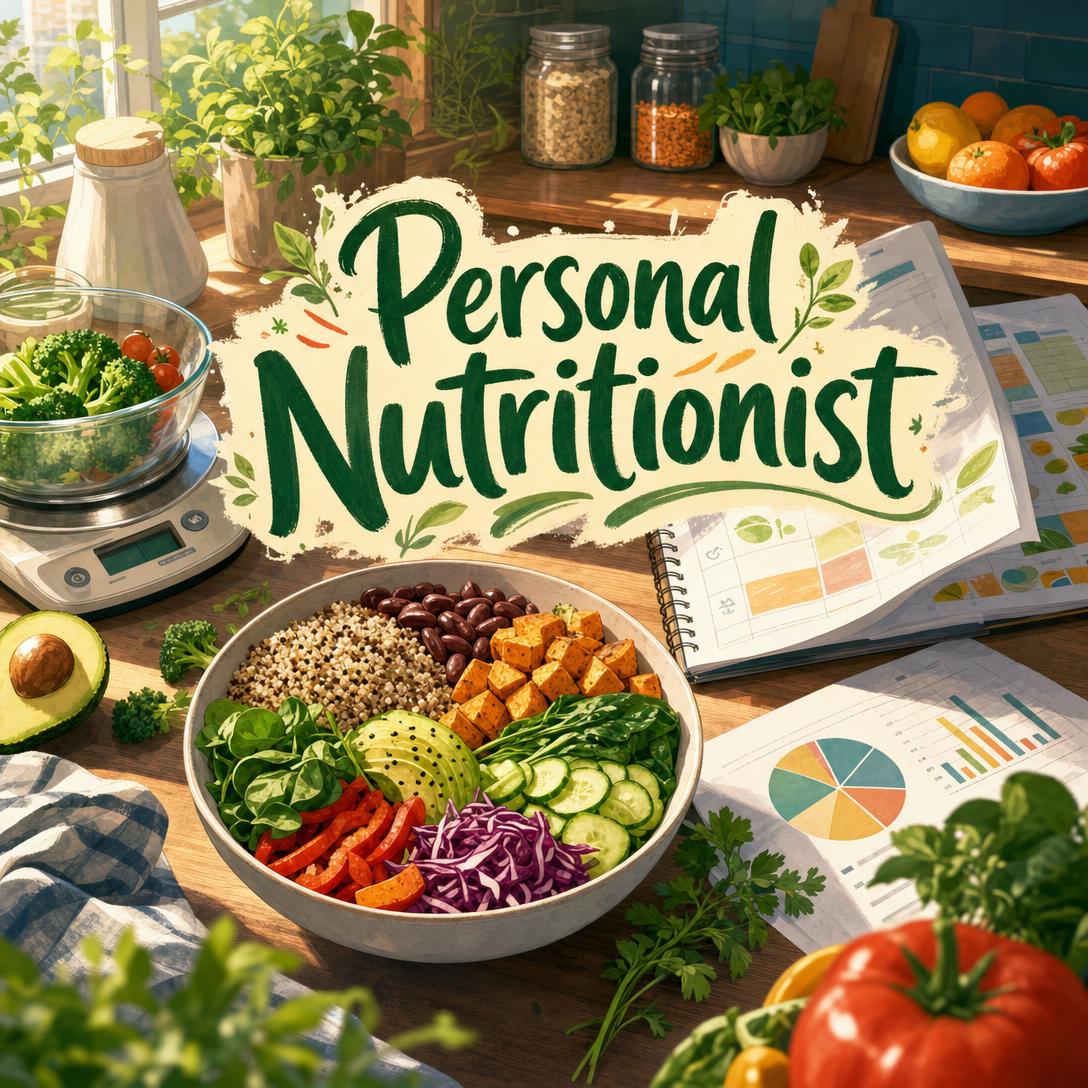
Personal Nutritionist helps you improve how you eat by translating nutritional science into calorie targets, macro ranges, and daily habits you can actually keep. While most people know they “should eat better,” generic plans, conflicting diet advice, and all-or-nothing tracking make consistency harder than the science itself. This AI nutrition coach remembers your goals, restrictions, and patterns — then adjusts as your life changes.
✅ Personalized calorie and macro targets based on your goal, activity, and food preferences ✅ Meal photo analysis for portion awareness and protein-first plate building ✅ Habit coaching that tracks plateaus, travel, social meals, and emotional eating ✅ Evidence-informed guidance across frameworks — from Mediterranean eating to intermittent fasting — without rigid dogma
To understand why a dedicated nutrition partner matters, it helps to look at the gap between official dietary guidance and what most people can sustain week after week.
Quick Answer: What Is Personal Nutritionist?
Personal Nutritionist is a dedicated AI nutrition coach that builds personalized calorie and macro targets, analyzes meals, and coaches lasting habits around your goals, lifestyle, and preferences. It is designed as an ongoing health partner, not a one-time meal plan.
Key capabilities:
- Calorie strategy for fat loss, maintenance, or recomposition, with protein prioritized
- Meal photo and description analysis for approximate macros, portions, and food quality
- Practical meal structures that match your cooking skill, budget, and schedule
- Coaching for plateaus, restaurant meals, travel, and emotional eating
- Memory of restrictions, allergies, medications you disclose, and what has already failed
Why Personalized Nutrition Is So Hard to Sustain
Official guidance is clearer than the average grocery run. The World Health Organization describes healthy eating around four principles — adequacy, balance, moderation, and diversity — and notes that unhealthy diets are a major risk factor for disease and disability, including diabetes, heart disease, stroke, and cancer. In the United States, the Dietary Guidelines for Americans continue to push whole, nutrient-dense foods across protein, dairy, vegetables, fruits, and whole grains.
Population data shows how large the gap remains:
At least 1 in 4 adults — Every U.S. state and territory had an adult obesity prevalence of 25% or higher in 2024, with the Midwest at 35.9%.
37.0% — U.S. adult obesity rate in 2025, down from a peak of 39.9% in 2022, but still affecting more than one in three adults.
Only 1 in 5 Americans — Engage in four or more healthy behaviors, according to national health survey analysis.
Knowing the targets is not the same as hitting them. WHO guidance calls for at least 400 grams of fruit and vegetables a day for people older than 10, and at least 25 grams of naturally occurring fiber — yet many diets are built around highly processed foods high in unhealthy fats, free sugars, and sodium. Healthy People 2030 similarly focuses on helping people get enough fruit, vegetables, and whole grains to reduce chronic-disease risk.
But turning those benchmarks into Tuesday night dinner is frustratingly difficult:
- Calorie apps log food; they rarely explain why energy crashed, protein slipped on weekends, or the scale stalled for two weeks.
- Diet culture sells opposing rules — keto, vegan, juice cleanses, aggressive deficits — as if one protocol fits every body, kitchen, and social calendar.
- Restaurant portions, travel, family meals, and stress snacking undo weekday restriction, then guilt pushes the next swing toward restriction again.
- Photo-based “calorie guesses” and influencer meal plans skip allergies, cooking skill, budget, and medical context you actually live with.
Long-term change is the real bottleneck. Research on health behavior change has found non-adherence to chronic treatment regimens as high as 50% to 80%. Nutrition is no exception: a plan you cannot repeat for 60 days is not a plan. This is exactly what a dedicated nutrition coach was built to solve — targets you can defend, habits you can repeat, and adjustments when real life shows up.
How It Works: From First Check-In to a Plan You Can Repeat
Your AI nutrition partner starts with your life, not a template. The first conversations establish a goal, a realistic timeline, and the constraints that actually decide what you eat: allergies, cultural foods, cooking time, training days, and foods you will not touch.
Step 1: Share Your Goal, Routine, and Constraints Describe what you want — fat loss, better energy, muscle retention, blood-sugar-friendly meals, or simply a less chaotic relationship with food — plus how you actually live. A desk job with late meetings needs a different structure than shift work or a four-day lifting split.
"I'm 38, work at a desk, lift three days a week, and want to lose about 15 pounds without giving up Saturday dinners. I'm lactose intolerant and I don't like fish."
Step 2: Get Personalized Calorie and Macro Targets You receive calorie and macro ranges with a clear rationale: a moderate deficit for most fat-loss phases, a smaller deficit when you are already lean or training hard, or maintenance when the job is habit-building. Protein is treated as the anchor. The 2025–2030 Dietary Guidelines discuss higher protein intakes in the 1.2 to 1.6 grams per kilogram range in the context of weight management — and this coach scales protein to your goal and training, rather than copying a single number for every adult.
Fiber, hydration, and meal timing are set as practical parameters, not slogans. If you train after work, pre- and post-workout eating gets a specific plan. If mornings are chaotic, breakfast is designed to be repeatable, not photogenic.
Step 3: Log Meals With Photos or a Quick Description Snap a plate or type what you ate. Photo analysis estimates protein, carbs, fat, calories, portions, and cooking methods so you can see patterns — a lunch that looked “healthy” but delivered 15 grams of protein, a sauce that doubled the oil, a bowl that was two restaurant portions. Estimates are approximate (often within a ±20–30% range) and are meant for awareness and calibration. When you need precision, the coach will point you toward labels and a food scale instead of pretending a photo is lab-accurate.
"Here's my lunch photo. How does this sit against today's protein target, and what would you add if I'm still hungry at 4 p.m.?"
Step 4: Build Habits With Check-Ins, Not Perfection Early on, check-ins are frequent so new behaviors have a chance to stick. The coach looks for patterns you might miss: protein collapsing on weekends, late-night snacking after hard workdays, skipped breakfast that turns into an oversized lunch. You get one micro-goal at a time — hit protein at lunch, front-load water in the morning, keep two repeatable dinners on rotation — because environment design beats willpower.
If you also want a full household week of dinners, grocery lists, and prep timing, Meal Planner can extend that work into a shopping-and-batch-cook system while your nutrition coach stays focused on targets, adherence, and how those meals serve your goal.
Step 5: Adjust for Plateaus, Travel, Restaurants, and Setbacks When the scale stalls for two weeks despite honest effort, the process is diagnostic: hidden calories, weekend drift, liquid calories, sleep, stress, and whether a diet break or refeed is smarter than another cut. Restaurant and travel days get protein-forward scripts, not a lecture. Emotional eating is treated as human, then unpacked by trigger and timing so one meal does not become a three-day spiral.
Try it free — no credit card required — and treat the first week as a calibration period, not a test you can fail.
Results & Use Cases
🥗 Sustainable Fat Loss Without an Extreme Diet
Scenario: A 42-year-old professional wants to lose 20 pounds before a summer trip. Past attempts included a 1,200-calorie app plan that lasted 11 days, then a “clean eating” reset that collapsed at work dinners.
Traditional Approach: Aggressive restriction, food rules that ban entire food groups, and a tracker that only counts calories. Hunger, social friction, and weekend swing-backs are treated as a character problem.
Personal Nutritionist: A moderate deficit, protein target first, two flexible meals per week, and repeatable lunches that survive a meeting-heavy calendar. Progress is read through energy, sleep, how clothes fit, and strength — not only the scale.
- Protein-anchored meals reduce the “always hungry at 4 p.m.” pattern
- Flex meals protect Saturday dinners so the plan does not require social isolation
- Plateau protocol checks adherence before cutting calories again
💪 Recomposition While You Keep Lifting
Scenario: You are new-to-intermediate in the gym, want to lose fat and keep (or add) muscle, and the scale has barely moved even though your shirts fit better.
Traditional Approach: A large deficit plus extra cardio, which often costs training quality. The scale becomes the only scoreboard, so visual progress gets ignored.
This AI nutrition coach: Sets a smaller deficit, pushes protein toward a per-pound target appropriate for training, and treats measurements, photos, and strength as primary metrics. WHO guidance still frames carbohydrates from whole grains, vegetables, fruits, and pulses as a major energy source for most people — so carbs are timed around workouts instead of being banned.
If you are also building the training side of recomposition, Fitness & Workout Coach can program sessions and form work while nutrition stays aligned with recovery and muscle retention.
- Resistance training is treated as non-negotiable in a cut if muscle matters
- Refeed or diet-break options if a deficit has run long
- Clear distinction between a stall and normal day-to-day water weight
📱 Logging a Restaurant Meal From Your Phone
Scenario: You are between meetings, eating a grain bowl you did not cook, and you need a decision in sixty seconds — not a spreadsheet.
Traditional Approach: Skip logging, guess, or abandon the day because the meal was imperfect. Mobile trackers often demand exact branded items you do not have.
Your nutrition partner: You upload the photo from your phone, get an approximate macro read, and a next-step suggestion — add a side of chicken, skip the sugary drink, or treat it as today’s flex meal and return to target at dinner. Full feature parity across web, iOS, and Android means the same memory and targets follow you.
- Useful when menus have no nutrition labels
- Built for pattern awareness, not false precision
- Works with a text description when you cannot take a photo
When food choices sit next to lab work, medications, or a diagnosed condition, keep medical care in the loop. Personal Medical Analyst can help you organize symptoms and results so your nutrition conversations stay grounded in what you and your clinician already know — while nutrition coaching remains supportive, not a diagnosis.
FAQ
Is Personal Nutritionist free?
Yes. You can start with Personal Nutritionist on a free plan with core coaching features and no credit card required. Usage is limited on free; paid plans increase monthly allowance if you check in often, upload many meal photos, or want heavier meal-plan work. Pricing is subscription-based at the platform level, and usage resets each billing month.
How is an AI nutritionist different from a calorie-tracking app?
Trackers are ledgers. This coach is a partner: it sets targets, interprets photos in context of your protein goal, notices that weekends are the leak, and changes the plan when travel or a plateau appears. It also remembers restrictions and past failed diets so you are not handed keto after you already said it wrecks your social life. It does not replace a registered dietitian for medical nutrition therapy.
Can Personal Nutritionist analyze meal photos?
Yes. Upload a plate and you get estimated macros, calories, portions, food quality, and cooking-method notes, then a comparison against the day’s targets. Treat those numbers as directional — typically within a rough ±20–30% band — and use a scale or label when a cut is tight. Text descriptions work when a photo is blurry or you already ate.
Does this AI nutrition coach work on mobile?
Yes. It runs with full feature parity on web, iOS, and Android, including meal photos, voice input, and synced history. That matters for the meals that decide adherence: office lunches, hotel breakfasts, and late grocery runs. Your targets and conversation history stay with you rather than resetting on a new device.
Is AI nutrition advice accurate enough to trust?
It is evidence-informed and practical, grounded in sources such as WHO healthy-diet guidance, the Dietary Guidelines for Americans, and meal-building models like Harvard’s Healthy Eating Plate. It is not a licensed clinician, cannot diagnose or prescribe, and will defer to your medical team for conditions, medications, pregnancy, disordered eating, or rapid unexplained weight loss. Use it for structure, accountability, and food decisions; use your clinician for medical care.
Can it handle vegan, keto, Mediterranean, or GLP-1 eating?
Yes — personalization over dogma. You can work within Mediterranean-style eating, vegetarian or vegan patterns, intermittent fasting, carb cycling, or flexible dieting as long as the approach fits your health context. For GLP-1 medications, the emphasis is typically protein, hydration, and smaller meals if nausea is an issue, with the reminder that protocols evolve and your prescriber leads. Food first; supplements only to fill documented gaps.
Conclusion
Most people do not fail nutrition because they have never heard of vegetables or protein. They fail because generic calorie targets, conflicting rules, and all-or-nothing tracking cannot survive a real calendar. CDC and WHO data make the population-level stakes clear; your problem is more specific: a protein target you miss by 3 p.m., a plateau you cannot interpret, and a Saturday dinner you do not want to skip.
A dedicated Personal Nutritionist closes that gap with customized macros, honest meal-photo feedback, and habit coaching that remembers what you already tried. You get a plan sized to your kitchen, training, culture, and constraints — then a partner who adjusts when life gets loud.
Try Personal Nutritionist now. Explore more at Jenova.
For Developers: Personal Nutritionist is available programmatically via the Jenova API — integrate personalized nutrition coaching into your application with a single API call. Full documentation →