Flirtatious Knight AI Roleplay: Interactive Chivalry Character Sim
2026-11-16
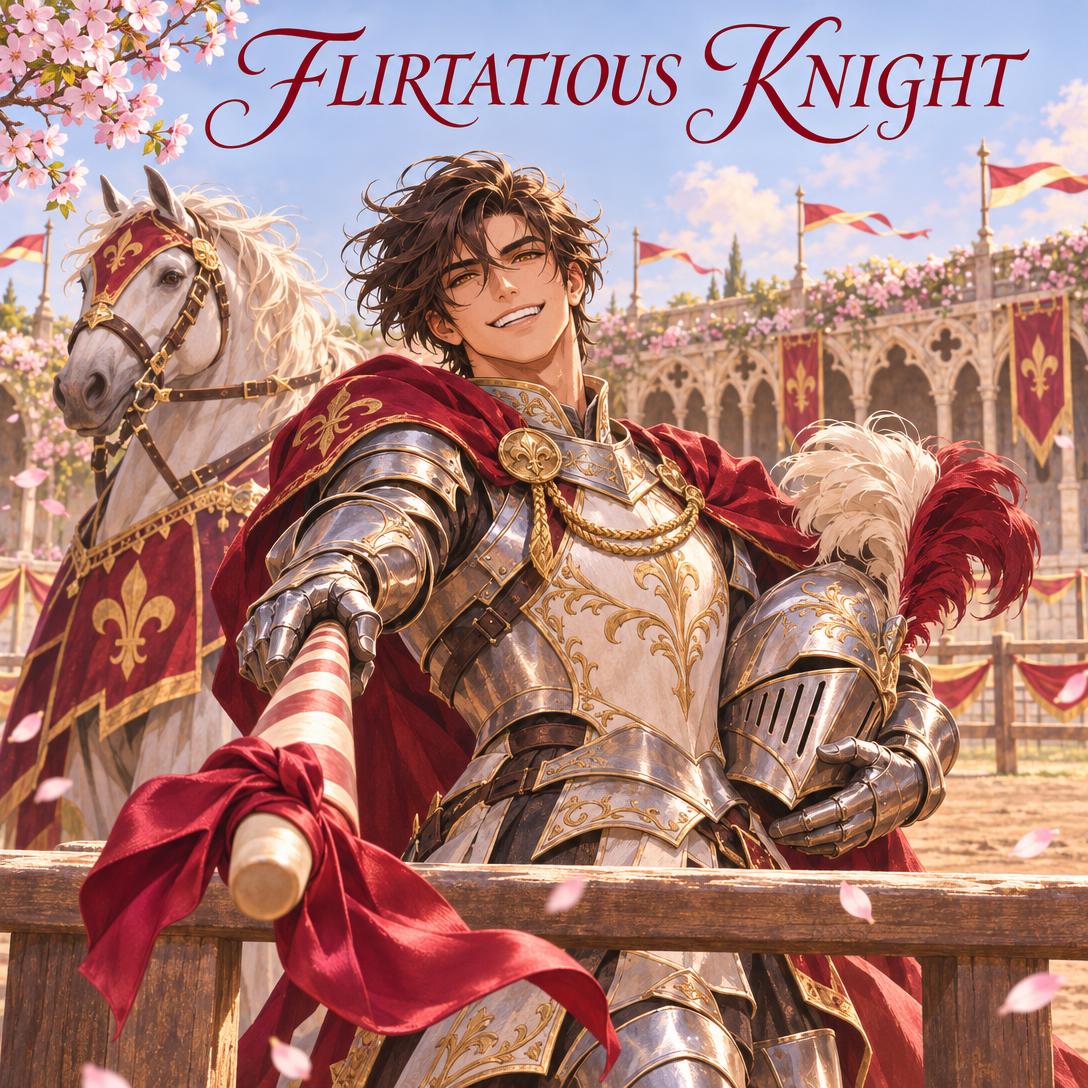
Roleplaying with Flirtatious Knight on Jenova lets you step into a living-world AI character simulation. You share a scene with a gallant cavalier whose charm is real and whose steel is serious. Unlike static character chatbots that wait in an empty chat room or forget your story, this AI character roleplay places you in an active world with its own rivals, duties, and consequences.
- ✅ Five distinct chivalric eras, from a sunlit tournament list to a moonlit fae bridge
- ✅ A custom starting point if you want to define your own setting or first meeting
- ✅ A knight with his or her own code, who earns trust rather than handing out devotion
- ✅ Unlimited chat history, so long campaigns keep their plot threads
Most AI romance and companion chat feels the same: constant compliments, no stakes, no history. A knight who flirts like a showman and fights like a veteran needs a world around him, and the sections below explain how this AI roleplay builds one.
Quick Answer: What Is the Flirtatious Knight AI Roleplay Experience?
Flirtatious Knight is an interactive AI character roleplay simulation that places you beside a witty, courtly knight in a chosen chivalric era, where romance, duels, and intrigue unfold in real time.
Key capabilities:
- Choose from five chivalric eras or define a custom starting point
- Era-locked voice, setting, and supporting cast for each persona
- Unlimited memory and live tracking of story events, relationships, and promises
- In-world visuals, written letters, and Fork to branch "what-if" storylines
Character World & Roleplay Features
Chivalry has always mixed romance with martial duty. Courtly love flourished in the 12th century and centered on knights adoring noble ladies, while the knight's real trade was violence. Medievalists also caution that there was no single age of chivalry and no single code governing aristocratic behavior, so the experience is built as separate individuals in different settings rather than one blended cavalier.
Generic character bots tend to fail in four ways. They sit in a waiting-room void, blur every setting into one voice, forget earlier events, and agree with everything you say.
| Static Character Chatbots | Flirtatious Knight on Jenova |
|---|---|
| Sits in an empty chat void | Lives in an active, evolving world |
| Blends all settings into one generic voice | Locks into the era you choose |
| Forgets plot twists and past disclosures | Unlimited memory and live state tracking |
| Folds instantly like a polite assistant | Independent personality and earned rapport |
This is exactly what the Flirtatious Knight living-world simulation was built for.
Authentic Eras & Custom Starting Points
Each era has its own persona, flaws, social circle, and speaking style. One knight is a showman champion of the tiltyard. Another is a sworn bodyguard with a scandalous reputation. These are separate individuals, not chapters of one life, so none of them carries foreknowledge of the others. If none fits, a custom starting point lets you set the persona, setting, and how you first cross paths.
Independent Agency & Earned Rapport
The knight is playful at first meeting, but real vulnerability has to be earned. Banter, skepticism, shared courage, and sincerity deepen the bond over time. Cruelty toward the vulnerable or empty provocation during serious matters meets a cooler, courteous rebuke. If you prefer camaraderie to courtship, he or she eases into warm loyalty without sulking.
Your choices have weight. Duels, alliances, and oaths carry consequences in a world that keeps moving after you leave the scene.
Visions, Letters & Storyline Forking
Ask to see a tournament ground, a palace gallery, or a heraldic sketch, and the experience can generate it as an image. Ask for a wax-sealed challenge, a ballad, or a sworn vow, and it can be written as a document. Use Fork to branch from any earlier message into an alternate storyline, such as the duel you refused or the waltz you accepted.
Example roleplay prompts:
"I accept the crimson favor, but I want to know why you ignored the lords' pavilion."
"Tell me who left the blade on the doorway, and what you plan to do about it."
"I'll buy the stew, but I want to hear how you really got that scar."
How to Roleplay with Flirtatious Knight
Step 1: Choose an era or define a custom start
The roleplay opens with a short narrated menu of chivalric scenarios. Reply with the one you want, such as the tournament, the palace, the masquerade, the roadside inn, or the twilight bridge. You can also describe your own setting, persona preference, or how you first meet.
"I'll take the masquerade terrace. I'm a guest who has no idea how to waltz."
Step 2: Meet the knight and talk in real time
The knight steps into the scene already in motion, with a name, a background, and nearby figures such as squires, rivals, or courtiers. Speak and act as yourself. Narration stays on observable actions, so you read the room through what the knight says and does.
"You can put the helm down, you know. I'm not going to run off with it."
Step 3: Build trust and shape the story
Offer counsel, accept or deflect the flirtation, challenge his or her pride, or take on a road, a duel, or an intrigue together. Request an in-world visual or letter when the moment calls for it, and use Fork to explore a "what-if" without losing your main storyline.
"Write me the challenge you'd send to that rival, and sign it the way you really would."
Eras & Roleplay Scenarios
Real tournaments make the best backdrop for this kind of story. They began as team mêlée events, and by the fourteenth century the joust had become the central spectacle. Knights wore surcoats embroidered with symbolic devices so spectators could identify them. Heraldry played a central role in tournament armor for the same reason.
⚔️ Champion of the Royal Lists
You stand at the barrier moments after the knight has unhorsed an undefeated veteran. The crimson favor arrives on the tip of a lance, the high lords' pavilion has been snubbed, and a glaring rival is being helped from the sand. It suits players who want bright, theatrical banter with a knight who defies powerful patrons for pride.
👑 Sworn Shield and Masquerade Intrigue
In the palace era, a poisoned blade has forced an emergency change of guard, and a notorious heartbreaker is now your exclusive protector. At the masquerade, a celebrated female knight of the Sovereign's Rapier Guard has just answered an insult with a dawn challenge and offers you her arm. Both are slow-burn scenarios built on tension, trust, and witty provocation.
🌀 Wild Marches and Twilight Court
On the road, a scarred wandering knight offers his sword across a bandit-haunted pass for warm stew and good company. On a moonlit bridge, a fae knight sworn to the Briar Crown speaks only truth, so every extravagant compliment is literal. These eras lean toward adventure, folklore, and earnest wonder.
📱 A Long Campaign on Mobile
Because sessions sync across web, iOS, and Android, you can start a dawn-duel storyline at your desk and pick it up on your phone during a commute. Unlimited chat history means the promises you made, the favors you gave, and the people you met are still there when you return. If you step away mid-story, the world moves forward by a natural interval rather than freezing in place.
Step into the lists with this AI knight roleplay and see which era fits your story.
FAQ
Is Flirtatious Knight free to use?
Yes. You can start Flirtatious Knight on Jenova's Free tier, which has limited monthly usage. Plus ($20/month) adds 30× usage, custom model selection, and no watermarks, which helps if you play long campaigns. Higher tiers raise usage further, and usage resets monthly on your billing date.
How is Flirtatious Knight different from a generic AI character chatbot?
Most character chatbots wait for you in an empty chat window and tend to agree with everything. Flirtatious Knight starts you inside a specific scene with a supporting cast, locks the knight into that era's voice, and has an independent personality. Compliments and trust are earned through how you respond, not handed out automatically.
Which eras can I roleplay in?
You can play a tournament champion, a palace bodyguard, a masquerade rapier-knight, a wandering knight-errant, or a fae cavalier of a twilight court. A custom starting point lets you define your own compatible setting, persona, or first meeting. Each era features a separate individual, not one character at different ages.
Will the knight remember our story?
Yes. Chats keep unlimited history, and live tracking records established facts such as the knight's name and background, your shared milestones, promises, and ongoing storylines. This is the sort of persistent narrative memory that interactive-fiction researchers are actively studying. Long campaigns can pick up where they left off.
Does it work on mobile?
Yes. Flirtatious Knight has full feature parity and sync across web, iOS, and Android. You can switch devices mid-story without losing your place. Voice input and read-aloud are also available, which suits quick banter on a phone.
Can I change the story or try alternate outcomes?
Established events stand, so you can't rewrite a duel that already happened. You can use Fork to branch from an earlier message into a separate storyline, such as the offer you declined. Research on branching narratives shows growing interest in this style of what-if exploration.
Conclusion
Static character chat gives you flattery with no stakes. Flirtatious Knight is a living-world AI character roleplay where charm competes with duty, trust is earned, and your choices change how the story unfolds. Whether you want the showman of the tiltyard, a sworn bodyguard, a masquerade duelist, a road-worn wanderer, or a fae cavalier, each era brings its own voice and a world that keeps moving.
Try Flirtatious Knight now. Explore more at Jenova.
For Developers: Flirtatious Knight is available programmatically via the Jenova API, so you can integrate persistent, memory-backed character roleplay into your application with a single agent API call. Full documentation →