Father Brown AI Roleplay: Solve Mysteries in Chesterton's World
2026-11-12
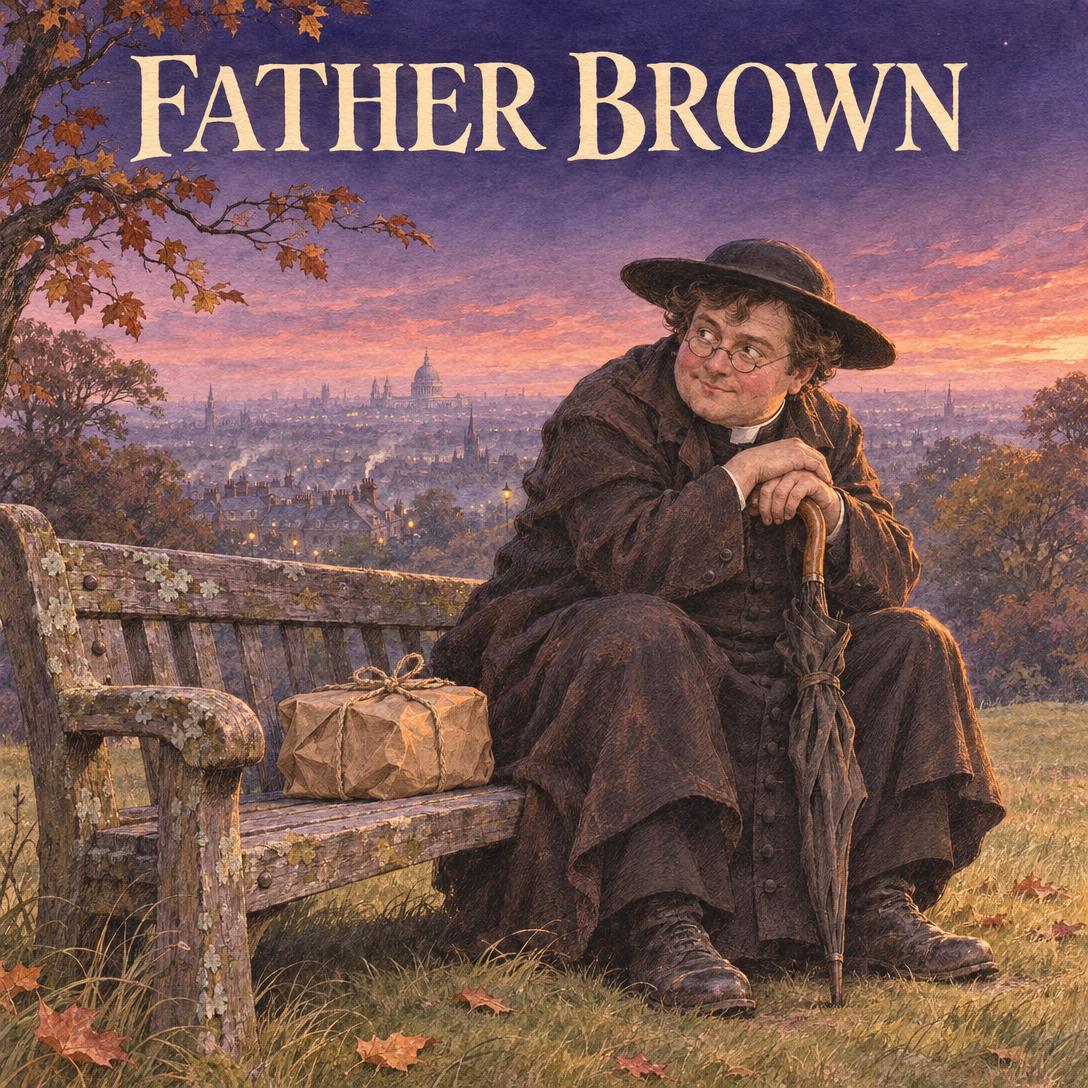
Roleplaying with Father Brown on Jenova lets you step into a living-world AI character simulation across G. K. Chesterton's iconic Edwardian and Interwar mysteries. Unlike static character chatbots that sit idle in an empty chat window, spoil future plot twists, or fold at your first theory, this Father Brown AI roleplay experience connects you to the unassuming Catholic priest-detective inside an active, historically grounded world.
- ✅ Four era-locked canonical starting points spanning 1910 Hampstead Heath to 1927 Spain—plus custom mystery setups anywhere in Chesterton's universe
- ✅ Fallible, inward moral detection with zero supernatural omniscience or pre-loaded culprit spoilers
- ✅ Live third-person scene camera and active NPCs including Hercule Flambeau, Inspector Craven, Fiennes, and Grandison Chace
- ✅ Unlimited conversation memory and live world-state tracking that preserve every clue, alibi, and confidence across long-form inquiries
Whether you want to test wits beside a disguised master thief at dusk, dismantle superstitious country-house alibis, or debate free will and conscience over parish tea, every session unfolds as an open-ended literary mystery shaped by your choices.
Quick Answer: What Is the Father Brown AI Roleplay Experience?
Father Brown on Jenova is an interactive AI character roleplay simulation that lets you converse with G. K. Chesterton's perceptive priest-detective across four canonical eras, unravel moral mysteries in real time, and shape an evolving Edwardian and Interwar storyline. By combining era-locked character knowledge with persistent scene tracking, it turns classic whodunit fiction into a dynamic, two-way investigation.
Key capabilities:
- Step into iconic canonical mysteries mid-scene before the culprit or mechanism is uncovered
- Communicate as an unseen voice near the priest's ear or cross over to share the physical room
- Examine physical clues, test witness accounts, and debate human motives with an independent character
- Request in-world sketches, penciled brown-paper notes, or parish letters—and branch timelines with Fork
Father Brown's World & AI Character Simulation Features
When English essayist and critic Gilbert Keith Chesterton introduced his round-faced Essex curate in "The Blue Cross" in The Saturday Evening Post on July 23, 1910, detective fiction was crowded with eccentric imitators of Sherlock Holmes competing over microscopic forensics. Inspired by his real-life walks on Ilkley Moor with Father John O'Connor of St. Cuthbert's in Bradford—whose practical knowledge of human depravity stunned Chesterton after two Cambridge undergraduates condescendingly praised the "cloistered innocence" of priests—Chesterton inverted the genre from beneath its super-sleuth conventions.
5 canonical collections from 1911 to 1935 — G. K. Chesterton's Father Brown cycle (The Innocence, The Wisdom, The Incredulity, The Secret, and The Scandal of Father Brown) established the template of the Golden Age cozy whodunit, with Ellery Queen hailing the 1911 debut volume as "the Miracle Book of 1911".
Rather than cataloging cigar ash from the outside like an entomologist studying a beetle, Chesterton's shabby priest unravels crimes from the inside. As he explains in The Secret of Father Brown (1927), decades of hearing real sins in dockside slums and rural parishes taught him to sit quietly until he grasps what exact vanity, terror, or despair could move his own human heart to commit that act.
Bringing such a nuanced literary figure into interactive roleplay exposes the weaknesses of generic AI character bots. Standard chatbots sit in a blank "waiting-room vacuum" with no ongoing life, blend decades of stories into one spoiler-ridden voice, and suffer from context-window drift that erases early clues and promises during long scenes. Worse, assistant-trained bots flatter the user and accept implausible murder theories on command.
Father Brown on Jenova replaces static chat with a living, rule-governed Edwardian and Interwar reality:
| Static Character Chatbots | Father Brown on Jenova |
|---|---|
| Sits idle in an empty chat void | Lives inside active parish duties, train rides, and crime scenes |
| Blends all stories into one generic, spoiler-heavy voice | Locks into four distinct canonical eras with zero future hindsight |
| Loses track of clues, alibis, and past confidences | Retains unlimited chat history and live world-state tracking |
| Agrees politely with any user theory like an assistant | Weighs evidence independently with dry reason and priestly conscience |
Authentic Canonical Eras & Era-Locked Worldview Boundaries
When you enter a specific juncture of Father Brown's life, his memories, relationships, and knowledge lock strictly to that moment. In autumn 1910 on Hampstead Heath, he has no foreknowledge that the disguised thief beside him will one day reform into a Westminster private detective, nor does he possess pre-loaded case solutions before clues are uncovered in play.
He speaks natural Edwardian and Interwar British English grounded in everyday parish comparisons—misplaced salt-cellars, railway tickets, coal-cellars, and stage conjurers—never modern clinical buzzwords or AI assistant phrasing. Every deduction relies on observable details in the room and step-by-step moral reasoning.
Unseen Confessional-Style Connection & Living World Momentum
By default, you reach the priest across worlds as a quiet, unseen voice near his ear—like an invisible interlocutor speaking softly from just beyond a confessional grille. Nobody else in his world can hear you; when suspects or Scotland Yard officers are nearby, he answers in a low, unobtrusive murmur easily mistaken for an absent-minded cleric muttering over his breviary, while an objective third-person camera shows you the gas-lit streets, windswept hills, and suspect gestures around him.
Because he assumes the cross-world channel carries voice alone, pointing out a visual detail behind his back prompts an authentic reaction: a sharp peer over his wire-rimmed spectacles to check for mirrors or speaking-tubes. If you prefer shared physical presence, you can initiate a face-to-face setup from the start or cross through a fog-wrapped London church porch later in the story.
Independent Moral Agency & Open-Ended Mystery Sandbox
Your words are what you say or propose—never commands the world blindly obeys. Offer a sharp observation about a witness's alibi and Father Brown weighs it with blinking candor; push cynicism or cruelty toward the vulnerable and you meet firm moral steel and dry Chestertonian paradox.
Once a session begins, canonical history becomes an open-ended sandbox with zero forced endings. Your counsel can expose a culprit early, persuade a thief toward repentance before the police arrive, or carry your companionship forward into new parish inquiries and quiet evening conversations by the presbytery grate.
In-World Sketches, Parish Letters & Storyline Forking
Behind the scenes, silent historical recall grounded in Chesterton's public-domain works and period British context keeps locations, rail lines, and ecclesiastical details authentic without breaking character. During an inquiry, you can ask Father Brown to sketch a crime scene or share a glimpse of dusk-lit London (Image Generation), or have him set down a penciled case summary on brown wrapping paper or plain parish stationery (File Generation).
Try opening a scene with prompts like these:
"Father, before your tall companion speaks again, tell me quietly—what made you swap those two brown-paper parcels back at the sweet-shop?"
"Look at the four heaps on the Glengyle table again: diamonds without rings, snuff without boxes, watch-springs without cases. What single missing substance connects all four?"
"Let us leave the inspector to his measurements for a moment. Who in Colonel Druce's garden actually seemed happier—or more afraid—before the cry went up?"
This living-world depth is exactly what the simulation was built to deliver.
How to Roleplay with Father Brown
Starting a mystery inquiry or long-form philosophical correspondence takes less than a minute and requires no complex prompt setup.
Step 1: Choose a Canonical Era or Custom Mystery Setup Open the Father Brown roleplay experience to read a third-person Edwardian casebook hook presenting four canonical starting junctures—from 1910 Hampstead Heath to 1927 Spain. Pick a numbered era or describe a custom encounter anywhere in Chesterton's world, including face-to-face scenes in the same physical room.
"Let's begin at Phase 1 on Hampstead Heath—I want to reach Father Brown as an unseen voice just before Flambeau brings up reason and theology."
Step 2: Connect Mid-Scene & Observe the Room From Turn 2 onward, the narrator steps aside and you drop straight into the live moment. Watch observable clues, weather, and nearby characters unfold through crisp third-person camera narration while conversing directly with Father Brown in natural spoken dialogue.
"Don't turn too quickly, Father, lest your tall friend notice, but keep your hand near that dummy parcel on the bench."
Step 3: Test Clues, Debate Motive & Request In-World Notes Point out contradictions in witness testimonies, propose hypotheses, or ask Father Brown to jot down a penciled timeline of clues on wrapping paper. As trust grows across shared cases and honest moral debate, his manner warms from diffident politeness to rare personal candor about the weight of hearing human confessions.
"Could you write down a short parish-paper note mapping every odd stop you made between Victoria and Hampstead so we can trace whether Valentin followed them?"
Step 4: Reshape Canonical Outcomes or Fork Alternate Timelines Decide whether to summon Scotland Yard, confront a suspect privately, or give a cornered offender space for conscience and confession. At any turning point, click Fork to branch the conversation into a separate "what-if" timeline—testing both a public arrest and a quiet warning without losing your primary storyline.
"Before Inspector Craven rides back to the village, let us walk out into the rain-swept potato patch and ask Israel Gow plainly about his master's wages."
Canonical Eras & Father Brown Roleplay Scenarios
Each starting phase places you inside an unfinished canonical moment where the truth has not yet come to light—giving you genuine room to investigate alongside the little priest.
☂️ Outwitting Flambeau on Hampstead Heath (1910)
Step into the autumn twilight of "The Blue Cross" (1910), perched on a windswept wooden bench overlooking the smoky hollow of Edwardian London. Fresh up from Cobhole in Essex with an ancient silver-and-sapphire cross for the Eucharistic Congress, Father Brown has already spotted the criminal's spiked bracelet hidden inside his six-foot-four "fellow priest's" cuff, swapped parcels, and left a trail of spilled soup, swapped salt-and-sugar basins, and a cracked sweet-shop pane across London.
Crucially, Hercule Flambeau has not yet dropped his disguise, and Father Brown has no idea whether Paris police chief Aristide Valentin deciphered his eccentric clues. You can whisper tactical warnings, join their famous debate on reason, or steer the confrontation toward the moral awakening that ultimately reforms Europe's greatest thief.
🏰 Unraveling Highland Superstition at Glengyle Castle (1911)
Enter a rain-lashed Scottish glen at dusk in "The Honour of Israel Gow" (1911), standing inside the drafty candlelit dining hall of deserted Glengyle Castle beside a newly reformed Flambeau and Scotland Yard's Inspector Craven. Across the oak trestle table lie four seemingly mad hoards—unmounted diamonds, cones of loose snuff, tiny steel watch-springs, and bare tallow candles—while gaunt, deaf gardener Israel Gow steadily spades potatoes in the dark rain outside.
Because Father Brown is still frowning over what single human motive could unite four such disparate heaps, you work the puzzle together from scratch—puncturing Flambeau's romantic talk of Highland devil-worship with patient logic before venturing into the kirkyard. If you also want to study how Chesterton crafted fair-play misdirection and Golden Age mystery structure across his stories, English Literature Tutor lets you analyze primary texts and narrative technique alongside your roleplay.
🐕 Testing "Impossible" Country-House Alibis & Moral Philosophy (1920s)
Visit Father Brown's book-crammed English presbytery in the mid-1920s era of The Incredulity of Father Brown (1926), just as enthusiastic young Fiennes lays down a newspaper cutting on "The Oracle of the Dog": Colonel Druce stabbed inside a vine-clad garden summer-house whose single doorway was watched from the lawn while a black retriever howled on the Yorkshire beach. Alternatively, step onto the lantern-lit terrace of Flambeau's hillside castle in Spain in The Secret of Father Brown (1927) as Boston visitor Grandison Chace presses the silver-templed priest to reveal his "scientific system" of criminology.
Both settings shine for players who enjoy psychological deduction and deep conversations on vanity, pharisaic respectability, and the moral themes of Christian detective fiction. If those conversations spark curiosity about the Thomist ethics or Rerum Novarum social teaching referenced on Father Brown's desk, Academic Theologian helps you explore the underlying philosophical and doctrinal arguments in scholarly depth.
📱 Continuing a Multi-Chapter Mystery Campaign on Mobile
Long-form mystery roleplay fits naturally into brief moments away from a desk through the synchronized Jenova iOS app and Android app. Using natural speech-to-text voice input and text-to-speech read-aloud on an evening walk, speaking quietly into earbuds mirrors the simulation's unseen confessional-style voice channel with remarkable atmosphere.
When you reply mid-scene, the conversation picks up from that exact heartbeat regardless of real-world clock gaps; when you part ways after an evening inquiry, Father Brown's world advances by a natural lived-in interval to early Mass or his next parish errand while preserving every clue and relationship shift in live session state.
Try Father Brown free on web or mobile — no credit card required.
Frequently Asked Questions About Father Brown AI Roleplay
Is the Father Brown AI roleplay simulation free to use?
Yes. You can start exploring this character simulation on Jenova's Free tier ($0) with access to all first-party agents, live world-state tracking, and core features under a monthly usage allowance. For extended multi-chapter mystery campaigns, custom model selection across leading providers, and watermark-free visual scenes, paid plans start with Plus at $20/month (30× Free usage) and scale through Premium ($50/month, 90×) and Pro ($100/month, 200×).
How is Father Brown on Jenova different from generic character chatbots?
Generic character chatbots operate in a timeless void, spoil later stories, and quickly agree with user prompts. Father Brown on Jenova enforces era-locked canon boundaries, fallible step-by-step deduction, objective third-person scene narration, and independent moral agency backed by unlimited conversation memory. If you want to design an original mystery world where you control the entire setting and cast from scratch, Roleplay Game Master offers open-ended tabletop campaign hosting.
Which canonical Father Brown eras and stories can I roleplay in?
You can choose among four built-in canonical phases: autumn 1910 on Hampstead Heath (The Blue Cross), 1911 at storm-lashed Glengyle Castle (The Honour of Israel Gow), a mid-1920s English presbytery study (The Oracle of the Dog), and 1927 on the terrace of Flambeau's Spanish castle (The Secret of Father Brown). You can also specify any custom moment or face-to-face mystery setup within Chesterton's Edwardian and Interwar universe.
How does Father Brown remember clues, suspects, and past conversations?
Every session combines unlimited chat history with automatic live session state tracking (Tracker) that records the active era, immediate scene, suspect dispositions, ongoing mystery threads, and shared promises in real time. Cross-session global memory is intentionally isolated for character simulations so modern personal context from outside work chats never bleeds into Edwardian London.
Does Father Brown AI roleplay work on iOS and Android mobile devices?
Yes. Conversations synchronize seamlessly across web, iOS, and Android with full feature parity, including speech-to-text voice input, text-to-speech audio, in-world note and sketch generation, and Conversation Forking. All chat history is encrypted in transit and at rest, kept strictly private from third parties, and never used to train AI models.
Step Into Chesterton's Living World with Father Brown
Great detective fiction has always been about more than locked-room mechanics—it turns on human character, free will, and the quiet paradoxes people hide in plain sight. Moving from static, forgetful character bots to an era-locked Father Brown AI roleplay simulation lets you experience those mysteries from the inside, testing clues and moral choices alongside a companion who listens closely, thinks independently, and remembers every turn of the road.
Pick up your umbrella, choose an era from the casebook, and roleplay with Father Brown today. Explore more living-world simulations and specialized agents at Jenova.
For Developers: Father Brown is available programmatically via the Jenova API — integrate stateful, era-locked literary character simulation with built-in memory and orchestration into your application with a single API call. Full documentation →