AI Fashion Lookbook Creator: Styled Looks, Color Stories & PDF Export
2026-10-06
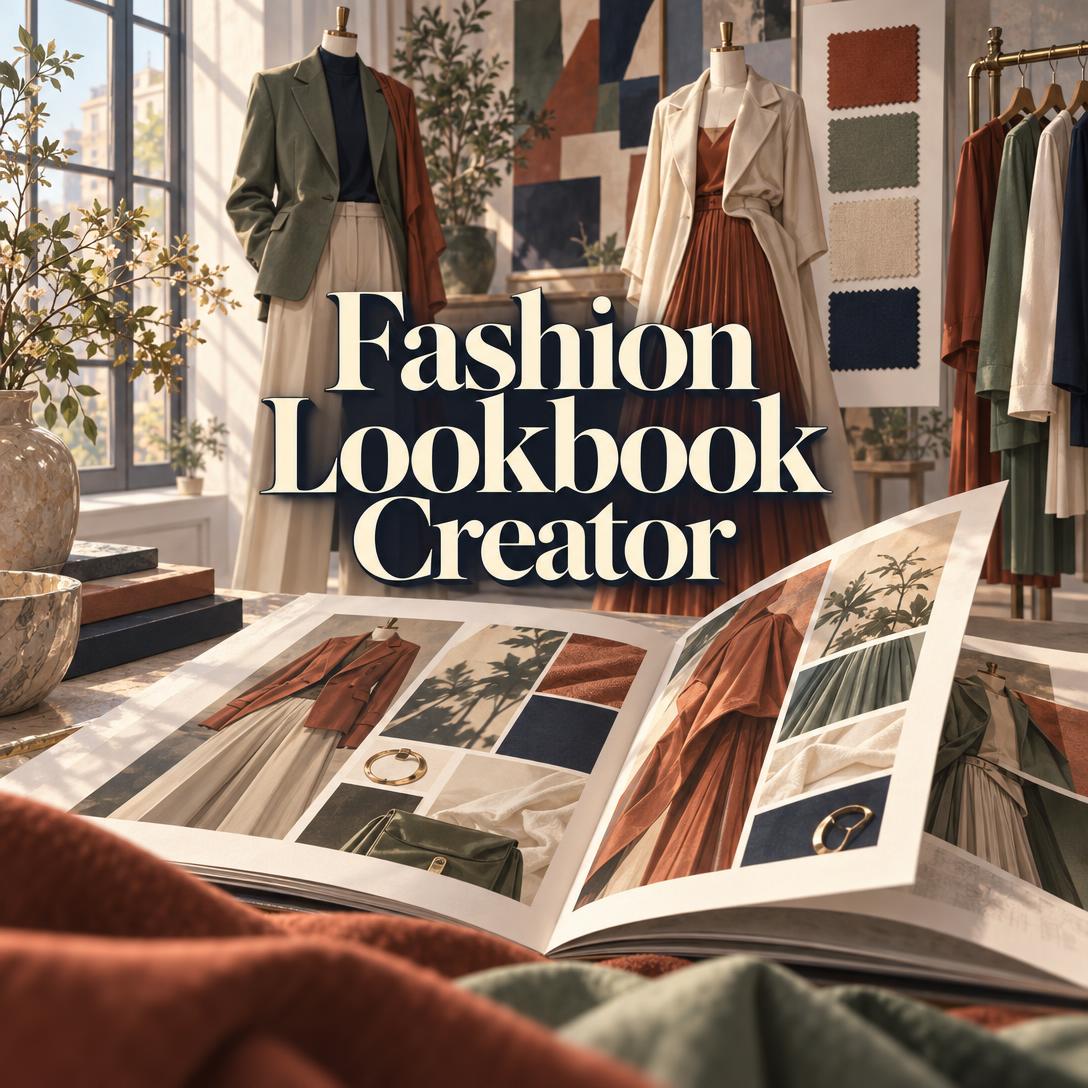
Fashion Lookbook Creator helps you build an AI fashion lookbook by working as your stylist, art director, and editorial designer in one conversation. A traditional lookbook requires a studio, a crew, and weeks of coordination before you can tell whether the concept works. This AI gives you styled looks, a deliberate color story, and a sequenced visual narrative that you can refine as you go. When you're ready, it compiles everything into a finished lookbook PDF.
It is built for emerging designers, boutique owners, personal stylists, and content creators who want editorial-quality presentation without a full production budget.
- ✅ Hero-piece styling: Every look is built around one focal garment, and the agent explains its proportion and texture choices
- ✅ Consistent direction: The color story and photography direction are set before any look is generated, so the whole book stays consistent
- ✅ Eight lookbook types: Brand collections, capsule wardrobes, editorial, campaign, streetwear, bridal, seasonal, and personal style
- ✅ Ready to share: Sequenced looks are compiled into a formatted lookbook PDF with cover and credits pages
A lookbook is a curated argument for a point of view, which makes it different from a catalog. Making that argument has become harder as trend cycles speed up and online shoppers expect more from fashion imagery. To see why a dedicated AI lookbook studio is useful, it helps to look at the creative and commercial pressures fashion teams face right now.
Quick Answer: What Is Fashion Lookbook Creator?
Fashion Lookbook Creator is an AI lookbook studio that styles, art-directs, and sequences fashion looks into a cohesive visual narrative, then compiles them into a polished lookbook in a single conversation.
Key capabilities:
- Styles complete outfits using hero-piece, proportion, layering, and texture-contrast principles
- Sets a color story, photography direction, and reference style image before generating looks
- Plans the order of looks, including an opening statement, pacing, and a closing image
- Generates each look with an outfit breakdown and styling notes, then exports the full book as a PDF
Creative Challenges: Why Lookbooks Are Harder to Make Than Ever
The fashion calendar does not slow down. JOOR's Spring 2026 report identified six distinct runway directions: crayon colors, spring leather, strong shoulders, feathery textures, a new take on boudoir dressing, and 3D appliqué florals. Months later, Vogue was already covering the Spring 2027 shows in New York, London, Milan, and Paris. For Fall/Winter 2026, Net-a-Porter reports that slim tailoring and structured silhouettes dominated, paired with velvet, charmeuse, and shearling.
Turning those directions into a coherent visual story is the lookbook's job. The commercial stakes are also high, because online fashion shoppers make decisions almost entirely from images:
25–40% vs. 10–15%: Typical fashion return rates compared with general e-commerce, with dresses and fitted items sometimes reaching 50%
USD 10.4B → USD 45.7B: Projected growth of the global visual e-commerce platform market from 2025 to 2035
The same DRESSX research found that shoppers who used visual try-on tools were about 3× more likely to add items to cart and viewed 7× as many product listings. Try-on technology is not the same thing as a lookbook. Still, the data suggests that imagery helping shoppers picture how clothes are worn and combined keeps them engaged. Analysts also note that e-commerce has raised demand for high-quality fashion imagery across every channel.
Producing that imagery with editorial discipline is difficult for several reasons:
- Production comes before proof. You book models, studios, and photographers before you know whether the styling concept holds together across 15 looks.
- Color stories drift. Without a locked palette, look 9 rarely matches the mood of look 1, and the book reads as a set of unrelated outfits.
- Sequencing gets ignored. Many lookbooks are simply arranged by SKU. They lack an opening hook, a rhythm between high-impact and quieter pages, and a closing statement.
- Fabrics and photography get mismatched. Silk needs movement to show its drape, while structured wool needs stillness and controlled light. Ignoring this weakens even good styling.
Fashion editors describe 2026 as a season that is not about flat outfits. Bouclé, suede, leather trims, and chunky knits are layered together. That kind of textural styling needs an art director's eye, and a dedicated AI lookbook studio is designed to provide one.
How to Create an AI Fashion Lookbook, Step by Step
Working with Fashion Lookbook Creator follows the same steps a creative director would take on a real shoot: direction first, then sequence, then looks.
Step 1: Share Your Brief, or Just a Mood
Start with whatever you have. That could be a full collection brief, a list of garments, a brand reference, or a single aesthetic phrase. If you give it only a mood, it generates looks that express that mood. If you give it an inventory, it proposes outfit pairings and an order for the looks.
"I'm launching a 12-look Fall/Winter womenswear collection. Earthy palette: olive, rust, cream, and navy. Quiet, tailored, a little romantic. Audience is women 28–45."
If you're still working out your personal aesthetic before building a portfolio lookbook, Fashion Consultant can evaluate your current wardrobe and help define the style direction you want the lookbook to express.
Step 2: Lock the Style Direction
Before generating final pages, the agent confirms three things: the aesthetic, the color story, and the photography approach. Examples of photography approaches include clean studio, editorial location, street, and environmental. It then creates a style exemplar, which is a reference image that sets the visual language for every look that follows. This step is what keeps the finished book consistent.
"Warm studio light, directional shadow, structured tailoring softened with drapey pleats. Matte textures, nothing high-shine."
You can also switch between image generation models with the "App" button beneath the chat input. Different models handle texture, lighting, and realism differently, so it is worth comparing them on your style exemplar.
Step 3: Map the Look Sequence
Next, the agent plans how the looks will progress. Look 1 is the opening statement and the most important image in the book. The middle looks alternate between hero looks and quieter detail or mood pages. The final look works as a callback or culmination. Each look in the plan has a stated purpose.
"Open with the olive blazer as the hero, build toward the rust pleated dress as the evening moment, and close with a cream trench that echoes look 1."
Step 4: Generate and Refine Each Look
Each look comes with structured notes: the full outfit breakdown, styling notes covering the hero piece, proportion, and color logic, and a sequence note explaining how it connects to the looks before and after it. You can give feedback on any part, such as a garment, color, mood, setting, or accessory, and the agent adjusts that element while keeping the rest of the look intact.
"Swap the navy turtleneck for a cream silk blouse and push the trousers wider. Keep the lighting exactly the same."
Step 5: Compile the Lookbook
Once the sequence is nearly complete, the agent compiles the looks into a formatted PDF. The file includes a cover, the looks in order, optional mood pages between sections, and a credits page. The result is ready to share with buyers, clients, or collaborators.
Start free: the Free tier includes all core features, so you can build your first sequence before committing to a plan.
Creative Showcase: What You Can Build
🧵 Emerging Brand: A Fall/Winter Collection Preview
Scenario: An independent womenswear label needs a 12-look lookbook to pitch wholesale buyers before production samples are finalized.
Traditional approach: Coordinate a stylist, photographer, models, and studio day, then wait for retouching. This often takes weeks, and any change of concept means reshooting.
Fashion Lookbook Creator: The designer locks an olive, rust, cream, and navy color story with warm studio photography. They approve a style exemplar and generate the full sequence in working sessions. A sample look from the output:
Look 1 of 12: The Overture Outfit: Olive wool single-breasted blazer, navy fine-gauge turtleneck, cream wide-leg pleated trousers, brushed-gold ring Styling Notes: The blazer is the hero piece. The 1/3–2/3 split comes from the high trouser rise, and the navy knit grounds the warm palette. Sequence Note: Sets a tailored, tonal opening that the rust evening look in look 7 will contrast.
- The color story stays consistent across all 12 looks because it was fixed in Step 2
- Buyers see an intentional narrative instead of a product list
- Changes to the concept take minutes rather than a second shoot
👗 Personal Stylist: A Capsule Wardrobe Lookbook
Scenario: A stylist wants to show a client how 10 core pieces can create 14 distinct outfits for a season of work travel.
Traditional approach: Pull garments, style each combination by hand, photograph flat lays, and assemble the deck manually.
With the AI lookbook studio: The stylist uploads the garment list. The agent styles it as given and does not substitute pieces without saying so. If 10 pieces can only support a certain number of strong looks, it says that directly and suggests complementary additions. It also tracks where each piece has appeared, so the camel coat might show up as a structured office layer in look 2 and draped over a slip dress in look 11.
- Re-styling the same pieces in different ways shows the client real versatility
- The grid page format gives a one-page overview of the full capsule
- The client receives a PDF they can revisit while packing
📱 Content Creator: A Mobile-First Social Lookbook
Scenario: A fashion creator wants a vertical lookbook series for Instagram, built from their phone between appointments.
Traditional approach: Plan outfits, find locations, coordinate a photographer, and edit separately for each platform.
With the AI lookbook studio: The creator opens the agent on iOS or Android, dictates the brief using speech-to-text, and requests a 4:5 vertical format with candid, street-style energy. Each look arrives with an evocative name and a short styling description that can be adapted for captions.
- The web, iOS, and Android apps have the same features, and projects sync across devices
- The 4:5 and 9:16 formats are suited to social feeds
- Look names and styling notes give a starting point for written content
To turn finished looks into platform-specific posts, Social Media Content Generator can write captions and engagement hooks in a consistent brand voice.
🌸 Boutique Buyer: A Trend-Direction Lookbook
Scenario: A boutique owner wants to show customers how Spring 2026 trends translate into wearable outfits.
Traditional approach: Collect runway screenshots into a mood board that customers find difficult to relate to.
With the AI lookbook studio: The buyer requests a seasonal lookbook organized into trend sections, such as crayon-color clashing and '80s-inspired strong shoulders. Mood pages separate each section. The agent searches for current trend coverage before styling, so the directions are based on what is actually being reported.
- Each trend is shown through styled, wearable outfits rather than runway extremes
- Customers can see how to wear the trends, not only which trends exist
- The same structure works for later seasons, such as the statement colors and mixed textures forecast for Fall 2026
FAQ
Is Fashion Lookbook Creator free to use?
Yes. Fashion Lookbook Creator is available on a Free tier that includes all core features with limited usage. For larger collections with many generated looks and revisions, paid plans start at $20/month and offer 30× the Free tier's usage, plus custom model selection and no watermarks. Usage resets monthly on your billing date, and there are no daily caps.
How is an AI lookbook different from a traditional photo shoot?
An AI lookbook lets you develop and refine the creative concept, including styling, color story, sequencing, and photography direction, before spending money on production. A traditional shoot captures your physical garments with real models and cannot be replaced for final product accuracy. Many teams use an AI lookbook to confirm the direction, pitch buyers, or build personal portfolios, and use photography later for final commercial imagery.
Can the AI lookbook maker style my actual garments?
Yes. It styles from your garment list or reference photos and does not swap pieces without telling you. The generated images interpret your described garments, so details like exact prints or trims may vary. If you need photorealistic images of specific garments on models, Fashion Mockup Studio specializes in studio-grade mockups with precise lighting and styling.
What types of fashion lookbooks can I create?
You can create eight main types: brand or collection lookbooks, editorial stories, capsule wardrobes, personal style portfolios, seasonal or trend lookbooks, campaigns, streetwear, and bridal or occasion lookbooks. Each type has its own typical length and pacing. For example, a campaign usually runs 6–12 looks, while a full brand collection might have 15–30. Culturally specific styling, such as South Asian draping or modest fashion, is also supported.
Does the AI lookbook creator work on mobile?
Yes. It works on web, iOS, and Android with the same features on each. You can describe looks with built-in speech-to-text, review generated images, and request revisions from your phone. Projects and settings sync across devices, so you can start a lookbook on desktop and finish it on mobile.
Can I export my lookbook as a PDF?
Yes. When your sequence is nearly complete, or whenever you ask, the agent compiles your looks into a formatted PDF with a cover page, the looks in order, optional mood pages between sections, and a credits page. If you revise a look later, the PDF can be updated. You can also export your look sequence or garment inventory as a spreadsheet for production planning.
Conclusion
Fashion lookbooks have always required taste, discipline, and a large production budget. Fast-moving trend cycles and image-driven online shopping have made the first two more important while the third has become harder to justify. An AI fashion lookbook studio lets designers, stylists, and creators work out the creative concept first: lock the color story, plan the sequence, style each look around a clear hero piece, and compile a polished lookbook PDF.
Whether you're pitching a Fall/Winter collection, presenting a capsule wardrobe to a client, or building a social lookbook series, the process is the same: set the direction, then let the looks follow from it.
Try Fashion Lookbook Creator now. Explore more at Jenova.
For Developers: Fashion Lookbook Creator is available programmatically via the Jenova API. You can integrate AI lookbook styling, sequencing, and generation into your fashion commerce or design application with a single API call. Full documentation →