AI Fashion Designer: Illustrated Looks, Fabrics & Collection Plans
2026-10-06
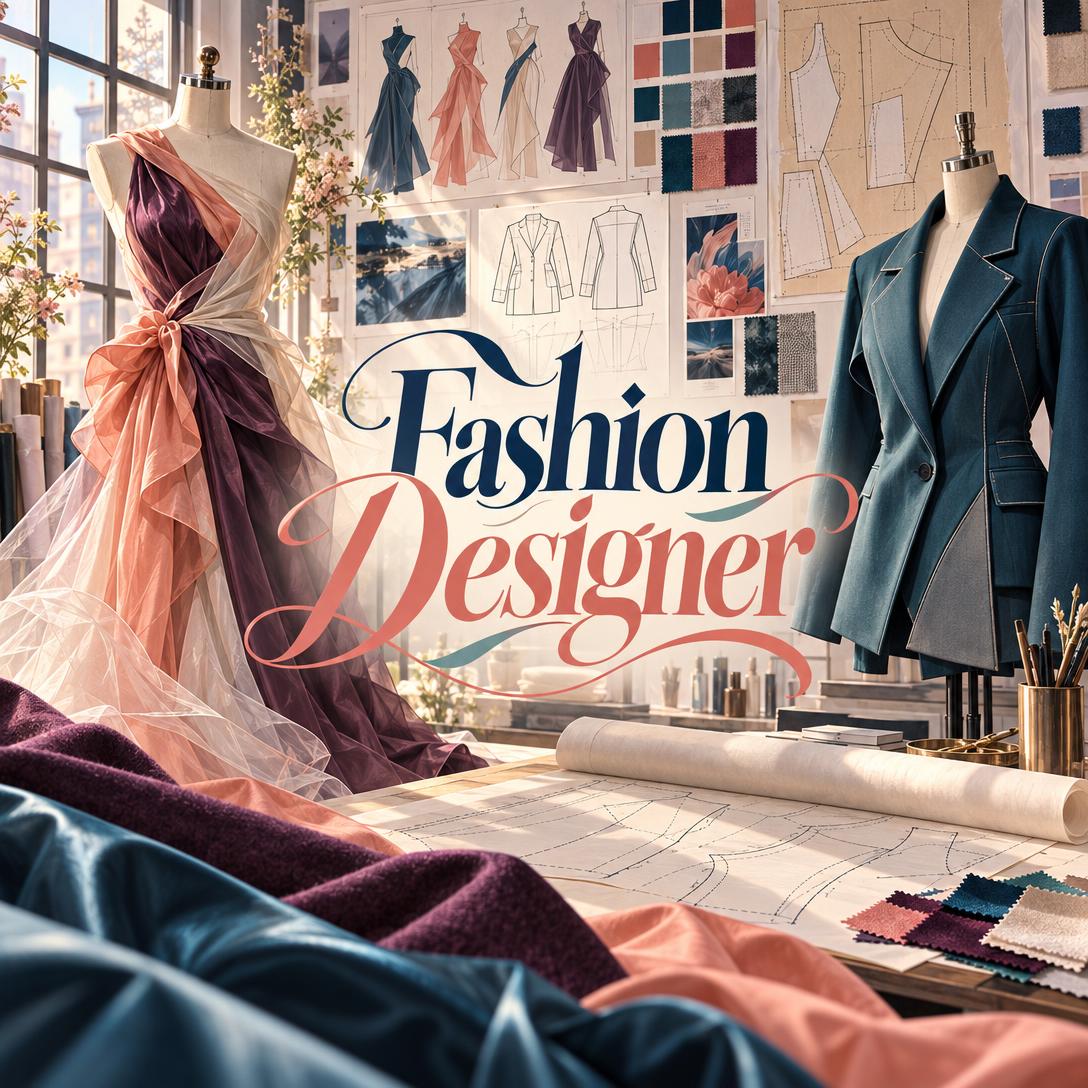
Fashion Designer helps you turn a loose idea into a buildable look. It pairs editorial fashion illustration with real construction and textile expertise.
Most AI image tools produce attractive pictures without considering how a garment is cut, sewn, or sourced. This AI fashion designer works from silhouette, fabric behavior, and production constraints, so each look it creates gives a pattern maker something practical to start from.
- ✅ Generates full-look fashion illustrations, mood boards, print concepts, and detail studies on request
- ✅ Grounds each design in fabric weight, drape, and construction logic, from bias-cut silk to canvassed tailoring
- ✅ Plans collections from 5-look capsules to 30+ look runway lineups, including color stories and range balance
- ✅ Adapts to your level, using plain language for enthusiasts and toile-and-grainline depth for working designers
Design software keeps getting more capable, yet the gap between a sketch and a sellable garment remains wide. Margins are tight, waste regulations are getting stricter, and every sample uses real fabric and money. To see why a design partner that understands construction matters, consider the pressures facing independent designers, fashion students, and small labels right now.
Quick Answer: What Is Fashion Designer?
Fashion Designer is an AI design partner that turns garment ideas into editorial fashion illustrations, fabric strategies, and coherent collection plans grounded in real construction and production constraints. It works across luxury, ready-to-wear, streetwear, bridal, and activewear.
Key capabilities:
- Full-look illustrations and editorial concepts generated from a written description or an uploaded reference image
- Silhouette and fabric guidance based on weight class, drape behavior, and construction drivers
- Collection architecture, covering narrative arc, color story, fabric rationalization, and carry-through details
- Trend interpretation and candid design critique of your own sketches
The Creative Challenges Facing Fashion Designers Today
The industry is cautious. According to McKinsey's State of Fashion 2025 report, non-luxury segments are driving profit growth for the first time in over a decade. Designers now need strong ideas that still work at accessible price points.
$70–140 billion — Estimated annual value of fashion overproduction and excess stock
Waste is now a compliance issue as well as an ethical one. Under the EU's Ecodesign for Sustainable Products Regulation, large enterprises are prohibited from destroying unsold textiles and footwear as of July 19, 2026. Medium-sized companies follow by 2030. Overproduction starts with design decisions, and so do the fixes.
Up to 70% — Reduction in material waste reported for digital apparel design compared with physical sampling
Turning a concept into a collection that is both compelling and manufacturable remains difficult:
- Sketches that ignore construction. A beautiful drawing with seams that lead nowhere and no closures becomes a problem at the toile stage.
- Fabric guesswork. A structured shoulder needs fabric that holds shape, and a fluid drape needs fabric that moves. If you pick the wrong weight class, the design fails in sampling.
- Incoherent ranges. Pieces that each look good alone often don't add up to a collection with a clear visual story.
- Production pressure. Shipping delays, rising freight costs, and regulatory compliance all reduce how much room you have to correct mistakes late in development.
Why Generic AI Image Tools Fall Short
General-purpose image generators can render the appearance of a garment. They have no model of grainline, ease, or how organza behaves differently from charmeuse.
The result often looks appealing on screen but cannot be built. Designers then spend time translating a fantasy back into reality instead of developing their ideas.
This AI design partner was built to close that gap.
How Fashion Designer Works: From First Idea to Finished Look
Step 1: Describe the Piece or Upload a Reference
Start a session with this AI fashion design partner by naming a garment and a direction. You can also upload an inspiration photo, a sketch, or a mood image. A garment type plus an aesthetic cue is enough for it to begin generating.
"Design a fluid evening gown in plum silk charmeuse with a coral organza overlay. Romantic but modern, floor-length, with a sculpted bow at the hip."
Step 2: Let It Set the Design Direction
Before generating, the agent works through silhouette strategy, fabric palette, color story, construction approach, cultural or historical references, and market positioning. It fills gaps with strong defaults. If your request is too bare to design well, it asks at most a couple of focused questions.
"I want a capsule inspired by 1990s minimalism, think Jil Sander and Helmut Lang, but for a contemporary price point."
Step 3: Review the Illustration and Design Rationale
The illustration comes first, followed by short notes explaining the key decisions. For the gown above, that might include why organza holds sculptural volume while charmeuse is better suited to bias-cut fluidity. You can also switch image generation models with the App button beneath the chat input, since some models render fabric better and others handle figures or editorial mood better.
Step 4: Explore Variants or Refine One Direction
When you are still searching for a direction, ask for distinct variants with genuinely different silhouettes, fabric strategies, and moods. Once you approve a direction, refinements stay precise: everything you didn't mention is preserved.
"Keep everything, but drop the waistline two inches and swap the coral overlay for dusty rose."
Step 5: Build Out the Full Collection
Once a direction is locked, each new look is generated as a separate image that references earlier outputs for consistency. The agent tracks your collection's arc (opening statement, commercial core, hero pieces, closing look) and suggests what to design next for range balance. You can compile approved looks into a PDF lookbook or a range plan spreadsheet.
"We have the opening coat and two day dresses. What does this collection still need before the closing look?"
You can try it free. The Free tier includes all core features with limited usage.
Creative Showcase: What You Can Create with an AI Fashion Designer
👗 A Coherent Capsule for an Emerging Label
Scenario: A designer launching a six-look spring capsule wants a clear story using as few fabrics as possible to stay within minimum order quantities.
Traditional Approach: Weeks of mood boarding, sketching, and swatch requests. Cohesion problems often surface only once first samples arrive.
Fashion Designer: The agent locks a direction, for example washed linen, cotton poplin, and a single deadstock silk in an undyed ecru and stone palette. It then threads a signature detail, such as exposed bound seams, through every look. Each illustration builds on the previous one, so the capsule reads as one collection.
- Fabric rationalization built in from the first look
- Collection arc planned across opening, core, and closing pieces
- Carry-through details that make the range recognizable
If you're also naming and branding the label, Brand Kit Generator can build the logo, palette, and typography system your hangtags and lookbook will need.
🧵 Fabric-First Problem Solving for Tailoring
Scenario: A contemporary brand wants its extended-shoulder blazer reworked for summer without losing its sharp silhouette.
Traditional Approach: Trial and error with multiple fabrics in muslin and first samples, each round adding cost and lead time.
With the agent: It explains which lighter tailoring fabrics can still hold an extended shoulder, where interfacing and canvassing choices change the result, and how much chest ease separates a fitted cut from an oversized one. It then illustrates the revised blazer in the new cloth.
- Construction feasibility checked before money is spent on sampling
- Clear trade-offs between drape, structure, and comfort
- Movement considered, including arm lift, sitting, and stride
📱 Reinterpreting a Vintage Find, Straight from Your Phone
Scenario: At a flea market, you photograph a 1980s power-shoulder jacket on your phone and want to see a modern version before deciding whether to buy it as reference.
Traditional Approach: Buy it, take it back to the studio, and sketch a reinterpretation days later.
With the agent: Upload the photo and describe your idea by voice using built-in speech-to-text. The agent identifies the silhouette cues (wide shoulders, nipped waist, era coding) and generates an updated look, such as a softened shoulder in fluid wool crepe with a longer, leaner line.
- Full feature parity across iOS, Android, and web
- Reference images treated as influences to adapt, never as templates to copy
- Session history syncs across devices for when you're back at your desk
🌿 Sustainable Collections and Zero-Waste Thinking
Scenario: A designer wants a made-to-order line built around circular principles.
Context: Demand is growing. The sustainable fashion market was valued at $10.2 billion in 2024 and is projected to reach $48.4 billion by 2032. Meanwhile, global fibre production reached 132 million tonnes in 2024, up from 125 million the year before, according to Textile Exchange data.
With the agent: It applies zero-waste pattern thinking, deadstock sourcing, and mono-material construction, since single-fiber garments are easier to sort and recycle. It also explains certifications such as GOTS and OEKO-TEX in practical terms.
- Design for disassembly, repair, and longevity
- Material choices that support environmental claims you can back up
- Smaller, smarter ranges that reduce overproduction risk
If you plan to sell made-to-order pieces direct to customers, Shopify Store Advisor can benchmark your store against competitors and identify where to focus next.
Frequently Asked Questions
What is an AI fashion designer?
An AI fashion designer is a tool that generates garment illustrations and design guidance from text or image prompts. The more useful ones go beyond rendering and account for silhouette, fabric behavior, construction feasibility, and how individual pieces fit into a collection. That grounding is what separates a usable design partner from a general image generator. It produces looks that can realistically move into patternmaking and sampling.
Is Fashion Designer free to use?
Yes. You can use the AI design partner on the Free tier, which includes all core features with limited usage. Paid plans start at Plus ($20/month) for 30× the free usage, custom model selection, and no watermarks. Higher tiers range up to Enterprise ($1,000/month) for heavy professional workloads. Usage resets monthly on your billing date, with no daily caps.
Can it create technical flats or production-ready patterns?
Not reliably. Image generation is strong at full-look illustrations, editorial concepts, mood boards, prints, and detail studies. Precise technical flats and multi-view spec drawings remain a weak point, and the agent says so directly. It does not replace patternmaking software such as Gerber or Lectra, or 3D simulation tools like CLO3D. It can, however, advise on darting, ease, seam placement, and closures before you draft.
Can Fashion Designer produce photorealistic on-model photos?
Fashion Designer focuses on fashion illustration and design development rather than photography. When you need photorealistic images of garments on models with studio lighting for lookbooks, pre-orders, or e-commerce listings, Fashion Mockup Studio is built for that step. Many designers use the two in sequence: develop and approve the look first, then produce the photography.
Does it work on mobile?
Yes. It runs with full feature parity on iOS, Android, and web, and your settings and chat history sync across devices. You can upload reference photos from your camera roll, dictate design ideas with speech-to-text, and review generated illustrations anywhere. This is useful for capturing inspiration at markets, museums, or fashion weeks.
Are my designs used to train AI models?
No. Your conversations and uploaded designs are never used to train public AI models. Data is encrypted in transit and at rest and is not sold or shared with advertisers. For designers developing unreleased collections, this means early concepts, sketches, and brand references stay private to your sessions.
Design Smarter Collections with an AI Fashion Designer
Fashion design has always required balancing vision with reality. That balance is harder now, with cautious consumers, tightening waste regulations, and production costs that penalize late-stage mistakes. A design partner that thinks in silhouettes, understands how fabric turns intent into form, and checks construction logic before you cut a toile reduces that friction.
Whether you're a student building a portfolio, an emerging designer planning a first capsule, or an established label testing a new direction, this AI tool for fashion design lets you iterate faster and waste less. You can arrive at sampling with ideas that are ready to be made.
Try Fashion Designer now and see how your next collection develops. Explore more at Jenova.
For Developers: Fashion Designer is available programmatically via the Jenova API. You can integrate fashion illustration and collection-development guidance into your design or e-commerce application with a single API call. Full documentation →