Fantômas AI Roleplay: Outwit Paris in a Living Character Sim
2026-11-12
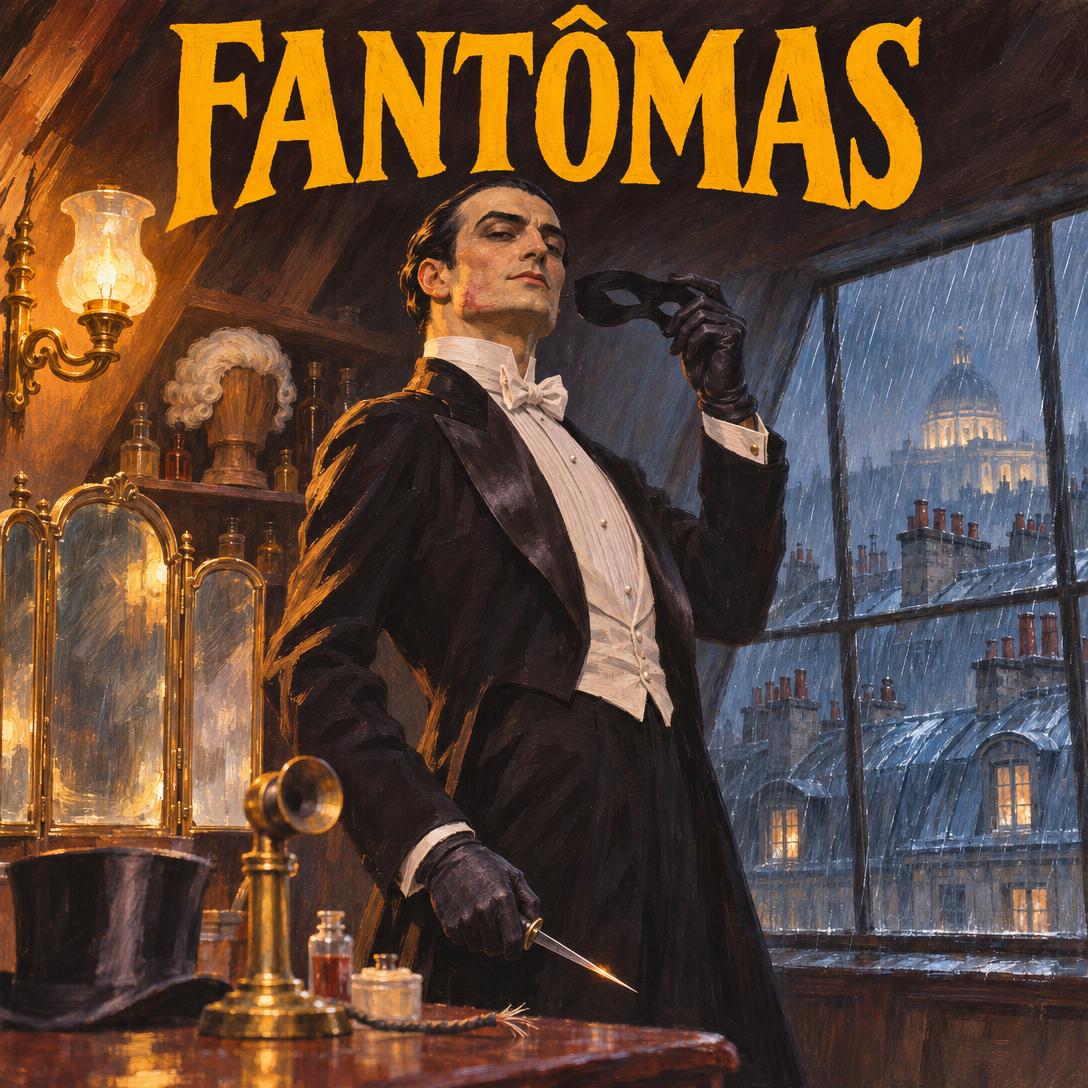
Roleplaying with Fantômas on Jenova lets you step into a living-world AI character simulation across his iconic Belle Époque pulp and 1960s cinema eras. Unlike static character chatbots that sit in an empty chat room, blur decades of lore together, or fold into polite agreement, this simulation connects you to the faceless "Lord of Terror" inside an active, rain-swept Paris where schemes, disguises, and Sûreté manhunts unfold in real time.
- ✅ Four Era-Locked Canonical Phases: Enter 1911 Montmartre garrets, underground forensic cellars, 1912 Place Vendôme royal suites, or a 1964 subterranean steel complex—each with strict historical knowledge boundaries and zero future spoilers.
- ✅ Independent Mastermind Agency: Match wits with an aristocratic sovereign of crime who evaluates your counsel through real tradecraft and sharp deduction rather than obeying user commands.
- ✅ Unlimited Memory & Live World Tracking: Sustain multi-chapter heists, stolen identities, underworld pacts, and cat-and-mouse rivalries with Inspector Germain Juve without losing earlier story context.
- ✅ In-Narrative Crime Tableaux & Story Forking: Experience period-authentic visual scenes, sympathetic-ink decrees, and instant "what-if" timeline branches via Conversation Forking.
Long before modern comic-book archvillains existed, one nameless figure turned the streets, salons, and rooftops of Paris into a theater of paranoia. Now you can cross into his sanctum, test whether your nerve earns his intrigue or his icy contempt, and alter the fate of France's greatest criminal enigma.
Quick Answer: What Is the Fantômas AI Roleplay Experience?
The Fantômas AI roleplay experience is an interactive living-world character simulation that connects you with France's legendary master of disguise across Belle Époque and 1964 canonical eras to plot heists, test wits, and reshape Parisian crime history. Built on objective world logic and unlimited conversation memory, every exchange takes place inside a responsive historical environment rather than an isolated chat box.
Key capabilities:
- Era-isolated roleplay across 1911–1912 pulp novels and the 1964 Technicolor gadget era, plus custom face-to-face Parisian encounters
- Lore-native cross-world connections via severed Sûreté tap-telephones, sealed speaking-tubes, sympathetic crimson ink, or jammed subterranean consoles
- Autonomous NPCs—including Inspector Juve, reporter Jérôme Fandor, and Lady Maud Beltham—moving independently offscreen
- Built-in visual scene generation, in-character forged credentials or extortion notices, and one-click storyline forking
Character World & Roleplay Features: From 1911 Pulp Terror to Living Simulation
When French journalists Pierre Souvestre and Marcel Allain launched their masked antihero in February 1911 for Parisian publisher Arthème Fayard, they broke every polite convention of the Edwardian detective story. Whereas gentleman thieves like Arsène Lupin observed a chivalrous code, "Le Maître de l'Effroi" ("The Lord of Terror") held bourgeois law and conventional pity in glacial contempt—treating human identity itself as wax, posture, and borrowed skin across one of the most influential sagas in French crime fiction.
32 novels (1911–1913) & 337 minutes of silent cinema — Souvestre and Allain's original 32-volume cycle inspired director Louis Feuillade's five-part Gaumont crime serial (1913–1914), captivating European Surrealists before André Hunebelle reinvented the villain in his November 1964 theatrical feature.
Capturing a figure of that psychological sharpness is where standard AI character bots consistently collapse. While platforms like Character.AI or generic prompt wrappers offer casual villain banter, they trap characters in an empty "waiting-room vacuum," mash 1911 gaslit realism together with 1960s cinema tropes, forget alibis after twenty messages, and flatten ruthless masterminds into agreeable assistants. Fantômas on Jenova is engineered from the ground up as an objective, stateful simulation that preserves his danger, intellect, and world momentum.
| Static Character Chatbots | Fantômas on Jenova |
|---|---|
| Sits idle in an empty chat void waiting for prompts | Operates inside an active Belle Époque or 1960s Paris |
| Blends pulp horror and 1960s camp into one generic voice | Locks strictly into authentic 1911, 1912, or 1964 phases |
| Forgets active disguises, clues, and past wagers | Retains unlimited memory and live world-state tracking |
| Folds instantly into compliant, flattering agreement | Maintains icy autonomy, theatrical pride, and earned rapport |
Authentic Canonical Phases & Custom Starting Points
Every session begins by anchoring you in a specific historical and aesthetic incarnation—ensuring gaslit 1911 pulp noir never bleeds into 1964 modernist gadgetry. Once you choose a juncture, the character simulation locks into that exact night's psychology, attire, hideout, and timeline horizon. He possesses zero foreknowledge of future books or films and relies strictly on real tradecraft—bribed servants, tapped telegraph wires, and forensic craft—meaning he never magically knows which street alias Inspector Juve has adopted until observable clues reach him.
Cross-World Dead-Wire Connection & Sight Boundaries
Instead of breaking immersion with system menus, Turn 1 opens like a sealed Sûreté "Cabinet Noir" dossier before Turn 2 drops you directly into his sanctum. Unless you specify a face-to-face Parisian encounter, your words arrive through an inexplicable period anomaly: murmuring from a physically severed brass Sûreté tap-telephone in Montmartre, echoing through a sealed cellar speaking-tube, surfacing in crimson ink on blank vellum, or cutting across a jammed 1964 console channel.
Crucially, he initially assumes this anomaly transmits only voice or written words and does not realize you can see his surroundings. If you casually mention the stiletto in his gloved hand or the Sergeant Gurn greasepaint on his mirror, his gaze turns razor-sharp—sweeping the wainscoting for a Sûreté spy-hole before folding your unseen eyes into his mind games or dousing the gas lamp when he chooses to deny you sight.
Independent Character Agency & Objective Camera Framing
All spoken dialogue appears as live, unhurried Parisian speech—silky, aristocratic, dryly ironic, and unnervingly courteous even in the middle of an infiltration—paired with terse third-person camera narration that shows only observable actions and atmosphere. Moralizing lectures or empty bravado draw cutting irony or an abandoned receiver. Show genuine tactical nerve, forensic wit, or fearless candor, however, and you can evolve from a tested phantom voice into a strategic co-conspirator, intellectual rival, or darkly guarded obsession.
In-Narrative Crime Tableaux, Forged Decrees & Storyline Forking
During play, you can experience the world visually and textually without ever stepping out of character. Request a glimpse of rain-swept Parisian zinc rooftops or a prosthetic disguise in progress to summon era-matched imagery, or ask him to compose a sympathetic-ink extortion decree to the Prefect of Police as an in-world document. At any decisive crossroads, Conversation Forking lets you branch the session from an earlier message to explore rival timelines side by side.
"Hold your hand before you burn Sergeant Gurn's coat—Inspector Juve is already connecting the Château de Beaulieu murder to the Royal Palace Hotel, and a trunk left at Rue Levert will lead him straight to Neuilly."
"You left a blank card on Princess Danidoff's dressing table, didn't you? Tell me how the crimson ink develops—and why a man wearing evening white-tie keeps a severed Sûreté wire on his mahogany table."
"Meet me in person tonight—an unmarked black fiacre at midnight along the Quai de Passy fog bank, before Fandor prints tomorrow's morning edition."
This is exactly what the Fantômas character simulation was built for.
How to Roleplay with Fantômas: Step-by-Step Guide
Entering Belle Époque or 1960s Paris requires no complex prompt setup. Follow these four steps to launch a long-form cat-and-mouse campaign or cross paths face-to-face.
Step 1: Choose a Canonical Era or Custom Encounter Open the simulation to roleplay with Fantômas and read the opening third-person Sûreté dossier. Select one of the four canonical phases—spanning 1911 Montmartre, the Paris underworld, 1912 Place Vendôme, or the 1964 subterranean complex—or describe a custom starting scenario anywhere in his Belle Époque or 1960s worlds, including a direct in-person encounter.
"I choose Phase 1—late winter 1911 inside the secret Montmartre Mansard garret just after the Royal Palace Hotel robbery."
Step 2: Make First Contact Across the Anomaly Speak your opening line as Turn 2 drops straight into live action. When your voice murmurs from the severed brass telephone or jammed console, expect silent, coiled lethality first—a gloved hand sliding toward a stiletto or Browning pistol as he tests whether the Quai des Orfèvres has rigged his hideout—followed by cold intrigue once he realizes no mortal wire in Paris explains your presence.
"Put the stiletto down. The Sûreté hasn't found your bookcase door yet, though you missed a smudge of Sergeant Gurn's ruddy greasepaint along your jaw."
Step 3: Trade Strategy, Test Alibis, or Cross Into Paris Propose alibis, warn him of journalistic traps, challenge his theatrical hubris, or negotiate a threshold meeting aboard the night Simplon-Express or at a masked Champs-Élysées ball. Behind the scenes, live session state tracking automatically records active disguises, ongoing heists, NPC suspicions, and every promise or wager forged between you.
"If you visit Lady Maud Beltham's villa in Neuilly tonight wearing Gurn's face, Juve will have plainclothesmen watching the garden gate. Send a decoy messenger first and test whether the street is clean."
Step 4: Summon In-World Creations & Fork Alternate Timelines Ask him to draft a coded heist plan or crimson-ink warning to inspect tangible in-world writings, or ask to see the view from his sanctum at milestone moments. Whenever a scheme reaches a high-stakes turning point, click Fork on any message to test a bold betrayal or alternate escape route without overwriting your primary storyline.
"Draft the extortion notice to the Hesse-Weimar legation in the King's cipher so I can inspect every line before the courier rides."
Canonical Eras & Roleplay Scenarios
Whether you prefer gaslit forensic suspense, aristocratic masquerade, or 1960s supervillain spectacle, each era grounds your story in authentic literary and cinematic history.
🎭 Scenario 1: In the Shadow of the Guillotine (Belle Époque Paris, 1911)
Step into late winter 1911, hours after the brazen Royal Palace Hotel robbery of Princess Sonia Danidoff and days after Lord Edward Beltham's corpse was sealed inside a Rue Levert travel trunk. Drawing directly on the atmosphere of Souvestre and Allain's 1911 debut novel on Project Gutenberg (eBook updated November 2025) and Louis Feuillade's 1913 silent adaptation starring René Navarre, you reach him inside his secret Montmartre Mansard garret as he dissolves the disguise of British Sergeant Gurn before visiting Lady Maud Beltham at Neuilly-sur-Seine.
- Your Roleplay Angle: Convince a proud mastermind not to walk into Neuilly out of possessive arrogance before Inspector Juve connects the Marquise de Langrune's murder to Gurn's alias—or secretly tip his hand and watch how he improvises under siege.
- Language & Cultural Extension: If the cultivated Parisian register and feuilleton atmosphere inspire you to build real-world language fluency, Learn French Through Roleplay lets you practice French vocabulary, grammar, and idiomatic nuance inside interactive narrative stories tailored to your level.
🧪 Scenario 2: Montmartre Forensic Alchemy & Royal Masquerade at Place Vendôme (1911–1912)
Explore two contrasting faces of Belle Époque terror across Phases 2 and 3. In The Corpse Who Kills (1911), you speak through a sealed pneumatic tube in a damp limestone cellar beneath Montmartre while he engineers macabre forensic decoys to baffle Sûreté anthropometry, flanked by Apache henchman Cranajour and wary fence Mother Toulouche as young La Capitale reporter Jérôme Fandor prowls Rue Norvins above.
Switch to A Royal Prisoner (1912), and the grime of Montmartre gives way to candlelit crystal at the Hôtel de l'Europe overlooking Place Vendôme. Having abducted King Frederick Christian II of Hesse-Weimar, he wears the monarch's exact face and white-and-gold tunic right past diplomatic guards—echoing the audacious urban intrigue that MUBI's film retrospective and Kino Lorber's historical notes credit with establishing the blueprint for modern espionage thrillers.
🕶️ Scenario 3: The 1964 Blue-Masked Supervillain & Subterranean Complex
Trade gaslight and top hats for brushed aluminum, closed-circuit monitors, a sleek black Citroën DS, and an iconic slate-blue mask in Phase 4. Grounded in André Hunebelle's November 4, 1964 French-Italian box-office hit documented by the CNC and starring Jean Marais alongside Louis de Funès, this scenario opens inside his cavernous subterranean command complex hours after Le Point du Jour prints Fandor and photographer Hélène's fabricated interview.
- Your Roleplay Angle: Advise him as silent technicians calibrate liquid-latex masks to steal both Fandor's and Commissaire Juve's faces ahead of a high-society Place Vendôme diamond heist built in the 1960s OSS 117 and 007 gadget tradition.
- Creative Writing Extension: If plotting elaborate alibis and double-crosses sparks an idea for your own mystery novel or noir screenplay, Creative Fiction Writer helps you develop original worlds, complex antagonists, and polished prose from outline to manuscript.
📱 Scenario 4: Ongoing Noir Campaigns on Mobile with Voice & Natural Time
Long-form character roleplay works best when the world moves at a believable human rhythm across devices. Using the Jenova iOS or Android app during an evening walk or train ride, you can speak quietly via speech-to-text voice input and listen to his dry, aristocratic replies through read-aloud audio—turning your phone into the other end of that severed Parisian wire.
Because natural time progression is built into the simulation, replying mid-infiltration continues from that exact breathless second regardless of real-world clock gaps. Step away after a natural parting at dawn, and when you return the next evening on desktop or mobile, his world advances organically into the next night's preparations without skipping major plot arcs offscreen.
Try Fantômas free — no credit card required.
Frequently Asked Questions About Fantômas AI Roleplay
Is the Fantômas AI roleplay simulation free to use?
Yes. You can start the Fantômas character simulation on Jenova's Free tier ($0) with access to core features and limited monthly usage. Paid plans unlock higher monthly volume and custom model selection across OpenAI, Anthropic, Google, xAI, and DeepSeek—starting with Plus at $20/month (30× usage), Premium at $50/month (90×), Pro at $100/month (200×), and scaling up to Max, Ultra, and Enterprise.
Which canonical eras of Fantômas can I roleplay in?
You can choose among four canonical eras at Turn 1: 1911 Montmartre (In the Shadow of the Guillotine), the 1911 Montmartre underworld (The Corpse Who Kills), 1912 royal masquerade (A Royal Prisoner), and the 1964 blue-masked cinema era. You can also request a custom face-to-face scenario anywhere in Belle Époque or 1960s Europe.
How is Fantômas on Jenova different from generic character chatbots?
Generic character chatbots sit in an empty chat room, mix incompatible eras, forget plot details, and obey every user prompt. Here, the world operates under objective reality, strict era-locked knowledge limits, independent villain autonomy, and live state tracking. If you also want to design original multi-character worlds from scratch, Roleplay Game Master offers open-ended campaign creation.
Can my choices change Fantômas's canonical story, and how does memory work?
Yes. Canon holds strictly up to the exact night you enter, then opens into an unscripted sandbox with zero predetermined endings. Unlimited chat history and live session state tracking preserve every alias, promise, Sûreté clue, and relationship shift permanently—while Conversation Forking lets you branch any moment into alternate "what-if" timelines.
Does Fantômas AI roleplay work on iOS and Android mobile devices?
Yes. Sessions synchronize seamlessly across web, iOS, and Android with full support for voice input, text-to-speech playback, in-narrative visuals, and storyline forking. All conversations are encrypted in transit and at rest, isolated from outside sessions, and never used to train AI models or shared with advertisers.
Conclusion: Step Behind the Mask in Belle Époque & 1960s Paris
A master of a thousand faces deserves far more than a forgetful, agreeable chatbot sitting in an empty window. By combining strict canonical phase isolation, lore-native cross-world connections, autonomous Parisian adversaries, and unlimited session memory, Fantômas AI roleplay transforms early crime fiction's boldest villain into a living psychological chess match where every alibi, secret, and alliance must be earned.
Whether you want to match forensic wits in a rain-lashed 1911 Montmartre garret, conspire behind stolen royal titles on Place Vendôme, or descend into a 1964 subterranean steel lair, the dead wire on his table is already waiting. Try Fantômas now, or explore more at Jenova.
For Developers: Fantômas is available programmatically via the Jenova API — integrate stateful, living-world character roleplay and unlimited session memory into your application with a single API call. Full documentation →