AI Fantasy Laws Generator: Design Legal Codes, Courts & Punishments
2026-10-24
Game Designer Assistant works as an AI fantasy laws generator. It builds complete legal systems for your world, including statutes, courts, enforcement, and sentencing, by reasoning from your setting's gods, governments, magic, and history. Many worlds handle law with a single line like "theft is punished by death." This AI gives you a working justice system that creates conflict for your characters and choices for your players.
As of October 2026, worldbuilders, game masters, and indie developers increasingly want generators that do more than roll random laws from a table. They want laws that fit the internal logic of their world.
- ✅ Generates laws grounded in your world's source of authority: divine, royal, judicial, or tribal
- ✅ Designs courts, enforcement bodies, and punishments that match your setting's culture and tech level
- ✅ Turns legal codes into plot hooks, quest triggers, and gameplay systems
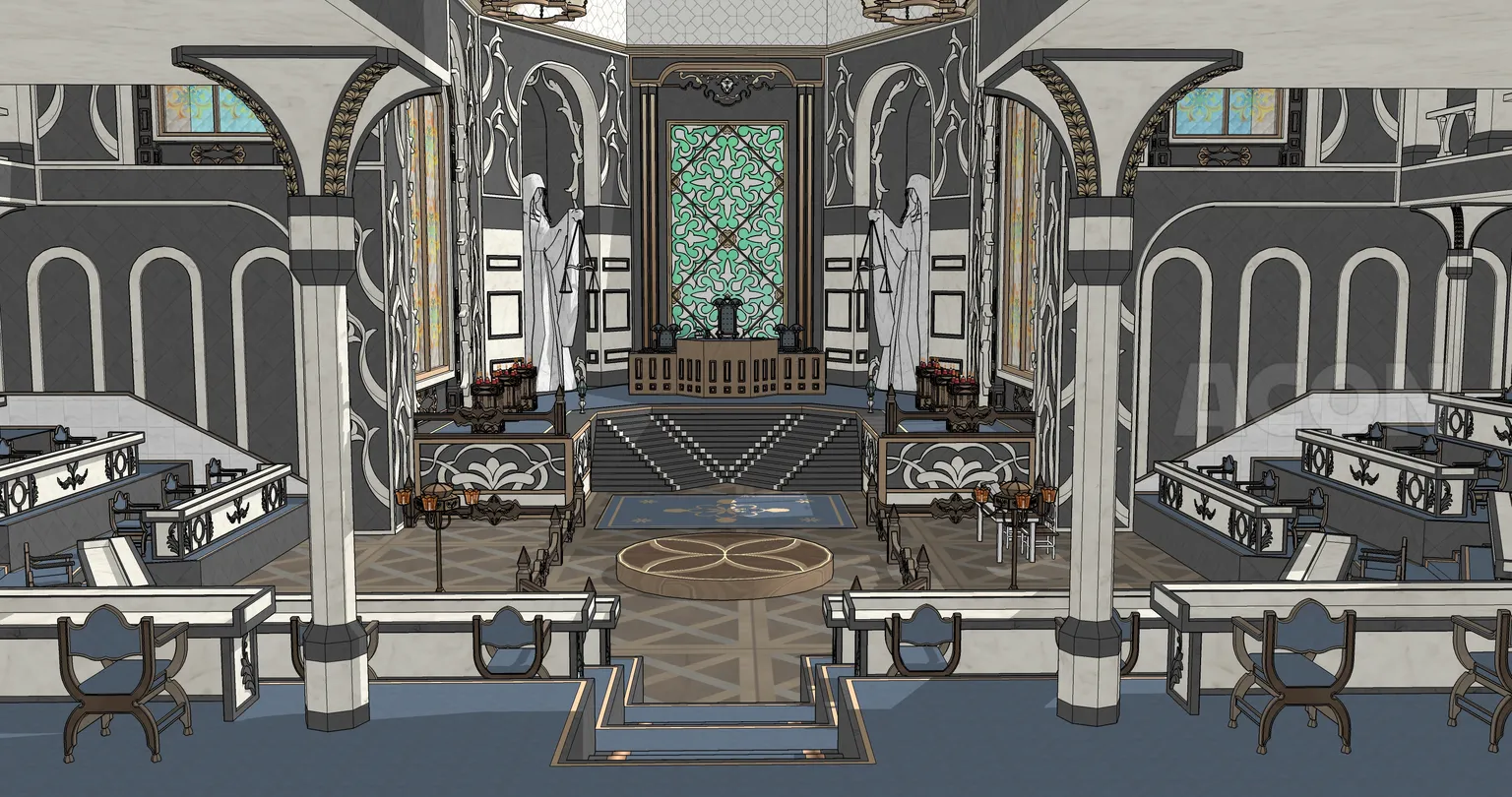
- ✅ Produces concept art of courtrooms, throne rooms, and halls of justice
Law touches nearly every part of a believable society: trade, inheritance, religion, war, and who gets to wield magic. To see why a dedicated generator helps, it is worth looking at why fantasy legal systems are so hard to get right.
Quick Answer: What Is an AI Fantasy Laws Generator?
An AI fantasy laws generator is a worldbuilding tool that creates legal codes, crimes, punishments, courts, and enforcement systems for fictional settings, tailored to each world's religion, politics, magic, and culture. Unlike random tables, it keeps every law consistent with your established lore.
Key capabilities:
- Derives a legal tradition (civil, common, religious, or customary) from your world's foundations
- Drafts specific statutes, including magic regulation, guild charters, and inheritance rules
- Designs judicial institutions, from village moots to imperial high courts
- Converts laws into story conflict or game mechanics like bounties, fines, and reputation
The Problem: Why Fantasy Legal Systems Usually Fall Flat
Most settings need some kind of legal system, even a simple one. As The Art of World Building notes, that can be as basic as "an eye for an eye." The challenge is depth. Real legal history is enormous. One Worldbuilding Stack Exchange discussion describes the history of law in pre-industrial states as "as sprawling and complex as can be imagined."
About one-third of the Earth: The reach of common law, which began in England's royal courts and spread through the British Empire
2 foundational schools of legal thought: Natural law and legal positivism, which shape how a society defines what is "legal"
But building a convincing fantasy legal system is difficult:
- Laws without a source: Writers often invent rules without deciding where authority comes from, such as gods, a sovereign, or judicial precedent. Without that foundation, the laws feel arbitrary.
- Sham or missing systems: Practicing attorney Garren Jacobsen observes in Mythic Scribes that many fictional legal systems are either so broken the populace would have torn them down, or they do not exist at all.
- Too many moving parts: A full justice system covers legal codes, enforcement, courts, and sentences. It also has to fit alongside the metaphysical and magical laws already governing your world.
- Laws that never matter: A legal code that never affects characters or players is dead weight in a lore document.
Game Designer Assistant was built for exactly this kind of systems-level worldbuilding.
Why Game Designer Assistant Works as a Fantasy Laws Generator
Game Designer Assistant approaches law the way it approaches any game system. It looks at inputs, incentives, consequences, and how each piece connects to the rest of your world. You describe your setting, and it reasons about what kind of legal tradition that society would plausibly develop. Then it drafts the specifics: what is forbidden, who judges, who enforces, and what happens to those who break the rules.
The result is a legal framework you can use in play or on the page, not a disconnected list of edicts.
| Traditional Approach | Game Designer Assistant |
|---|---|
| Rolling on random law tables that ignore your lore | Laws derived from your world's gods, government, and magic |
| Weeks of reading legal history to understand systems | Instant explanations of civil, common, and religious traditions applied to your setting |
| Static legal codes that never come up in play | Laws designed as plot hooks, quest triggers, and gameplay mechanics |
| Separate tools for writing, documentation, and visuals | Brainstorming, systems analysis, documentation, and concept art in one place |
| Contradictions that pile up as your world grows | A partner that remembers your established canon across sessions |
Derives Law From Your World's Metaphysics
Do your gods actively intervene? If so, Mythic Scribes' analysis suggests your society likely leans toward natural law, where rulers claim divine right. If your gods are silent or absent, a positivist system, where the sovereign simply declares the law, fits better. The AI works through these foundations first, so every later statute has a coherent root.
"My world has three active gods who speak through oracles. Design a legal system where religious law and royal decrees sometimes conflict."
Matches Law to Culture and Technology
Not every society can sustain a codified legal system. The Art of World Building points out that civil and common law systems are unlikely among nomadic peoples or civilizations without written language, because they cannot record and store laws for reference. Your nomadic steppe clans get oral customary law and elder councils. Your dwarven holds get stone-carved codices and archivist-judges.
Turns Statutes Into Plot and Gameplay
Worldbuilding in games lays out the actions players can take and the choices they need to make. The AI designs laws with consequences in mind: smuggling routes that exist because of tariffs, outlawed schools of magic that create black markets, and travel restrictions that force party members to split up.
"Create five laws in the port city of Varrow that would naturally generate side quests for a level 3–5 adventuring party."
Designs Courts, Enforcement, and Sentencing
Who arrests a lawbreaker? Watchmen, temple inquisitors, bounty hunters, or a summoned spirit? Who judges? Does precedent bind the judge? The AI builds the full chain from accusation to sentence, including appeals, pardons, and the corruption that creeps into every system.
Visualizes Your Halls of Justice
Because the agent produces concept art, you can see the high court of your empire or the moot circle of your forest folk. These visuals work well as reference for level designers, illustrators, or handouts at your gaming table.
Related Agents You'll Also Find Useful
Legal systems connect to politics, history, and game mechanics. If you are building a full world, these agents fit naturally into the same workflow.
Deep Research
If you want your fantasy laws to echo real history, such as the Code of Hammurabi, Roman law, or medieval trial by ordeal, Deep Research searches hundreds of sources and synthesizes findings with inline citations.
- Comprehensive reports on historical legal traditions
- Rigorous citations you can verify
- Useful for grounding fictional law in real precedent
Machiavelli Mentor
Laws are instruments of power. If your story involves court intrigue, coups, or factions bending the law to their will, Machiavelli Mentor helps you think like the players in that game.
- Power mapping across factions and institutions
- Incentive decoding for nobles, judges, and guilds
- Multi-move campaign planning for political plots
Trading Card Game Creator
If you are turning your world into a card game, Trading Card Game Creator can convert laws, edicts, and courts into playable mechanics.
- Card mechanics and balance from concept to playable set
- Lore integration so cards reflect your world's rules
- Card art generation
Try Game Designer Assistant free, with no credit card required.
How to Generate Fantasy Laws With AI: Step-by-Step
Step 1: Describe Your World's Foundations
Open Game Designer Assistant and outline the essentials: government type, religion, how magic works, the literacy level, and major cultures. The more context you provide, the more grounded the laws will be.
"The Kingdom of Aldmere is a feudal monarchy. The Church of the Dawn is powerful but not ruling. Magic is rare, inherited, and feared. Most commoners can't read."
Step 2: Establish the Source and Type of Law
Ask the AI to determine where legal authority comes from and which tradition fits. The choice has real consequences. Under civil law, a judge has no authority if no law has been broken. Under common law, a judge facing a new case can effectively create law.
"Should Aldmere use precedent-based law or a written royal code? Explain how each would change the way a trial plays out for an accused mage."
Step 3: Generate Specific Laws, Crimes, and Punishments
Request statutes organized by category: magic, trade, property, religion, nobility, and travel. Ask for punishments scaled to severity and social class, along with the reasoning behind each law.
"Write a 12-article Magic Registration Act for Aldmere, including penalties, exemptions for nobility, and who enforces it."
Step 4: Build Courts and Enforcement Institutions
Design the people and places of justice. That includes magistrates, inquisitors, city watch, jails, and execution grounds. Request concept art of key locations to anchor the visual identity.
"Design the Royal High Court of Aldmere: its judges, procedures, and appeals process. Then create concept art of the courtroom."
Step 5: Stress-Test and Document Your Legal System
Run scenarios to find loopholes, contradictions, and story opportunities. Then have the AI compile everything into a structured lore document for your series bible or game design doc.
"A foreign merchant unknowingly breaks the Magic Registration Act. Walk through what happens from arrest to sentencing, and flag any loopholes he could exploit."
Results & Use Cases
🎲 Tabletop GM Ruling Mid-Session on Mobile
Scenario: A D&D party's rogue pickpockets a noble in a city whose legal code you never wrote. The players want to know the consequences right now.
Traditional Approach: Improvising a punishment that contradicts lore you set up three sessions ago, or stalling the game to flip through notes.
With your worldbuilding partner: You type a quick prompt on your phone and get a ruling consistent with the city's existing laws, plus a complication to keep the scene moving.
- A fast, lore-consistent ruling at the table
- Built-in escalation options, such as fines, bounties, or a magistrate's summons
- No need to break immersion
📖 Novelist Building a Trial Scene
Scenario: A fantasy author's protagonist is arrested in a foreign kingdom for something perfectly legal back home.
Traditional Approach: Researching comparative legal history for days to make the trial feel credible.
With Game Designer Assistant: The AI designs the foreign legal code, court procedure, and the specific law the character broke. This mirrors a device The Art of World Building recommends: characters getting into trouble while traveling because they do not know the local laws.
- Court procedure that feels authentic without a law degree
- Tension built into the system's rules, such as no right to counsel or trial by ordeal
- Character development through legal conflict
🎮 Indie Developer Designing a Crime System
Scenario: A small studio is building an open-world RPG with regional laws that affect NPC reactions, bounties, and guard behavior.
Traditional Approach: Hand-authoring dozens of rules per region in spreadsheets, often disconnected from the game's lore.
With the AI: Laws are designed alongside the mechanics they trigger, in line with the view that worldbuilding can shape game design more critically than narrative alone.
- Region-specific law tables tied to gameplay systems
- Faction-based enforcement variations
- Design documentation ready for the team

👑 Worldbuilder Plotting a Regime Change
Scenario: A campaign's arc ends with a rebellion overthrowing a divine-right monarchy, and the new government needs a new legal order.
Traditional Approach: Vague hand-waving about a "new council" with no real legal identity.
With Game Designer Assistant: The AI models how the old and new legal philosophies clash. A rebellion grounded in natural law speaks of inalienable rights, while a positivist one demands practical protections. Pair it with Machiavelli Mentor to plan the power struggle.
- Distinct political rhetoric for each faction
- A transitional legal code with realistic gaps and abuses
- New plot threads from the abandoned courts of the fallen regime
Frequently Asked Questions
Is there a free AI fantasy laws generator?
Yes. Game Designer Assistant is available on Jenova's free tier, which includes all core features with limited monthly usage. Writers and game masters who need more capacity can upgrade to Plus at $20/month for 30× the free usage and custom model selection. Higher tiers are available for heavy worldbuilding work. Usage resets monthly on your billing date, with no daily caps.
How is an AI fantasy laws generator different from a random law table?
Random tables roll disconnected results, such as "Wearing blue is illegal," with no connection to your world. An AI fantasy laws generator reasons from your setting's religion, government, magic, and culture, so each law has a plausible origin and consequences. It also adapts when you push back or add new lore, keeping your legal system internally consistent as your world grows.
Can Game Designer Assistant create laws regulating magic?
Yes. Magic regulation is one of the most story-rich areas of fantasy law. Game Designer Assistant can draft licensing acts, banned schools of magic, inquisitorial courts, and punishments specific to magical crimes. It can also design how magic changes the justice system itself, for example truth-compelling spells in trials or wards on prison cells.
Does the fantasy laws generator work on mobile?
Yes. Jenova offers full feature parity across web, iOS, and Android, with settings synced across devices. Game masters can generate rulings at the table from their phones, and writers can brainstorm legal codes on the go. Speech-to-text input lets you describe a scenario aloud instead of typing it.
How do I make fantasy laws feel realistic?
Start with the source of legal authority, then match the system to your society's literacy, technology, and religion. Ground your laws in real precedents using a research tool like Deep Research. Also consider the historical and political contexts that would have produced each law. Laws feel real when they reflect who holds power and why.
Conclusion
A fantasy world without a working legal system is missing much of its society. Laws decide who holds power, who is persecuted, what is traded in shadow markets, and why your characters end up in chains. Building one by hand means working through legal philosophy, comparative history, and endless consistency checks.
An AI fantasy laws generator handles that complexity. You get legal codes, courts, enforcement, and punishments that grow from your world's foundations and feed directly into story and gameplay. Whether you are writing a fantasy novel, running a tabletop campaign, or designing an RPG crime system, your world's justice system can become a source of conflict and depth.
Try Game Designer Assistant now to start drafting your world's first legal code. Explore more at Jenova.
For Developers: Game Designer Assistant is available programmatically via the Jenova API. You can integrate AI-powered worldbuilding and fantasy law generation into your game tools or writing apps with a single API call. Full documentation →