AI Fantasy Festival Generator: Lore, Rituals, Feasts & Quest Hooks
2026-10-24
Creative Fiction Writer works as an AI fantasy festival generator. It builds complete celebrations from a single prompt, including origin myths, rituals, feast menus, music, and the trouble brewing beneath the lanterns. A random table gives you a festival name. This tool gives you a festival shaped by your world's gods, seasons, trade routes, and grudges.
Most game masters and novelists know a festival can change the pace of a session or a chapter. Few have the hours it takes to design one with real cultural depth. As of October 2026, this AI produces scene-ready festivals in polished prose that fit the world you've already built.
- ✅ Generates full festival profiles: purpose, calendar timing, rituals, cuisine, decorations, and games
- ✅ Grounds invented traditions in research on real-world celebrations without copying them
- ✅ Writes read-aloud boxed text, chapter scenes, and in-world documents like proclamations and songs
- ✅ Builds in quest hooks, rivalries, and secrets so the festival moves your story forward
A good festival shows how a culture celebrates, what it fears, and who profits while everyone else is dancing. That is why festivals reward careful design and fall flat when improvised. To understand where an AI generator fits, start with why fantasy festivals are so hard to build well, and why the usual shortcuts leave GMs and writers with a name and not much else.
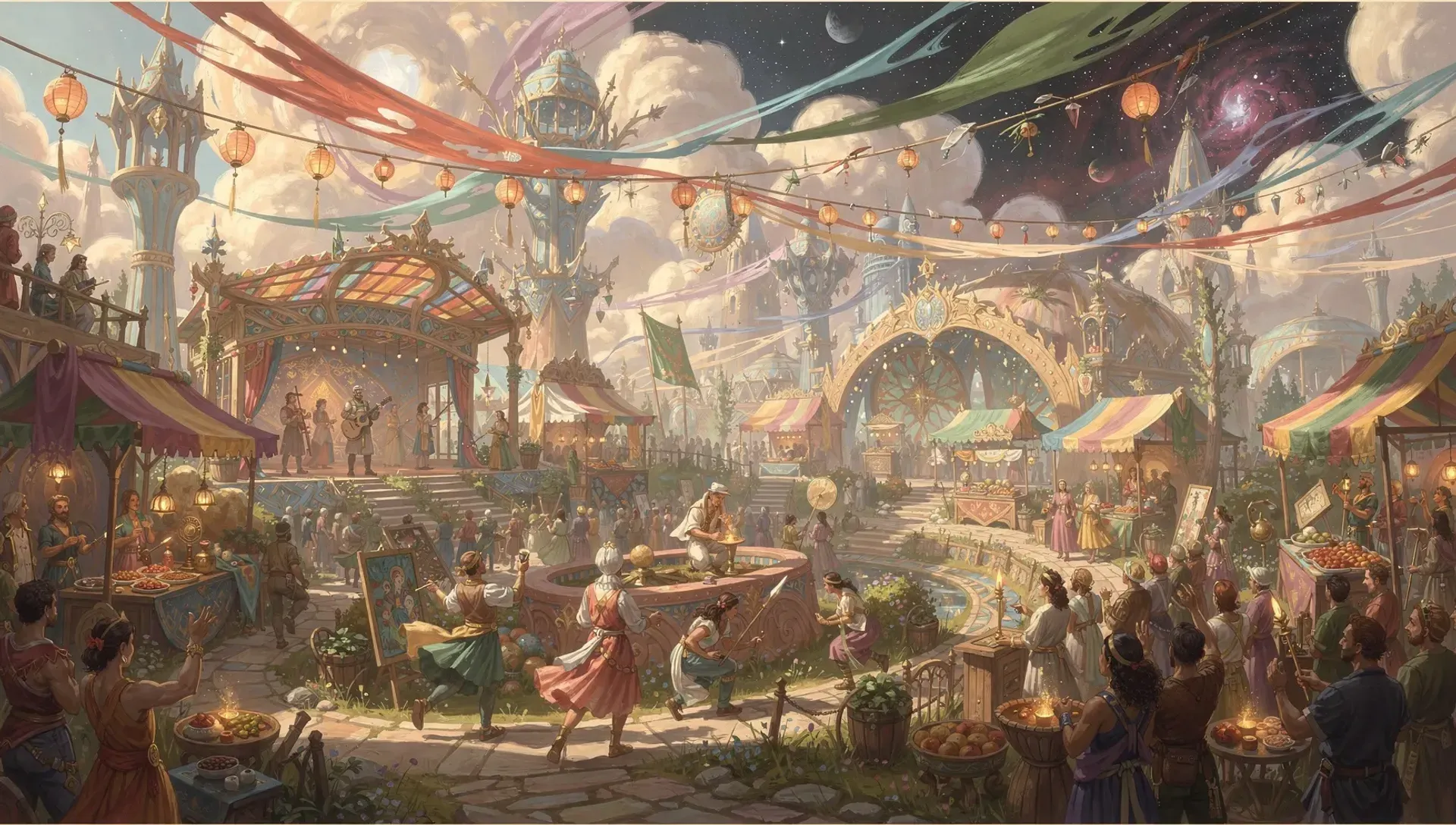
Quick Answer: What Is an AI Fantasy Festival Generator?
An AI fantasy festival generator is a worldbuilding tool that turns a short prompt into a complete fictional celebration, covering its origin, rituals, food, music, and plot hooks, tailored to your setting in minutes. Unlike static random tables, it adapts each festival to the cultures, religions, and conflicts you describe.
Key capabilities:
- Festival concepts tied to your world's calendar, climate, and belief systems
- Sensory scene writing covering sights, sounds, smells, and tastes
- Embedded adventure hooks, NPC agendas, and festival-specific competitions
- Revisions and variations, from a solemn regional rite to a raucous city-wide fair
Why Fantasy Festivals Are Hard to Build From Scratch
Festivals have become a staple of modern campaign design, and the audience for that content keeps growing. Tabletop roleplaying is now a multi-billion-dollar category:
$2.31 billion: Global tabletop role-playing game market value in 2025, per Fortune Business Insights
USD 5.05 billion by 2034: Projected TTRPG market size, up from USD 2.06 billion in 2025, per Market Reports World
Festivals do specific work in that play. As Geek Native notes, a GM or worldbuilder can insert a fantasy festival to shake up a campaign's pacing or drop unexpected quest hooks. For novelists, author A. K. Wilder argues on Writerspace that celebrations reveal a character's beliefs and family relationships without dense exposition.
But building one that holds up is surprisingly difficult:
- Too many interlocking decisions. A believable holiday needs answers on timing, duration, celebratory cuisine, regional variations, decorations, gifts, and who leads the prayers. Scribes & Archers breaks this into dozens of questions per festival.
- Random generators stop at the seed. Tools like the Fantasy Name Generators holiday description generator and Scabard's festival name generator give fast inspiration: a name and a short backstory. Turning that seed into a playable scene connected to your setting is still your job.
- Real-world copies break immersion. The same Scribes & Archers guide warns that a winter holiday called "Yulemas" makes readers wonder whether your secondary world secretly connects to Earth.
- Festivals must earn their page count. A celebration with no stakes reads like padding. It needs conflict, secrets, or consequences to justify the time players or readers spend inside it.
This is exactly the gap an AI fiction partner was built to fill.
Why Creative Fiction Writer Works as a Fantasy Festival Generator
Creative Fiction Writer is a storytelling partner for original fiction in any genre. Its strengths fit festival design closely: deep research for authentic worlds, expert editorial insight, and polished prose from first draft to final manuscript. You describe your setting, and it answers the questions that usually stall worldbuilders, connecting each answer to the culture you've established.
The result is a festival with a reason to exist. It has an origin people still argue about, food that only appears once a year, and a tradition that a faction quietly resents.
| Traditional Approach | Creative Fiction Writer |
|---|---|
| Roll a festival name on a random table, then invent everything else | Full festival profile generated from your setting's details |
| Hours answering timing, food, ritual, and decoration questions | Interlocking answers that follow your world's logic |
| Real-world holidays reskinned, which risks broken immersion | Research-informed traditions transformed into original customs |
| Flat descriptions that tell rather than show | Sensory, scene-ready prose for boxed text or chapters |
| Festival as backdrop with no stakes | Conflicts, secrets, and hooks built into the celebration |
Festivals That Follow Your World's Logic
Tell the AI that your river city depends on spring floods, worships a drowned goddess, and has a powerful lantern-makers' guild. It will build a festival where those facts reinforce each other. Picture a night vigil where lanterns bearing the names of the drowned are floated downstream, and where the guild controls who may buy one.
Sensory Detail That Puts Readers in the Crowd
Writerspace highlights the sights, sounds, smells, textures, and tastes that make fiction feel true. The AI writes at that level: honey-glazed river eel sold from barges, the hiss of wax hitting water, children chanting a counting rhyme for the dead.
Research-Backed Traditions, Not Thin Copies
Harvest rites, ancestor days, and carnival inversions have real-world precedents worth studying. The AI draws on those patterns for plausibility, then reshapes them so your festival feels native to your world rather than borrowed.
Built-In Conflict and Quest Hooks
Every generated festival can include tension points. A pickpocket ring may work the crowd, a rival noble house may sabotage the procession, or a ritual may be quietly failing. For GMs, these become optional hooks. For novelists, they become scene turns.
Editorial Feedback on Your Own Drafts
Already wrote a festival scene that isn't landing? Paste it in for an editorial pass on pacing, exposition density, and whether the celebration reveals character the way it should.
Example prompts:
"Generate a midwinter festival for a mountain dwarf kingdom that worships its ancestors. Include the origin myth, three rituals, the feast menu, and one secret the clergy is hiding."
"My elven port city trades with human kingdoms. Create a festival where both cultures participate but disagree about its meaning, and give me two quest hooks for a level 5 party."
"Rewrite my harvest festival scene so it shows the protagonist's estrangement from her family through the rituals, not through internal monologue."
Related Agents You'll Also Find Useful
A festival rarely ends with its description. If you're also building the games, names, music, and handouts around it, these agents extend the workflow.
Game Designer Assistant If you're running the festival as a playable session, this agent helps you design the systems behind it. Brainstorm contest rules, balance festival mini-games, and document everything cleanly.
- Brainstorming and systems analysis for competitions and challenges
- Concept art to show players the festival grounds
- Expertise across genres and platforms
Name Generator Festivals are full of things that need names: the holiday itself, its saints, its foods, and the NPCs running the stalls. This naming consultant brings cultural and linguistic fluency so names feel consistent with your world's languages.
- Character, place, and event naming with linguistic depth
- Culturally coherent naming conventions
- Strategic options rather than random strings
Poster Maker Turn your festival into a physical prop. A printed festival proclamation or event poster on the table makes a celebration feel real to players.
- Event posters and promotional designs
- Wall art and infographic layouts
- Professional results suited for printing
Lyric Writer Every festival needs a song: a drinking chant, a solemn hymn, or a children's rhyme with a dark origin. This songwriting partner writes singable lyrics in any style.
- Genre mastery across musical styles
- Attention to singability for table performance
- Lyrics in any language
Try it free, no credit card required.
How to Generate a Fantasy Festival With AI
Step 1: Share Your World's Anchors Open the AI fiction partner and give it the essentials: the culture celebrating, its religion, climate, economy, and current tensions. Three or four sentences is enough to start.
"The festival takes place in Varrow, a coastal trade city ruled by a merchant council. They worship a tide goddess, and there's simmering tension with inland farmers over grain prices."
Step 2: Define the Festival's Purpose Decide what the celebration commemorates. It could honor a god, mark a season, or remember a historical event. Purpose determines timing, tone, and who participates.
"Create a festival commemorating the night the city survived a great storm surge. It should be part mourning, part celebration, and last three nights."
Step 3: Layer Rituals, Food, and Sensory Detail Ask for the traditions that make the festival distinct: what people eat, wear, hang, sing, and avoid. Request regional or class variations so the festival feels lived-in rather than uniform.
"Describe the food, decorations, and three key rituals. Show how the nobility and dockworkers celebrate differently."
Step 4: Add Stakes and Hooks Request the conflict layer. Ask for factions with agendas, a secret beneath the ritual, or an event that could go wrong. GMs can specify party level or campaign arc.
"Give me three quest hooks tied to the festival, one involving the farmer tensions, and an NPC who wants to disrupt the final night."
Step 5: Convert to Your Final Format Ask for boxed read-aloud text, a full chapter scene, an in-world history excerpt, or a one-page GM reference. Then revise until it fits your voice.
"Write a 200-word read-aloud description for when the party arrives on the first night, plus a one-page GM summary."
Fantasy Festival Generator Use Cases for GMs and Writers
🎲 Prepping a Mid-Campaign Festival Session
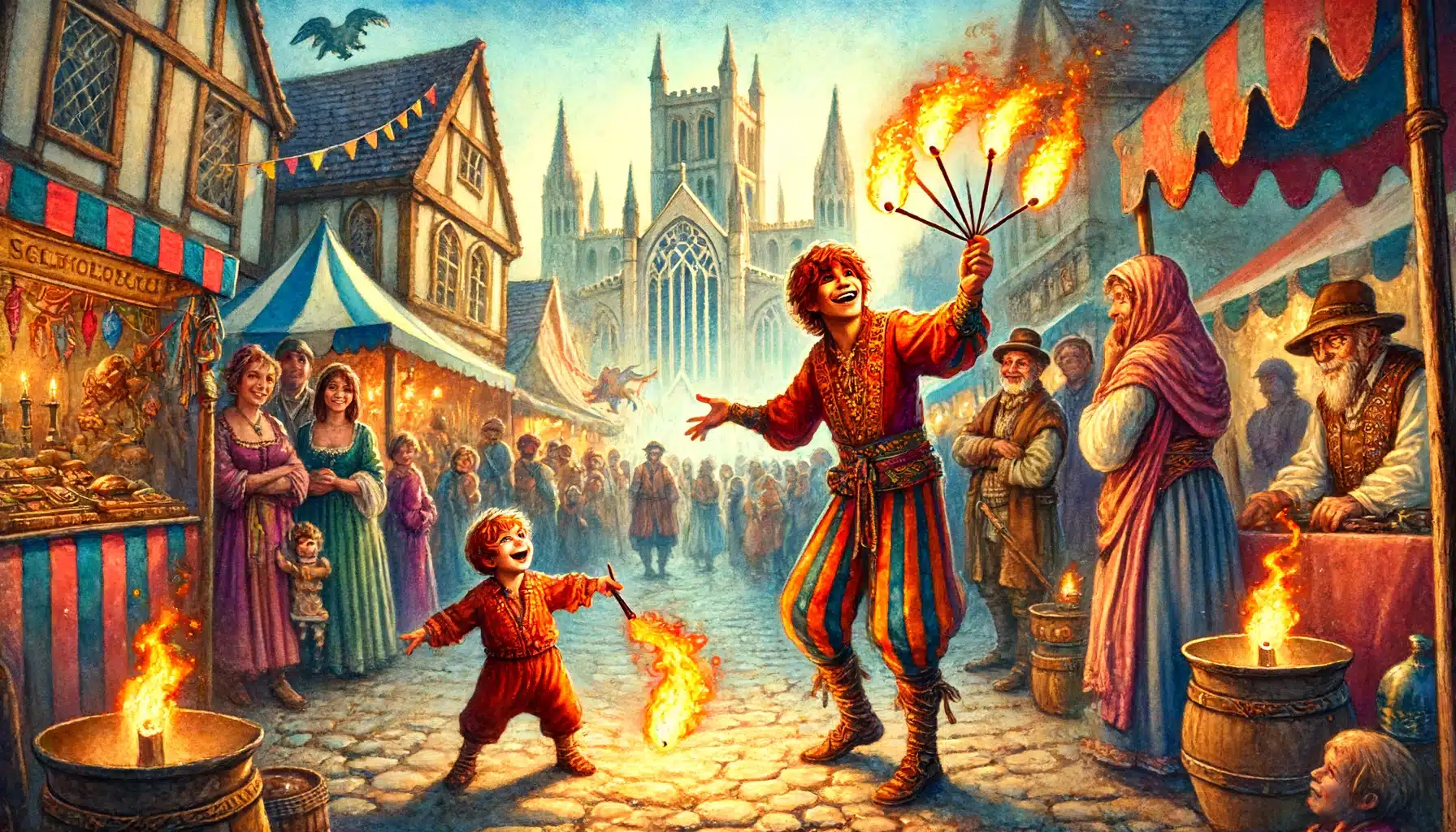
Scenario: A GM's party is arriving in a cathedral city during the Emberwake, a fire festival where performers juggle flame to honor a saint who held back a dragon.
Traditional Approach: An evening of stitching together random table results, inventing NPCs, and hoping the session doesn't stall when players ask what the festival is actually about.
With Creative Fiction Writer: A complete festival profile with origin legend, fire-performance traditions, street food, and three hooks. One hook involves a street urchin apprenticed to a performer who is secretly a cult informant.
- Read-aloud text ready for the session
- NPCs with motivations tied to the festival
- Contest ideas that Game Designer Assistant can turn into playable mechanics
📖 Writing a Pivotal Festival Chapter
Scenario: A fantasy novelist needs a harvest festival chapter where the heroine publicly breaks with her family.
Traditional Approach: Drafting and redrafting while struggling to balance world description with emotional beats, which often produces exposition-heavy scenes.
With Creative Fiction Writer: Rituals designed to create dramatic pressure, such as a family toast the heroine refuses to give. The AI then writes or edits the scene so the culture and the conflict reveal each other.
- Rituals that serve character arcs
- Editorial feedback on pacing and exposition
- Prose that matches the manuscript's voice
📱 Improvising at the Table From Your Phone
Scenario: Mid-session, players unexpectedly detour into a fishing village the GM never prepared.
Traditional Approach: Stalling, inventing on the spot, and producing a festival that contradicts established lore.
With Creative Fiction Writer: The GM dictates a quick prompt using speech-to-text on mobile and gets a compact village festival with a name, two customs, a food, and a hook in moments.
- Works on iOS, Android, and web with synced history
- Voice input keeps the table moving
- Consistent with details shared earlier in the conversation
🗺️ Building a Full Festival Calendar
Scenario: A worldbuilder wants a year of celebrations for a homebrew setting with three religions and two competing calendars.
Traditional Approach: Weeks of notes, spreadsheets, and inconsistencies between regions.
With Creative Fiction Writer: A complete calendar with seasonal anchors, holidays shared and disputed between faiths, and notes on which festivals overlap and cause friction.
- Cross-cultural consistency
- Festivals that reflect political and religious tensions
- A reusable reference for campaigns or novels
Frequently Asked Questions
What is the best fantasy festival generator?
It depends on how much depth you need. Random generators give quick names and short descriptions, which work well as seeds. An AI fantasy festival generator builds complete celebrations tied to your setting, with rituals, food, factions, and hooks, and adapts them as you refine your world. Use a random generator for quick inspiration and AI when the festival needs to carry a session or chapter.
Is Creative Fiction Writer free to use?
Yes. Creative Fiction Writer is available on a free plan that includes all core features with limited usage. That is enough to generate and refine several festivals. Paid plans start at $20 per month for 30× the free usage and custom model selection. Higher tiers serve heavy users such as GMs running weekly campaigns or novelists drafting full manuscripts. Usage resets monthly with no daily caps.
Can an AI generate fantasy festival names and NPCs?
Yes. A festival generator can propose names for the holiday, its rituals, foods, and the NPCs involved. For names with deeper linguistic consistency, such as matching a constructed language or a culture's naming conventions, Name Generator specializes in culturally fluent naming for characters, places, and events.
How do I make a fantasy festival feel original instead of copying real holidays?
Start from your world's specific history, religion, and environment rather than a real-world template. Worldbuilding guides caution that thinly reskinned holidays can make readers wonder whether your world connects to Earth. Use real celebrations as structural inspiration, such as harvest rites or ancestor days, then change the purpose, customs, and symbolism so they emerge from your setting's own logic.
Does the fantasy festival generator work on mobile?
Yes. The AI works on iOS, Android, and web with full feature parity, and conversations sync across devices. Speech-to-text lets GMs dictate prompts at the table without typing, which helps when players wander somewhere you haven't prepared and you need a festival in moments.
Build Festivals Your Players and Readers Remember
Fantasy festivals take a lot of work to design. Each one needs answers on timing, cuisine, ritual, and decoration, plus the stakes that keep it from becoming filler. An AI fantasy festival generator handles that groundwork. Random seeds become fully realized celebrations rooted in your world's gods, economies, and conflicts, written in prose you can read aloud or drop into a chapter.
Whether you're a GM preparing a campaign event, a novelist writing a turning-point scene, or a worldbuilder drafting a full holiday calendar, the right worldbuilding tool turns a festival from backdrop into story engine.
Try Creative Fiction Writer now and generate your first festival in minutes. Explore more at Jenova.
For Developers: Creative Fiction Writer is available programmatically via the Jenova API. Integrate AI worldbuilding and festival generation into your game, VTT, or writing app with a single API call. Full documentation →