AI Fantasy Currency Generator: Design Coins, Names & Exchange Rates
2026-10-24
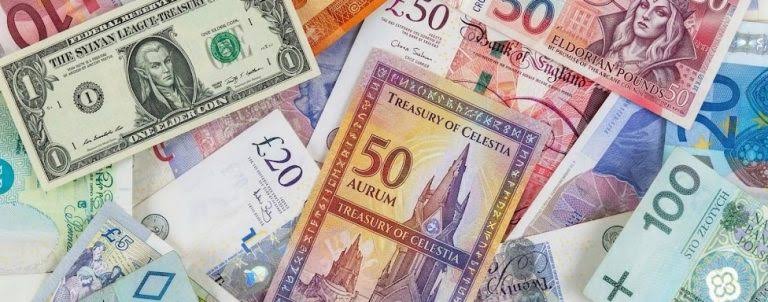
Game Designer Assistant helps you build a complete fantasy currency system by working through your world's history, politics, and game mechanics with you. It covers coin names, denominations, materials, exchange rates, and the economy behind them. Most random generators stop at a list of invented words. This AI fantasy currency generator produces money that fits your setting and still works when players start spending it. As of October 2026, game masters, novelists, and indie developers use it to create coinage that supports both the story and the rules.
- ✅ One conversation, full system: It generates names, denominations, metals, and conversion ratios together.
- ✅ Balanced, not just named: Currency is tuned against prices, loot, and progression pacing.
- ✅ Multi-format: It works for tabletop RPGs, video game economies, card games, and fiction.
- ✅ Design-ready output: You get coin and banknote art direction, inscriptions, and setting-bible documentation.
Currency is one of the few worldbuilding systems players handle in almost every session. They count it after fights, haggle with it in markets, and spend it on things they care about. When the money feels generic or the math breaks, immersion suffers quickly. To see why a dedicated tool matters, it helps to look at where most fantasy currencies go wrong.
Quick Answer: What Is an AI Fantasy Currency Generator?
An AI fantasy currency generator is a design tool that creates names, denominations, materials, exchange rates, and economic rules for fictional money, giving worldbuilders a coherent currency system in a single working session. Better tools also balance that currency against your game's prices and rewards.
Key capabilities:
- Culture-aware coin and banknote names tied to your world's languages and rulers
- Denomination ladders with clean conversion math, such as 10:1 or 12:1 ratios
- Cross-realm exchange rates, trade restrictions, and counterfeiting lore
- Economy balancing using sources ("faucets"), sinks, and price curves
The Problem: Fantasy Money Is Harder Than It Looks
Worldbuilding for tabletop play is a growing creative economy. Market research firms value the tabletop RPG industry in the billions:
USD 2.31 billion — Global tabletop role-playing game market value in 2025
USD 6.59 billion by 2035 — Projected TTRPG market size, up from USD 2.41 billion in 2026
Many of those players and designers are building homebrew worlds, and currency usually sits on the to-do list until a session forces the issue. Worldbuilding guides such as Mackenzie Kincaid's coin-creation framework break the job into several separate decisions: the basic unit, the materials, naming conventions, and local variation. Each of those decisions affects the others.
But getting this right is surprisingly difficult:
- Names that sound random rather than cultural. Invented syllables rarely suggest who minted a coin or why it carries that name.
- Too few or too many denominations. The Alexandrian argues that three to four currency types is the sweet spot: a poor coin, one or two everyday coins, and a rich coin that signals unusual wealth.
- Multi-realm bookkeeping. The same analysis notes that designers often abandon nation-specific currencies because of the tracking burden on both players and GMs.
- Inflation and broken rewards. Unity's economy guide identifies inflation spirals caused by too many faucets and not enough sinks as a core design mistake, and tabletop campaigns suffer the same problem when loot outpaces spending.
This is exactly the gap a dedicated AI game design partner was built to fill.
Why Game Designer Assistant Works as a Fantasy Currency Generator
Game Designer Assistant treats currency as a system rather than a word list. You describe your world's geography, politics, technology, and the type of game you're running. It then builds money that reflects those choices: who mints it, what it's made of, what it buys, and how it moves between borders. Because it understands systems design across genres, it can also check whether your currency holds up once players start earning and spending it.
| Traditional Approach | Game Designer Assistant |
|---|---|
| Random name generators produce disconnected words | Names derived from your world's languages, rulers, and history |
| Denomination ratios guessed and rarely tested | Conversion ladders designed for clean table math and clear value tiers |
| Exchange rates abandoned because of tracking overhead | Lightweight cross-realm systems built to match how much bookkeeping you want |
| Loot and prices set separately, which causes inflation | Prices, rewards, and sinks balanced together |
| Coin designs described vaguely, if at all | Specific inscriptions, materials, shapes, and art direction |
Culturally Coherent Names and Denominations
The assistant connects each coin to a source in the world. A dwarven mountain-hold might mint a heavy iron "anvil" stamped with clan runes. A merchant republic might issue a silver "ledger" named for its trading houses. The meaning of each coin name becomes part of your lore, so you don't have to stretch to make a random word fit later.
Value Tiers That Carry Narrative Weight
Following the poor/everyday/rich structure that experienced GMs recommend, it builds ladders where each tier signals something. Copper sliding across a tavern bar and platinum delivered in a velvet bag should feel different. As The Alexandrian observes, currency choices are themselves "a channel for information about the game world."
Economy Balancing With Faucets and Sinks
Video game economy design offers useful concepts here. Unity's framework divides every economy into currencies, faucets, sinks, and converters. The assistant applies the same logic to your setting: what players earn, what drains their purses (tolls, guild dues, upkeep, tithes), and how money converts between realms. Researchers are also exploring procedural approaches, such as GEEvo's evolutionary-algorithm method for generating and balancing game economies. Simulation platforms like Machinations are used to model economies before launch. The assistant brings that systems thinking into a single conversation without requiring you to learn a modeling tool.
Physical and Visual Coin Design
Real numismatics is one of the best sources of fantasy design ideas. The Poland–Ukraine coins issued for UEFA Euro 2012 are a good example: two interlocking silver halves, bilingual inscriptions, each nation's emblem, and denominations in both złotych and hryvnia.
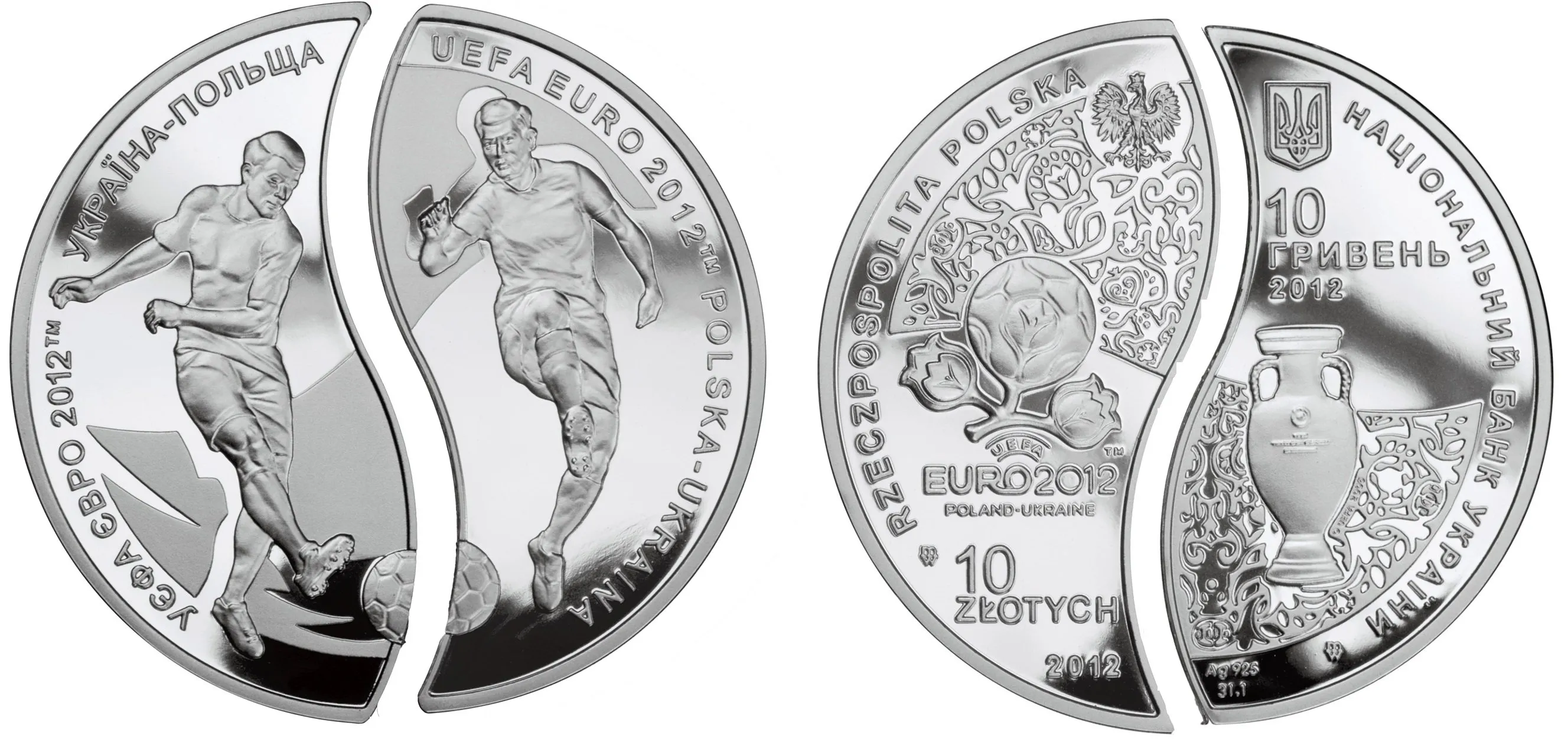
That pairing suggests a strong worldbuilding idea: alliance coinage. Two kingdoms could mint matching halves that only reach full value when joined. That could become a treaty symbol, a smuggling hook, or a quest MacGuffin. The assistant can develop concepts like this in detail, including obverse and reverse imagery, edge inscriptions, alloy composition, and concept art direction for printable props.
Example prompts:
"Design a currency for a desert trade empire with three tiers, brass, silver, and gold, including names, what's stamped on each coin, and what an average meal costs."
"My campaign has two rival kingdoms that just signed a peace treaty. Create an alliance coin system inspired by interlocking commemorative coins, plus three plot hooks it could generate."
"Players are hoarding gold by session 10. Suggest five in-world gold sinks that fit a gritty low-magic setting."
Related Agents You'll Also Find Useful
Currency rarely exists in isolation. These agents fit into the same worldbuilding workflow.
Name Generator
If you're also naming the mints, monarchs, and trade cities behind your coins, Name Generator uses linguistic expertise and cultural fluency to keep names consistent across your world.
- Character, place, and organization names
- Linguistically coherent naming conventions
- Useful for coin names, banks, and guilds
Excel Generator
Once your currency is designed, Excel Generator turns it into a working spreadsheet with formulas that convert between denominations and realms automatically.
- Exchange-rate calculators with built-in formulas
- Price lists and merchant inventories
- Loot tables and campaign treasury trackers
Trading Card Game Creator
If your fantasy currency doubles as a resource in a card game, Trading Card Game Creator handles mechanics, lore, card art, and balance from first concept through playable sets.
- Resource and cost-curve design
- Lore integration for currency-themed cards
- Balance testing across a full set
You can try any of these agents free, with no credit card required.
How to Generate a Fantasy Currency With AI
Step 1: Describe Your World and Its Economy
Open Game Designer Assistant and give it the essentials: geography, major powers, technology level, and the format, whether that's a TTRPG, video game, or novel. The more context you provide, the more the currency will reflect your setting.
"High-fantasy archipelago, five island nations, sea trade dominates, magic is rare and regulated. This is for a D&D-style campaign."
Step 2: Set Your Value Tiers
Decide how many coin types you want to track and what each tier represents. The assistant will propose ratios that keep table math simple while giving each coin a distinct role.
"Give me four tiers with clean conversion math. The top tier should feel almost mythical."
Step 3: Name and Design Each Coin
Ask for names, materials, imagery, and inscriptions for every denomination. Then request visual direction or concept art for handouts and props.
"For each coin, give the name's origin, the metal, the obverse and reverse designs, and a slang nickname sailors use."
Step 4: Build Prices and Exchange Rates
Have the assistant draft a sample price list and the exchange rates between realms. Add trade friction such as moneychanger fees or banned foreign coins where it creates useful story moments.
"Create a market price list for a port city and exchange rates against the two neighboring nations, including a 5% moneychanger cut."
Step 5: Stress-Test and Document
Describe how much treasury your party will earn per adventure, and ask the assistant to flag inflation risks and suggest sinks. Then ask for a polished setting-bible entry you can share with players.
"Assume players earn about 200 silver per session. Where does this economy break by level 10, and how do I fix it?"
Results & Use Cases
📊 Homebrew Campaign Currency Overhaul
Scenario: A GM running a long homebrew campaign realizes the party is carrying thousands of gold with nothing meaningful to spend it on.
Traditional Approach: Forum research, rewriting price lists by hand, and invented fixes that players may see as arbitrary.
With your AI game design partner: The GM gets an audit of earning versus spending, a set of in-world sinks (property upkeep, guild memberships, rare reagent markets), and a revised loot curve.
- Diagnoses inflation using faucet/sink logic
- Introduces sinks that create new adventure hooks
- Keeps existing coin names intact for continuity
💼 Indie Video Game Dual-Currency Design
Scenario: A solo developer building a fantasy RPG needs an in-game currency structure that feels fair to free players.
Traditional Approach: Studying monetization talks such as GDC's session on designing virtual currency, then iterating blind. Unity notes that roughly 5% of players drive over 50% of in-game purchase revenue, which makes it tempting to design only for spenders.
With the assistant: The developer receives a soft/hard currency structure with lore-justified names, earn rates, and pay-to-win safeguards.
- Soft currency earned through play, with premium currency limited to cosmetics
- Lore explanations for why each currency exists
- A progression curve the developer can model in a spreadsheet
📱 Novelist Worldbuilding on the Go
Scenario: A fantasy author drafting on a phone during a commute needs a believable currency for a market scene.
Traditional Approach: Leaving placeholder text like "[COINS]" and returning to it weeks later, which often means rewriting scenes.
With the assistant on mobile: The author gets coin names, slang, and price references they can use in the scene immediately, and those details stay consistent across later chapters.
- Full feature parity on iOS and Android
- Speech-to-text for dictating world notes
- Persistent memory keeps currency details consistent across sessions
🎯 Multi-Realm Exchange Without the Bookkeeping
Scenario: A worldbuilder wants each nation to have its own money but doesn't want players tracking a dozen coin types.
Traditional Approach: Either drop the idea or accept heavy tracking every session.
With the assistant: Each nation is assigned a different metal standard, such as silver for the trade league and gold for the old empire, with copper shared everywhere. This approach is inspired by The Alexandrian's metal-standard technique.
- Regional flavor with minimal tracking
- Foreign coins become plot clues, not paperwork
- An exchange table you can export to a spreadsheet
Frequently Asked Questions
What can Game Designer Assistant do for fantasy currency?
Game Designer Assistant designs complete currency systems: names, denominations, metals, coin imagery, exchange rates, price lists, and economy balancing. It also produces setting documentation and concept art direction. Because it covers game systems across genres, it can tune currency for tabletop RPGs, video games, or card games, and it can also make currency believable in fiction where no mechanics are involved.
Is there a free AI fantasy currency generator?
Yes. You can use Game Designer Assistant on Jenova's free tier, which includes all core features with limited usage. Paid plans start at $20 per month for Plus, which adds 30× the free usage and custom model selection. For most worldbuilders, a currency system can be designed within free-tier limits, and higher tiers help with large campaigns or ongoing economy iteration.
How is an AI currency generator different from a random fantasy coin name generator?
Random generators produce isolated names with no context. An AI currency generator builds a connected system: names that come from your world's cultures, denominations with tested conversion ratios, prices that make sense, and economies that resist inflation. You can also ask follow-up questions, revise individual coins, and stress-test the design, which a static name list can't support.
How many currencies should a fantasy world have?
Experienced game masters often recommend three to four currency types: a poor coin, one or two everyday coins, and a rich coin for unusual wealth. The Alexandrian's analysis calls this the sweet spot for flavor before tracking becomes tedious. For multiple nations, use different metal standards per nation instead of adding entirely new coin types.
How do I stop my fantasy economy from inflating?
Match every source of income with a meaningful way to spend it. Unity's economy design guide recommends auditing every faucet against a matching sink. In tabletop terms, that means pairing loot with upkeep, taxes, training costs, property, or rare goods. An AI design partner can identify where your economy breaks and suggest sinks that fit your setting.
Can I use an AI fantasy currency generator on mobile?
Yes. Jenova offers full feature parity across web, iOS, and Android, with speech-to-text for dictating ideas. Your currency designs sync across devices, and persistent memory keeps coin names and exchange rates consistent across sessions. If you're also naming the cities and rulers behind your coinage, Name Generator works the same way on mobile.
Conclusion: Build Fantasy Money That Works at the Table
A good fantasy currency does several jobs at once. It signals class and culture, makes travel feel concrete, generates plot hooks, and keeps rewards meaningful over a long campaign. Most worldbuilders struggle not because they lack ideas, but because names, denominations, exchange rates, and balance all depend on each other. An AI fantasy currency generator handles them together, so your coinage fits your setting and your rules.
Whether you're designing a dwarven mint, a dual-currency video game economy, or alliance coins inspired by real numismatics, you can go from a rough idea to a documented, balanced system in one session. Try Game Designer Assistant now. Explore more at Jenova.
For Developers: Game Designer Assistant is available programmatically via the Jenova API, so you can integrate AI-powered currency and game economy design into your worldbuilding app or game tools with a single API call. Full documentation →