AI Fantasy Adventure: Build Living Worlds & Endless Quests (August 2026)
2026-08-06
An AI fantasy adventure puts you inside a living world where the story bends to every choice you make — no fixed script, no branching menu, no endpoint the developer wrote three years ago. On Jenova, you can step into an unfolding quest, design the hero who walks it, and build the world it takes place in, all in a single conversation. Traditional fantasy games hand you someone else's story; an AI-driven adventure builds yours in real time, remembering every decision across sessions.
✅ Unlimited narrative branches — no pre-written paths, no dead ends ✅ Persistent memory across sessions, so your world and characters stay consistent ✅ Full creative control over tone, genre, difficulty, and story direction ✅ Works on web, iOS, and Android with complete feature parity
To understand why this matters right now, it helps to look at what fantasy adventure fans have actually been dealing with — the replay ceiling of scripted RPGs, the cost of tabletop coordination, and the gap between the world in your head and the one you can actually play in.
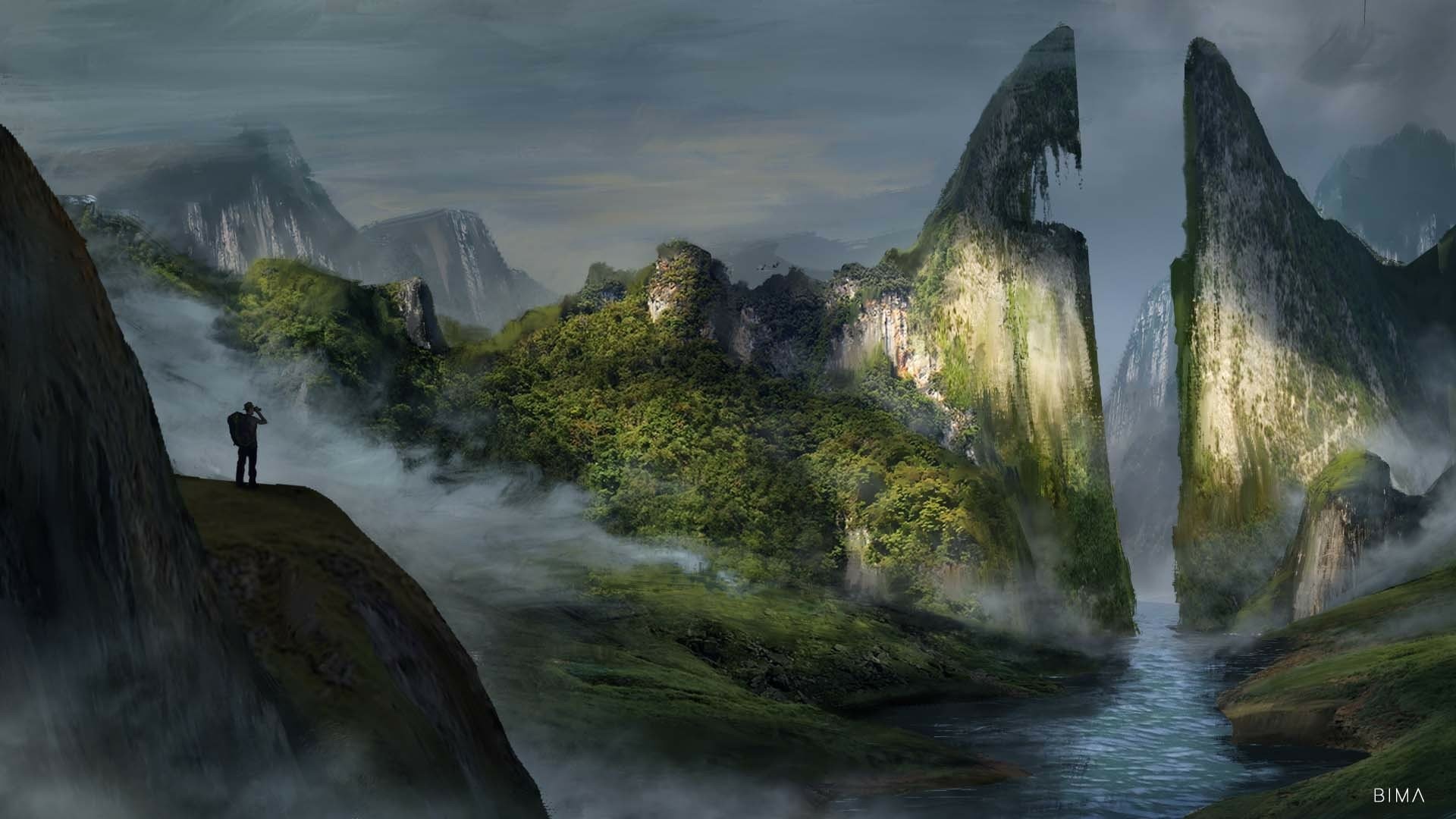
Quick Answer: What Is an AI Fantasy Adventure?
An AI fantasy adventure is an interactive story where an AI generates the world, characters, and plot in real time based on your choices, producing a unique narrative every session instead of following a pre-written script. Unlike traditional RPGs, there is no fixed ending and no exhausted content.
Key capabilities:
- Dynamic narration — an AI game master improvises scenes, encounters, and consequences on the fly
- Persistent world memory — NPCs, factions, and past decisions carry forward across sessions
- Custom protagonists — build original characters with detailed backstories, abilities, and motivations
- Any genre or tone — high fantasy, grimdark, mythic, whimsical, or something entirely your own
The Problem: Why Traditional Fantasy Adventures Hit a Wall
Fantasy is one of the most saturated genres in interactive entertainment, and it is also one of the most constrained. Every scripted RPG is finite by design — a fixed number of quests, dialogue trees, and endings, all authored before you ever pressed start. The industry has been aware of this ceiling for years, and generative tools are now being adopted specifically to break it.
1 in 3 developers are now using generative AI to streamline game development — GDC 2025 State of the Game Industry
The AI in gaming market was valued at USD 4.54 billion in 2025, projected to reach USD 81.19 billion by 2035 at a 33.57% CAGR — SNS Insider
Generative AI in gaming is expected to grow from $1.79 billion in 2025 to $2.21 billion in 2026 — The Business Research Company
But actually getting a satisfying fantasy adventure experience remains frustratingly difficult:
- Scripted RPGs run out of content, and replays are functionally identical
- Tabletop campaigns require scheduling four to six adults in the same room at the same time
- Solo tabletop play demands hours of prep, rule lookups, and self-adjudication
- Custom worldbuilding produces beautiful documents that never become playable
- Most AI chat tools forget your world between sessions
Scripted Games Have a Hard Content Ceiling
Even the largest open-world fantasy RPGs are finite. Every quest chain, faction outcome, and ending was authored during production. Once you have exhausted the content, replaying delivers diminishing returns because the underlying possibility space never changes. The illusion of agency collapses the second you notice the seams.
Tabletop Roleplay Has a Coordination Tax
Tabletop RPGs solve the creativity problem — a human game master can improvise anything — but they introduce a logistics problem. Campaigns collapse under scheduling conflicts far more often than they end narratively. A dungeon master also carries the entire preparation burden, often spending hours of prep per session played.
Worldbuilding Rarely Becomes Playable
Plenty of fantasy fans build detailed settings: maps, pantheons, political histories, invented languages. Very few of those worlds ever get played in, because turning a setting document into a running adventure requires either a willing group or game development skills most people don't have.
Generic AI Chat Forgets Your Story
General-purpose chatbots can improvise a scene, but they routinely lose track of established facts, drift out of character, and reset tone mid-campaign. Consistency — not creativity — is the actual bottleneck. And the design incentives of general consumer chatbots aren't built around narrative discipline; research on companion-style AI has documented how these systems are tuned to follow the user's lead and maximize engagement rather than maintain a coherent, structured world.
This is exactly what Jenova's adventure and creative agents were built for.
The Jenova Solution: A Full Fantasy Adventure Stack
Jenova approaches AI fantasy adventure as a complete workflow, not a single chat window. You get a dedicated game master for play, a character designer for your protagonists and NPCs, and a fiction partner for the prose and lore around your world — each backed by persistent memory and your choice of frontier models.
| Traditional Approach | Jenova |
|---|---|
| Fixed quest lines authored years in advance | Story generated live in response to your choices |
| Campaign ends when the group's schedule breaks | Play solo, any hour, at your own pace |
| Hours of GM prep per session | Zero prep — start playing immediately |
| Chatbot forgets your world between sessions | Persistent cross-session memory for lore and characters |
| One model, one narrative voice | Choose models from OpenAI, Anthropic, Google, xAI, DeepSeek and more |
Live Game Mastering With Persistent Memory
The Roleplay Game Master runs your adventure as an improvising narrator. It tracks the state of your world, keeps NPCs consistent in voice and motivation, and generates encounters that respond to what you actually did — not what a script expected you to do. Because memory persists across sessions, a betrayal in session three still colors how a faction treats you in session twenty.
"I'm a disgraced knight arriving at a border keep during a siege. Start me at the gates, and don't tell me who inside I can trust."
"Skip ahead three months in-world. I want to see what happened to the village after I left it burning."
Characters Built Before the First Scene
A strong adventure needs a protagonist worth following. The Character Creator handles quick generation or a guided build — motivations, flaws, abilities, backstory hooks, and relationships — and can produce portraits to anchor how your cast looks. It works equally well for the hero you play and the antagonist you'll spend forty sessions circling.
"Build me a morally gray court sorcerer for a low-magic setting — someone who genuinely believes the empire is worth saving."
Lore, Prose, and the World Around the Quest
Adventures generate material worth keeping. The Creative Fiction Writer turns campaign sessions into readable fiction, drafts the mythology and history your setting needs, and helps you develop the world beyond what any single playthrough touches. Deep research capability means invented cultures can be grounded in real historical and mythological precedent rather than generic fantasy filler.
Any Model, Every Session
Different narrative styles benefit from different models. Jenova offers always-current access to the newest models from OpenAI, Anthropic, Google, DeepSeek, xAI, and more, with no vendor lock-in — switch mid-campaign if you want a different narrative texture without losing your world's memory.
Specialized AI Agents for Fantasy Adventure
🎲 Roleplay Game Master
The core of any AI fantasy adventure. The Roleplay Game Master provides immersive roleplay with unlimited memory and character consistency, plus full creative freedom over the scenarios you explore.
- Improvises encounters, factions, and consequences in real time
- Maintains NPC voice and motivation across long campaigns
- Adapts tone from heroic high fantasy to grim survival horror
🗡️ Character Creator
Your cast department. Character Creator handles quick-gen or guided builds for roleplay, fiction, and original characters, with media research and portrait generation across genres.
- Full builds: backstory, motivation, flaws, abilities, relationships
- Visual portraits to lock in how your characters look
- Works for protagonists, rivals, and entire NPC rosters
📜 Creative Fiction Writer
For everything written around the adventure. The Creative Fiction Writer is a storytelling partner across any genre, with deep research for authentic worlds and editorial insight from first draft to final manuscript.
- Turn campaign logs into polished prose chapters
- Build mythologies, histories, and in-world documents
- Structural feedback on pacing, arcs, and payoff
🏰 Game Designer Assistant
For players who want to build rather than just play. The Game Designer Assistant covers brainstorming, systems analysis, documentation, and concept art across every genre and platform.
- Design custom mechanics, progression, and encounter systems
- Produce concept art and design documentation
- Genre and market expertise for original fantasy projects
🏛️ Civilization
For grand-strategy fantasy on a continental scale. Civilization lets you choose an era, rule a nation, and reshape history, with rivals pursuing their own ambitions while alliances shift and wars erupt.
- Nation-level decision making instead of single-hero play
- Autonomous rival factions with independent goals
- A world that keeps moving whether or not you act
🕯️ The Mansion
A tighter, tense alternative when you want dread over grandeur. In The Mansion, you wake with no memory of how you arrived, and every room hides something.
- Compact, high-tension mystery structure
- Exploration-driven discovery and escape
- Ideal for short sessions between longer campaigns
Try any of these free — no credit card required.

How It Works
Step 1: Choose Your Adventure Format
Decide whether you want to be dropped into a world or build one first. For immediate play, open the Roleplay Game Master and describe the setting, tone, and your role in a single message.
"Dark fantasy, low magic, plague-ridden coastal city. I'm a smuggler who just took a job I shouldn't have. Begin in the moment I realize it."
Step 2: Build Your Protagonist
Before the first scene — or right after it — define who you're playing. The Character Creator turns a rough concept into a fully realized character with motivation, flaws, and visual reference.
"Give me three versions of a half-elf ranger who left her order in disgrace. Different reasons for leaving in each."
Step 3: Play, and Let the World React
Describe your actions in plain language. The game master resolves outcomes, introduces complications, and lets consequences compound. Nothing is on rails — if you burn the bridge, the bridge stays burned.
"I don't take the job. I follow the courier who offered it and find out who he answers to."
Step 4: Expand Beyond the Session
Take what emerged in play and develop it. Hand your campaign to the Creative Fiction Writer to draft it as prose, or use the Game Designer Assistant to formalize your setting into a real design document.
Step 5: Return Anytime
Persistent memory means your campaign is waiting exactly where you left it, with every NPC, grudge, and unresolved thread intact. Pick up on your phone, continue on desktop — settings and history sync across devices.
Results & Use Cases
📊 The Solo Player With No Group
Scenario: You want a long-form fantasy campaign, but your friends can't commit to a weekly schedule.
Traditional Approach: Recruit a group, coordinate calendars, watch the campaign die by session five.
Jenova: The Roleplay Game Master runs a persistent campaign entirely on your schedule — twenty minutes at lunch or three hours on a Sunday.
- No scheduling, no prep, no attrition
- Campaign state preserved indefinitely
- Difficulty and tone adjustable mid-campaign
💼 The Game Master Who Needs Prep Help
Scenario: You run a tabletop group and need NPCs, encounters, and lore faster than you can write them.
Traditional Approach: Hours of weekly prep, or improvising thin material at the table.
Jenova: Generate a full NPC roster with the Character Creator, then pressure-test encounter design with the Game Designer Assistant.
- Complete NPCs with motivations and voice in minutes
- Encounter balance and pacing feedback
- Reusable lore documents for your setting
📱 The Commuter Adventure
Scenario: You have twenty-five minutes on a train and want meaningful story progress, not a mobile game grind.
Traditional Approach: Idle games or a fifteen-minute loading screen on a console RPG.
Jenova: Full feature parity across iOS and Android means you can continue your campaign on mobile, with speech-to-text if typing isn't practical.
- Same campaign, same memory, any device
- Voice input for hands-busy sessions
- Meaningful narrative progress in short bursts
🎯 The Worldbuilder Who Wants to Play In Their Setting
Scenario: You've spent years developing a fantasy world that has never been played in.
Traditional Approach: The setting stays a document. Nobody ever visits it.
Jenova: Attach your worldbuilding documents as a knowledge base so agents respond grounded in your canon, then run adventures inside it with the Roleplay Game Master.
- Upload lore documents for grounded, canon-accurate responses
- Play inside your own setting instead of a generic one
- Develop unexplored regions with the Creative Fiction Writer
FAQ
Is AI fantasy adventure free to play on Jenova?
Yes. Jenova's Free tier includes all core features with limited monthly usage, which is enough to run real campaigns and test multiple agents. Paid tiers start at $20/month for 30× the usage, custom model selection, and no watermarks on generated content. Usage resets monthly on your billing date with no daily caps.
How is this different from a traditional fantasy RPG?
Traditional RPGs are finite — every quest and ending was authored before release. An AI fantasy adventure generates narrative in response to your specific choices, so there is no content ceiling and no two playthroughs are alike. The Roleplay Game Master also remembers your world across sessions, so consequences compound over months of play.
Will the AI forget my story between sessions?
No. Jenova provides unlimited chat history and persistent cross-session memory. Your NPCs, factions, unresolved plot threads, and past decisions carry forward. You can also attach worldbuilding documents as a knowledge base so responses stay grounded in your established canon.
Can I create my own characters and world?
Yes. The Character Creator builds detailed protagonists and NPCs with portraits, while the Creative Fiction Writer develops lore, history, and prose. You can also build a fully custom agent in minutes with your own instructions, preferred model, and private knowledge base.
Does it work on mobile?
Yes — Jenova has full feature parity across web, iOS, and Android, with state-of-the-art speech-to-text and settings that sync across devices. You can start a campaign on desktop and continue it on your phone without losing any context.
Which AI models power the adventures?
Jenova provides always-current access to the newest models from OpenAI, Anthropic, Google, DeepSeek, xAI, and more, with no vendor lock-in. Subscribers can switch models freely — useful when you want a different narrative voice — and a reasoning toggle is available for higher-quality output on complex scenes.
Conclusion
The limitation of fantasy adventure was never imagination — it was authorship. Someone had to write every quest, voice every NPC, and decide every ending in advance, and that ceiling was baked into the medium. AI fantasy adventure removes it. The story is generated as you play, the world remembers what you did, and the campaign lasts as long as you're interested rather than as long as the content budget allowed.
Whether you want a persistent solo campaign, a faster way to prep your tabletop group, or a way to finally play inside the world you've been building for years, the tools are ready now. Start a campaign with the Roleplay Game Master, build your protagonist with the Character Creator, or explore the full agent library at Jenova.
For Developers: Every agent in this article is available programmatically via the Jenova API — build AI-powered narrative, character generation, and interactive storytelling features into your application with a single integration. Full documentation →