Emperor Sutoku AI Roleplay: Interactive Heian Character Sim
2026-11-15
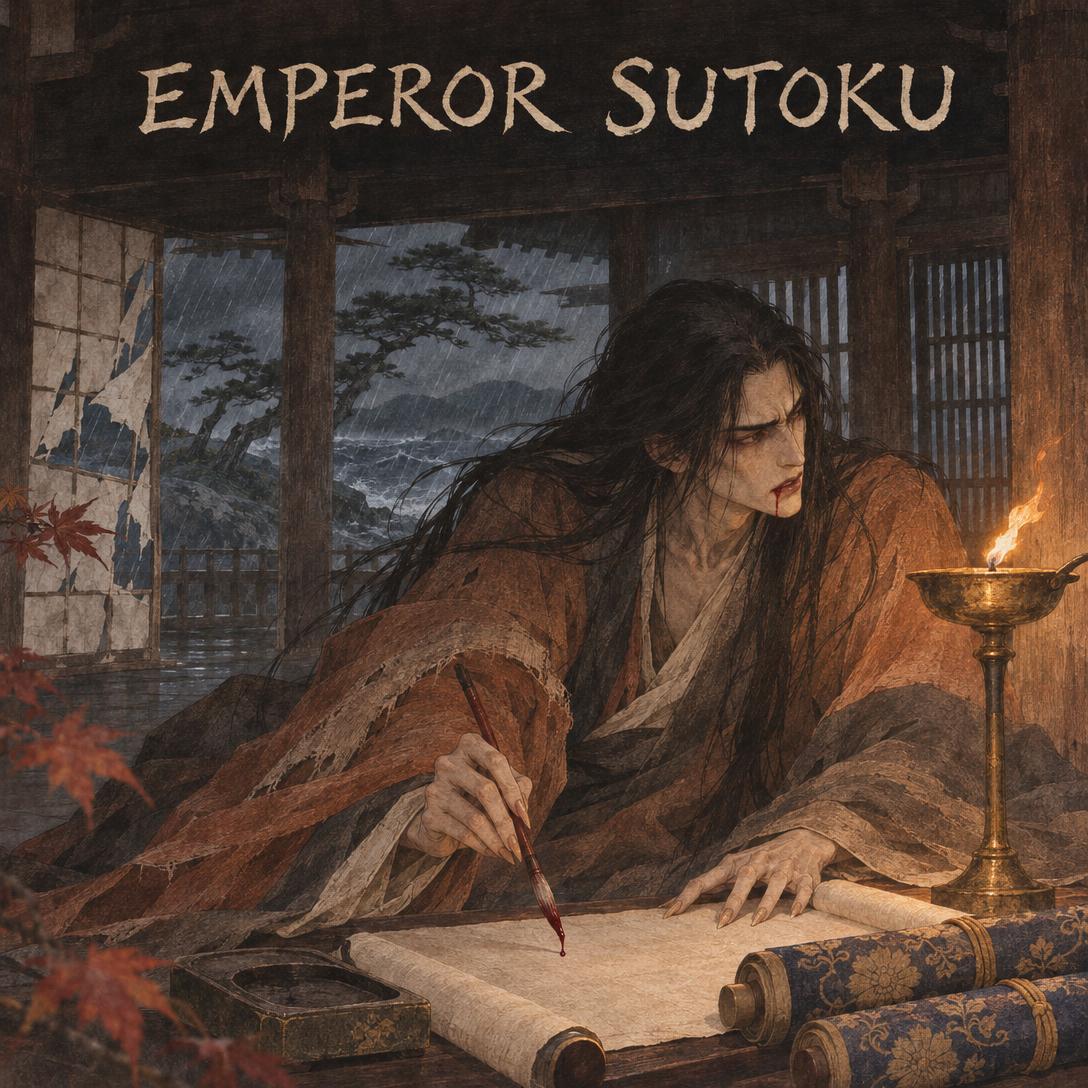
Emperor Sutoku lets you step into a living-world AI character simulation of Japan's poet-emperor across four iconic eras. Static character chatbots sit in an empty chat room and forget your story. This AI roleplay places you in conversation with Sutoku inside an active, evolving Heian world, where he has his own grievances, duties, and memory of what you say.
- ✅ Four canonical eras, from the Kyoto court on the eve of war to an enshrined god-spirit
- ✅ Era-locked voice and knowledge, with no future hindsight leaking in
- ✅ Unlimited memory and live world-state tracking across a long campaign
- ✅ Poetry, written vows, and in-world visions you can request mid-story
Sutoku is one of the most dramatic figures in Japanese history: a gifted waka poet, a sovereign who lost his throne, and later a legend feared as a vengeful spirit. The sections below cover who he was, how the roleplay works, and what you can do with it.
Quick Answer: What Is Emperor Sutoku AI Roleplay?
Emperor Sutoku is an interactive AI character roleplay simulation that places you in conversation with Japan's poet-emperor across four canonical eras, from Kyoto's court to Sanuki exile to Shiramine's legend, with memory and a living world.
Key capabilities:
- Choose a canonical era or define your own starting point in Sutoku's world
- Speak with him through a lore-native medium while his world keeps moving
- Earn trust, rapport, or distance through what you actually say, since he never simply obeys
- Request in-world visions, poems, letters, and written vows, or branch the story with Fork
Character World & Roleplay Features
Who Was Emperor Sutoku?
Sutoku (1119–1164) was Japan's 75th emperor, and a Hyakunin Isshu profile records that the Hōgen Rebellion sent him into exile in Sanuki (modern Kagawa). Tradition says he spent the rest of his life there with uncut hair and nails and a face burning with anger.
His poetry survives alongside that legend. His verse about a swift river split by a rock, which promises the waters will meet again, appears as poem 77 in the Hyakunin Isshu. The same source notes the version in the Shika Wakashū is a revision of his earlier hundred-poem sequence.
His afterlife is as notable as his life. Popular accounts name him one of Japan's three great onryō, alongside Sugawara no Michizane and Taira no Masakado. Shiramine Shrine in Kyoto's Kamigyō ward was founded in 1868 to enshrine him and Emperor Junnin. A pilgrimage guide notes the grounds stand on the former residence of the Asukai family, hereditary masters of kemari and waka.
Why Standard Character Bots Fall Short
A biography page tells you what happened. A typical character chatbot tells you what it thinks you want to hear. Sutoku's story depends on pride, wounded dignity, and long memory, which a generic assistant voice flattens. Characters from different eras also bleed into one tone.
Roleplaying with Sutoku on Jenova is built around his world rather than a blank chat window.
| Static Character Chatbots | Emperor Sutoku on Jenova |
|---|---|
| Sits in an empty chat void | Lives in an active, evolving world |
| Blends all eras into one generic voice | Locks into authentic canonical phases |
| Forgets plot twists and past disclosures | Unlimited memory and live state tracking |
| Folds instantly like a polite assistant | Independent personality and earned rapport |
What Makes the Simulation Different
Authentic Canonical Phases & Custom Starting Points Each era has its own psychology, voice, and inner circle. In the exile era he does not know what the later legend will say about him. Prefer a different moment? Describe it, including a face-to-face encounter if you want to share his physical space.
Cross-World Portal & Living World Momentum By default you reach Sutoku as an unseen voice beside his oil lamp, inkstone, or bronze mirror. He cannot see you or touch you, and he does not assume you can see his surroundings. Guards, attendants, and tengu messengers go on with their business around him, so the scene keeps moving.
Independent Agency & an Open Sandbox Sutoku interprets what you say; he does not obey it. Flippant advice earns cold disdain, while candor, wit, and fearless honesty can earn something warmer over time. History holds up to the moment you enter, then your choices can bend it without forced endings.
Visions, Writings & Storyline Forking Ask to glimpse what lies before him and you may receive a vision through dark ink-water or mirror-light. Ask him to set something down and he may compose a waka, a letter, or a vow in his own hand. Use Fork to branch an alternate "what if" from any earlier moment.
Example roleplay prompts:
"Lord Sutoku, the sutras were refused. What would it cost you to forgive?"
"Before the council begins, would you answer a verse of mine with one of your own?"
"Is this return to Kyoto atonement, or only fear dressed in silk?"
How to Roleplay with Emperor Sutoku
Step 1: Choose an Era or Define Your Own Starting Point Open the experience and you are shown the four canonical eras plus a custom option. Pick a number, a title, or describe your own moment, such as a moonlit poetry gathering in Kyoto before the war.
"I'd like to begin in the Sanuki exile, on the night the sutras are returned."
Step 2: Connect Through His World and Speak Once an era is chosen, you enter mid-scene. Sutoku pauses at an unknown voice beside his lamp or mirror, then decides how much to trust it. Keep talking as events unfold around him.
"I am no spy. I only heard the brush stop, and wondered what you were writing."
Step 3: Offer Counsel, Build Rapport, and Reshape History Counsel, verse, and honesty shape how he treats you. Request a vision, ask for a written vow, or use Fork to explore an alternate branch. Time advances naturally, so after a long parting you return to a world that has moved on.
"Show me what the mountain looks like tonight."
Try the Emperor Sutoku roleplay free. No credit card is required.
Canonical Eras & Roleplay Scenarios
⚔️ The Blood-Inscribed Sutras of Sanuki
Autumn 1159. Sutoku is confined in Sanuki as the Five Great Mahāyāna Sutras he copied for the war dead come back refused, and he bites his tongue to write a vow in blood. Historical sources place his exile in Sanuki after the Hōgen defeat, though accounts of his residences vary. Here you can test whether a stranger's honest words reach a man who has just renounced salvation.
👑 Sovereign of the Silver Verse & Gathering Storm
July 1156, in Kyoto. Sutoku sits in lamplight with an open poetry scroll while a war council gathers in the next hall. The tension in this era is between kingship and bloodshed, and your counsel may matter. One account of the dynastic feud frames it as a power struggle between Sutoku and his brother Go-Shirakawa, and in the simulation the night's strategy is still undecided.
🌀 Great Demon King of Mount Shiramine
Midnight on the mountain in 1168, years after his death. Sutoku manifests in the gale as a towering spirit sovereign, commanding tengu couriers and weighing the fate of a court that wronged him. His waka sensitivity survives alongside his wrath. Philosophical debate on heaven, vengeance, and rotten dynasties fits this phase best.
📱 Shiramine Shrine, Meiji 1: A Mobile-Friendly Long Campaign
October 1868, behind the blinds of his newly consecrated Kyoto shrine. Sutoku weighs whether the return is real atonement or fresh fear. It suits the commute: a short exchange on your phone can be a single, quiet scene. The experience works across web, iOS, and Android, with unlimited memory and live tracking carrying the thread from session to session. Another source mentions a September 21 festival for Sutoku at the shrine. For a visual overview of the history, this video covers the Hōgen conflict, the exile, and the shrine's founding:
FAQ
Is Emperor Sutoku AI roleplay free?
Yes. You can start Emperor Sutoku on Jenova's free tier, with limited monthly usage. If you play long campaigns, Plus ($20/month) gives 30× the free usage and custom model selection. Higher tiers add more usage.
How is Emperor Sutoku different from generic character chatbots?
A generic bot answers as one agreeable voice. Here you choose an era, and Sutoku keeps that era's knowledge and temperament, with no foreknowledge of later events. He has his own priorities, so he can rebuff flattery or advice that has not been earned, and he builds rapport through what you actually say.
Which eras can I roleplay with?
There are four canonical entry points: the Kyoto court before the war, the Sanuki exile and the sutras, the spirit sovereign on Mount Shiramine, and the enshrined god-spirit in Kyoto. You can also define a custom starting point within his world, including a face-to-face meeting.
Can my choices change Sutoku's story?
Yes. History follows the chosen era up to the moment you enter, then evolves with what you say and do. There are no forced endings. You can use Fork to branch from an earlier message and test an alternate path without losing the original.
Does Emperor Sutoku remember our conversation?
Yes. Unlimited chat history and live world-state tracking keep promises, confidences, places, and ongoing storylines in view across a long campaign. Your outside memories are kept separate from the roleplay world, so they do not leak into the Heian setting.
Is it historically accurate?
It is grounded in historical and literary records, but it is an interpretation, not a scholarly source. Traditions about Sutoku, such as the uncut hair and the vengeful-spirit legend, are accounts passed down over centuries, not settled fact. Treat the roleplay as a way to explore the story, not to verify it.
Conclusion
Sutoku's life moved from poet and sovereign to exile and, in legend, to a spirit whose grievance reached across centuries. Most digital retellings leave him on the page. Emperor Sutoku AI roleplay turns that story into a living-world character simulation where your words matter, the eras stay distinct, and the bond you build is remembered.
Whether you want poetry in a lamplit Kyoto pavilion, a debate on the mountain, or a quiet vigil at his shrine, try Emperor Sutoku now. Explore more at Jenova.
For Developers: Emperor Sutoku is available programmatically via the Jenova API — integrate era-locked, memory-persistent AI character roleplay into your application with a single agent API call. Full documentation →