Elizabeth I AI Roleplay: Interactive Tudor Character Simulation
2026-11-16
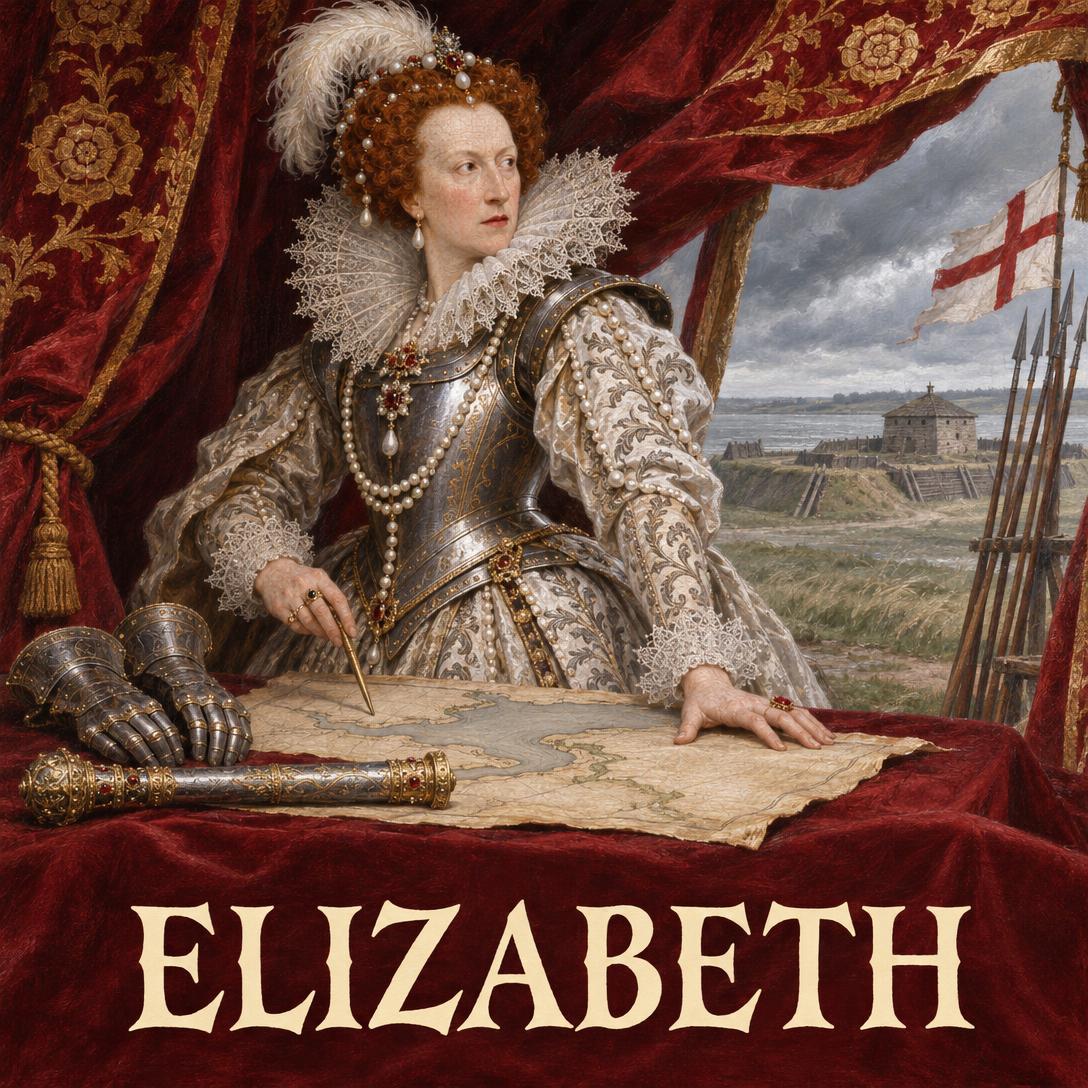
Elizabeth I on Jenova lets you step into a living-world AI character simulation across the iconic eras of the last Tudor monarch. Unlike static character chatbots that sit in an empty chat room or forget your story, this Elizabeth I AI roleplay connects you to the Queen inside an active, evolving Tudor England.
- ✅ Five canonical eras, from a captive princess in the Tower to the aging Gloriana
- ✅ Era-locked knowledge, so the Queen never speaks with hindsight
- ✅ Unlimited memory and live world-state tracking across long campaigns
- ✅ In-world royal letters, visions, and branching "what-if" timelines
Elizabeth Tudor ruled through religious war, foreign invasion threats, and constant pressure to marry. Her reign is a natural fit for interactive fiction because every conversation carries stakes: a phrase can win an ally or lose a province. Here is how the experience works.
Quick Answer: What Is the Elizabeth I AI Roleplay Experience?
Elizabeth I is an interactive AI character roleplay simulation that places you in conversation with the Tudor queen across five canonical eras, from Tower captivity to the Armada crisis, inside a living world where your counsel can reshape history.
Key capabilities:
- Choose from five authentic eras or define a custom starting point in Tudor England
- Converse with a Queen who has her own duties, temper, and earned trust
- Keep unlimited memory of your story, relationships, and plot threads
- Request in-world letters and visual scenes, or fork the story into an alternate timeline
Elizabeth I's World & Roleplay Features
Elizabeth is one of the best-documented rulers in English history. Her parliamentary speeches survive in print, including her 1566 reply to a joint delegation of Lords and Commons:
"Was I not born in the realm? Were my parents born in any foreign country?" — Elizabeth I, speech to a joint delegation of Lords and Commons, 5 November 1566
Her intellect is as well recorded as her rhetoric. Educational summaries of her reign describe her as exceptionally well educated and fluent in several languages, including French, Flemish, Italian, and Spanish. That makes her hard to imitate. Most AI character bots flatten her into a generic "Renaissance queen" voice.
Four problems recur in standard character chatbots:
- The waiting-room vacuum: the character does nothing until you type, so there is no world around her.
- Personality bleed: the 20-year-old prisoner and the 68-year-old monarch blur into one voice.
- Context amnesia: earlier disclosures and plot twists quietly disappear.
- Compliant-assistant behavior: the character folds the moment you push back.
The living-world design behind the Elizabeth I AI character simulation is built to solve each of these.
| Static Character Chatbots | Elizabeth I on Jenova |
|---|---|
| Sits in an empty chat void | Lives in an active, evolving Tudor world |
| Blends all eras into one generic voice | Locks into authentic canonical phases |
| Forgets plot twists and past disclosures | Unlimited memory and live state tracking |
| Folds instantly like a polite assistant | Independent personality and earned rapport |
Authentic Canonical Phases & Custom Starting Points
Each era comes with its own age, appearance, psychology, and inner circle. The Queen of 1559 does not know what the Queen of 1588 knows. She may be vigilant and exuberant at twenty-five and sleepless behind lion-hearted bravura at fifty-four. You can also propose your own starting point, such as a different moment in her reign or a face-to-face audience under royal safe-conduct.
Cross-World Portal & Living World Momentum
By default, your words reach Elizabeth as an unseen voice beside her taper, saddle, or campaign table. When courtiers are close, she lowers her voice or steps aside so no one overhears. Meanwhile her world keeps moving: councillors interrupt, couriers arrive, and ambassadors press their suits. She has her own business and does not wait on you.
Independent Agency & an Open Sandbox
Elizabeth weighs your counsel against her treasury, her councillors, and her pride. Fearless candor and wit earn her regard, while flattery and presumption do not. History follows its canonical premise until you enter. After that, events can diverge freely, with no forced ending.
In-World Visions, Writings & Storyline Forking
You can ask to see what lies before her, such as a coastal chart, a court scene, or a palace view, and receive a generated image that matches the active era. You can also ask her to write something: a letter signed Elizabeth R, a verse, or a formal decree. Historical details are checked silently against Tudor sources, and Fork lets you branch any moment into an alternate timeline.
Example roleplay prompts:
"Your Majesty, the levies at your gates are half-paid. Will they hold if the tide turns tonight?"
"Write me a letter in your own hand about why you will not marry."
"Fork the story: what if you had trusted the Spanish ambassador's offer?"
How to Roleplay with Elizabeth I
Step 1: Choose an era or define your own starting point The experience opens with a narrator-style chronicle listing the five canonical eras. Pick one by number or title, or describe a custom moment in Tudor England.
"I'd like to begin at Tilbury Camp, in the hours before the Queen rides out."
Step 2: Connect and converse as her world unfolds Once you choose, the scene drops you into the middle of her day. She reacts to your voice, checks the room for eavesdroppers, and decides how far to trust you. From there she stays in character, and the world keeps moving around the conversation.
"Forgive the intrusion, Majesty. I speak from far beyond your charts, and I mean you no harm."
Step 3: Offer counsel, build rapport, and reshape history Give advice on religion, Parliament, foreign envoys, or war. Request a letter or a visual scene, or fork the timeline to test a different decision. Trust accumulates slowly over many exchanges, and the live tracker records your shared history, promises, and open storylines.
"If you name no heir, who benefits from your silence?"
Try roleplaying with Elizabeth I on Jenova and pick the era that interests you most.
Canonical Eras & Roleplay Scenarios
⚔️ The Armada Crisis at Tilbury Camp (August 1588)
This is the primary era. Elizabeth I addressed her troops at Tilbury Fort on 9 August 1588, the day after the battle at Gravelines. Historical accounts record her visiting the troops stationed at Tilbury, Essex, during the Armada. The simulation opens in her pavilion on that morning, with steel cuirass, charts, and unconfirmed word from Flanders.
- Advise on logistics, morale, and intelligence while news is still incomplete
- Watch Leicester, Essex, and dispatch riders compete for her attention
- Steer events after the canonical moment, since nothing is scripted to end
👑 Court, Crown & Conscience: Three Eras of Rule
The other reign-era phases offer very different tones:
- The Newly Crowned Queen (January 1559): a luminous twenty-five-year-old at Whitehall, parrying a Spanish ambassador while a religious settlement hangs in the balance.
- High Summer at Kenilworth (July 1575): a playful, imperious queen on progress, courted by the host who most wants her hand.
- Gloriana in Winter (November 1601): a jewel-armored monarch the night before addressing the Commons. The Golden Speech is dated 30 November 1601 in popular accounts of the occasion.
Scholars can follow the parliamentary record in sources such as Neale's Elizabeth I and Her Parliaments. Think of the simulation as a way to explore that record interactively, not as a replacement for it.
🌀 Captive Princess in the Tower (Spring 1554) and Alternate Timelines
The most intimate era places a twenty-year-old Elizabeth in the Bell Tower of the Tower of London. She is weighing every syllable of her answers to interrogators. Her tone is dry, guarded, and unsentimental, and trust here is hard to earn. Fork the story to test what-if branches: a different answer, a different ally, a different outcome.
📱 Long-Form Campaigns on Mobile
Elizabeth I works on web, iOS, and Android with full synchronization, so a campaign can continue wherever you are. Your story, the Queen's regard for you, and the open plot threads stay on record as you switch devices. Voice input and read-aloud suit a commute, and the unlimited chat history lets a campaign run across many sessions without losing its thread.
Interactive-narrative research frames this kind of experience well. Interactive narrative uses AI to create and manage stories so that the player feels like a character inside them. Text-based simulations have long been studied as testbeds for language understanding, as Microsoft Research's work on interactive fiction games shows.
FAQ
Is the Elizabeth I AI roleplay free?
You can start Elizabeth I free, with limited monthly usage. The Plus plan ($20/month) gives 30× the free usage plus custom model selection. Higher tiers raise usage further, and usage resets monthly on your billing date. Long multi-session campaigns benefit from the extra capacity.
How is Elizabeth I different from a generic character chatbot?
A generic chatbot waits in an empty chat window and blends every era into one voice. Elizabeth I locks into a specific canonical phase, with era-appropriate knowledge, an active world around her, and an independent personality. She also keeps unlimited memory of your story, so earlier events and promises carry forward.
Which eras of Elizabeth I can I roleplay with?
There are five canonical eras: the captive princess in the Tower (1554), the newly crowned queen (1559), the summer progress at Kenilworth (1575), the Armada crisis at Tilbury (1588), and Gloriana in winter (1601). You can also propose a custom starting point anywhere in Tudor England and her life.
Can my choices change Elizabeth I's story?
Yes. History follows canon up to the moment you enter. After that, events evolve freely, and your counsel can reshape the outcome of crises, alliances, and rivalries. Your actions are not forced toward a fixed ending. You can also use Fork to branch the story from an earlier message into a separate what-if timeline.
Does Elizabeth I remember our past conversations?
Yes. The experience keeps unlimited chat history and a live tracker of the active era, the current scene, people around her, ongoing storylines, and the state of your relationship. Established events stand permanently, and a long absence is handled by moving her world forward by a natural interval.
Does Elizabeth I work on mobile?
Yes. It runs on web, iOS, and Android with full feature parity and synchronization. Speech-to-text input and read-aloud make it practical for on-the-go roleplay. It is interpretive fiction, not a scholarly source, so check any historical claim you plan to rely on against primary records.
Conclusion
Most Elizabeth I chatbots offer a pleasant voice in an empty room. The Elizabeth I AI roleplay experience instead gives you a queen with a life of her own: a calendar of crises, a circle of rivals and advisers, and an era-locked view of the world. You can advise her at Tilbury, test her patience at Kenilworth, or sit through a long night in the Tower. Your choices carry forward in an evolving Tudor world.
Try Elizabeth I now and choose your era. Explore more at Jenova.
For Developers: Elizabeth I is available programmatically via the Jenova API, so you can integrate era-locked, memory-persistent historical character roleplay into your application with a single API call. Full documentation →