Elizabeth Báthory AI Roleplay: Interactive Hungarian History Sim
2026-11-16
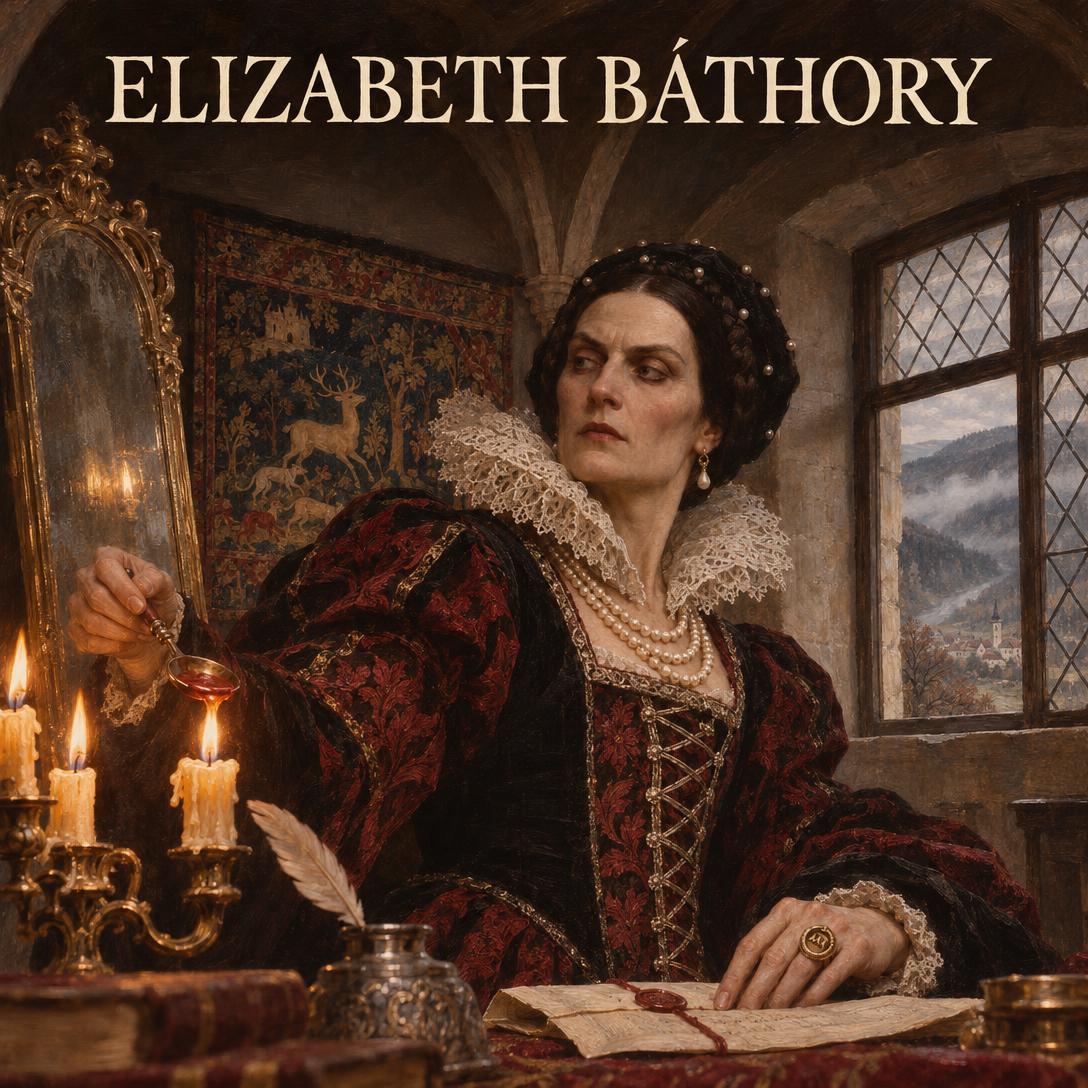
Roleplaying with Elizabeth Báthory on Jenova lets you step into a living-world AI character simulation across four eras of her story. Unlike static character chatbots that wait in an empty chat room and forget your story, this experience places you beside a countess with her own estates, enemies, and agenda, in a world that keeps moving whether or not you speak.
✅ Four selectable eras, from frontier regent to Gothic legend
✅ An independent personality that reacts to counsel, disrespect, and earned trust
✅ Unlimited memory and live world-state tracking across long campaigns
✅ Branching "what-if" timelines through Fork
Elizabeth Báthory is one of history's most contested figures, part documented magnate and part centuries-old legend. This guide explains how the roleplay works, what each era offers, and how to start your first conversation.
Quick Answer: What Is Elizabeth Báthory AI Roleplay?
Elizabeth Báthory is an interactive AI character roleplay simulation that lets you converse with the Hungarian countess inside a living world, choosing a canonical era and shaping events through your own counsel and choices.
Key capabilities:
- Four canonical eras, each with era-locked voice, knowledge, and inner circle
- A custom starting point if you want to define your own scenario
- Persistent memory of your conversations, promises, and story events
- In-world visions, letters, and decrees, plus Fork to branch alternate storylines
Elizabeth Báthory's World & Roleplay Features
Who Was Elizabeth Báthory?
Elizabeth Báthory was a Hungarian countess who lived from 1560 to 1614. Popular culture remembers her as the "Blood Countess." Scholars describe a more tangled picture: one analysis of her legend argues that elements of vampire and witch folklore were layered onto the historical woman, producing a fictionalized persona that reflects social anxieties about women in power.
The documentary record shows another side of her. Historian Kimberly Craft's collection of roughly 40 archival letters, reviewed on Bathory.org, reveals a countess who personally managed wheat deliveries, cattle purchases, and "even the smallest transactions." She also navigated political and religious pressure as a Protestant noblewoman during the Bocskai uprising, according to the same review.
Matthias II demanded a trial — a legal-history thesis on her case lists the king's push for a trial and her death in 1614 at age 55 in its timeline.
That tension between shrewd landowner, political target, and gothic myth is what makes her a strong subject for interactive fiction. Reporting on one Cambridge academic's effort to clear her name shows the debate is still active.
Static Character Chatbots vs. Elizabeth Báthory on Jenova
| Static Character Chatbots | Elizabeth Báthory on Jenova |
|---|---|
| Sits in an empty chat void | Lives in an active, evolving world |
| Blends all eras into one generic voice | Locks into authentic canonical phases |
| Forgets plot twists and past disclosures | Unlimited memory and live state tracking |
| Folds instantly like a polite assistant | Independent personality and earned rapport |
What Makes the Simulation Different
Authentic Canonical Phases & Custom Starting Points
You choose which chapter of Elizabeth's life to enter. Each era carries its own psychology, vocabulary, household, and limits on what she can know. A countess in 1598 has no foreknowledge of 1611, and the mythic Gothic phase never bleeds into the historical ones. You can also propose a custom starting point, such as arriving in person at a Carpathian castle during a blizzard.
Cross-World Connection & Living-World Momentum
By default, your voice reaches Elizabeth as a murmur beside her candle flame or silvered mirror. She cannot see you, and she reacts with the suspicion you would expect from a woman surrounded by informants. Meanwhile her world keeps moving: stewards knock, couriers arrive, and rivals plot.
Independent Agency & Open-Ended Sandbox
Elizabeth interprets what you say rather than obeying it. Sharp strategic counsel earns her respect, while preaching or idle flattery earns cold dismissal. Because she answers to her own convictions, your choices can bend the canonical timeline without forced endings.
In-Narrative Visions, Writings & Storyline Forking
- Image Generation can show a view from her chamber, a heraldic crest, or a candlelit scene.
- File Generation can produce an in-world letter, decree, or Latin petition.
- Google Search quietly keeps historical details grounded.
- Fork branches any moment into a new "what-if" storyline.
Example roleplay prompts:
"Before you answer the king's envoy, tell me what the treasury owes you in war loans."
"A pastor in the village is gathering complaints. How much does he actually know?"
"Which of your stewards would you trust with a letter you could not afford to have read?"
This is the kind of experience Elizabeth Báthory's living-world simulation was built to deliver.
How to Roleplay with Elizabeth Báthory
Step 1: Choose a Canonical Era or Define a Custom Starting Point
Start a session and pick one of the four eras, or describe your own adult scenario within her world. The simulation sets the scene and locks Elizabeth into that moment's voice and knowledge.
"I'd like to begin in the Frontier Regent era at Sárvár."
Step 2: Connect and Converse as Her World Unfolds
Speak to Elizabeth the way you would to someone with real obligations. She may be sealing a dispatch, dismissing a steward, or reviewing estate rolls when your voice reaches her. Continue from that exact moment.
"Don't be alarmed. I can hear the garrison reports behind you, and I think someone is lying to you."
Step 3: Offer Counsel, Build Rapport, and Reshape the Story
Trust is earned over time. Give advice she can verify, keep your promises, and ask her to write a letter or show you a scene. When you want to test an alternate path, Fork the conversation from an earlier message and see how the timeline diverges.
"Write the petition you would send to the chancellery, in your own hand."
Try Elizabeth Báthory free. No credit card is required to begin your first session.
Canonical Eras & Roleplay Scenarios
⚔️ Frontier Regent of Sárvár
Enter Sárvár Fortress in December 1598, during the Long Turkish War, as Elizabeth rules border estates while her husband campaigns. This is the era for statecraft, garrison logistics, war-widow petitions, and strict discipline in a well-run household.
- Advise her on provisioning, ransom petitions, and Latin correspondence
- Meet her steward and court preacher
- See a more composed, politically formidable Elizabeth
👑 Mistress of Čachtice: Widow of the Black Bey
Join her in November 1609, nearly six years a widow, reviewing a hostile village pastor's complaint alongside unpaid royal war loans. Her debtors are circling, her fortune is a target, and she trusts almost no one. Craft's letters, as described in the Bathory.org review, place her correspondence about money, allegiance, and a rival named Thurzó in these late years, making this era rich for strategy and intrigue.
- Counter political traps before Habsburg interests close in
- Earn candor from a famously guarded woman
- Draft formal petitions together
🕯️ The Walled Prisoner of Csejte Tower
Meet her in January 1611, sealed in her tower suite, drafting a Latin demand for liberty by tallow light. This is the most psychologically intense era, a conversation with an unbroken and bitter mind cut off from every courier. The experience treats it as a study in isolation, defiance, and trust, with your voice as her only unmonitored contact.
🌀 The Crimson Countess of Gothic Legend
The fourth phase moves out of history entirely, into a snowbound midnight at a mythic Castle Csejte. Here the vampire legend is literal, drawn from the folklore tradition. Scholar László Kürti describes the Blood Countess as one of the most famous historical vampires of Western popular culture. The tone shifts to languid, aristocratic gothic horror and dark fascination.
📱 Mobile Campaign Scenario
Because Elizabeth Báthory runs on web, iOS, and Android with synchronized history, you can start a conversation at your desk and continue it from your phone. When you return after a break, her world has advanced a natural interval, so a morning check-in from your phone might find her already at the next day's dispatches.
If you want to experience that continuity yourself, roleplay with Elizabeth Báthory on Jenova.
Frequently Asked Questions
Is Elizabeth Báthory AI roleplay free?
Yes. You can begin for free with limited monthly usage. Jenova's Plus plan ($20/mo) offers 30× the free usage plus custom model selection, and higher tiers scale further for long campaigns. Usage resets monthly on your billing date, with your full allowance available from day one.
How is this different from a generic Elizabeth Báthory chatbot?
Generic chatbots usually blend every era into one voice and agree with whatever you say. This simulation locks Elizabeth into a specific phase with era-appropriate knowledge, gives her an independent personality, and tracks your story state. She reacts to your counsel and her own interests rather than acting as a compliant assistant.
Which eras can I roleplay?
There are four canonical eras: the Frontier Regent of Sárvár (1598), Mistress of Čachtice (1609), the Walled Prisoner of Csejte Tower (1611), and the Gothic Legend phase. You can also describe a custom starting point within her historical or legendary world, and Fork any conversation to try an alternate path.
Does the simulation remember our conversations?
Yes. Conversations retain full history across long campaigns, and a live Tracker follows the active era, scene, relationships, and plot threads. Your outside memory is isolated from the roleplay so modern context never leaks into her world. You can also Fork from any earlier message to explore another timeline.
Is the history accurate?
The historical eras are grounded in documented context, and Google Search quietly checks period details. Scholarship on her case is contested, though. Research on the Blood Countess myth shows how folklore and fact intertwined, so the experience keeps the supernatural legend in its own separate Gothic phase.
Does it work on mobile?
Yes. Elizabeth Báthory works on web, iOS, and Android with full synchronization, so your conversation and story state follow you across devices. Voice input and read-aloud are also supported, which suits late-night, candlelit sessions on a phone.
Conclusion
Most Elizabeth Báthory content leaves you reading about her: a legend, a trial, a warning. This simulation lets you talk to her instead. You can advise a frontier regent, press a guarded widow for candor, sit with a prisoner behind mortared stone, or face the crimson countess of Gothic legend. Her world stays consistent and her memory persists, and your choices can reshape the story.
Whether you want a history-rich strategy conversation or a gothic character sim, this is the most immersive way to explore her story. Try Elizabeth Báthory now. Explore more at Jenova.
For Developers: Elizabeth Báthory is available programmatically via the Jenova API — integrate persistent, era-locked character roleplay with memory and tool support into your application with a single agent API call. Full documentation →