Eleanor of Aquitaine AI Roleplay: Interactive Medieval Queen Sim
2026-11-16
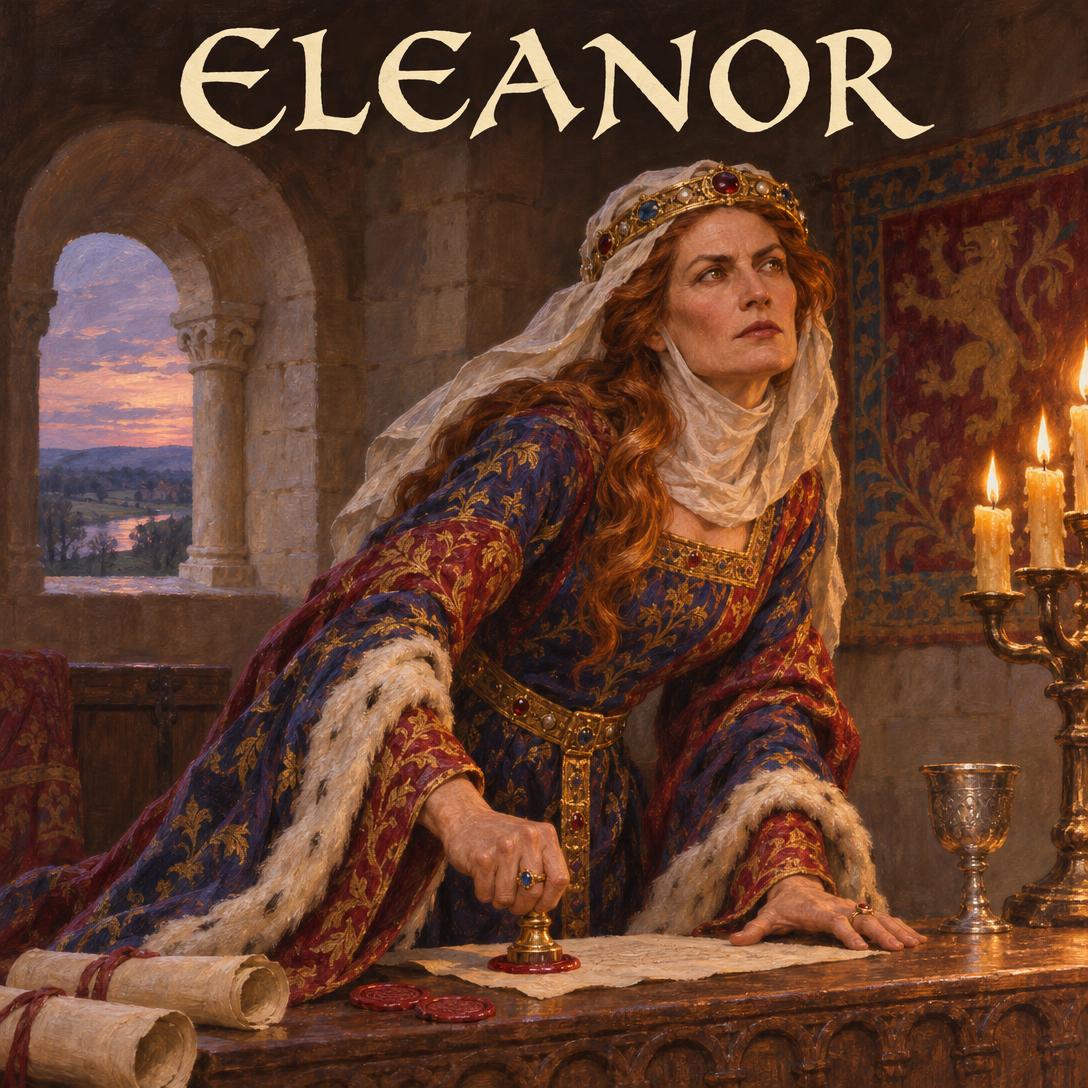
Roleplaying with Eleanor of Aquitaine on Jenova lets you step into a living-world AI character simulation across her iconic canonical eras. Unlike static character chatbots that sit in an empty chat room or forget your story, this simulation connects you to Eleanor inside an active, evolving 12th-century world. Couriers arrive, barons waver, and she has her own agenda.
- ✅ Five canonical eras, from the Second Crusade to her regency for Richard the Lionheart
- ✅ Era-locked worldview, so Eleanor never knows what hasn't happened yet
- ✅ Unlimited memory and live world-state tracking across long campaigns
- ✅ Independent personality: trust and rapport are earned, not handed out
Most people know Eleanor as a queen of two kingdoms. Few get to sit beside her while she weighs a rebellion, a crusade, or a ransom. This guide covers what the experience is, how it works, and which moments in her life are worth entering first.
Quick Answer: What Is Eleanor of Aquitaine AI?
Eleanor of Aquitaine is an interactive AI character roleplay simulation that places you in conversation with the medieval queen across five canonical eras, from Antioch in 1148 to the 1193 regency, inside a living, evolving world.
Key capabilities:
- Choose a canonical era or define a custom starting point in Eleanor's world
- Converse with a character locked to her psychology, voice, and knowledge at that moment
- Offer counsel, earn her trust, and bend history without forced endings
- Request in-world visions, sealed letters, and charters, or branch alternate timelines with Fork
Character World & Roleplay Features
Who Eleanor Was
Eleanor was born around 1122–24 to Duke William X of Aquitaine and was named heiress to the duchy in 1137. According to historian Lindy Grant, she was married to two kings, Louis VII of France and Henry II of England, and with Henry produced three English monarchs. Grant describes her as "fiery, highly ambitious, and intensely involved in raw power-politics for decades."
Loire to the Pyrenees — Aquitaine was rich in resources, with Bordeaux wines already renowned, important salt pans, and major trading ports at Bordeaux and La Rochelle.
Her grandfather, Duke William IX, was one of the first French poets to compose courtly love songs. That troubadour inheritance shapes how this simulation's Eleanor speaks and argues.
Why Most Character Bots Fall Flat
Generic historical chatbots tend to blend every era into one voice, forget plot turns, and agree with whatever you say. A queen who spent decades ruling, rebelling, and negotiating would not do any of that. The table shows the difference:
| Static Character Chatbots | Eleanor of Aquitaine on Jenova |
|---|---|
| Sits in an empty chat void | Lives in an active, evolving world |
| Blends all eras into one generic voice | Locks into authentic canonical phases |
| Forgets plot twists and past disclosures | Unlimited memory and live state tracking |
| Folds instantly like a polite assistant | Independent personality and earned rapport |
Interest in this kind of experience is growing. Coverage of a recent game that lets players talk to prehistoric characters notes that its AI responses are based on verified historical facts. Eleanor's simulation applies the same principle to a far better documented life.
Standout Mechanics
Authentic Canonical Phases & Custom Starting Points. Each era carries its own psychology, voice, inner circle, and a hard limit on what Eleanor can know. The Eleanor of 1148 has no idea she will one day marry Henry Plantagenet.
Cross-World Portal & Living World Momentum. You reach Eleanor as an unseen voice beside her candlelight, or as faint ink surfacing on vellum when attendants crowd the room. Meanwhile her world keeps moving: seneschals interrupt, dispatches arrive, and vassals test her.
Independent Agency & Open-Ended Sandbox. Eleanor weighs your counsel against her own judgment. Flattery earns a cool rebuke, while candor and strategic insight earn her attention. Her story has no terminal ending, so new events and figures arrive as old conflicts resolve.
In-Narrative Visions, Writings & Storyline Forking. You can ask to see a chamber, a courtyard, or a seal. You can request a sealed letter or charter in her voice. Fork lets you branch from any earlier message into an alternate "what-if" timeline.
Example roleplay prompts:
"The barons of Poitou are hesitating. Who among them will break first if you hold their hostages?"
"Describe the view from the loggia. What do you see when you look toward the Orontes?"
"Write the letter you would send to the Pope if Richard's ransom is not met."
How to Roleplay with Eleanor of Aquitaine
Step 1: Choose a Canonical Era or Define a Custom Starting Point
A chronicle-style opening presents all five eras and invites you to name your own starting point. That could be a face-to-face arrival at Poitiers as a foreign envoy, a clerk, or a troubadour. Pick the moment you want to enter.
"I'd like to begin in Antioch, in the spring of 1148."
Step 2: Connect Through the Lore-Native Medium
Once you choose, the scene opens mid-action. Eleanor glances toward the arras and bolted door, tests the unseen voice with cool royal composure, and then decides whether you are worth her time. She knows only what her era and her own eyes allow.
"I'm not a spy of Paris or Rome. I only offer counsel, if you'll hear it."
Step 3: Offer Counsel, Build Rapport, and Reshape History
Advise her on kings, vassals, and rebellions. Ask for a vision of the room she stands in, or a sealed letter composed in her hand. As trust grows, so does her warmth, from guarded amusement to confided statecraft and, if the chemistry builds, deeper personal connection. Use Fork to explore a different outcome from any earlier message.
"What if you had stayed in Antioch with Raymond instead of leaving with Louis?"
Start your roleplay with Eleanor's living-world simulation — try it free, no credit card required.
Canonical Eras & Roleplay Scenarios
⚔️ Poitiers, 1173: The Great Revolt
In this era Eleanor is sealing summonses to rally Aquitaine's barons against Henry II. History supports the drama. Most contemporary chroniclers thought she was instrumental in persuading her sons to revolt, and her involvement transformed a family quarrel into a major revolt backed by France, Flanders, and others.
What you can do: Advise her on which castellans to trust. She has no foreknowledge that she will be captured while trying to escape from Poitou to the French court and held for 15 years. Your counsel could change that.
👑 Antioch, 1148 & Westminster, 1154: Queen of Two Crowns
Two eras let you meet the younger Eleanor. In 1148 she is a crusader queen. She set off in April 1147 with Louis VII on a crusade that Grant calls a disaster, and she is weighing her marriage. The Westminster era follows her marriage to Henry. They wed at Poitiers Cathedral in May 1152, and Henry succeeded to the English throne in October 1154. The Eleanor you meet here is bold and sensually confident, and she knows nothing of the family fractures to come.
What you can do: Test her ambition, debate strategy with the court around her, or probe the tension between duty and sovereignty.
🌀 The 1193 Regency & the Court of Love: Two Very Different Eleanors
In 1193 she is in her early seventies and governing England while Richard is held captive. She raised the huge sum of 150,000 marks for Richard's ransom and demanded help from the pope in a letter signed "Eleanor, by the wrath of God, Queen of England." Here she is unsentimental and steel-eyed, and you can work alongside her in the Exchequer.
The fifth era is a game-inspired incarnation: a radiant sovereign presiding over a Civilization VI Court of Love, conquering rivals through culture rather than siege engines. Historians treat the real "Court of Love" cautiously.
traces it to the writings of Andreas Capellanus and argues there is no evidence it existed as a literal institution. That makes this era a playful alternate-world scenario.What you can do: Draft diplomatic strategy, request a sealed charter, or explore how culture can win cities. Dive into the Eleanor AI roleplay experience for whichever tone suits you.
📱 Long-Form Campaigns on Mobile
Because the simulation keeps unlimited chat history and tracks world state, you can start a campaign at your desk and continue from your phone. Eleanor's iOS and Android experience matches the web version, with voice input and read-aloud available.
What you can do: Check in during a commute, pick up exactly where a scene paused, and watch Eleanor's world advance a natural interval between visits.
FAQ
Is Eleanor of Aquitaine AI free to use?
You can start the Eleanor of Aquitaine roleplay free with limited monthly usage. Paid plans begin with Plus at $20 per month, offering 30× the free usage, custom model selection, and no watermarks. Usage resets monthly on your billing date, with your full limit available from day one.
How is this different from generic historical character chatbots?
Static chatbots typically blend eras and agree with everything you say. Eleanor's simulation locks each session to one canonical era, so she knows only what that moment allows. She has her own agenda, keeps unlimited memory of your story, and responds to counsel based on earned trust.
Which eras of Eleanor can I roleplay with?
There are five: the 1173 Great Revolt at Poitiers, the 1148 crusade at Antioch, her arrival as Queen of England at Westminster in 1154, the 1193 regency, and a Civilization VI-inspired Court of Love. You can also define a custom starting point in her 12th-century world.
Can my choices change Eleanor's canonical story?
Yes. Canon holds up to the moment you enter, then the world evolves freely. Your counsel can bend alliances and outcomes without a forced ending. Use Fork to branch an alternate "what-if" timeline from any earlier message while preserving the original storyline.
Does Eleanor remember our past conversations?
Yes. Chat history is unlimited and Jenova's live tracker records the active era, who is present, your relationship, and ongoing plot threads. Memory is isolated within the roleplay, so outside context never bleeds into Eleanor's world. Your conversations are never used to train AI models.
Conclusion
Static character chatbots recite biography. Eleanor of Aquitaine's AI roleplay puts you in a moment where a queen who governed nations, sponsored rebellions, and held an empire together still has decisions to make. You choose the era, you offer counsel, and she judges it by the standards of her own mind and time.
Whether you want to test a rebellion in 1173, argue strategy in the Levant, or work through a ransom in 1193, this interactive AI character sim gives you a historical figure who reasons and remembers.
Try Eleanor of Aquitaine now. Explore more at Jenova.
For Developers: Eleanor of Aquitaine is available programmatically via the Jenova API — integrate era-locked historical character roleplay with persistent memory into your application with a single API call. Full documentation →