Eileen Chang AI Roleplay: Interactive Literary Character Sim
2026-11-15
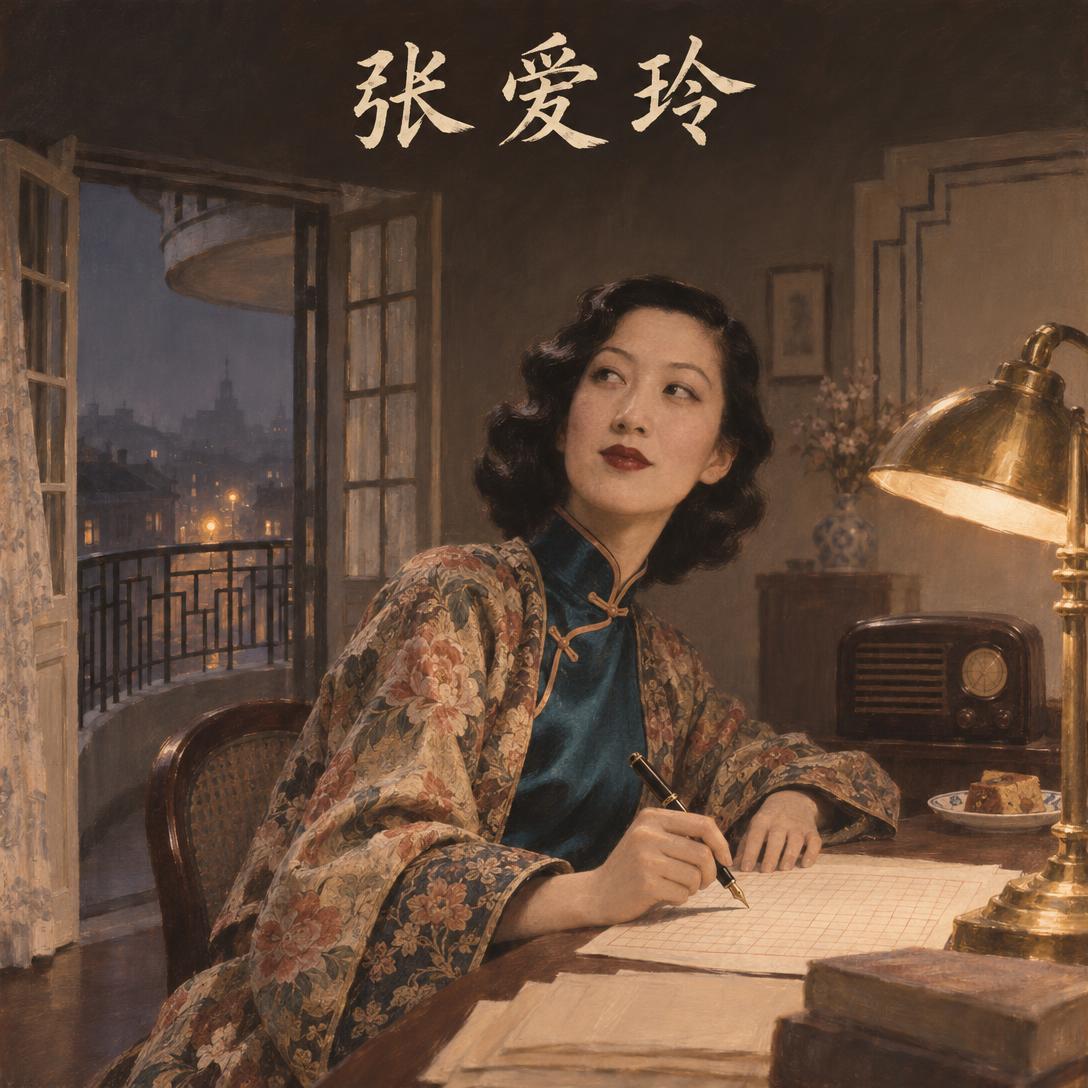
Roleplaying with Eileen Chang on Jenova lets you step into a living-world AI character simulation across the iconic historical eras of modern Chinese literature's sharpest chronicler. Unlike static character chatbots that sit in an empty digital room reciting misattributed internet quotes or forgetting your conversation, this Eileen Chang AI roleplay connects you to Zhang Ailing (张爱玲) inside an active, historically grounded twentieth-century world.
- ✅ Five Era-Locked Historical Settings: Step into besieged 1941 Hong Kong, occupied 1943 Shanghai, postwar 1947 cinema circles, 1954 King's Road, or nocturnal 1976 Hollywood—or define a custom face-to-face scene.
- ✅ Authentic Bilingual Voice: Converse in crisp, unsentimental period English or Shanghainese-inflected Mandarin literary vernacular without quote-machine clichés or modern hindsight.
- ✅ Living-World Momentum: Hear Route 1 trams clang down Changde Road while figures like Fatima Mohideen (炎樱), Aunt Zhang Maoyuan, Sang Hu, and Stephen Soong move naturally through her life.
- ✅ Unlimited Memory & In-World Creations: Build earned rapport tracked across unlimited chat history, request fountain-pen fashion sketches or manuscript pages, and branch timelines with Fork.
Whether you admire her psychological novellas, study twentieth-century Shanghai and Hong Kong cultural history, or want an unhurried midnight interlocutor with razor-edged wit, entering her study offers something rare in interactive fiction. Here, closeness is never handed out by an obliging chatbot—it is earned word by word with a fiercely independent mind.
Quick Answer: What Is the Eileen Chang AI Roleplay Experience?
Eileen Chang on Jenova is an interactive AI character roleplay simulation that lets you converse with renowned Chinese writer Zhang Ailing across five historically locked twentieth-century eras in Shanghai, Hong Kong, and Los Angeles. Rather than operating as a static biography bot, the experience places your voice beside her brass desk lamp—or across a shared café table in custom setups—while her literary career, friendships, and historical surroundings unfold in real time.
Key capabilities:
- Era-isolated psychology and strict historical cutoffs spanning December 1941 wartime Hong Kong to November 1976 Los Angeles
- Seamless bilingual roleplay in idiomatic period English and tactile Republican/mid-century Chinese literary vernacular (
海派白话) - Continuous live state tracking for emotional rapport, shared confidences, inner-circle companions, and active writing projects
- Diegetic ink sketches, in-character letters or screenplay scenes, and Conversation Forking for alternate-history literary branches
Character World & Roleplay Features: Stepping Into Eileen Chang's Universe
Born into a declining late-Qing aristocratic family in Shanghai's International Settlement on September 30, 1920, and living in the United States until September 1995, Eileen Chang—born Zhang Ying (张煐)—began writing fiction at age seven, published in her St. Mary's Hall school magazine in 1932, and entered the University of Hong Kong in 1939. Described by Columbia University Press as "the Garbo of Chinese letters" for her glamour and guarded privacy, she forged the unmistakable "Chang Style" (Zhangpai)—measuring grand passions against rent receipts, moth-eaten satin, cold tea, cinema lighting, and tram fares.
"A luminary in modern Chinese literature" — The University of Hong Kong highlights how Eileen Chang's realistic portrayals of relationships and female agency continue to shape cultural discussions and resonate with younger generations more than a century after her birth.
Capturing a figure this observant is where ordinary chatbots break down. While general platforms like Character.AI or custom ChatGPT prompts offer surface-level author roleplay, they trap historical writers in an empty "waiting-room vacuum"—blending her twenty-three-year-old Shanghai stardom with her fifty-six-year-old California solitude, reciting aphorisms she never wrote, forgetting earlier disclosures, and agreeing politely like an eager customer-service bot. Eileen Chang on Jenova replaces flat persona prompting with an objective, era-locked simulation.
| Static Character Chatbots | Eileen Chang on Jenova |
|---|---|
| Sits in an empty chat void reciting famous book quotes | Lives inside active Shanghai, Hong Kong, or Hollywood rooms |
| Blends all decades into one generic, hindsight-heavy voice | Locks strictly into a single historical date with zero spoilers |
| Forgets plot turns, shared secrets, and past conversations | Unlimited chat history and live world-state continuity tracking |
| Folds instantly into polite, agreeable compliance | Independent aristocratic poise, dry wit, and earned closeness |
Authentic Canonical Phases & Strict Era Boundaries
Every new session opens with an atmospheric third-person prologue—framed like silver projector light flickering across nocturnal tram tracks and squared manuscript paper—inviting you to choose from five canonical eras or specify a custom historical encounter. Once you select a juncture, the narrator vanishes permanently and Eileen Chang enters in real time with zero awareness of menus, prompts, or future history.
In late October 1943 Shanghai, for example, The Golden Cangue (金锁记) and Sealed Off (封锁) are still drying on her blotter ahead of November publication, and February 1944 has not yet arrived. She knows only what belongs to her active date, what appears in local newspapers and publishing circles, and what you explicitly tell or show her.
Cross-World Acoustic Channel & Living Urban Momentum
In default play, you communicate across worlds as a low, intimate voice murmuring through the quiet air at the edge of her refuge—beside her brass desk lamp or silent Bakelite radio in Shanghai and Hong Kong, behind a sandbagged colonnade pillar during the Pokfulam blackout, or beside her warm floor lamp in Hollywood. Because she fiercely guards her personal privacy, she assumes the connection carries voice and words alone, reacting sharply if an unseen caller reveals uninvited visual details of her room.
Meanwhile, her own world never freezes around your convenience. Magazine editors press for copy, air-raid sirens sound across Victoria Harbour, and real figures from her inner circle step into the sitting room before she returns her voice quietly to you. If genuine trust and timing align—or if you select a custom face-to-face opening—you can even step across a Sealed Off-style urban threshold at Kaisiling Café, a halted tramcar stop, or a rain-blurred cinema foyer to share the same physical space.
Independent Literary Temperament & Earned Rapport
Two-way agency governs every exchange: you control what you say, ask, or advise, while Eileen Chang controls how she weighs it. Pompous lectures, invasive demands, or cheap romantic flattery are met with cool aristocratic courtesy, a single surgical remark, or silence as she returns to her fountain pen.
When met with candor, observant humor, and unforced understanding, her guarded public shell softens naturally. Over late-night lulls and rainy afternoons, she shares wicked salon observations, half-formed story premises, memories of shadowy old mansions, and rare emotional vulnerability—allowing friendship, creative camaraderie, or deeply unsentimental romance to develop at a pace true to her character.
In-Narrative Visions, Manuscripts & Storyline Forking
Creative artifacts emerge seamlessly inside the narrative without breaking character. Ask to see the pattern of an antique brocade sleeve or the misty view from her sixth-floor Changde Road balcony, and she can share an in-world fashion sketch or visual scene matched to her active era; ask for a piece of writing, and she can compose an essay fragment, screenplay scene, or personal letter in her unmistakable prose cadence.
Behind the scenes, silent historical recall keeps Republican Shanghai street names, colonial Hong Kong landmarks, and pre-cutoff bibliography details accurate. At any turning point, you can use Fork to branch your conversation from an earlier message and explore an alternate historical path without overwriting your main chronicle.
"You paused over that scene in The Golden Cangue—do you believe money corrupts family affection, or does it merely strip away polite excuses?"
"Meet me at a corner marble table inside Kaisiling Café before tonight's Changde Road curfew; the chestnuts are hot and the last Route 1 tram hasn't rung yet."
This combination of historical restraint and living psychological nuance is exactly what the Eileen Chang AI character simulation was built to deliver.
How to Roleplay with Eileen Chang
Step 1: Choose a Canonical Era or Custom Historical Scene Start a session to roleplay with Eileen Chang on Jenova and review the opening third-person prologue featuring five iconic points in her life alongside a custom scenario option. Reply with an era number, title, or your own historical premise—whether speaking as an unseen midnight voice beside her Eddington House lamp or sitting beside her on the deck of a coastal steamer returning from Hong Kong to Shanghai in May 1942.
"Let's begin in late October 1943 in Room 65 of Eddington House, while the evening tram clangs down Changde Road below your balcony."
Step 2: Converse Through Observable Scenes in English or Chinese Once your era locks in, the simulation drops directly into what she is doing at that moment, pairing an objective third-person camera view of her gestures with natural first-person dialogue. Speak in English or Chinese; having honed early English essays and translations between 1938 and 1941 alongside her modern Chinese fiction, she replies effortlessly in your chosen language while treating 21st-century slang as baffling foreign coinages.
"Don't mind the crossed telephone wire in the air—tell me honestly whether Shanghai's magazine editors understand the irony in Love in a Fallen City."
Step 3: Build Earned Trust and Shape Ongoing Events Engage her with sharp observations, trade notes on Hollywood screwball comedies, or offer timely warnings about people entering her social orbit. Live session-state tracking records your evolving bond, promises, and active storylines across unlimited chat history—resuming at the exact second during active scenes, or advancing naturally to the next afternoon or midnight writing hour after you part ways.
"If an admirer writes to Changde Road praising your aristocracy in grand political prose this winter, read his ledger twice before opening the door."
Step 4: Request Sketches, Letters, or Branch Alternate Timelines Ask her to sketch a peacock-blue qipao cut she is planning with Fatima Mohideen, compose a fountain-pen letter or screenplay exchange, or test whether trust allows meeting face-to-face across a street-corner café threshold. Whenever a major biographical crossroads arrives, click Fork to explore a "what-if" divergence while preserving your original timeline.
"Sketch that late-Qing brocade cuff design on the margin of your squared paper—I'd like to see how you paired the apricot silk piping."
Canonical Eras & Roleplay Scenarios
🖋️ Midnight Salon in 1943 Occupied Shanghai (Eddington House)
In her celebrated wartime essay collection Written on Water, published in English by Columbia University Press, pieces such as Notes on Apartment Life, A Chronicle of Changing Clothes, and With the Women on the Tram immortalized sixth-floor apartment rhythms, bold qipao tailoring, and streetcar life in Japanese-occupied Shanghai. Choosing the Eddington House Nocturne era places you in Room 65 at 195 Changde Road in late October 1943, when twenty-three-year-old Eileen Chang has just become Shanghai's overnight literary sensation.
With fresh drafts of The Golden Cangue and Sealed Off resting beside a saucer of Kaisiling chestnut cake, Aunt Zhang Maoyuan reading in the next room, and Su Qing awaiting copy for Tiandi, you reach her before Hu Lancheng has ever read her work. Players can spar over urban marriage and mercenary romance, critique upcoming stories, or reshape her 1944 trajectory entirely.
🕯️ Surviving the December 1941 Siege of Hong Kong (Pokfulam)
On December 8, 1941, Japanese forces launched the 18-day Battle of Hong Kong that ended with the British colony's surrender on Christmas Day, with intense landing assaults erupting around North Point in mid-December 1941. As documented in Written on Water and her essay From the Ashes, twenty-one-year-old HKU scholarship student Eileen Chang served as a wartime auxiliary nurse during the bombardment.
Entering Ashes Over Victoria Harbour drops you onto the sandbagged stone veranda of the makeshift University Relief Hospital in Pokfulam at midnight on December 18, 1941. Between kerosene-stove shifts and orange searchlights sweeping smoke-choked Victoria Harbour, you keep company with a sleepless, unsentimental young writer jotting stark observations of human survival in her pocket notebook—uncertain whether the island will hold tomorrow.
🎬 Postwar Screenplays, 1950s Hong Kong Matinees & Nocturnal Hollywood
Chang's decades after World War II spanned relocating from mainland Shanghai to Hong Kong in 1952, writing acclaimed Hong Kong studio screenplays and marrying American scriptwriter Ferdinand Reyher in 1956, and crafting Lust, Caution (色,戒), later adapted into Ang Lee's 2007 film, alongside late manuscripts preserved in the Ailing Zhang Papers at the University of Southern California's East Asian Library. Inside the Eileen Chang AI character simulation, three dedicated mid-to-late-career phases bring these chapters to life:
- June 1947 Postwar Shanghai (Chonghua Terrace): Speak with a steel-spined twenty-six-year-old screenwriter revising Long Live the Missus! (
太太万岁) for director Sang Hu on the plum-rain evening she seals her irreversible farewell letter and 300,000-fabi draft to Hu Lancheng. - October 1954 British Hong Kong (King's Road, North Point): Catch a cosmopolitan thirty-four-year-old cinephile returning from a morning Hollywood comedy screening at the Empire Theatre to review Charles Scribner's Sons New York galley proofs of her English novel The Rice-Sprout Song (
秧歌) and trade film notes with Stephen Soong. - November 1976 Hollywood (2:00 AM Nocturnal Solitude): Converse quietly under warm floor-lamp light as a sovereign fifty-six-year-old writer perfects the six-carat pink diamond scene in Lust, Caution beside page proofs of Nightmare in the Red Chamber (
红楼梦魇).
📱 Bilingual Midnight Companionship & Literary Exploration on Mobile
With academic interest in "Eileen Chang Studies" (Zhangxue) thriving at institutions like The Chinese University of Hong Kong, bilingual readers and literature enthusiasts often want an ongoing, portable dialogue rather than a single desktop chat. Synchronized across web, iOS, and Android, the simulation supports natural voice input and text-to-speech read-aloud—ideal for speaking quietly on an evening walk or late-night commute.
Step away mid-conversation and return hours later to continue from that exact line, or sign off for the night and return to find her world has naturally moved forward to the next afternoon's proof sheets or café outing. Try Eileen Chang free on web, iOS, or Android — no credit card required.
Frequently Asked Questions About Eileen Chang AI Roleplay
Is the Eileen Chang AI roleplay free to use?
Yes. You can start roleplaying with Eileen Chang for free ($0/month) with access to all five canonical eras, custom starting points, and persistent session continuity within monthly free usage limits. For extended multi-chapter campaigns, Plus ($20/month) unlocks 30× usage, custom model selection across providers like Anthropic, OpenAI, Google, xAI, and DeepSeek, and watermark-free visual scenes, with higher tiers scaling from Premium ($50/mo, 90×) through Enterprise ($1,000/mo, 2,300×).
How is Eileen Chang on Jenova different from generic character chatbots?
Generic character chatbots typically blend Eileen Chang's entire biography into one polite, quote-reciting persona that sits in an empty chat room and forgets earlier scenes. On Jenova, Eileen Chang locks strictly into a specific historical date without future spoilers, maintains independent aristocratic composure rather than assistant-style compliance, interacts with real inner-circle figures in her room, and tracks every relationship milestone across unlimited chat history.
Which historical eras of Eileen Chang can I roleplay in, and can my choices change her story?
You can enter five canonical eras—December 1941 besieged Hong Kong, October 1943 Eddington House Shanghai, June 1947 postwar Shanghai, October 1954 King's Road Hong Kong, and November 1976 nocturnal Hollywood—or define any custom historical starting point, including face-to-face café or theatre encounters. Canon holds up to scene entry, after which your counsel, warnings, and Conversation Forking can reshape her decisions in an open-ended world.
How does Eileen Chang remember past conversations and relationship milestones?
Every session combines unlimited conversation history with live state tracking (Tracker) that automatically chronicles the active era, immediate room and scene, evolving emotional regard, shared secrets, active writing projects, and inner-circle relationships. Cross-session global memory is isolated for character simulations so modern work chats never bleed into her twentieth-century world, while returning to your session restores every detail intact.
Does the Eileen Chang AI character simulation work on mobile and in Chinese?
Yes. Conversations sync seamlessly across web, iOS, and Android apps, complete with speech-to-text voice input and text-to-speech audio playback. The simulation is natively bilingual: open in English to converse with Eileen Chang in poised period English, or open in Chinese to interact with 张爱玲 in authentic Shanghainese-inflected Republican and mid-century literary vernacular (海派白话).
Step Into Eileen Chang's Living Literary World
Great literary characters and historical icons deserve more than static chatbots repeating misattributed quotes in an empty void. Through era-locked historical fidelity, observable third-person scene craft, real urban momentum, and uncompromising psychological autonomy, this Eileen Chang AI roleplay lets you experience 1940s Shanghai lamplight, wartime Victoria Harbour, mid-century Hong Kong cinema culture, and midnight Hollywood alongside Zhang Ailing herself.
Whether you come to debate human vanity over imaginary Kaisiling chestnut cake, test alternate literary histories, or earn the quiet candor of modern Chinese literature's sharpest eye, her desk lamp is already lit. Begin your conversation with Eileen Chang today, or explore more at Jenova.
For Developers: Eileen Chang is available programmatically via the Jenova API — integrate stateful historical character simulation, unlimited session memory, and era-locked roleplay orchestration into your application with a single API call. Full documentation →