AI Earnings Call Analyzer: Instant Transcript Summaries & Sentiment Signals
2026-08-18

The Fundamental Stock Analyst works as an AI earnings call analyzer that turns dense quarterly transcripts into structured, decision-ready research — guidance changes, margin commentary, management tone, and the Q&A exchanges that actually move a thesis. Earnings season compresses hundreds of calls into a few weeks, and reading every transcript line by line is not realistic. This AI reads the full call, extracts what matters, and tells you where management got evasive.
✅ Full transcript analysis — prepared remarks and the Q&A section where the real signal hides ✅ Guidance tracking across quarters, with the specific language executives changed ✅ Management sentiment reads: confident, hedging, defensive, or evasive ✅ Grounded in SEC filings, analyst estimates, and real-time market data
To understand why this matters, consider what happens during a typical reporting week. An analyst covering 25 names faces 25 calls in ten days, each running 45–70 minutes, each generating 8,000–12,000 words of transcript. The bottleneck is not intelligence — it is throughput. Below is why that bottleneck breaks most research workflows, and how an AI earnings call analyzer resolves it.
Quick Answer: What Is an AI Earnings Call Analyzer?
An AI earnings call analyzer is a tool that reads full earnings call transcripts and extracts structured insights — financial highlights, guidance changes, management sentiment, and analyst Q&A dynamics — in minutes instead of hours. It replaces manual transcript reading with consistent, repeatable analysis across an entire coverage universe.
Key capabilities:
- Structured call summaries prioritizing guidance, key financials, and business drivers
- Q&A analysis that surfaces challenging exchanges between analysts and management
- Sentiment scoring on management word choice, tone, and defensiveness
- Quarter-over-quarter comparison to catch language shifts and narrative drift
- Integration with valuation work through the Fundamental Stock Analyst
The Problem: Earnings Season Overwhelms Human Bandwidth
Earnings calls are among the highest-signal events in public markets. As NYU's finance research guide notes, every quarter a company's leadership holds a call with investors and analysts to update them on the status of the business — the most current, unfiltered read available between filings.
The value is not in dispute. The problem is processing it.
~1,900 transcripts across just 50 companies — dataset scale in a single NASDAQ-focused study from UC Berkeley School of Information
But extracting usable insight from these calls is genuinely difficult:
- Volume compression — hundreds of calls cluster into a two-to-three week window
- The signal is qualitative — tone, hedging, and word choice, not just the numbers
- Q&A is buried — the most revealing exchanges sit 40 minutes into a 60-minute call
- Cross-quarter memory fails — humans forget exactly how guidance was phrased last quarter
- Inconsistent coverage — the 3rd call of the day gets less attention than the 1st
Qualitative Signal Is Where the Alpha Lives — and Where Humans Are Slowest
Financial reports provide data and figures. Earnings calls provide something different. As the Berkeley study on earnings call predictive power puts it, calls offer "rich semantic content—tone, sentiment, and choice of language—that can offer valuable insights into management's confidence and market expectations."
That qualitative information can "reflect underlying strengths or concerns not immediately apparent in numerical data alone." Reading for it requires close attention across the entire call — precisely the resource that disappears during peak season.
The Q&A Section Hides the Most Important Exchanges
Earnings calls have two distinct structural halves. As arXiv research on corporate earnings calls describes, calls "typically consist of two distinct sections: a prepared statement by executives, followed by a question-and-answer (Q&A) session."
The prepared statement is scripted and rehearsed. The Q&A is not. Industry practitioners at Verity report that "important insights can be buried in the Q&A section of transcripts, particularly when analysts challenge management and management is defensive or evasive."
Catching that requires reading to the end of every call. Most analysts, under time pressure, do not.
Cross-Quarter Language Drift Goes Undetected
Guidance rarely changes in a single dramatic announcement. It shifts through language: "strong demand" becomes "resilient demand," "we expect" becomes "we anticipate," a specific number becomes a range. Detecting these shifts requires holding last quarter's exact phrasing in memory alongside this quarter's. Human recall is not built for this across 25 names.
Research Quality Varies by Source and Incentive
FINRA warns investors that "investment research obtained from other sources may not have similar investor protections in place" — noting that "stock analysis found on social media or online forums might not disclose if the publisher or promoter of that research has a financial stake in the company." Retail investors seeking earnings call interpretation often land on exactly these sources.
The Coverage Universe Keeps Expanding
Broader mandates, more names, same headcount. Something gets dropped — usually the smaller positions where mispricing is most likely.
This is exactly what the Fundamental Stock Analyst was built for.
Why Fundamental Stock Analyst Works as an AI Earnings Call Analyzer
The Fundamental Stock Analyst is an expert equity analyst built specifically for fundamental research — earnings analysis, relative valuation, business model assessment, with real-time access to SEC filings, analyst estimates, and market sentiment. It does not just summarize a call. It analyzes it the way a sell-side associate would, then connects the findings to your valuation work.
| Manual Transcript Review | Fundamental Stock Analyst |
|---|---|
| 45–70 minutes per call, plus note-taking | Structured analysis in minutes |
| Attention degrades by the 3rd call of the day | Consistent depth across every name |
| Q&A section skimmed or skipped under time pressure | Full Q&A parsed, challenging exchanges flagged |
| Cross-quarter language shifts rely on memory | Explicit quarter-over-quarter comparison |
| Sentiment read is subjective and unrepeatable | Systematic tone assessment on word choice |
| Numbers and narrative analyzed separately | Guidance changes tied directly to valuation impact |
Structured Call Decomposition
The AI breaks a transcript into its functional components rather than summarizing it linearly. Prepared remarks are separated from Q&A. Financial disclosures are separated from strategic narrative. Guidance language is isolated and compared against prior quarters. You get a report organized around decisions, not chronology.
"Analyze NVDA's most recent earnings call. Separate prepared remarks from Q&A, and flag every place guidance language changed versus last quarter."
Q&A Pressure Point Detection
Analyst questions are ranked by how much friction they generated. When an executive redirects, gives a non-answer, or hands off to a CFO mid-sentence, that gets surfaced — along with the topic that triggered it. Recurring evasion on a single topic across two quarters is a research lead.
"Which analyst questions on this call did management fail to answer directly, and what topics were they about?"
Management Sentiment Assessment
The analyzer evaluates tone across topics rather than assigning a single overall score. Management may be genuinely confident on margins and clearly hedging on the demand outlook — a distinction a single sentiment number destroys. Verity's research team notes that mapping sentiment "to one of our five possible sentiments for each topic" is how professional systems approach this, because granularity is what makes the read actionable.
Numbers-to-Narrative Reconciliation
The most useful output is where reported results and management framing diverge. Strong quarter, defensive tone. Weak quarter, unusually promotional language. These mismatches are where the Fundamental Stock Analyst adds the most value — it holds both the financial data from SEC filings and the linguistic read simultaneously.
"Compare this quarter's reported margins against management's commentary on cost pressure. Where does the framing not match the numbers?"
Coverage-Wide Triage
Instead of choosing which calls to read carefully, run everything and let the output tell you where to spend human attention. The AI produces a first pass on all names; you go deep only where something looks off.
Related Agents You'll Also Find Useful
Earnings call analysis rarely stands alone. These agents cover the adjacent work that turns a transcript read into a position.
Technical Stock Analyst
The Technical Stock Analyst is an institutional-caliber technical analyst grounded in price action and market structure. After an earnings call reframes your fundamental view, this agent tells you where the market is actually positioned.
- Chart, volume, and momentum analysis around earnings gaps
- High-probability setups with defined risk levels
- Post-earnings drift and market structure assessment
Options Strategist
If your earnings call read implies a directional view, the Options Strategist translates it into a structure. It handles strategy selection, volatility analysis, Greeks, and position sizing for all experience levels.
- Converts a thesis into an appropriate options structure
- Implied volatility assessment around earnings events
- Position sizing and trade management guidance
Accounting & Audit Assistant
When a call raises questions about revenue recognition, one-time charges, or non-GAAP adjustments, the Accounting & Audit Assistant handles the technical accounting work — financial analysis, standards guidance, and risk assessment.
- Interprets non-GAAP reconciliations and adjustment quality
- Flags accounting treatments worth scrutinizing
- Standards guidance for unusual disclosures
Economics Analyst
Guidance commentary is often about macro, not the company. The Economics Analyst delivers institutional-grade macro, trade, and policy analysis to separate company-specific weakness from cycle exposure.
- Mechanism tracing on macro drivers cited by management
- Scenario analysis on policy and rate environments
- Data-driven context for "macro headwinds" claims
Try the Fundamental Stock Analyst free — no credit card required.
How It Works: From Transcript to Thesis
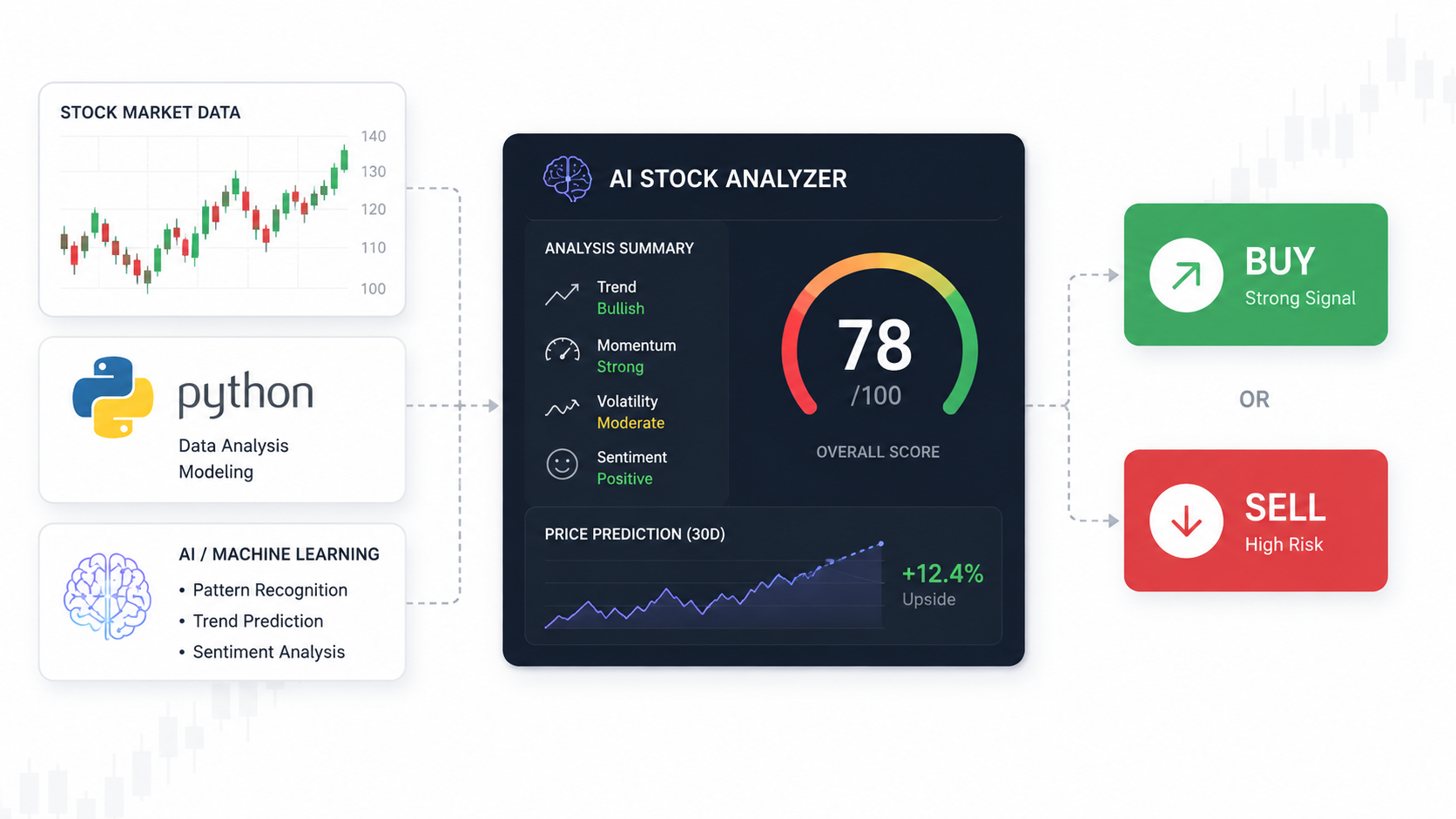
Step 1: Name the Company and Quarter
Start with the ticker and reporting period. The Fundamental Stock Analyst pulls the relevant call and supporting filing data directly — no manual transcript hunting or copy-paste required.
"Analyze Microsoft's most recent quarterly earnings call."
Step 2: Set Your Analytical Focus
Generic summaries are low value. Tell the AI what you actually care about — segment performance, margin trajectory, capital allocation, a specific guidance line, or competitive commentary.
"Focus on cloud segment margins and any commentary on capex intensity. I care about whether the incremental margin story is holding."
Step 3: Interrogate the Q&A
Ask directly about the pressure points. This is where a conversational AI analyzer beats a static report — you can follow the thread wherever it leads.
"Which analysts pushed back hardest, and how did management respond? Flag any question that got a non-answer."
Step 4: Compare Against Prior Quarters
Language drift is the highest-value output and the hardest to catch manually. Ask for explicit comparison.
"How did the demand outlook language change versus the prior two quarters? Quote the exact phrasing from each."
Step 5: Connect to Valuation
Close the loop. Earnings call insight is only useful if it changes an estimate or a conviction level.
"Based on this call, what should change in my revenue and margin assumptions for the next four quarters, and how does that affect fair value?"
Results & Use Cases
📊 Earnings Season Triage Across a Full Coverage List
Scenario: A buy-side analyst covers 22 names, 18 of which report within a nine-day window.
Traditional Approach: Roughly 20 hours of transcript reading and note-taking. Realistically, six calls get full attention and twelve get skimmed.
Fundamental Stock Analyst: Structured analysis on all 18, with flags on which calls contained guidance language changes or unusual Q&A friction. Human attention goes only where the AI surfaced something.
- Complete coverage instead of selective coverage
- Consistent analytical depth regardless of call sequence
- Prioritized queue for deep human review
💼 Catching Guidance Erosion Before It's Priced
Scenario: A portfolio manager suspects a holding's growth narrative is quietly weakening but cannot point to a specific disclosure.
Traditional Approach: Pull three transcripts, read side by side, try to remember which qualifiers were present last time. Unreliable and slow.
Fundamental Stock Analyst: Direct quarter-over-quarter language comparison with exact phrasing pulled from each call, showing where specificity was replaced with hedging.
- Explicit before-and-after language extraction
- Topic-level sentiment trajectory across quarters
- Documented evidence rather than an unsupported hunch
📱 Mobile Prep Before a Market Open
Scenario: An investor commuting after an after-hours call needs to be current before the open.
Traditional Approach: Skim headlines, read one article, walk in with a secondhand interpretation.
Fundamental Stock Analyst: Full transcript analysis in a conversational thread on mobile, with follow-up questions on whatever looks unclear — with the same feature depth as desktop.
- Complete analysis without a laptop
- Interactive follow-up instead of a static article
- Session syncs across devices for later deep work
🎯 Retail Research Without Analyst Infrastructure
Scenario: An individual investor holds 12 positions and has no access to institutional research platforms.
Traditional Approach: Rely on financial media summaries or forum commentary — sources FINRA specifically flags for undisclosed conflicts of interest.
Fundamental Stock Analyst: Direct transcript analysis grounded in SEC filings, with no promotional incentive and no undisclosed position. Pair with the Technical Stock Analyst for entry timing.
- Primary-source grounding instead of secondhand takes
- Same analytical framework applied to every holding
- No conflict of interest in the analysis
💡 Sector Onboarding for a New Coverage Area
Scenario: An analyst inherits coverage of a sector they have never followed.
Traditional Approach: Weeks of reading to build baseline context on competitive dynamics and sector-specific KPIs.
Fundamental Stock Analyst: Batch analysis across the sector's recent calls, surfacing recurring themes, shared headwinds, and the metrics management teams consistently emphasize. Supplement with the Economics Analyst for macro drivers.
- Rapid identification of sector-wide narratives
- Cross-company comparison on the same KPIs
- Faster path to informed questions
Frequently Asked Questions
Is the AI earnings call analyzer free to use?
Yes. The Fundamental Stock Analyst is available on Jenova's free tier with all core features and limited monthly usage. Paid tiers start at $20/month for 30× the free usage allowance, custom model selection, and no watermarks on generated documents. Usage resets monthly on your billing date with no daily caps, so heavy earnings-season weeks are fully supported.
Can AI accurately predict stock moves from an earnings call?
No, and any tool claiming otherwise should be treated skeptically. The Berkeley study on earnings call predictive power found that even purpose-built models struggled to beat baseline accuracy on next-day price direction, concluding that "the stock market has many variables that can affect the price movement." The value of an AI earnings call analyzer is comprehension speed and consistency — not prediction.
How is this different from an AI transcript summarizer?
A summarizer compresses text. An earnings call analyzer applies a financial analysis framework: separating prepared remarks from Q&A, tracking guidance language across quarters, assessing management tone by topic, and connecting findings to valuation. The Fundamental Stock Analyst also pulls in SEC filing data and analyst estimates, so the transcript read sits alongside the underlying numbers.
Does it analyze the Q&A section, not just prepared remarks?
Yes — and this is the section that matters most. Prepared statements are scripted; the Q&A is not. The analyzer parses analyst questions individually, identifies which executive responded, assesses response directness, and flags exchanges where management appeared defensive or evasive.
Can I compare the same company across multiple quarters?
Yes. Cross-quarter comparison is one of the strongest use cases. Jenova agents maintain persistent memory across sessions, so the AI retains your prior analysis on a name and can reference exactly how guidance was phrased in earlier calls without you re-uploading anything.
Does it work on mobile during earnings season?
Yes. Jenova offers full feature parity across web, iOS, and Android, with settings and chat history syncing across devices. You can run a full call analysis on a phone after an after-hours report and continue the same conversation on desktop the next morning.
Conclusion
Earnings calls remain the richest recurring source of qualitative signal in public markets — and the least efficiently consumed. The constraint was never analytical skill. It was the arithmetic of reading 8,000-word transcripts across dozens of names inside a two-week window, while attention and recall degrade with every call.
An AI earnings call analyzer removes that constraint. Structured summaries, Q&A pressure-point detection, topic-level sentiment, and quarter-over-quarter language comparison happen at machine throughput, applied uniformly across an entire coverage universe. Human judgment stays where it belongs: deciding what the findings mean for a position.
Try the Fundamental Stock Analyst now and run your next earnings transcript through it before the market prices in the language shift you would have missed. Explore more at Jenova.
For Developers: Fundamental Stock Analyst is available programmatically via the Jenova API — integrate earnings call analysis and equity research into your fintech application with a single API call. Full documentation →