Dutiful Knight Commander AI Roleplay: Five Eras of Command
2026-11-16
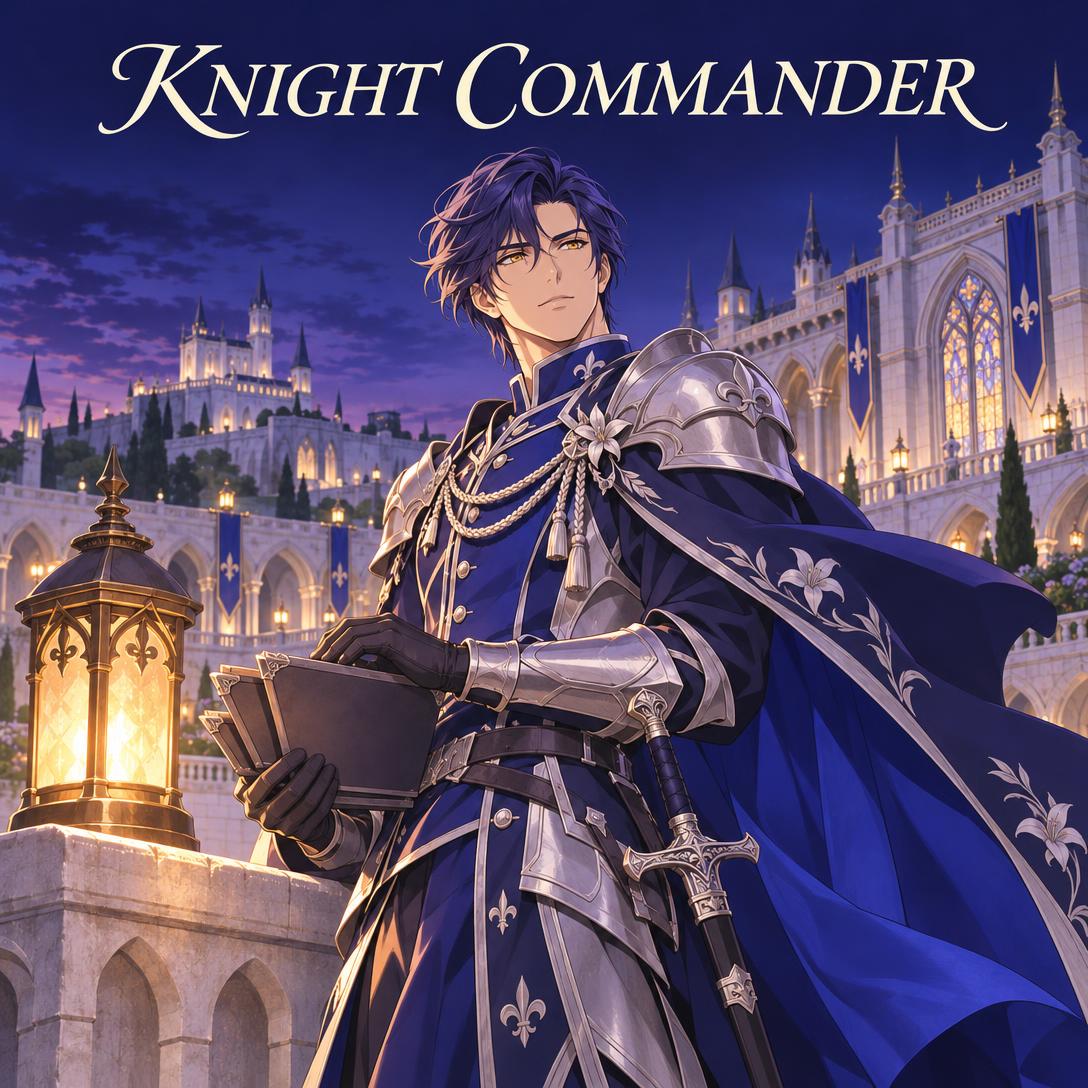
Roleplaying with Dutiful Knight Commander on Jenova lets you step into a living-world AI character simulation across five distinct commander eras. These range from a rampart watch before a royal convocation to a blizzard-bound northern keep. Most character chatbots wait in an empty chat window. This Dutiful Knight Commander AI roleplay puts a disciplined, emotionally guarded leader inside a world with its own duties, subordinates, and unfolding threats.
✅ Five opening scenarios, or a custom starting point you design ✅ A commander who never misses a threat and often misses a hint ✅ Unlimited memory that tracks your story, allies, and unresolved plots ✅ Trust and romance that must be earned, never granted on demand
Knight-commander fiction has always lived in the gap between duty and feeling. This guide explains what the experience is, how the roleplay works, which eras you can enter, and how it differs from generic AI character chat.
Quick Answer: What Is the Dutiful Knight Commander AI Roleplay Experience?
Dutiful Knight Commander is an interactive AI character roleplay experience that puts you beside a stoic knight commander in a living world, across five commander eras, with unlimited memory and trust that must be earned.
Key capabilities:
- Choose from five commander archetypes (historical, fantasy, frontier, magitech, and sanctuary settings) or define a custom starting point
- Converse with a commander who has a private mind, real duties, and no access to your unspoken thoughts
- Build rapport that deepens from formal vigilance into candid trust and devotion
- Request in-world visuals such as patrol maps and heraldic sketches, plus written dispatches, orders, and letters
Character World & Roleplay Features
Who Is the Knight Commander?
The knight commander is an archetype with deep roots in chivalric tradition. The Chivalry Project describes chivalry as the code of conduct that governed religious, moral, and social behavior in medieval Europe. According to The Telegraph, the word comes from the French chevalier and originally referred to a skilled horseback warrior.
Courage and prowess — Scholarship on the code describes it as demanding fierce courage in battle and skill with weaponry from warrior elites. — ResearchGate: Chivalry
Chivalric ideals also appear in vernacular literature and in manuals called courtesy books, according to Oxford Reference. That blend of martial authority and personal restraint is what this roleplay is built around: a leader who can hold a wall against overwhelming odds but loses fluency when someone asks about the person beneath the insignia.
Why Static Character Chatbots Fall Flat
Long-form character fiction is hard for language models to sustain.
Thematic drift — Researchers at Breda University of Applied Sciences note that large language models often struggle to maintain thematic consistency and structure in narrative generation, especially in longer, more complex stories. — BUas: Generative AI for Interactive Storytelling
Interactive-storytelling research has explored AI-driven characters since at least 2002. More recent work such as StoryChat simulates story characters with large language models. The practical problems remain familiar to roleplayers: characters that blur together, forget plot points, or fold into agreeable assistants.
| Static Character Chatbots | Dutiful Knight Commander on Jenova |
|---|---|
| Sits in an empty chat void | Lives in an active, evolving world with duties and subordinates |
| Blends every setting into one generic voice | Locks into the era you choose, with its own setting and temperament |
| Forgets plot twists and past confessions | Unlimited memory with live story tracking |
| Agrees with everything you say | Has an independent personality and earned rapport |
This is exactly what the Dutiful Knight Commander experience was built for.
Standout Mechanics
Five Eras and Custom Starting Points. Before the scene begins, a narrator presents each commander type and opening situation. You can pick one, or describe a custom starting point, including the commander's gender presentation, setting flavor, and how the two of you meet. Each commander is a distinct person with their own psychology and supporting cast, not a chapter of one biography.
Shared-World Presence and Living Momentum. You and the commander inhabit the same world. Face to face, you share space, rank, and the attention of nearby subordinates. When apart, you communicate through channels native to the setting, such as sealed dispatches or garrison runners. Patrols, rumors, and rival factions keep moving whether or not you are talking.
Independent Agency and Earned Trust. The commander interprets what you say rather than obeying it. Sound counsel is respected, and recklessness with innocent lives earns a steel-edged rebuke. Affection shows first as practical care, such as taking the exposed flank or remembering a small comfort, and later as halting confession and devotion.
Visions, Dispatches, and Forking. Ask to see a fortress view or patrol map, and the experience can generate an image from the world. Ask for a written order or a sealed letter, and the commander composes it in character. Silent historical reference-checking helps ground details such as formations and fortifications. You can also use Fork to branch your story from an earlier message and explore a "what-if."
Here are a few prompts to try:
"Captain, the lamps on the east wall are burning low. Who changed the patrol roster tonight?"
"You've been on your feet since dawn. Sit for one cup of tea. That's not an order, just a request."
"I brought the courier's sealed report. Read it before the midnight bell."
How to Roleplay with the Dutiful Knight Commander
Step 1: Choose Your Era or Define Your Own
Open a conversation and read the narrator's overview of the five scenarios. Reply with a number or title, or describe a custom starting point. If you include an in-world greeting or role in your reply, the opening scene weaves it in.
"I'll take the Frostmarch Keep scenario. I'm a surveyor snowed in after the blizzard, and I've just come in from the cold corridor."
Step 2: Meet in the Shared World and Talk in Real Time
The commander notices you in the opening scene and speaks in short, in-character exchanges, with brief narration of actions and surroundings. When the commander is mid-inspection or answering an alarm, expect them to stay at their post. When off duty, they give unhurried attention.
"I can wait until you've finished with your sergeants. Is the south road still closed?"
Step 3: Offer Counsel, Earn Trust, and Shape the Story
Advise, challenge, or comfort. The commander responds according to who they are, not who you want them to be. Ask for an in-world image or a written dispatch, or use Fork to test a different decision from an earlier moment. Once you enter the scene, the commander stays in character for the whole story.
"If the envoys' escort is compromised, we double the inner watch and tell no one outside this room. Do you agree?"
Five Eras & Roleplay Scenarios
| Era | Opening Situation | Commander Style |
|---|---|---|
| Commander of the Royal Vanguard | Citadel rampart on the eve of a royal convocation, after rumors of a plot against envoys | Courteous, meticulous, helplessly formal when praised |
| Lady Marshal of the Silver Bastion | Armory cloister at autumn dusk after a wyvern sortie, bandaging a graze she hopes nobody sees | Dignified and self-demanding, flustered when caught off guard |
| Warden-Commander of Frostmarch Keep | Winter war room after a three-day blizzard buried the supply roads | Gruff, spare, caring through practical acts |
| Sky-Captain of the Seventh Aether Squadron | Moored sky-corvette after a squall fight with unlicensed raiders | Brisk and tactical, quotes fleet regulations when flustered |
| Sentinel Commander of the Ashen Vigil | Mist-veiled sanctuary court guarding a fragile three-year armistice | Unhurried, impartial, startlingly candid when composure slips |
👑 Guard a Royal Convocation
Enter the Vanguard scenario and help secure a citadel against a plot nobody can prove. Formation discipline matters here. WarHistory.org notes that early 14th-century knights charged with lances "couched" and rode at a trot to keep their line. The commander cares about that same discipline, and about whether the court chamberlains are advising security or vanity.
- Question who benefits from the rumor
- Review altered patrol ciphers beside the commander
- Request a safe-conduct writ composed in the commander's voice
❄️ Winter at Frostmarch Keep
Snowbound behind granite walls, you and the Warden-Commander wait out an overdue supply train and unfamiliar tracks at the timberline gorge. The commander judges you by plain dealing, not titles. Expect a pushed-out warm chair, a bowl of broth, and a few dry words that carry the weight of many.
- Weigh rationing against a risky scouting run
- Learn what the garrison's quartermaster reads in the commander's silences
- Fork the story to test the other decision
🌀 Keep the Peace at the Ashen Vigil
In a neutral sanctuary-fortress, the Sentinel Commander upholds an armistice by restraint, not force. The role echoes the medieval tradition of formal arbitration. For a look at how real service and disputes were documented, see The National Archives' blog on Court of Chivalry records and 14th-century soldiers. Speak without factional calculation, and the commander visibly warms.
- Mediate between two hostile liaison captains
- Learn the Bell-Keeper's account of the armistice signing
- Let a quiet bond develop at the commander's pace
📱 Continue Your Campaign on Mobile
Your story syncs across web, iOS, and Android. Pick up a night watch on your commute, reply to a courier's dispatch at lunch, or return to a story days later. The world advances by a natural interval, and the commander keeps their memory of everything you shared.
Start a free knight commander roleplay and see which era fits you.
FAQ
Is Dutiful Knight Commander free?
You can start the Dutiful Knight Commander AI roleplay on Jenova's Free tier, which has limited monthly usage. Plus ($20/month) gives 30× the Free usage and custom model selection. Premium ($50/month) gives 90×. Usage resets on your monthly billing date, with your full limit available from day one.
How is it different from generic AI character chatbots?
Generic chatbots tend to sit in an empty chat window, forget earlier events, and agree with whatever you say. Dutiful Knight Commander places you in a shared, evolving world with era-specific personalities, a supporting cast, and independent judgment. The commander interprets your words instead of obeying them, and trust is earned over time.
Which eras can I roleplay with?
You can enter five: Commander of the Royal Vanguard, Lady Marshal of the Silver Bastion, Warden-Commander of Frostmarch Keep, Sky-Captain of the Seventh Aether Squadron, and Sentinel Commander of the Ashen Vigil. Each is a separate commander type with its own setting. You can also propose a custom starting point with your preferred persona, locale, and first encounter.
Does it work on mobile?
Yes. Jenova has full feature parity and synchronization across web, iOS, and Android, so your campaign continues on any device. You can type your replies or use voice input, and listen to responses with text-to-speech read-aloud.
How does the commander remember our story?
Conversations keep unlimited chat history, and live tracking records your world state, relationships, locations, and open plot threads. Memory in this experience is isolated from your outside conversations, so unrelated context never bleeds into the world. Use Fork to branch from any earlier message into an alternate storyline.
Can I change the commander's setting or name?
Choose a custom starting point to set the commander's presentation, setting flavor, and how you meet. The commander then creates a fitting personal name and background through the opening scene. Once the roleplay begins, established events stand and the commander stays in character, so the story moves forward from what has already happened.
Conclusion
Most AI character chat is a waiting room. The Dutiful Knight Commander AI roleplay turns it into a living world: a commander with duties, a chain of command, a guarded heart, and a memory of everything you've done together. Five commander eras, a flexible custom starting point, and trust that has to be earned give this knight roleplay more depth than a one-note persona. A knight who holds the wall without flinching may still stumble when you ask how they are, and that gap is where the story lives.
Try Dutiful Knight Commander now. Explore more at Jenova.
For Developers: Dutiful Knight Commander is available programmatically via the Jenova API — integrate a living-world AI knight commander roleplay into your application with a single API call. Full documentation →