AI Dungeon Map Generator: Tactical Maps for D&D and Games
2026-09-03
Game Designer Assistant helps you generate complete dungeon maps — room graphs, tactical terrain, encounter notes, and visual direction — in a single working session. While most groups still sketch empty boxes on graph paper or scroll through generic map packs, this AI dungeon map generator turns a brief into a space that actually plays. As of September 2026, that gap is wider than it looks: tabletop nights expect set-piece rooms, virtual tabletops need grid-ready layouts, and a pretty corridor with nowhere to hide is not a dungeon.
✅ Playable layouts: loops, multiple exits, cover, and hazards — not a hallway of boxes ✅ Tuned for D&D, OSR, indie CRPGs, and hybrid VTT tables ✅ Encounter notes, lighting, and treasure placed where they change decisions ✅ Iterate in chat until the map is readable, fair, and worth exploring
To understand why a dedicated dungeon map generator is worth using, it helps to look at what makes a map fail at the table — even when it looks finished.
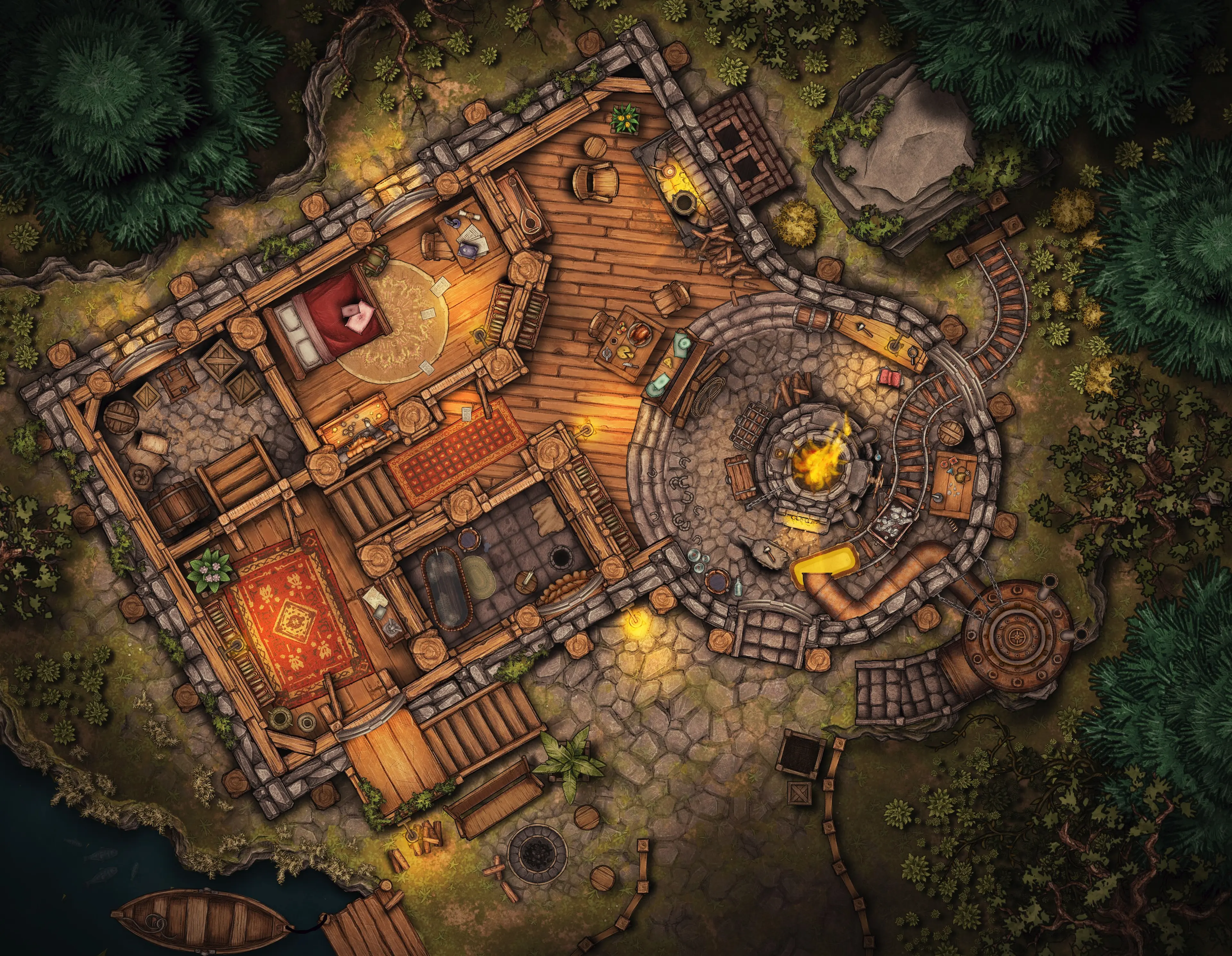
Quick Answer: What Is an AI Dungeon Map Generator?
An AI dungeon map generator is a design tool that turns a theme, party, and encounter goal into a complete dungeon layout — rooms, loops, hazards, and tactics — in minutes. Game Designer Assistant is built for that job, not for generic chat.
Key capabilities:
- Room graphs with multiple paths, keyed locations, and a reason each space exists
- Tactical terrain: cover, elevation, choke points, and environmental hazards
- Grid and scale notes for 5-foot squares, print, or VTT
- Encounter, lighting, and loot notes you can drop into a session or a GDD
The Problem with Drawing Dungeons by Hand
A dungeon is not a picture of rooms. It is a machine for choices: where to stand, which door to open, when to split the party, and how to spend the last spell slot. Tabletop combat research is blunt about this. Without a clear map, players argue over distances and lose the fight inside the rules discussion (1985 Games). Experienced GMs push the same checklist from the other direction: at least three exits, real obstructions, and hazards that change movement (
).The hobby is large enough that “I’ll just wing it” is expensive. The global TTRPG market is estimated at $2.41 billion in 2026, with long-range forecasts pointing higher. The broader tabletop games market was valued at $19.50 billion in 2024. Players show up expecting spaces that feel designed.
But getting a map that plays is still slow and easy to get wrong:
- The blank page: a cool theme with no loops, cover, or second exit
- Random generators that output topology with no tactics
- Hours in a drawing tool for a room the party sprints through
- Linear railroads that punish curiosity instead of rewarding it
Game studios feel a parallel pressure. A Google Cloud / Harris Poll study of 615 developers found 90% already use AI in their workflows, 95% use it to automate repetitive work, and 89% say AI is changing what players expect from worlds and levels — including dynamic level design. A generator that only dumps rectangles cannot meet that bar.
Blank Rooms Kill Combat
Static, featureless rooms collapse a fight into a dice exchange. Designers who write for the table recommend three to five distinct terrain features per encounter — pillars, elevation, water, debris — so positioning matters and players stop dogpiling in the same square (1985 Games). Most homemade maps never get that far because the author ran out of Saturday.
Linear Layouts Railroad the Party
“Jaquaysing” — multiple paths, loops, and more than one way in — is still the difference between a dungeon and a queue. Linear corridors offer low agency and almost no replay. Multi-path maps let a party flank, scout, or retreat without asking the GM for a secret door that was never drawn (1985 Games; The Angry GM). Random dungeon tools are especially weak here: they connect rooms, then skip the question “why would anyone take the long way?”
Prep Time That Does Not Survive Contact With Players
Hand-drawn maps are tactile and good. Digital maps edit cleanly and print at 300 DPI or sit on a VTT at roughly 140 pixels per square (1985 Games). Either way, the bottleneck is design, not ink. A survey of procedural dungeon generation research treats a dungeon as topology plus geometry plus gameplay objects. If your generator only draws walls, you still have to invent the game after the art is done.
This is exactly what a specialized AI dungeon map generator is for.
Why Game Designer Assistant Works as a Dungeon Map Generator
Game Designer Assistant treats dungeon creation as systems work, not as a clip-art search. You bring the theme, the party (or the player verbs), and the constraints. It returns a map with structure: what each room tests, where cover sits, how loops reconnect, and which objects are actually interactable.
That is a different job from a generic chatbot or a purely random mapper. A general model can invent “a 30-by-40 crypt.” This tool is framed as a design partner — brainstorming, systems analysis, documentation, and concept direction across genres — so the output looks like something you would paste into session notes or a level-design doc.
| Traditional Approach | Game Designer Assistant |
|---|---|
| Empty rectangles on graph paper | Rooms with cover, elevation, and a job to do |
| One entrance, one exit, one fight | Loops, flanks, and a retreat path |
| Random tables with no party context | Layout tuned to level, size, and available verbs |
| Hours in a drawing app before play | Draft → critique → retune in one conversation |
| Art with no encounter notes | Keyed locations, lighting, and loot that matter |
It Starts From Play, Not From Wallpaper
The strongest published map advice starts from how the space will be used: standard 5-foot squares so a 30-foot move is six tiles, clear grid lines, and terrain that rewards placement (1985 Games; 2-Minute Tabletop). Ask for that workflow and you get a chapel you can fight in, not a painting of a chapel.
"Design a two-level flooded crypt for a level 5 party of four. Include three ways between floors, waist-deep water in two rooms, a bell tower sniper perch, and a ritual chamber that becomes a battle map. Key every room. Note lighting and 5-foot grid scale."
It Writes Topology and Story in the Same Pass
Procedural dungeon research has spent years on the same split: generate the graph, then dress the geometry, then place gameplay objects (TU Delft; Liapis). You can demand that split by name — or describe the fantasy (“a lakeside cabin that is also a smuggler’s warehouse”) and get rooms that justify the furniture. Pair that with Creative Fiction Writer when you need rumors on the dock, a coded ledger in the bedroom, or the last words scratched into the fire-pit stones.
It Speaks Tabletop and Video Games Fluently
Need a 5e lair with legendary-action terrain and a phase when the floor collapses? A metroidvania chunk with a locked shortcut back to the hub? An OSR hole with no balanced CR, just three bad ideas and a well? Specify the ruleset and the verbs. The output should name stairs, pits, and sightlines the players already have, not invent a mapping subsystem they will never use.
"Create a 12-room OSR dungeon under a lakeside cabin. One secret dock entrance, one trapped chimney, looping cellars, and a boss room that can be skipped if the party bargains. No boxed text longer than four sentences. Include a one-page key."
Try the Game Designer Assistant free — no credit card required.
Related Agents You'll Also Find Useful
If you are generating dungeons, you are rarely doing only floor plans. These agents cover the rest of the pipeline.
Roleplay Game Master
If you need to run the map before Saturday — or live, with players in the rooms — Roleplay Game Master will hold the keyed locations, remember which doors were spiked, and keep factions consistent as the party loops back.
- Unlimited memory for multi-room delves
- Character consistency so the villain does not “forget” their own lair
- Open scenario play for playtests or full TTRPG nights
Creative Fiction Writer
A map without a reason is a maze. Use this agent when you need origin myths, graffiti, interrogation banter, or the letter hidden under the red rug.
- Genre-aware prose from grimdark crypts to cozy lakeside mysteries
- Editorial passes so lore matches the rooms you already locked
- Handouts and rumor tables, not just a paragraph of backstory
Prompt Generator
Once the layout exists on paper, you still need a face for the VTT. Prompt Generator turns your dungeon brief into high-quality image prompts you can run in whatever model you already use.
- Top-down battle-map prompts with grid, lighting, and terrain calls
- Refinement loops until the art matches the tactics
- Useful for tokens, loading screens, and print-at-home mats
How It Works
Step 1: Brief the Place and the Players State the genre, the ruleset, and who is walking in. Include constraints: session length, “no vertical combat,” Foundry vs. paper, or a party that has no darkvision.
"5e, four level 3s, four-hour session. A ruined lakeside cabin that hides a smuggler’s cellar. Must play on a 1-inch grid. One hard fight, two exploration rooms, one social beat with the dockmaster’s ghost."
Step 2: Demand Loops, Cover, and a Job for Every Room Ask the generator to treat empty space as a bug. Multiple exits, at least one loop, and three to five tactical features in any room that will host combat. If a new tool was introduced last session — a grappling hook, a sunrod, a knock spell — it should have a door to open here.
"Jaquays the cellar: two stairs, one chimney, one flooded tunnel back to the lake. Combat rooms need cover and a hazard. No dead-end 10-by-10 boxes."
Step 3: Generate the Key, the Battle Maps, and the Tells Request a numbered key, lighting, and which rooms become battle maps versus theater of the mind. For video games, ask for a room graph, lock-and-key items, and a shortcut that pays off after the first death.
"Output: (1) bird’s-eye room graph, (2) 5-foot battle-map notes for the chapel and the fire-pit courtyard, (3) a one-page key with monsters, traps, and treasure. Call out telegraphs the players can see from the doorway."
Step 4: Critique, Retune, and Export Push back. “The chapel is a sponge.” “There is no reason to use the dock.” “My VTT needs 140 px per square and a 4K export note.” The value of an AI dungeon map generator is the revision loop, not the first draft. Ask for a GM one-pager, a programmer-facing room list, or image-prompt language you can hand to Prompt Generator.
"Cut two empty rooms, add a collapsing choir loft, and rewrite the courtyard so the fire pit is cover and a hazard. Then give me a Foundry-ready description and a print checklist."
Results & Use Cases
📊 Saturday Crypt for a Level 5 Party
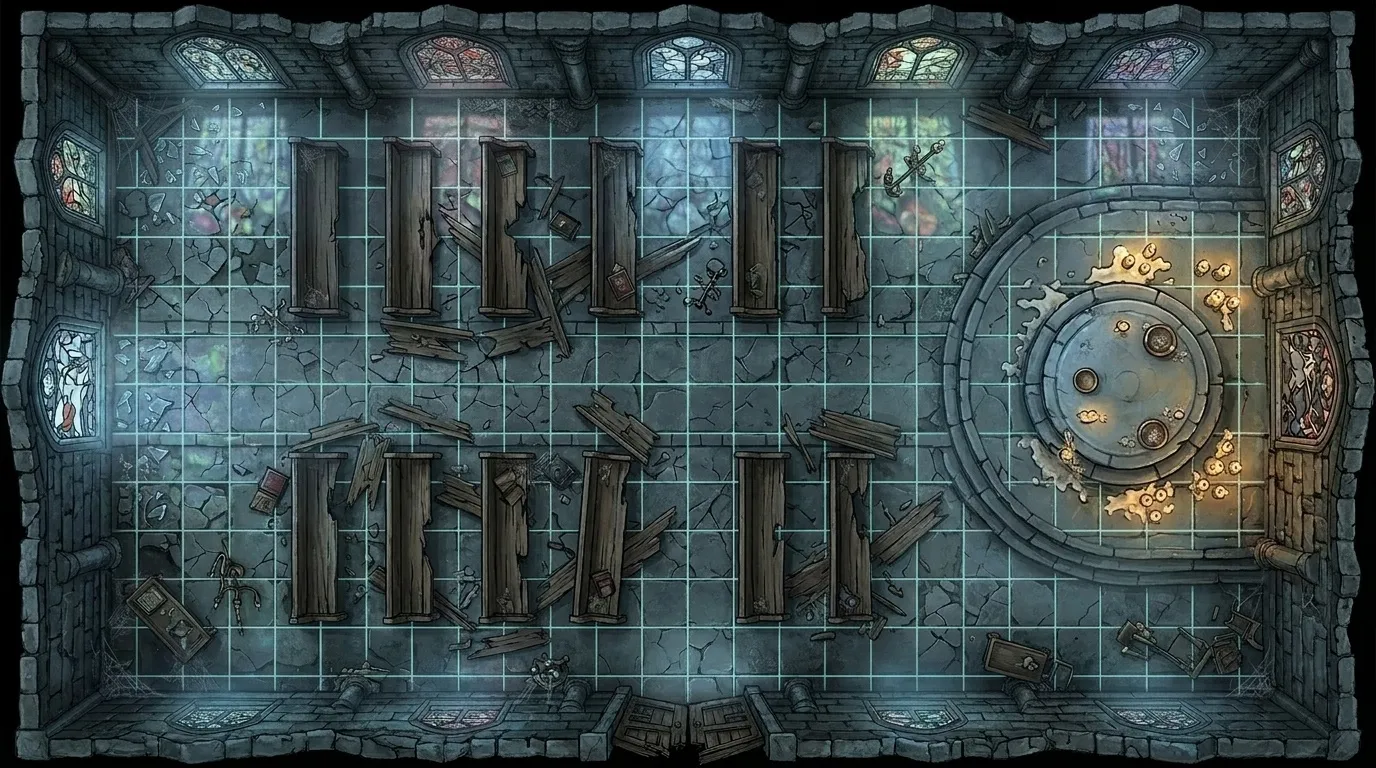
Scenario: A dungeon master has four players and three hours. The hook is a drowned chapel under the hill. The party will notice if every room is a square. Traditional Approach: A stock map pack, hastily relabeled, plus a fight that becomes a hit-point race in an empty nave. Game Designer Assistant: A keyed chapel with broken pews as cover, a circular mechanism as a trap and a prize, stained-glass lighting notes, and a loop through the vestry so a wipe is not a TPK.
- Terrain with a job, not decoration
- Multiple exits so flanking is a real plan
- Ready to run — or to playtest in Roleplay Game Master on Thursday
💼 Room Kit for an Indie Roguelike
Scenario: A solo developer needs a foundry biome: six room templates, two lock-and-key tricks, and a boss arena that teaches the new dash. Traditional Approach: A weekend of reference hunting and a first playable that still feels like a reskin of the tutorial cave. This AI dungeon map generator: A room graph, hazard list, and “you may dash now” geometry, plus notes a programmer can implement without redrawing the biome.
- Skills mapped to spaces before any tile is painted
- Loops and shortcuts that respect permadeath
- A written design doc you can drop into the GDD the same day
📱 Next Room Drafted on a Phone
Scenario: The party kicked in a door you did not prep. You are on the couch with a phone and ninety seconds of table silence. Traditional Approach: “It’s a 20-by-20 room with… orcs?” and a fight that teaches nothing. The design assistant on mobile: A readable side chamber with one loop, one hazard, and a clue that points back to the cabin — before anyone opens a laptop.
- Full feature parity on phone, so the map does not wait for a desk
- Fast iteration between turns
- Output you can sketch onto a battle mat or paste into a VTT
🎬 Set-Piece Arena for a Story Boss
Scenario: The writer knows the emotional beat — a mentor who will not leave the chapel — but combat has no unique geometry yet. Traditional Approach: Cutscene, then a reskinned elite in a blank box. Players remember the scene and forget the floor. The design assistant + Creative Fiction Writer: A nave that collapses in phases, pews that become cover, and dialogue that lands on the punish windows. Concept-art prompts via Prompt Generator so the mat matches the fight.
- Combat and story designed as one object
- Verticality and sightlines that enact the theme
- Image language you can send straight to a renderer or a VTT background
FAQ
What is an AI dungeon map generator?
An AI dungeon map generator is a tool that produces a complete dungeon from a short brief: topology, room keys, tactical terrain, lighting, and encounter notes. Game Designer Assistant is built for that design problem — systems, documentation, and genre craft — rather than as a general chatbot that happens to know what a 10-foot corridor is.
Is Game Designer Assistant free?
Yes. You can use it on the free tier with no credit card. Paid plans raise usage limits if you are generating full campaigns, many floors, or long revision threads. Start with one site, see whether the layout holds up in play, then scale.
Can this dungeon map generator make D&D 5e (or VTT) maps?
Yes. Specify the ruleset, party level and size, and whether you need a 5-foot grid, Foundry/Roll20 notes, or a print-at-home mat. Ask for loops, cover, and which rooms should stay theater of the mind. For a live rehearsal, run the same key in Roleplay Game Master so you can feel pacing before Saturday.
How is this different from Donjon, DungeonDraft, or ChatGPT?
Random mappers and drawing tools are strong at walls and weak at purpose. Published map practice still starts from playable terrain, multiple paths, and encounter areas you can actually run (1985 Games; 2-Minute Tabletop). This agent is specialized as a game-design partner, so you can demand a keyed one-pager, a Jaquaysed graph, and VTT scale notes instead of a paragraph of flavor next to an empty box.
Does an AI dungeon map generator work on mobile?
Yes. Brief a side room, a chase map, or a whole cellar on your phone and pick up the same thread on desktop. That is the difference between capturing the next door on the commute and stalling the table while you hunt a PDF.
Can it generate the actual battle-map image?
It can describe silhouette, materials, grid, lighting, and terrain in designer language — enough to brief an artist or a renderer. For model-ready image prompts, hand that description to Prompt Generator, which is built to write and refine prompts for image, video, and music models.
Conclusion
A dungeon map is not a prettier maze. It is a test of how the party moves, looks, and spends resources — and a short story told in doors, loops, and bad ideas. Graph paper, random generators, and generic chat still produce blank rooms, one-way hallways, and art with no encounter underneath.
An AI dungeon map generator that thinks like a designer changes the order of work. You start from verbs, paths, and terrain that has a job. You leave with a key, a battle-map brief, and a document someone can actually run — whether that someone is a dungeon master with four friends and a ruined chapel, or an indie programmer shipping a biome on Friday.
Try Game Designer Assistant now and generate the map you have been postponing. Explore more at Jenova.
For Developers: Game Designer Assistant is available programmatically via the Jenova API — integrate AI dungeon map generation into your VTT, campaign tool, or game-dev pipeline with a single API call. Full documentation →